More than 1,000 residents, along with several legislators, gathered to voice their discontent over government relocation policies for the Taoyuan Aerotropolis project, the largest land expropriation case in Taiwan.
The protest took place on 13th October 2023, after continued public appeals over the high cost of resettlement housing had gone unheeded. Huang Shih-chieh, the Democratic Progressive Party legislator, said the government should adjust relocation compensation in line with the price index and that the high cost of resettlement housing should be absorbed by the government, not shifted onto the affected people. In response, the Taoyuan City Government stated that the compensation budget had been increased by 20% but affected households said they have never felt adequately compensated. Kuomintang (KMT) Councillor Hsu Chi-wan said the government had repeatedly given the same resonse to appeals from households whose property was expropriated and suggested that compensation measures executed by Taoyuan’s Land Administration Department should be expedited.
Large amounts of public funds are being poured into a planned Airport Business Park near Eppley Airfield, located on the northeastern edge of the City of Omaha in Nebraska. The priority site contains many residences and small urban farms. Residents have concerns over lack of information about the project and whether they will have to relocate.
On 6th December 2022 the State of Nebraska awarded US$400,000 in Economic Development Awards funds to the Omaha Development Foundation to help create a master plan for an area near Eppley Airfield. The grant was the first step in implementing the state’s Airport Business Park Program (ABP Program), created by the Nebraska Legislature in 2022 in response to negative economic impacts of the coronavirus pandemic drawing grants from Nebraska’s allotment from the American Rescue Plan Act (ARPA). Signed into law on 11th March 2021 the purpose of ARPA is to support the country’s recovery from the economic and health impacts of coronavirus and recession.
In February 2023 the Nebraska Department of Economic Development (DED) elected to double the total amount available through its ABP Program, awarding US$800,000 in Planning Grants. The Omaha Development Foundation and the Omaha Economic Development Corporation each received a US$400,000 grant. Officials have proposed a powerful inland port authority to provide a support structure for the business park; a plan was presented to Omaha City Council on 20th December 2023. The port authority would focus on bringing large commercial and industrial developers to the city. It would have limited democratic input. A 9-member board, appointed by the Mayor, would co-ordinate developments related to rail, airports and waterways and be given authority to oversee investments in the area. The inland port authority would have legislative powers to issue and sell revenue bonds to construct buildings and infrastructure and be charged with guiding economic development in a wider, approximately 300 acre area, around Eppley Airfield.
Graphic depicting map of proposed business park near Eppley Airfield, as envisaged by a development team led by the Greater Omaha Chamber, Burlington Capital and the North Omaha-based Omaha Economic Development Corp. The priority site is north of Carter Lake. Image: Nebraska Examiner, 22/12/2023
The 160-acre priority site, to the west of Eppley Airfield near the northern shore of Carter Lake, contains about 320 mixed-use land parcels. Under the ABP Program about US$90 million in state funds would be used to turn the site into shovel-ready land ready for industrial development. City of Omaha officials are in negotiations with the private owner of the second site, a 70-acre area located west of Carter Lake. The priority site contains homes and small urban farms. Community leaders say affected communities have not been informed about the project. Joe Higgins of Levi Carter Sherman Neighbourhood Association said residents had to research information about the project themselves due to scarcity of detail provided by authorities. He said the neighbourhood had been marginalized since the 1950’s but most homes pre-date that time with residents having deep roots in the area. Some Omaha lawmakers also say there has been a lack of engagement with residents.
One of the urban farms operating in the earmarked site is City Sprouts which grows thousands of pounds of produce for a community pantry. It was established in 2021 and in 2023 it provided 15,000 pounds of food. City Sprouts also teaches agriculture providing internships and other learning opportunities. Manager Ann French said the farm was drawn to the area because of the truck farm and agricultural history. Currently covering 7-acres City Sprouts has plans to grow, building a greenhouse and a barn and quadrupling the produce it shares with neighbours. She said it would be impossible to find a similar site elsewhere in Omaha.
A 19th February 2024 community meeting, the first to include most of the major players in the business park and give residents clarification about the project, was attended by about 75 people. The key issue concerning residents was whether they would be forced to relocate and, if so, how they would be compensated. Several people voiced concerns over how little information had been shared with residents about the fate of homes they had built and lived in for many years. There were outbursts of frustration and anger. At one point a woman shouted “are they taking your home?” and a man called the discussion a “clown show” then walked out. Information about the proposed inland port authority to oversee the business park project clarified that most members would be appointed, but seats would be offered to two residents, two business owners and one youth.
Large amounts of funding, including public funds, is also being ploughed into expansion and renovation of Eppley Airfield, already the largest airport in Nebraska handling more than 5 million passengers in 2023. On 17th January 2024 the Omaha Airport Authority announced approval of a US$950 million terminal expansion and renovation plan at Eppley Airfield, funded by federal grants along with airport revenues and future airport bonds. Yet more public funding for Eppley Airfield expansion was announced on 14th February 2024; a US$3.1 million grant for Terminal Building Improvement Phase 7 will support increased capacity and improvements including a new terminal. The money is part of US$15 billion in funding for US airport infrastructure under the provisions of the 2021 Bipartisan Infrastructure Law, $11 million of which was allocated for Nebraska airports.
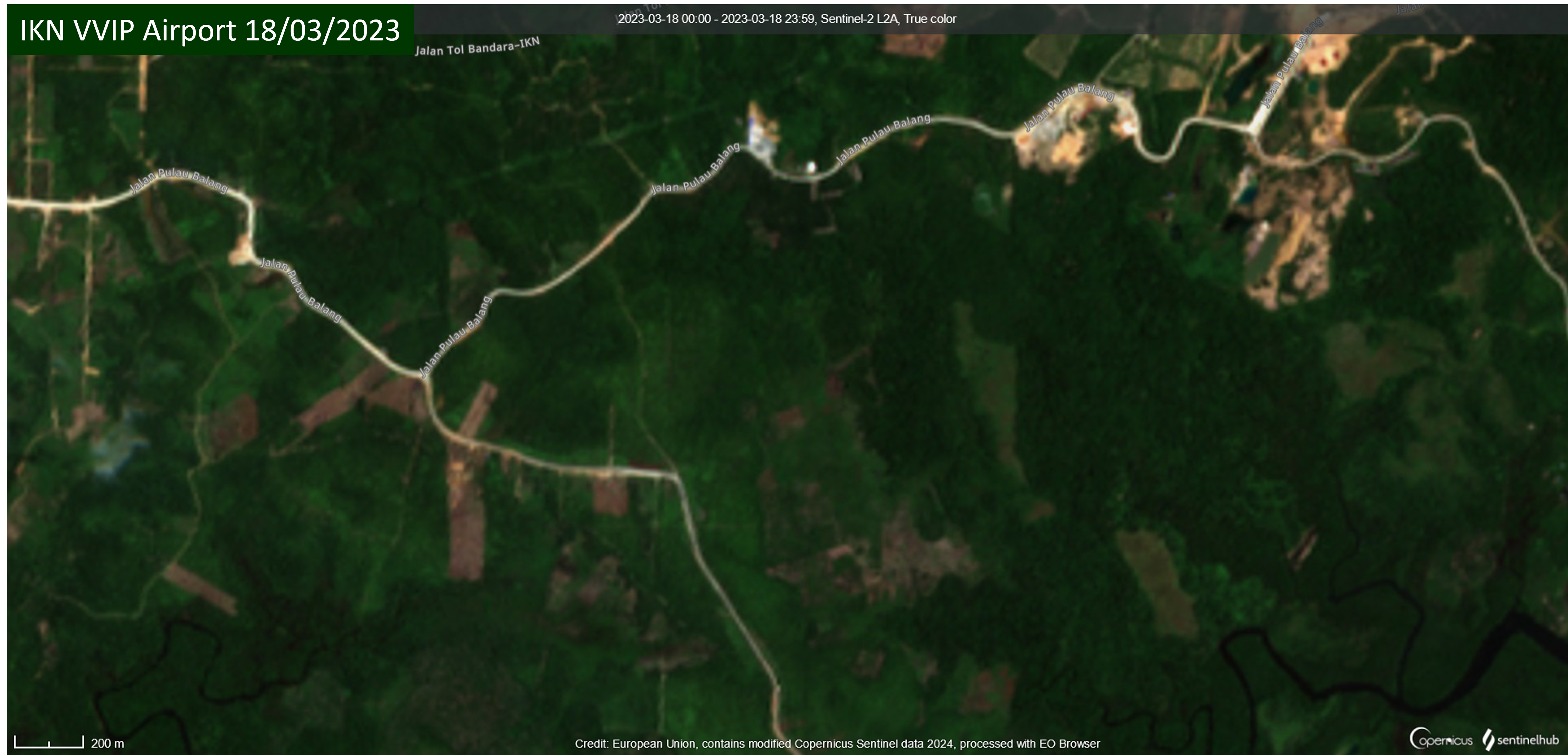
In East Kalimantan on the east coast of Borneo a new VVIP (Very Very Important Person) airport is being constructed to support development of Nusantara (IKN), the future capital city of Indonesia. With a VVIP and VIP terminal covering an area of 7,350 square metres and three helipads IKN VVIP Airport will support the mobility of the President, high-ranking officials, state guests and investors. The international airport will have a 3,000 metre runway to accommodate Airbus A400 military airaft and will be used in coordination with the Indonesian Air Force (IAF). Development of IKN VVIP Airport was accelerated by Presidential Regulation No. 31 on 6th June 2023.
Satellite imagery shows land clearance and earthworks. The image on the left is from 18th March 2023 before works began. On the right is an image from 16th February 2024 where development of the IKN VVIP Airport terminal, runway and access road are clearly visible.
Demarcation of a 360-hectare site began within a few days and triggered reaction from some affected residents. On 30th June Muslimah News reported that hundreds of residents from five sub-districts – Gersik, Jenebora, Pantai Lango, Kelurahan Riko and the Maridan village area in Sepaku – were protesting take-over of land they occupied by the Land Bank Agency for construction of the VVIP airport. They refused to hand over their land to the Land Bank Agency because stakes were installed without prior notice and the government’s promise, made the previous year, to provide land for agrarian reform had not yet been fulfilled. There was a lot of evidence that construction was consuming residents’ land and authorities were ignoring their protests. Protest was not just in response to construction of the airport; there was also some controversy over whether the land bank serves public interest or corporate projects. The Land Bank Agency made reassurances that residents’ rights to replacement land would be accelerated and that agrarian reform land was being prepared for this purpose.
On 3rd August 2023 many palm farmers gathered at their former plantation area where they unfurled banners and made speeches demanding compensation for land affected by the VVIP airport construction project. A lawyer representing some of the residents said that oil palm land previously managed by them was suddenly cleared with heavy equipment. Palm oil trees had been damaged and razed to the ground but the farmers said they had not received compensation and there had been no discussions or meetings with authorities.
Land clearance and installation of boundary markers continued and on 10th January 2024, during socialisation for communities impacted by construction of the VVIP airport and access toll road, it was announced that 400 hectares of replacement land had been prepared for them. Yet complaints about the land acquisition process continued. On 14th January 2024 TribunKaltim reported that some farmers whose land was used for construction of the VVIP airport were unable to farm the land and had no clarity regarding replacement land. The land declared for the airport was the only land they owned and they relied upon it for their livelihoods. Many affected farmers owned one or two hectares of land. Many residents who lost their land had still not received compensation.
On 9th February 2024 Acting Regent of North Penajam Paser, Makmur Marbun, said the number of people whose land was allocated for the VVIP airport but had not yet been acquired had reduced from 80 to 22, explaining that the land of these 22 people is in the area that will be the runway and vital for the airport project. The residents had brought a lawyer to the airport site where they met with officials but Makmur Marbun said he would continue to attempt to resolve the issue through discussions. Completion of IKN VVIP Airport and commencement of operations is targeted for early August 2024.
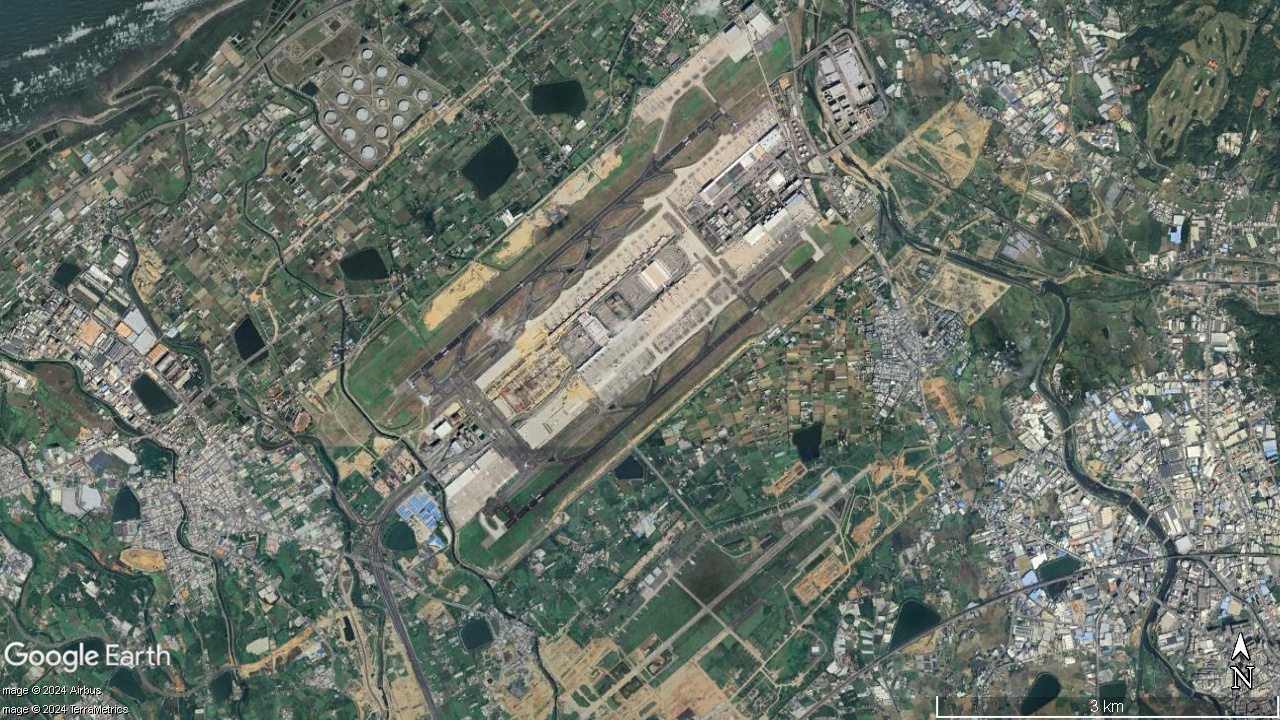
Taoyuan Aerotropolis is the largest zone expropriation case in Taiwan. The plan for development centred around Taoyuan Airport, the largest and busiest in Taiwan located 40km west of Taipei, encompasses over 4,500 hectares. The megaproject is fraught with controversies, not least because it is estimated that at least 6,000 households will be impacted by land expropriation for the first phase, covering an area of 2,599 hectares. But expropriation for Taoyouan Aerotropolis will be constrained by a June 2023 ruling from the Taipei High Administrative Court. The Taiwan Association for Human Rights reported that a lawsuit calling for cancellation of Taoyuan Aerotropolis land expropriation obtained a favourable ruling with most of the plaintiffs winning their cases.
The 4,500 hectare Taoyuan Aerotropolis plan is centred around Taoyuan Airport and includes a third runwayto the north
The lawsuit discussed issues of public interest, necessity and proportionality principles regarding land expropriation. Representing the legal team, Xiong Yiling (熊依翎) expressed gratitude for the court’s judgement which allows for preservation of the plaintiffs’ land and homes. In this case it was found that clients’ land was not expropriated for public interest or necessity. Lu Xueshin (呂學信), representing plaintiffs from both sides of Yugang Road, north of Taoyuan Airport where a third runway is planned, said that their community was not within the scope of Taoyuan Aerotropolis for many years. But they were forcibly included after residents in a neighbouring area petitioned for their inclusion. Lu Xueshin said the land is not needed to construct a third runway and was expropriated due to others’ private interests. Wu Mingzhe (吳明哲), representing Ziqiang Community plaintiffs located near the airport entrance, stated that the area was supposed to remain residential. However, without the knowledge of residents, a large group of other residents expressed their wishes to be included in expropriation plans. As a result a large area of the community was included in expropriation plans, in spite of a 2019 plan for preserving the Ziqiang community and a public hearing establishing that those who refuse to be expropriated can be excluded.
Yu Yicha (余宜家), Deputy Secretary-General of the Taiwan Association for Human Rights, said that the locations of the plaintiffs were excluded from the expropriation plan for many years, or neighboured almost identical lands not requiring expropriation, demonstrating that these areas do not need to be expropriated and keeping their land does not hinder construction of Taoyuan Aerotropolis. Futhermore, Taiwan’s land expropriation system, a system rarely seen in democratic countries, has been heavily criticised becasue of the large areas and numbers of households affected and violation of people’s housing and property rights. The Taiwan Association for Human Rights welcomed the Taipei High Administrative Court’s careful consideration of the serious infringement of people’s basic rights and a verdict marking a significant milestone in Taiwan’s land expropriation system. They urged the relevant authorities to review the Taoyuan Aerotropolis plan as a whole and negotiate with residents to return expropriated land.
The land expropriation case is one of five lawsuits relating to Taoyuan Aerotropolis, assisted by non-governmental organisations including Taiwan Association for Human Rights, Taoyuan Aerotropolis Anti-Forced Eviction, the Environmental Jurists Assoication and the Environmental Rights Foundation.
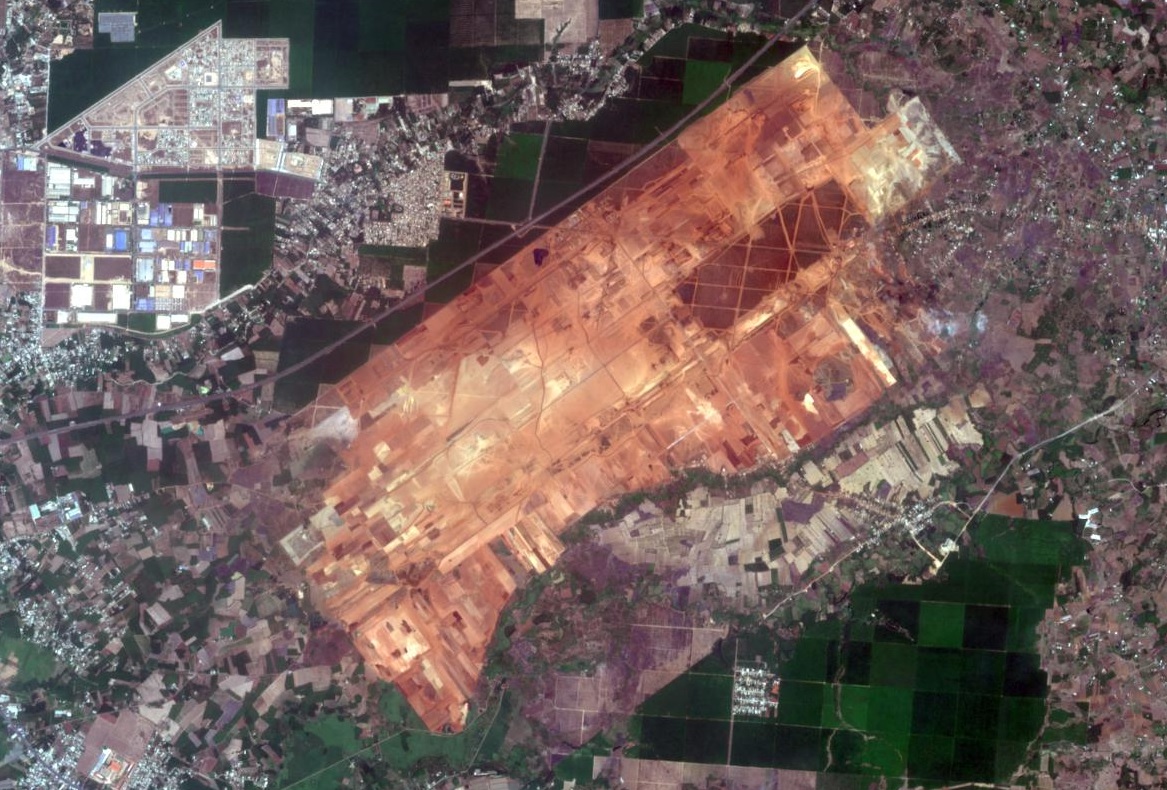
Long Thanh Airport, under construction in the Đồng Nai Province, is slated to be Vietnam’s biggest airport. With a 5,000 hectare site and costing USD16 billion the airport is designed to have capacity to handle 100 million passengers and five million tonnes of cargo per annum. High levels of dust pollution from levelling Long Thanh Airport construction site, caused distress and posed health risks for neighbouring communities. Between April and October 2022 inspections by Đồng Nai Department of Natural Resources and Environment found dust pollution at the site up to 18 times higher than permitted levels. Levelling works entailed digging up and filling and flattening vast volumes of soil and trucks carrying soil on the site stirred up clouds of dust. In December 2022 more than 1,800 vehicles and machines were operating on the airport site. By the end of March 2023 residents of neighbourhoods near Long Thanh Airport construction site had been shrouded in dust for several months. Satellite imagery dated 13th March 2023 showed progress of the levelling works.
Long Thanh Airport site 13/03/2023. Image credit: Esri, European Commission, European Space Agency, Amazon Web Services
One place worst affected by dust was the primary school at the heart of the Binh Son Commune. Doors were kept closed for the entire day but dust still seeped in. “It’s impossible to clean” said a school security guard, “the dust is everywhere and comes at all times.” A teacher at the school said pupils’ books were “terribly dirty”. Pupils’ hands were always red and they were not comfortable with wearing face masks. Ten people cleaned the school three times every day but dust got into every corner. Some households attempted to keep dust out with canvas tarpaulins or plastic sheeting. A local resident said before airport construction started air quality in the area had been good, but now it was “unbearable”. Another resident said it would be another two of three years until the airport is completed and they “could not bear the red dust”. The deputy chairman of the Vietnam Lung Association said exposure to dust on a daily basis can severely affect people’s health, causing damage to the lining of the respiratory tract or leading to pneumonia, lung infection or pulmonary fibrosis.
Green roofs were coated in red dust and residents spoke of dust on every surface. Farmers in Binh Son Commune grappled with pervasive red dust from the airport construction site. Dust had stuck to mangosteen and rambutan leaves just as the trees began to bear fruit. One farmer said his durian trees had not developed properly and more than half of the fruit had fallen. He and other farmers attempted to wash their trees, spraying them with water which was of limited effectiveness. Another farmer cleaned his trees from 2am to 8am each day, consuming a lot of water and electricity. Other crops were affected, including jackfruit, lychee, banana and sapodilla. Red plumes rose like fires from the construction site and dust was carried by the wind, turning the sky red and impacting on people living at some distance from the construction site, including in the Loc An-Ninh relocation area, a resettlement site for people displaced to make way for Long Thanh Airport. A blanket of dust hung in the air extending as far as 10 kiometres from the site.
A video filmed on the airport site in March 2023 shows a red dust ‘tornado’, a large, dense, rotating plume of dust. You can hear the rumbling sound of the tornado. Clouds of dust are generated when a bulldozer pours red soil into a truck. Footage from a moving vehicle shows areas of the site under a heavy haze of dust and trucks pumping water onto part of the site.
Efforts to address the dust problem, such as spraying water and deploying trucks to dampen the ground to reduce airborne dust, had been ineffective. Officials noted that the size of the site, the dry season and windy weather exacerbated the dust problems. Beginning in April 2023 dust mitigation measures were increased with construction of 10 reservoirs, each with capacity to store 3,200 cubic metres of water, to supply water for 60 trucks including two firefighting trucks. It was also announced that air conditioners would be installed at some schools near the construction site, to prevent dust from entering classrooms.
For more information see the case report on EJatlas, the world’s largest, most comprehensive online database of social conflict around environmental issues: Dust pollution from Long Thanh Airport construction, Vietnam. In April 2023, after publication of the case study, ACV was fined VND180 million (US$7,670) for dust pollution during construction of Long Thanh Airport, plus an additional fine of VND90 million (US$3,835) for failure to implement the environmental impact assessment report.
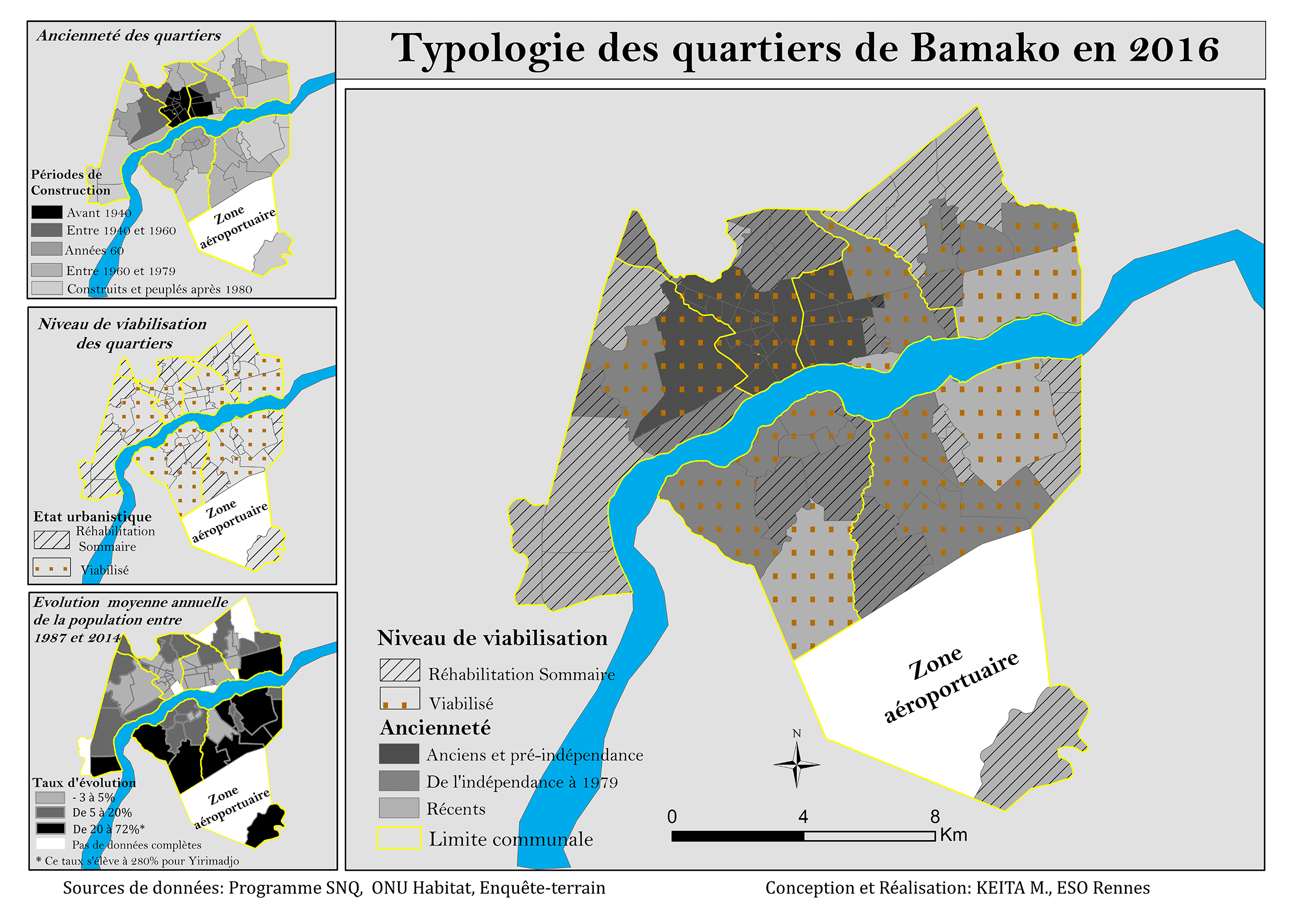
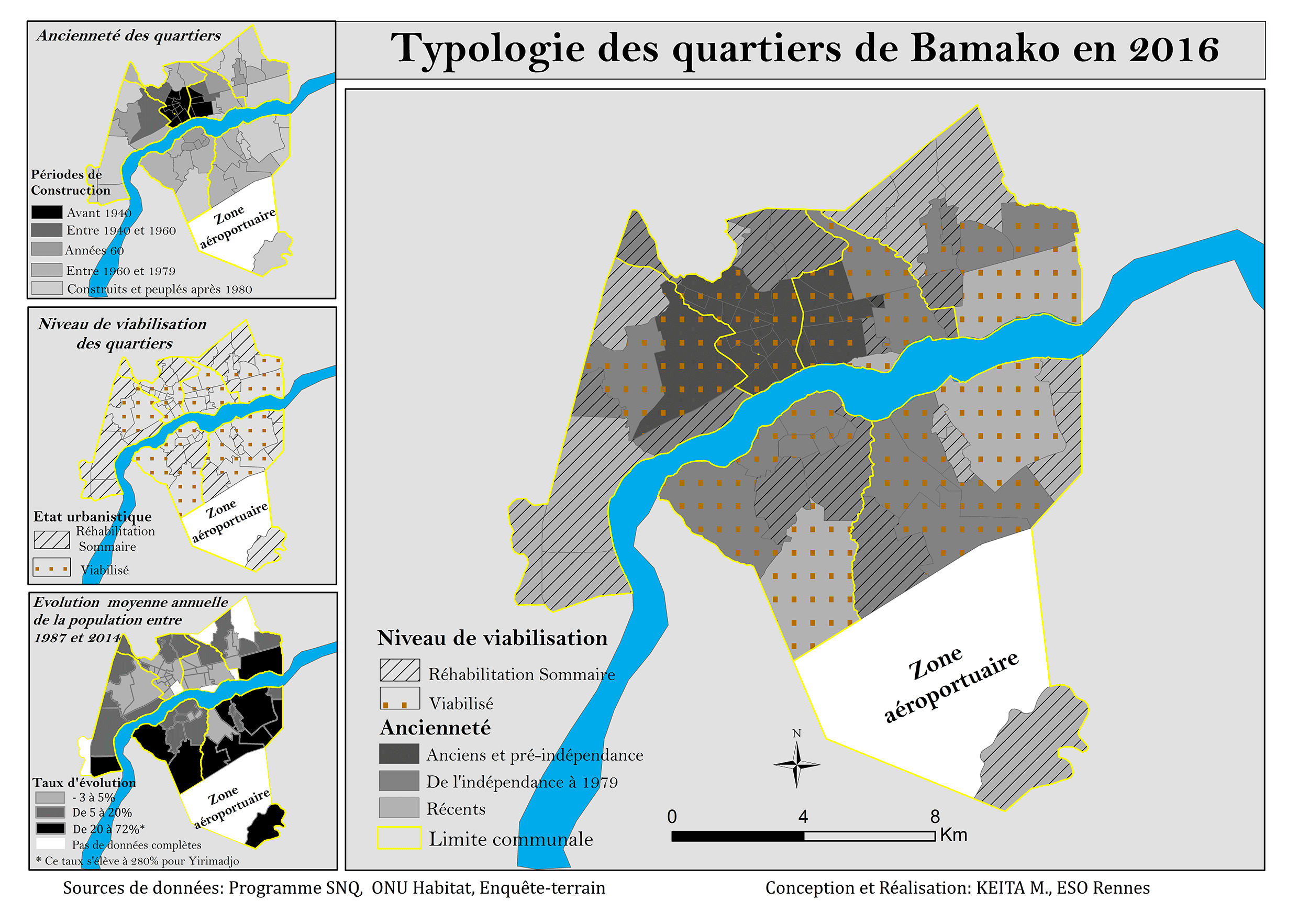
Mass evictions for an ‘airport zone’ next to Modibo Keita Airport, Mali’s main airport on the outskirts of Bamako, the capital city, began on 20th April 1995. Without warning, the government began bulldozing the Senou neighbourhood to make way for expansion of the zone. Demolitions continued for ten days and about 3,707 families, approximately 30,000 people, were forcibly evicted. Further waves of demolitions followed with many instances of land grabbing and speculation. Farmers were displaced for a fertilizer plant on the land in 2007-8 and in 2009 residents resisted instructions to leave the land. A drive to clear remaining communities began in 2021. Bulldozers arrived early in the morning of 14th January, in a major eviction drive covering 1,600 hectares; about 20,000 families in 11 neighbourhoods were impacted. About 800 evictees said they had permits to occupy the land and many affected people were left destitute without shelter.
The ‘airport zone’ – zone aéroportuaire Modibo Kéita – is vast, extending over 7,194 hectares northwest of the airport. It was classified as a plot of land for airport company use in 1999. Residents contest government claims that their occupation of the airport zone is illicit; they have lived on the land for several generations. An inhabitants’ organization – Plateforme deshabitants de la zone dite aéroportuaire (PHZA) – has been established with active groups, sometimes holding different views about land management, in many affected villages. Women, some of them elderly, play a prominent role in resistance against eviction from the ‘so-called airport zone’. The land struggle is supported by l’Union des Associations et Coordinations d’associations pour le Dévelopement et la Défense des Droits des Démunis (UACDDDD), a national federation fighting the injustices of dispossession. Demonstrations and meetings about the airport zone have been attended by hundreds of people. In November 2021 an independent national commission of inquiry to investigate demolitions in the airport area was established.
For more information about the Modibo Keita airport zone evictions see the case report on EJatlas, the world’s largest, most comprehensive online database of social conflict around environmental issues: Modibo Keith airport zone, Mali
Disputes over land acquisition for New Phnom Penh Airport date back to 2018 when 2,600 hectares, in the Kandal Province, were allocated for the project. With an estimated cost of US$1.5 billion the development was described as one of the world’s largest airports by land area with an adjoining ‘Airport City’. The site is predominantly agricultural land and villagers were shocked by sudden news of the airport and the prospect of losing homes, land and livelihoods from farming and fishing. A series of protests between February and June 2018 involved hundreds of people, representing about 2,000 families, complaining of low compensation offers, intimidation during negotiations over land and encroachment onto communally held wetlands. By December 2019 foundations for the airport were being laid.
Protest continued into 2020. In June the Kandal Stung district governor said 2,000 plots of land were affected by airport construction and in August villagers from the Kandal and Takeo provinces whose farmland fell within the planned site petitioned the Prime Minister requesting a bigger payout from the airport developer. By May 2021 construction of New Phnom Penh Airport was reported to be 40% complete, with the terminal hall, airfield and 100 metre high control tower already in place. A State Secretariat of Aviation (SSCA) spokesperson said, “We are aware that the pandemic has disrupted many projects and the economy, but the construction of the airport in Kandal Province and other airport projects in the country have been on schedule.” The map below, dated 17th July 2021, shows satellite imagery of part of the airport site and communes impacted by land acquisition including Ampov Prey, Boeng Khyang and Kandork.
The land dispute escalated on 14th May 2021 when approximately 200 people who said their rice crops had been destroyed set up a protest camp blocking a road to the construction site. They set up tents and a few days later several of them surrounded a bulldozer and demanded proper compensation for their land and crops. Residents were still blocking bulldozers from clearing farmland in July and authorities warned journalists against covering the land dispute. On 7th September about 50 villagers attempted to block National Road 2 in protest against development of New Phnom Penh Airport. They were confronted by about 100 security officers but the standoff remained non-violent. Then police set up roadblocks to prevent villagers from inspecting land they had been displaced from. A representative of Kampong Talong village (shown to the south of the map) said villagers were being prevented from seeing land that had been seized for airport construction. They had ceased cultivating the land three years ago but economic hardship, due to business shutdowns during the Covid pandemic, had driven them to start farming it again as they had been left without other ways to survive.
On 12th September 2021 a ‘clash’ between about 100 protesters and about 400 police left 13 officers and an unknown number of protesters injured. Kandal provincial police dispersed the protests with teargas and about 30 people were arrested and detained. Nine of the arrested people were accused of violence – specifically being in possession of sticks stones and slingshots, hurling gasoline and burning tyres. In February 2022 a dozen excavators were digging up rice fields and wetland in Boeng Khyang and dozens of police and military officials were dispatched to ensure implementation of authorities’ instructions to carry out the works. The nine protesters charged with violence were acquitted in November 2022. At this time the number of villagers impacted by land acquisition increased; about 200 people demanded to know whether they would be joining the 300 families already being displaced for the airport. Numbers were sprayed in red paint on dozens of houses alongside the 94 canal, located about 5km from the airport site. Then in January 2023 residents affected by the airport development said company workers had instructed them to dismantle sheds housing animals, causing anxiety that their land might be cleared. Representatives of 460 families living around the airport project had requested land titles the previous month but received no response.
For more information about the airport land dispute see the case write-up on EJAtlas, the world’s largest, most comprehensive online database of socio-economic conflict related to environmental issues: New Phnom Aiport and Airport City, Kandal Province, Cambodia
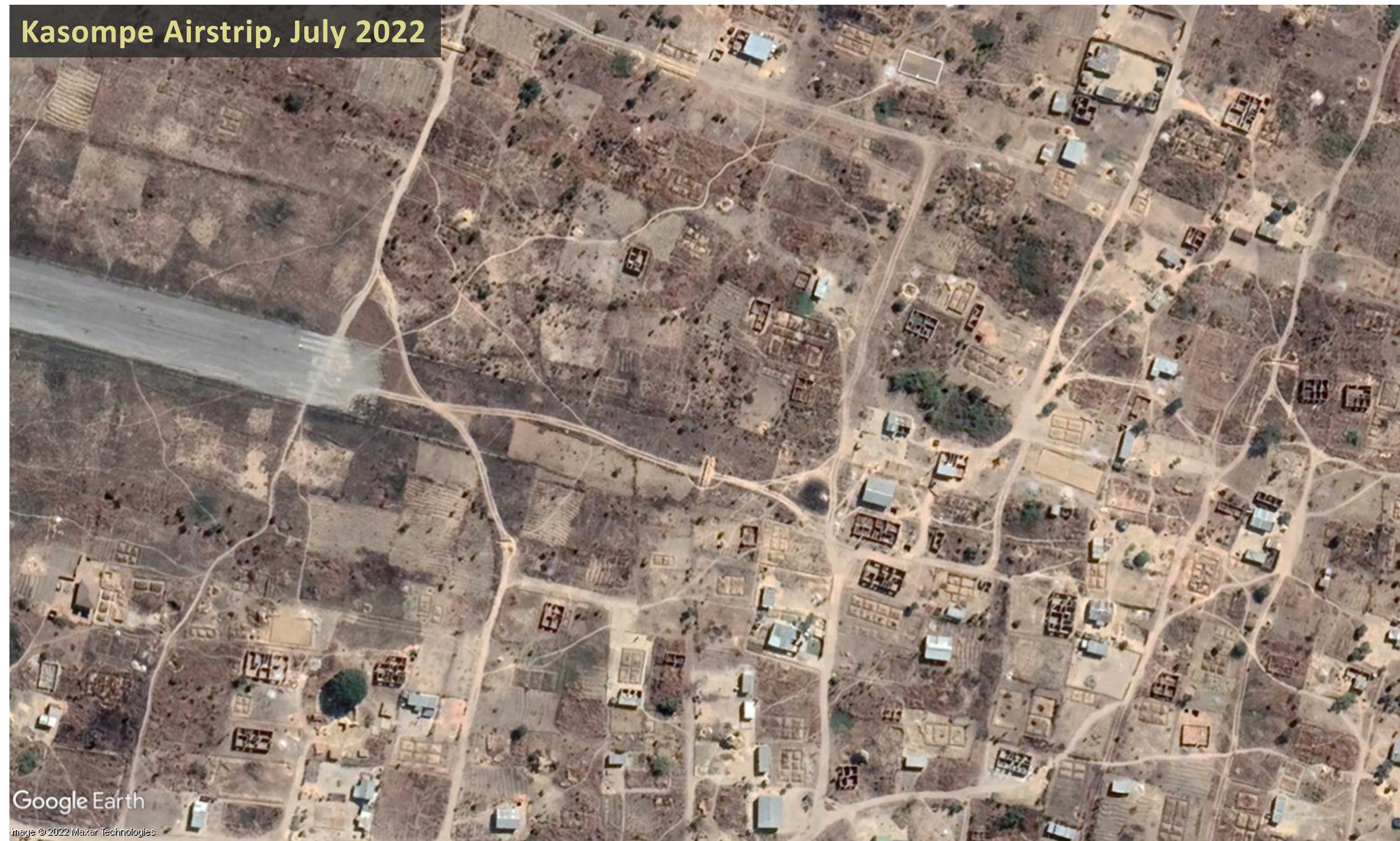
On 20th August 2022, beginning at 2am, more than 300 houses built on land surrounding Kasompe Airstrip were demolished by officers from Chingola Municipal Council and the Zambia Police Service. The Council stated it had not allocated the land in question and the buildings had been erected without planning permission. Residents appealed to the government to find them alternative land and some of them attempted to resist the demolition, burning tyres and breaking the windows of bulldozers. A video of the demolition shows houses in plots of land with gardens and trees being bulldozed, as displaced people looked on.
Completed houses as well as houses still under construction were demolished. A number of residents retaliated against destruction of their homes, setting fire to two properties – a guesthouse and servants’ quarters – owned by Johnson Kang’ombe, Mayor of Chingola, whom they accused him of selling them plots of land at Kasombe Airstrip. Two suspects thought to be involved in the arson were apprehended and detained. A group of women protested chanting slogans including “The Mayor must go”. One evicted woman said that her aunt whose home was also demolished had collapsed with suspected high blood pressure.
In the aftermath of the demolitions the only help given to displaced residents was food aid and space in a camping site, provided by the Chingola District Disaster Management and Mitigation Unit (DMMU). On 29th August it was reported that Chingola District Commissioner Raphael Chimupi had said that DMMU had given relief food items to 95 out of 98 families whose houses had been demolished. Chingola Member of Parliament Chipoka Mulenga visited affected residents and promised to help them, saying “I will do everything in my power to help resolve this issue, it is saddening to see a lot of houses demolished, which has left many families in the cold.” Mulenga said the government would provide alternative land to the victims of the demolition of 345 houses, but as of 27th September 2022 some people were still stranded with nowhere to relocate to.
Satellite imagery of an area at the eastern end of the Kasompe Airstrip runway, dated 26th July and 8th September, shows some of the buildings which were destroyed on 20th August 2022. Slide the bar between the images below to compare the area before and after the demolitions.
The land conflict, inustice and human rights violations related to Kasompe Airstrip is documented on EJAtlas, the world’s largest, most comprehensive online database of social conflict around environmental issues. Kasompe Airstrip is located on the eastern outskirts of the city of Chingola, in the Copperbelt Province, a mineral rich area that is the main copper mining region in Zambia. President of the Equity and Economic Party, Chilufya Tayali, said information had surfaced indicating that the demolition of the houses was not driven by the purported illegality of allocation on plots of land but by foreign interests in a mine near Kasompe Airstrip. Aerotropolis-type plans were mentioned in 2019 when the then Mayor of Chingola, Titus Tembo, said Chingola aims to become a city with Kasompe Airstrip being part of this agenda.
The Zambia Air Force (ZAF) denied allegations that it has influenced or pressured Chingola Municipal Council to demolish the houses on Kasompe Airstrip land. ZAF Director Public Relations Lieutenant Colonel Helen Chota said rumours were incorrect and that none of the other ZAF airstrips had been encroached. Yet the day after the demolitions, on 21st August 2022, it was reported that ZAF Commander Lieutenant Colon Barry had alerted citizens to more house demolitions across the country, saying houses and other structures built within 500 metres of airport infrastructure would be demolished and that building civilian structures on or near airports is a threat to national security.
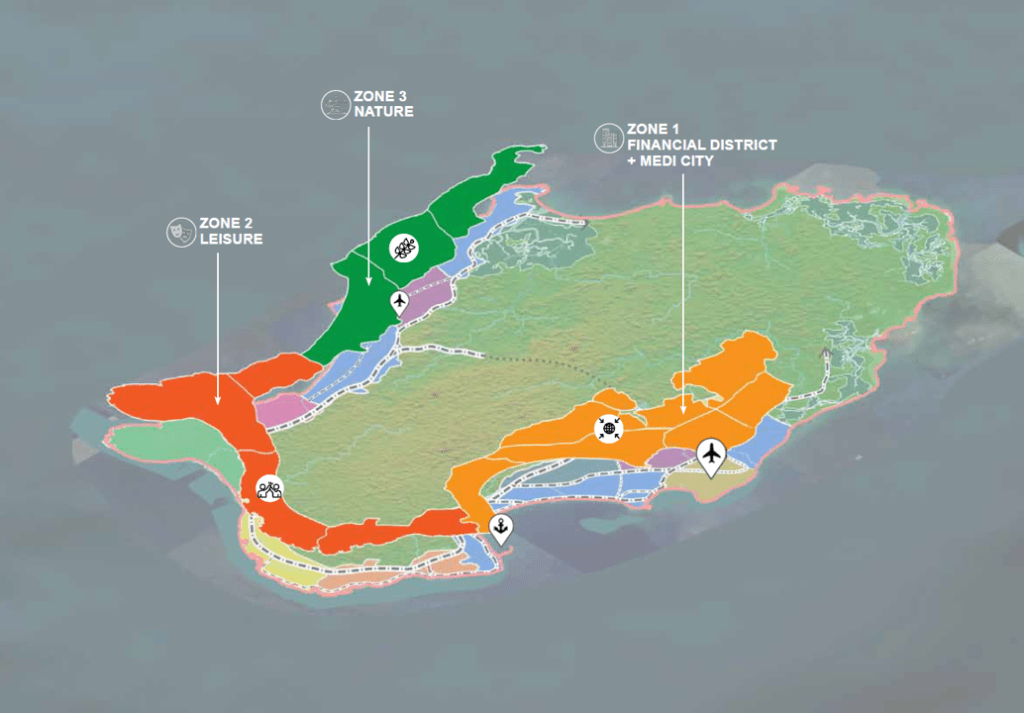
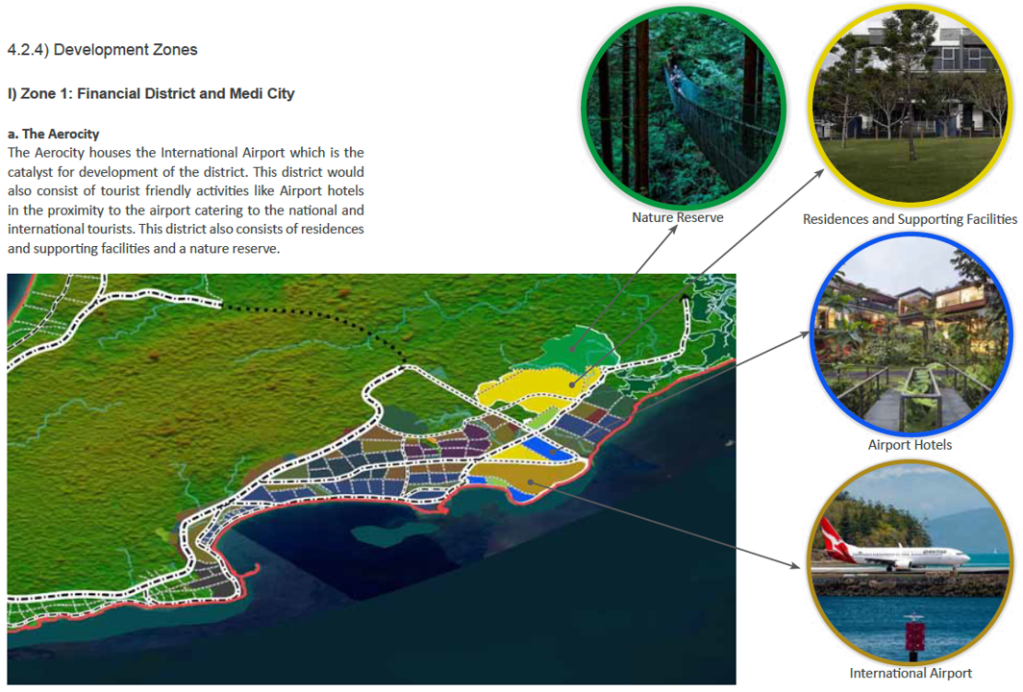
Airport development features heavily in a plan for tourism-oriented megaprojects on Little Andaman Island, the southernmost island of the Andaman archipelago. Graphics below, from the 58-page ‘Sustainable Development of Little Andaman Island – Vision Document’, show: Zone 1, on the eastern coast, featuring an Aerocity, housing an international airport, envisaged as ‘the catalyst for development of the district’; Zone 2, on the southern coast, including a Leisure Zone and Tourism SEZ (special economic zone) with casinos, theme park and beach hotels; Zone 3, on the western coast, a Nature Zone containing super-luxury resorts and hotels, with an airstrip for private charter flights.
Map of Little Andaman plan indicating developable areas
Little Andaman plan map showing 3 zones
Zone 1: The Aerocity is the catalyst for development
Sudden news of the plan, in January 2021, alarmed conservationists. The ‘Vision Document’, thought to have been finalised a few months previously but not in the public domain, is included in ‘A MONUMENTAL FOLLY: NITI Aayog’s Development Plans for Great Nicobar Island (An evolving archive of reports, information and documents)’, compiled by Panjaj Sekhsaria and published by Kalvpavriksh Environmental Action Group. The total project area is nearly 240 sq km, 35% of the island; the three zones would take up 107 kilometres of the island’s coastline. Development of this scale would have major impacts on indigenous people and the island’s unique biodiversity and forests. Little Andaman is home to the Onge tribe, living on the island for more than 50,000 years, the population dwindling since 1900. Now numbering an estimated 125 people the Onge tribe is categorised as one of India’s Particularly Vulnerable Tribal Groups (PVTG). According to the plan the Onge Tribal Reserve would be reduced by 31%; the Vision Document states that steps would be taken to relocate and protect Onge people but no detail is given. An anthropologist pointed out that bringing areas where Onge, with nomadic origins, do not live into the proposed development would still impact them, saying “the Onges have a close attachment with their territory be it inhabited or not”.
The Divisional Forest Officer of Little Andaman raised concerns that the major diversion of forest land for the project would cause irreversible damage to the island’s forests, entailing the loss of more than 2 million trees. An official source said there are over 2.4 million trees in the “vast tract of forests” in the areas where development is proposed. Removal of trees would cause topsoil erosion and reduce rainfall, impacting on the small area of the island with cultivable soil. Uprooting more than 2 million trees for the Little Andaman plan would also result in carbon emissions and carbon stock losses. Carbon pools were calculated for the four forest types in the development areas: nearly 136 sq km of Evergreen/Semi Evergreen and smaller areas of Deciduous, Swamp/Mangrove and Plantation forests. A study estimated that implementation of the ‘Sustainable Development of Little Andaman – Vision Document’ would result in carbon stock loss of 2,996.286 tonnes from five categories of carbon pools: 55% from woody debris and soil organic matter, 32% from above ground living biomass, 9% from below ground biomass, 3% from dead mass of litter and 1% from dead wood.
Nesting sites of Giant Leatherback Turtles, the world’s largest turtles growing over 6 feet in length, with many populations in precipitous decline, are threatened by the Little Andaman plan. South Bay and West Bay on Little Andaman are both high-intensity nesting sites and among the most important in the entire island chain. Along with other nesting beaches on the islands, the two sites are specifically mentioned as ‘Important Marine Turtles Habitats in India’ in the National Marine Turtle Action Plan. There are fears that implementation of the ‘vision’ would push the leatherback turtles to the brink of extinction. A 2019 report on a long-term monitoring programme at Little Andaman island identified previously unknown migratory routes of Great Leatherback Turtle nesting in the region, highlighting their dependence upon foraging and nesting sites that are thousands of kilometres apart. Nine tracked turtles traversed much of the Indian Ocean, as far southeast as Western Australia and towards the eastern coast of Africa. The turtle travelling the furthest, close to the western coast of Mozambique, covered 13,237km in 266 days; it was also the fastest, travelling an average of 49.8km per day.
More information about the Little Andaman plan has been published on EJatlas, the world’s largest, most comprehensive online database of social conflict around environmental issues: Little Andaman Development Plan
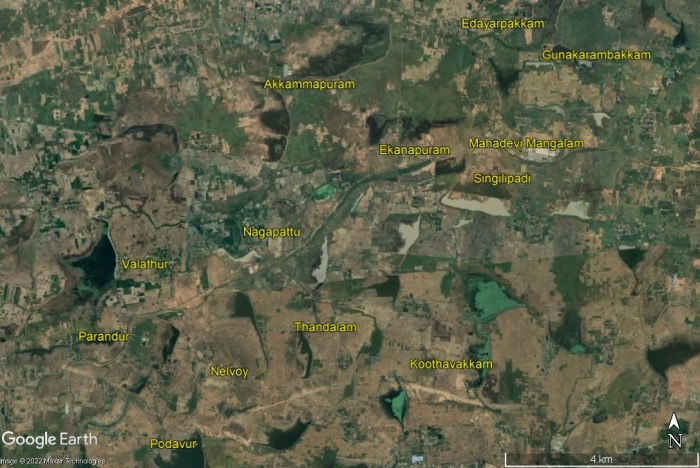
Thousands of farmers and residents have urged the Tamil Nadu state government and Central government of India not to implement a proposed second Chennai airport in Parandur that would destroy their agrarian activities and livelihoods. Parandur is an agricultural area in the Kanchipuram district and the State government plans to acquire land in 12 villages for the airport project. The proposed site in Purandur is approximately 57 kilometres eastwards of the existing Chennai Airport and to the north of the Chennai-Bangalore national highway which is being constructed in stages. Below is a slideshow of a map of the proposed airport site and Google Earth satellite imagery showing several of the villages that might be impacted by land acquisition.
A Times of India article states that the 12 villages from which land for the airport will be acquired are: Parandur, Valathur, Nelvoy, Thandalam, Polavur (Podavur), Madapuram, Ekanapuram, Akkammapuram, Singilipadi, Mahadevi Mangalam, Gunakarambakkam and Edayarpakkam. Other villages to be impacted by land acquisition are listed in other sources referenced in this blogpost, namely Nagapattu, Koothavakkam, Uthyarpakkam and OM Mangalam.
Concerns over acquisition of farmland and environmental issues
On 1st August Union Minister of State for Civil Aviation Vijay Kumar Singh announced that the Parandur site has been finalised after consultation with the Tamil Nadu government. Some Purandar residents demanded suitable replacement land and employment from the government in return for acquiring their land; others said that acquisition of their agricultural land will render them jobless as it is the only work they have known. Some villagers have spoken to media outlets about reluctance to give up their land and uncertainty over provision of compensation:
Ramasamy, from Ekanpuram village, said “A huge tract of our agricultural land would come under this project. We don’t want to lose our agricultural land for this project because farming is our sole source of livelihood.”
Jayakumar, a farmer from Singilipadi, said, “We have been living here for generations. We didn’t know that the airport is coming up here. No one has informed us. If the government suddenly takes away our homes and land, what would we do? Even if they provide compensation, we don’t know what that would be. I am shocked.”
Rajendran, a resident of Thandalam, said, “We are ready to give up land if needed. But we need assurance from the government about good compensation and employment.
Selvaraj from Parandur village said, “We’ve been here in the village for the last 50 years. As per the map released by the government, 5 villages would be destroyed for constructing a new airport. Even if the government gave us compensation for our land, we don’t know what to do for a living, since we know only farming. All of us are shocked by this decision and are planning for a big protest soon. Even last month, the district collector assured us that the airport would not be constructed in Parandur.”
Nachiyappan, a farmer from Koothavakkam, said, ”We are living by farming and if the government acquires our land what will we do for a living? I have small children and want to educate them and am the sole breadwinner for the family. The government will make all sweet talking, but in reality, nothing will happen and we will be the losers. We will protest strongly against this project that will destroy our livelihood as well as the flora and fauna of the area.”
A postgraduate in Economics from Koothavakkam, R. Bindu, said, “Around 800 houses would be demolished in the area and the agrarian economy will be totally destroyed. There are many people in this village who don’t have the patta or the legal rights of the land and they will be totally on the streets.”
Many villagers are employed by the Mahatma Gandhi National Rural Employment Guarantee Scheme (MNREGS) and are concerned that their livelihoods could be destroyed along with the agricultural fields.
An environmental expert pointed out several hydrological problems that might arise from construction of the airport, from decreased recharge of groundwater to deterioration of water quality and possible flooding during the monsoon. The 4,791-acre site is dotted with water bodies and a large proportion, 2,605 acres, is wetlands. A large number of migratory bird species, especially from eastern Europe, visit the site. Some of the birds fly south to Vedanthangal which would pose a bird strike risk to air traffic. Building a stable structure on wetlands would be challenging. Parandur has a lake where migrant birds – tufted ducks, flamingos and common pochards – are frequently spotted.
An airport on a 4,791-acre site, with a huge aerocity
The proposal is for the new airport, with two runways, to have capacity to handle 100 million passengers annually, almost five times higher than the capacity of the existing Chennai Airport, at 22 million passengers per year. Capacity at Chennai Airport is being increased to 35 million in a seven-year expansion project. The runways at the airport in Purandar would be larger than at Chennai Airport, enabling it to handle larger aircraft carrying more than 600 passengers. Tamil Nadu chief minister Muthuvel Karunanidhi Stalin said the initial estimated cost of the proposed airport is Rs20,000 Crore, more than USD2.5 billion. Details of the break-up of this sum, and the funding route, have yet to be made public.
A Times of India article states that ‘The plan is to develop a huge aero city with facilities for maintenance and repairs, aviation ancillary units, and commercial establishments’. Confederation of Indian Industry (CII) Tamil Nadu Chapter chairman Satyakam Arya has pushed for an aerocity around the new airport, which in addition to aviation related facilities could have a convention centre for global conferences and exhibitions. Shankar Vanavarayar, vice-chairman of CII Tamil Nadu, said the state may introduce special schemes and incentives for industries in order to spur industrialization from Chennai towards Parandur.
The proposed site for the Parandur airport, 4,791 acres (1,939 hectares), is certainly large enough to allocate a significant portion of the site for non-aviation facilities. It is larger than the world’s largest airport, Hartsfield Jackson in Atlanta USA, which, with five parallel runways and a site of 1,902 hectares, handled more than 110.5 million passengers in 2019, before traffic reduced worldwide due to the response to Covid-19. In addition to the 4,791-acre site a further 200 acres of land is required for construction of two airstrips, for which the process of surveys and land acquisition is likely to start soon.
Difficulties acquiring thousands of acres for the airport
Land availability has been the main hurdle stalling the second Chennai airport project since it was first mooted, in 1998. Many attempts at large-scale land acquisition failed until authorities zeroed in on Parandur and an article in The Hindu provides a timeline. In November 2000 a ‘futuristic terminal’ was anticipated on a 3,000-acre site likely to be at Porur in west Meenambakkam, north of the existing Chennai Airport. In May 2007 the then Chief Minister of Tamil Nadu, Muthuvel Karunanidhi, said that 4,820 acres would be acquired for the airport in Sriperumbudur. In 2016 the proposed greenfield airport, still planned in the vicinity of Sriperumbudur, was mired in land procurement problems. Union Minister of State for Civil Aviation Jayant Sinha said the thousands of acres required for the new airport were difficult to procure.
In January 2022 the Airports Authority of India (AAI) began to study four potential alternative sites identified by the State government: Pannur, Parandur, Padalam and Thiruporur. Subsequently this list was narrowed down to Pannur and Parandur. On 1st August 2022 Minister of State for Civil Aviation Vijay Kumar Singh said the Tamil Nadu government had shortlisted Parandur as the site for development of a second Chennai airport. The State government will now submit a proposal to the Ministry of Civil Aviation for ‘grant of site clearance’ for the finalised site. The State is also set to begin preparation of a detailed project report. Land acquisition is likely to begin once the State receives approval from the Centre. State government officials have confirmed they will conduct sittings in all affected villages allowing people to express their views to officials.
2010 protest against land acquisition in Sriperumbudur
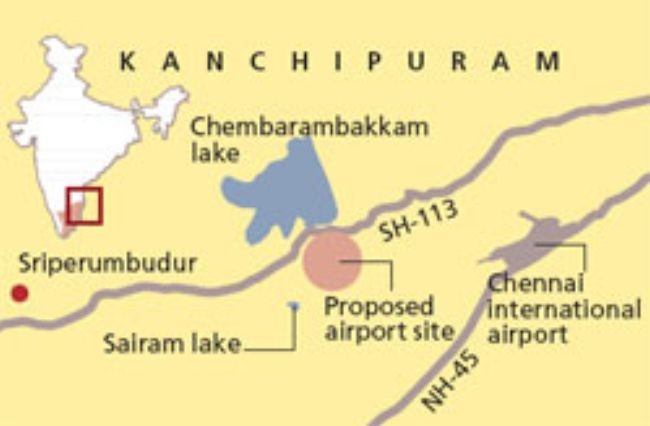
The article with the project timeline in The Hindu does not mention that the 2007 identification of land for the airport in Sriperumbudur triggered mass protest by villagers resisting land acquisition. In 2010 Moverment against SEZs in Tamil Nadu reported that a 6,921-acre (2,800-hectare) site in Sriperumbudur, located eastward of Parandur and just 30 kilometres from Chennai’s existing airport, had been earmarked for a greenfield airport. The proposed land acquisition for the new airport threatened to displace 2,800 families, about 37,000 people, from 20 villages. Village representatives opposed the airport project and were not interested in compensation from the government. They said agriculture was viable in the proposed site where they cultivated rice paddies, mangos, jasmine trees and vegetables. The site also containing 77 lakes, 120 ponds and 10,000 trees which would be felled. Six village panchayats – Thirumanaikuppam, Vadamangalam, Vayalur, Thirupandiyur, Kottaiyur and Kiloy – passed resolutions opposing land acquisition in a gram sabha meeting.
Proposed site for a 2nd Chennai airport in Sriperumbudur, triggering mass protest in August 2010. Image: Down to Earth, 15/09/2010
Villagers drove away officials sent to survey the land on at least three occasions. On 12 August 2010, 3,000 people from 26 villages demonstrated against the project. Police attacked them with a lathi (baton) charge. Villagers who went to meet the District Officer and attempted to present a petition were beaten and around 20 of them had to be admitted to hospital. A jet fuel pipeline to Chennai Airport, routed through Sriperumbudur, seemingly hardwired the area for development of a new airport. Inaugurating the fuel pipeline in 2009 Praful Patel, Minister of State for Civil Aviation from 2004 to 2011, said, “This (pipeline) also passes through Sriperumbudur where another airport is planned. Once it comes up, the pipeline will be extremely useful.”






 antiaero.org