A major aerotropolis has been approved in Bulacan, Manila Bay, the Philippines. The project area spans 2,500 hectares with the airport covering 1,168 hectares and an adjoining airport city. Land reclamation would destroy marine ecosystems and the megaproject threatens the livelihoods of more than 20,000 fisherfolk. Pamalakaya, the national progressive fisherfolk group, vows to oppose the aerotropolis and other infrastructure projects under President Duterte’s Build, Build, Build (BBB) program.
Fisherfolk says no to Bulacan international airport
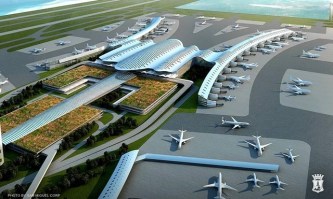
Proposed airport in Bulacan | Photo by San Miguel Corp.
Manila, Philippines – The national fisherfolk alliance Pambansang Lakas ng Kilusang Mamamalakaya ng Pilipinas (PAMALAKAYA-Pilipinas) opposes the international airport project in Bulacan that has been approved by the National Economic and Development Authority (NEDA).
With NEDA’s approval, Ramong Ang’s San Miguel Corporation (SMC) is set to build, operate, and maintain the P700-billion international “aerotropolis” which involves an airport covering 1,168 hectares and a city complex to be built at a 2,500-hectare area along Manila Bay in Bulacan, Bulacan.
For its part, PAMALAKAYA Chairperson and former Anakpawis Partylist solon Fernando Hicap said the project will lead to environmental disaster in Manila Bay threatening the livelihood of more than 20,000 fisherfolk in the municipality of Bulacan, Bulacan and other neighboring towns.
“This project will not only destroy marine ecosystem, but also the livelihood of…
A plan for a new airport, one of the largest in the world on a 2,600 hectare site in the Kandal District of Cambodia, with an accompanying ‘Airport City’, has reignited one of the country’s fiercest land disputes.
In January the Cambodian government approved a plan for a new airport, one of the largest in the world by land area, on farmland in the Kandal Province, about 30 kilometres south of Phnom Penh. Construction of the new airport is anticipated to commence in 2019 and a 21st December 2017 document from the Council of Ministers approved an investment proposal from Cambodia Airport Investment, a joint venture between the State Secretariat of Aviation (SSCA) and Overseas Cambodia Investment Corporation (OCIC). OCIC is a private firm, one of the largest finance, infrastructure and real estate companies in Cambodia, owned by tycoon Pung Khiev Se, with a track record of financing major development projects.
The land area earmarked for the airport project, 2,600 hectares, is more than six times larger than the existing Phnom Penh Airport’s 400 hectares and considerably larger than Beijing Capital Airport, the world’s second busiest passenger airport, with a 1,480 hectare site and handling over 94 million passengers in 2016. Predominantly low-lying agricultural land, the proposed site is on the northwestern shore of a large lake, Boueng Cheung Loung. Preparing the lakeside area of the proposed site for airport construction would require land reclamation and it is thought that there is some overlap with the lake itself.
A map produced by GAAM shows the proposed airport site, based on a modified satellite image published in the Phnom Penh Post. The authors of the article were not certain whether the proposed airport site is state-owned or part of OCIC’s vast land bank. The rectangular area outlined in orange, measuring 1,000 hectares, appears to be allocated for the airport. The adjoining rectangular area, outlined in yellow, measuring approximately 1,800 hectares, appears to be earmarked for development of an ‘Airport City’, described by SSCA spokesman Sinn Chanserey Vutha as a mixed-use development including a commercial centre and residential housing. Chanserey Vutha explained that investors will not be able to generate a profit from the airport itself, so the land for the Airport City is being offered to investors for generating profits from commercial centres and other amenities.
Land rights protests as villagers fear eviction
Announcement of the new airport and associated development sent land prices soaring upwards and within days land for sale signs were hastily erected. Rice fields and lakeside properties in the area that had been valued at between US$20,000 – 50,000 per hectare before announcement of the new airport began selling for as much as US$100,000 or even US$200,000 per hectare. Kandal District villagers were shocked by sudden news of the airport project, along with publication of maps appearing to show the new airport and a massive multi-use development on land they have resided on and near for more than two decades. Their land ownership is disputed by a local ‘oknha’ or tycoon, Seang Chanheng, who has long laid claim to it. A government-aligned media outlet, Fresh News, released documents purporting to show that the land had belonged to Seang Chenheng all along, but even provincial authorities profess uncertainty regarding rights to the land. Regardless of this uncertainty, a large area of disputed land was recently purchased for the airport project, by OCIC in partnership with the SSCA.
Several communes in the Kandal Stung district are wracked by long-running land disputes; the airport project has raked up old tensions and new potential conflicts are looming. Already, there are indications that the authorities are siding with Chanheng’s company and criminalizing protest by villagers residing near the land earmarked for the new development. At the beginning of February over 100 villagers blocked bulldozers from digging a dam on disputed land adjacent to the proposed airport site. Subsequently, Kandal Military Police summoned six villagers to appear for questioning after Chanheng accused them of “incitement” and obstructing her machinery. Oeung Sary, one of the villagers called in for questioning, was undeterred by the order, saying “We will go to meet with the Military Police whether they arrest us or not, because we are fighting for our land…We have no guns or power to fight them with. If they want to jail us, let them jail us.”
On 19th February affected villagers staged a major protest. Over 200 people from four communes gathered at Kandal Provincial Hall to voice their complaints regarding land earmarked for the new airport and seek resolution of the dispute with Seang Chanheng. Oeung Sary remained defiant and determined to stay on the land. Refusing to appear before the military police she said “We will not go to answer. If they want to arrest us, let it be” and accused the government of “bias” in favour of Chanheng’s company. Another villager, Sorn An, said she was one of several villagers who had sold land, in her case belonging to her grandmother, to Chanheng’s company but been underpaid, selling it for $250 per hectare but receiving a fraction this amount, just $25 or $50. She said they had been intimidated during negotiation over the land, that representatives of the company had slammed the table in front of them, threatened them, locked the door and called the police.
Reigniting one of Cambodia’s fiercest land disputes
One of the fiercest and lengthiest land disputes in Cambodia has been reignited by the new airport project. Nearly 300 families living in three villages in the Kandal District, still bearing their Pol Pot era names of Point 92, Point 93 and Point 94, have resided in the area for more than twenty years. Before the residents settled upon it the land was uncultivated. Their ownership of it appears to be legitimate on the basis of a 2001 law that people living peacefully on uncontested land for five years can lay claim to it.
But in 2005 Chenheng’s men began bulldozing the land in order to claim ownership of it. The villagers achieved a rare legal victory in 2006-7 when the Kandal Provincial Court upheld their claim to the land. Some families were issued with temporary land titles, but the official land titles that they were assured of were not issued. Chanheng’s company began clearing the land again in 2009, bulldozing villagers’ farms and a much loved local temple. Company security guards and Military Police fired on villagers who came to protest, wounding three of them. Prime Minister Hun Sen did not respond to a protest outside his house. In 2010 ten villagers attempting to block bulldozers from destroying their ripening rice crops were arrested and charged with land grabbing and incitement in connection with the protests, a move decried as harassment by human rights organizations.
Suddenly, in 2014, the Supreme Court ruled that the disputed land belongs to Min You Cultural Foundation, a company which appeared to be unregistered with no trace of it to be found in Ministry of Commerce records. The Court made this ruling even though it acknowledged “many irregularities” in the sale of the land to this company. Villagers had not heard of the company or the court case or the hearing and were not even called to testify at the hearing.
As land disputes erupt again in the wake of the planned new airport, with villagers fearing they will be stripped of their land and evicted, human rights groups argue that development on the land should cease until land disputes are resolved. Vann Sopathi, business and human rights coordinator for the Cambodian Center for Human Rights, said that government and developers should conduct a social and environmental impact assessment of the airport project, and that it should not be permitted to proceed until a mutually acceptable solution is agreed between the company and the affected people.
Villagers are not the only people embroiled in land disputes relating to the new airport; several high-ranking officials own land in the Kandork commune which overlaps with the northernmost portion of the proposed site and a group of them complained of encroachment by an un-named Chinese company. Villagers were hired to guard their plots and one woman said she had climbed onto a bulldozer to prevent men digging her employer’s land.
Cambodia is beset with a multitude of land disputes due to ambiguities over, and haphazard implementation of, land rights laws. The dispute over the land that is now announced as the site for a new airport is a typical example of tensions between elites with legal claims and villagers who have lived on the land for long periods and whose informal claims are backed by local authorities. Such land disputes are usually settled in favour of people with power and money, as they have the necessary influence and social connections to produce the requisite documentation.
Airport project financing
The projected cost of the new airport is $1.5 billion. Of this sum, OCIC will invest US$280 million and US$120 million will come from public funds, but the bulk of the funding, $1.1 billion, will come from “foreign banks” that at the time of the announcement remained unspecified. But it is clear that at least a significant proportion of the foreign investment will be from China. OCIC signed a “co-operation framework agreement” for the new airport with the state-run China Development Bank. Chinese financing of the new airport is one of 19 agreements to develop Cambodia’s infrastructure, agriculture and health system, signed on 11th January during a visit by Premier Li Keqiang. The deals were signed by various representatives of the Cambodian and Chinese governments in a ceremony lasting less than 10 minutes. Officials did not ask any questions and few details were given about the agreements, even though they are likely to impact heavily on Cambodia’s future development.
At this juncture it is unclear whether the new airport is intended supplement or replace the established Phnom Penh Airport. SSCA spokesman Chanserey Vutha declined to comment on whether the existing airport will be dismantled once the new airport becomes operational. Closing down the existing airport would render the considerable amount of investment in the facility in recent years wasteful and short-sighted. A US$100 million expansion of Phnom Penh and Siem Reap airports commenced in 2014, extending the passenger terminals and parking lots and enlarging the commercial space with more shops and food and beverage outlets. In December 2017, as plans for the new airport were announced, a new US$26 million arrivals hall was inaugurated at Phnom Penh Airport, incorporating extension of the boarding concourse.
China has also confirmed financing for a new airport in Siem Reap, a resort town most renowned for Cambodia’s most famous tourist attraction, the Angkor Wat temple complex. The new airport is to be constructed on a 700 hectare site in the Sotr Nikom district 50 kilometres outside Siem Reap city. Groundbreaking, marking the beginning of construction of the new airport, is imminent. The US$880 million agreement with China’s Yunnan Investment Holding Ltd (YIHL) allowing the state-owned company to manage the new Siem Reap airport under a 55-year build-operate-transfer (BOT) concession was actually announced in August 2017, with YIHL reportedly having already commenced land clearance. Double the capacity of the existing Siem Reap Airport the new airport will be able to handle 10 million passengers per year.
Road projects
Number 13 in the list of 19 China-Cambodia development deals is an expressway linking two hotspots for Chinese investment: Sihanoukville and the existing Phnom Penh Airport. Sihanoukville, a resort city on the Gulf of Thailand, is a major destination for Chinese property investment, construction boom in recent years, hotels, casinos and thousands of apartments. China has also invested heavily in Sihanoukville Special Economic Zone, promoted as Cambodian equivalent of the Shenzhen tech hub, with about 100 Chinese firms already operational.
The Sen Sok district surrounding Phnom Penh Airport is also a magnet for Chinese residential development and investment. The 190 kilometre highway, 4 lanes wide for most of its length, is expected to cost nearly US$2 billion. It could lead to evictions. Ministry of Public Works and Transport spokesman, Va Sim Sorya, said that the expressway would likely infringe upon people’s homes and land, but that it would be the responsibility of China’s state-owned China Communication Construction Co. to provide fair compensation for affected people, with the assistance of the ministry.
The planned new Phnom Penh airport appears to be linked with another road project. An article on the Construction & Property website, which includes a map of the new airport site and a video of the joint Cambodia and China signing ceremony, shows Ringroad Number 3 running through the north of the site. The Cambodian government is building three ring roads around the outskirts of Phnom Penh; construction of the third outer ring road, part of an expressway development masterplan US$9 billion expenditure on 850 kilometres of roads by 2020, is expected to commence in 2018.
Evictions for OCIC ‘satellite city’
By land area, the airport and ‘Airport City’ project is an even bigger project for OCIC than its 387 hectare, Chroy Changvar satellite city. The airport project’s US$1.5 billion budget is comparable with US$1.6 billion for Chroy Changvar, which is now under construction and the largest property development in Phnom Penh. A protracted land dispute with residents from six communities, living on and depending upon the land for years, dates back to 1994 when the government banned construction of homes on the land, designating it for development two years later. In 1998 Prime Minister Hun Sen reassured landowners who had lived on the site for a minimum of five years that they would not be evicted, reiterating this in a 2002 speech. A number of residences were duly excluded from the project site. But 200 families were not so fortunate, in spite of being in possession of official documentation proving their land ownership, and in 2016 were informed they would have to accept the compensation offer.
In February 2016 100 people representing 359 affected families facing eviction for Chroy Changvar petitioned Phnom Penh City Hall in a bid to resolve the land dispute with OCIC. They urged the government to halt alleged housing rights violations, calling either for higher compensation of US$400 per square metre as opposed to OCIC’s offer of just US$15, or to be given back half of their land, not merely 10 per cent of it as was proposed. In April 2016, in spite of the ongoing land dispute, OCIC, protected by 50 security guards, resumed bulldozing to make way for a new road and drainage system to serve the planned city, in spite of two families laying claim to the land being cleared and one resident stating that she had not been compensated. High security echoed 2014 when security guards stopped an attempt by 40 villagers to stop machinery pumping sand onto wetlands, causing water to rush back into the river, destabilizing their homes and putting them at risk of flooding. Protest continued into 2017, in February 40 villagers gathered to demand compensation for land taken for the new city.
Cambodia’s crackdown on democracy and human rights
China is, by far, Cambodia’s biggest trading partner and and its biggest source of foreign aid, investment and tourists. Backing from China has bolstered the Hun Sen government, the world’s longest serving Prime Minister, since 1985, and its investment increases in the face of a crackdown on democracy, freedom of expression and human rights. Cambodia is regressing to its authoritarian past as a political crackdown silences opposition figures, civil society groups and independent media. Critics are slammed with accusations of treason, defamation, collusion with foreign governments and being a threat to national security. Democracy is in a death spiral. The Cambodia National Rescue Party (CNRP) has been dissolved, its leader Kem Sokha is in jail awaiting trial on charges of ‘treason’ and 118 senior party members have been banned from political activity for five years. CNRP is the only real opposition party, so Hun Sen’s Cambodian People’s Party (CCP) will effectively run unchallenged in the upcoming national elections in July. Human Rights Watch warned of the “death of democracy”.
In November 2017 two former Radio Free Asia (RFA) journalists were charged with espionage; still in custody, they could face a 15 year jail sentence if found guilty. They were arrested on the basis of a vaguely worded provision in the penal code criminalizing passing information to a foreign state that could damage national security. Their defence lawyer says the charges against them are baseless and a petition for their release is currently before the Supreme Court. Under the same provision, an Australian film-maker was jailed for flying a drone at an opposition rally. Two former Cambodia Daily reporters were charged with incitement after asking questions during the lead-up to the June 2017 local elections. Both RFA and Cambodia Daily closed down their Cambodia newsrooms after being suddenly issued with enormous tax bills, US$6.3 million with one month to pay in the case of Cambodia Daily, a 24-year old independent newspaper which published its final edition with the damning headline “Descent Into Outright Dictatorship”. A representative of the Committee to Protect Journalists said that the Cambodian government’s arrests and threats against journalists are a “clear and present danger to press freedom”.
The tightening grip of repression is also restricting activists. Amnesty International called for convictions against two environmental activists who filmed large vessels off Cambodia’s coast suspected of illegally carrying sand for export. Hun Vannak and Doem Kundy, from the NGO Mother Nature, were sentenced to one year in prison plus fines for this exposé aiming to galvanize action to curb the illicit trade on 26th January 2018. Foreign NGOs have been targeted, for example staff of US-based National Democratic Institute were ordered to leave the country, accused of receiving assistance from foreign governments.
As the Cambodian government persecutes citizens and NGOs for collaboration with foreign governments it is bending over backwards to enable China to increase its economic and geopolitical influence. As the 19 agreements for billions of dollars worth of Chinese investment in Cambodia’s infrastructure, including the new airport, were signed Cambodia pledged its support for China’s international goals. Specifically, Cambodia agreed to support China’s claims to disputed territory in the South China Sea, where jurisdictional disputes and construction of ports, military installations and airstrips are straining its relationships with several countries in Southeast Asia. China also gains increased access to Cambodian resources, such as oil, gas and timber, and can take advantage of low tax rates and cheap labour. Critics argue that Cambodia is selling itself short and will pay a price for China’s financial support, warning of ending up in its giant ally’s pocket and already losing its voice on regional issues.
A new report ‘Solidarity Calls for Kulon Progo Farmers against Airport and Airport City‘ about farmers’ resistance against eviction for New Yogyakarta International Airport (NYIA) gives many insights into one of Indonesia’s key land rights struggles. Opposition to the airport dates back to 2011. The site, on the south coast of Java, comprises six villages which, before eviction commenced, hosted 11,501 residents. Farmers worked for many generations to increase the fertility of the land, establishing successful farms and thriving communities. Eviction from farmland means many thousands of agricultural labourers also lose their livelihoods and excavation of coastal areas has destroyed fishing farmers’ ponds.
The megaproject was approved without the requisite Environmental Impact Assessment (EIA) even though there are serious ecological concerns, including the destruction of sand dunes which act as a bulwark protecting from coastal erosion and tsunamis and prevention salinization of groundwater. The report includes a map of the tsunami hazard area. Cultural heritage, such as the Glagah Stupa historical Buddhist site and Mount Lanang prayer monument, is also being obliterated.
The report is filled with striking photographs showing the progress of the airport and the resistance: bulldozers at work clearing land for the airport and the devastation that is left behind, evictions and protest actions including roadside banners, marches, blocking bulldozers, a road block and a hunger strike. Infographics show the projected development of NYIA not just as airport infrastructure but as an airport city, the affected areas of construction and inhabitants, and the food crops (approximately 450 tonnes annually per hectare including melons, eggplant and chilies) and livelihoods being displaced by the airport.
The airport project has divided the community. Many citizens have refused to sell their land for the airport, whilst some are willing to sell their land for compensation. Supporters of the airport worked to widen the social, economic and political rifts, facilitating the project. Resistance to land acquisition has met with state intimidation, repression and criminalization. Four farmers were imprisoned for four months. The report contains a chronology of violence against local residents resisting eviction and their supporters. Most recently, beginning on 28th November 2017, as another phase of eviction took place, police blocked road access to a group of residents’ homes, cut off their electricity supply, destroyed plants in their gardens and intimidated them. Police attacked a woman causing bruising on her neck and a number of citizens supporting the residents experienced violence at the hands of police, one person suffered a head injury and another suffered injuries from being dragged along the road.
An ‘airport city’ or aerotropolis – comprising shopping malls, offices, hotels, golf resort, tourism village, leisure town, industrial park and residential areas – is planned around the new airport, increasing the land area to 2,000 hectares and potentially leading to eviction of even more citizens. A new solidarity organization Paguyuban Warga Penolak Penggusuran Kulon Progo (PWPP-KP), has been formed to oppose the airport and airport city, allied with an organization of neighbouring farmers resisting sand mining, and supported by many citizens and environmental groups, including Jogja Darurat Agraria.
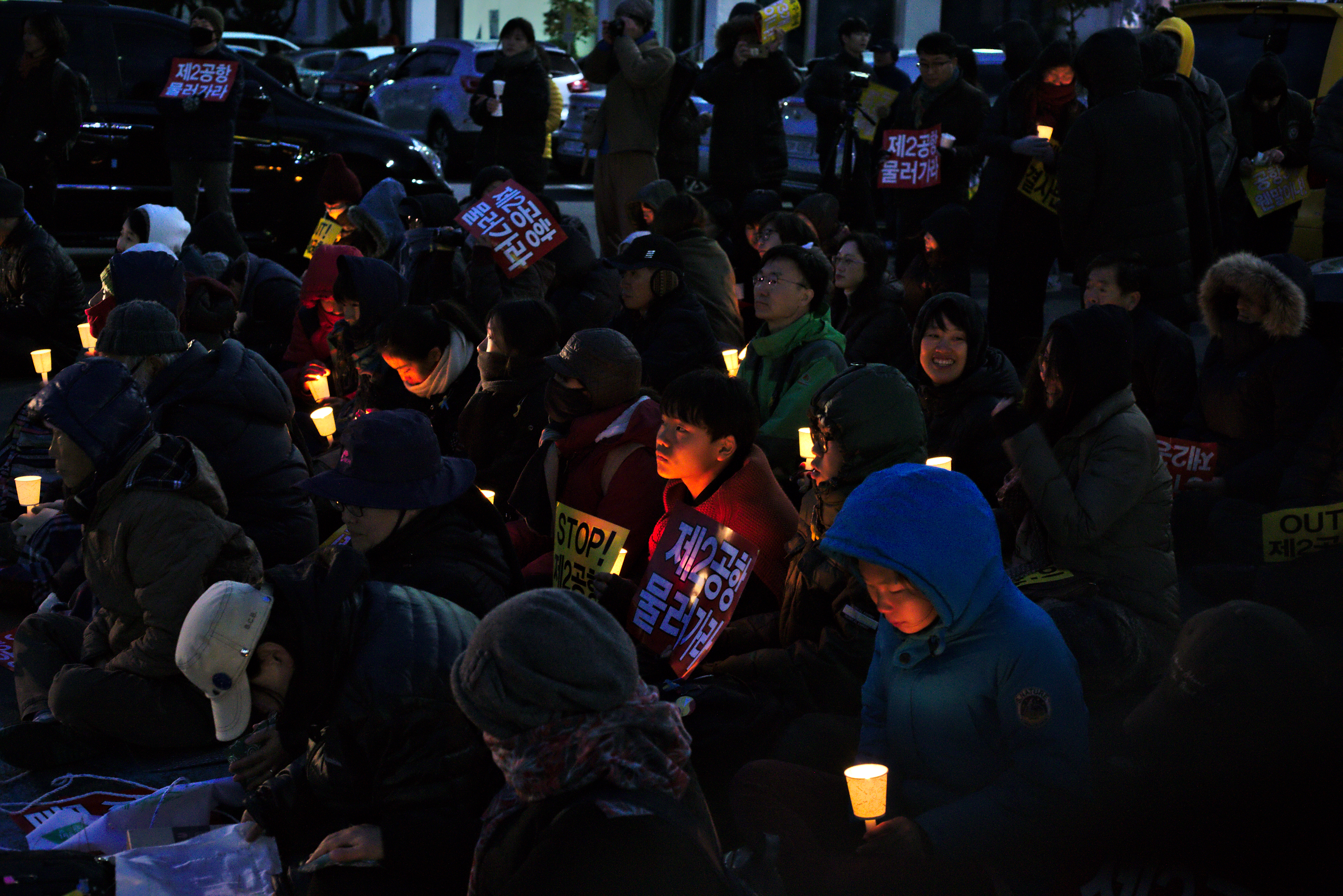
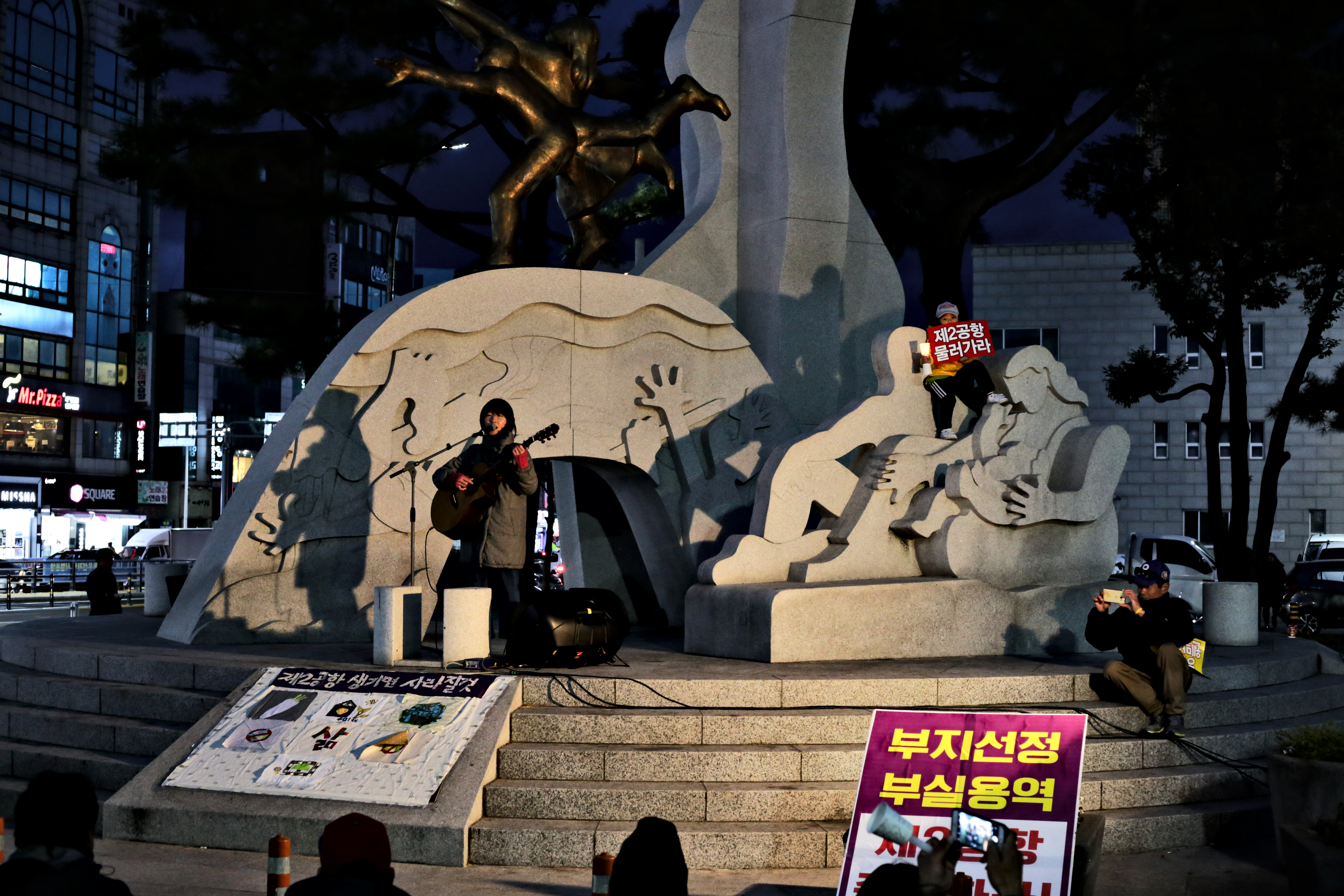
Youth and other activists from some twenty civic groups have joined five villages in their struggle against a planned ‘aerotropolis’ on Jeju Island, South Korea.
Still waiting for a statement from the national government’s Ministry of Land and Transportation, residents of South Korea’s largest island continue their fight against the proposed second airport project. The project would push hundreds of locals off of their land and have the more drastic effect of radically transforming the island, environmentally and socio-economically.
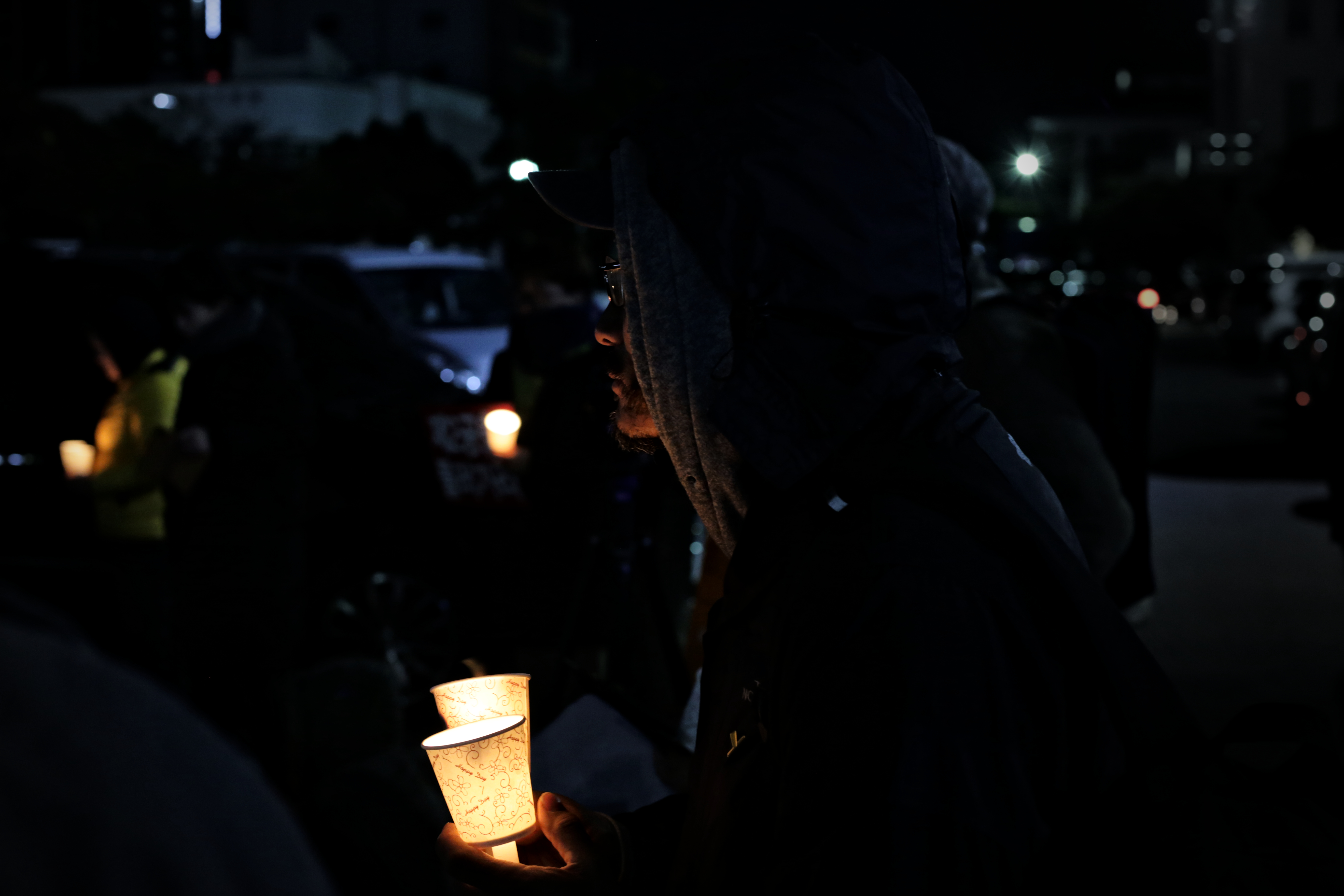
A number of candlelight vigils and other actions are ongoing. Saturday’s vigil marked the fortieth day of Kim Young-bae’s hunger strike. Kim is the vice-chair of the 2nd airport opposition committee.
The Polish government has approved a plan for a mega-airport and ‘airport city’ on a 3,000 hectare site. An area of farmland has been identified as a suitable location for the project.
On 7th November, the second day of the UN Climate Change Conference (COP23) in Bonn, the Polish government approved a plan to build a new mega-airport, called Poland Central Airport or New Central Polish Airport, handling as many as 100 million passengers per year. The project would result in a a major increase in Poland’s greenhouse gas emissions. Poland, host of the next climate summit, COP24, in December 2018, is already widely regarded as a climate renegade for its continued investment in coal plants, and had the dubious honour of being awarded Fossil of the Day award in Bonn, for its relentless efforts to siphon European Union (EU) funds for clean energy into subsidizing its ageing coal plants. Announcement of a major airport project makes a further mockery of the country’s commitments to address climate change.
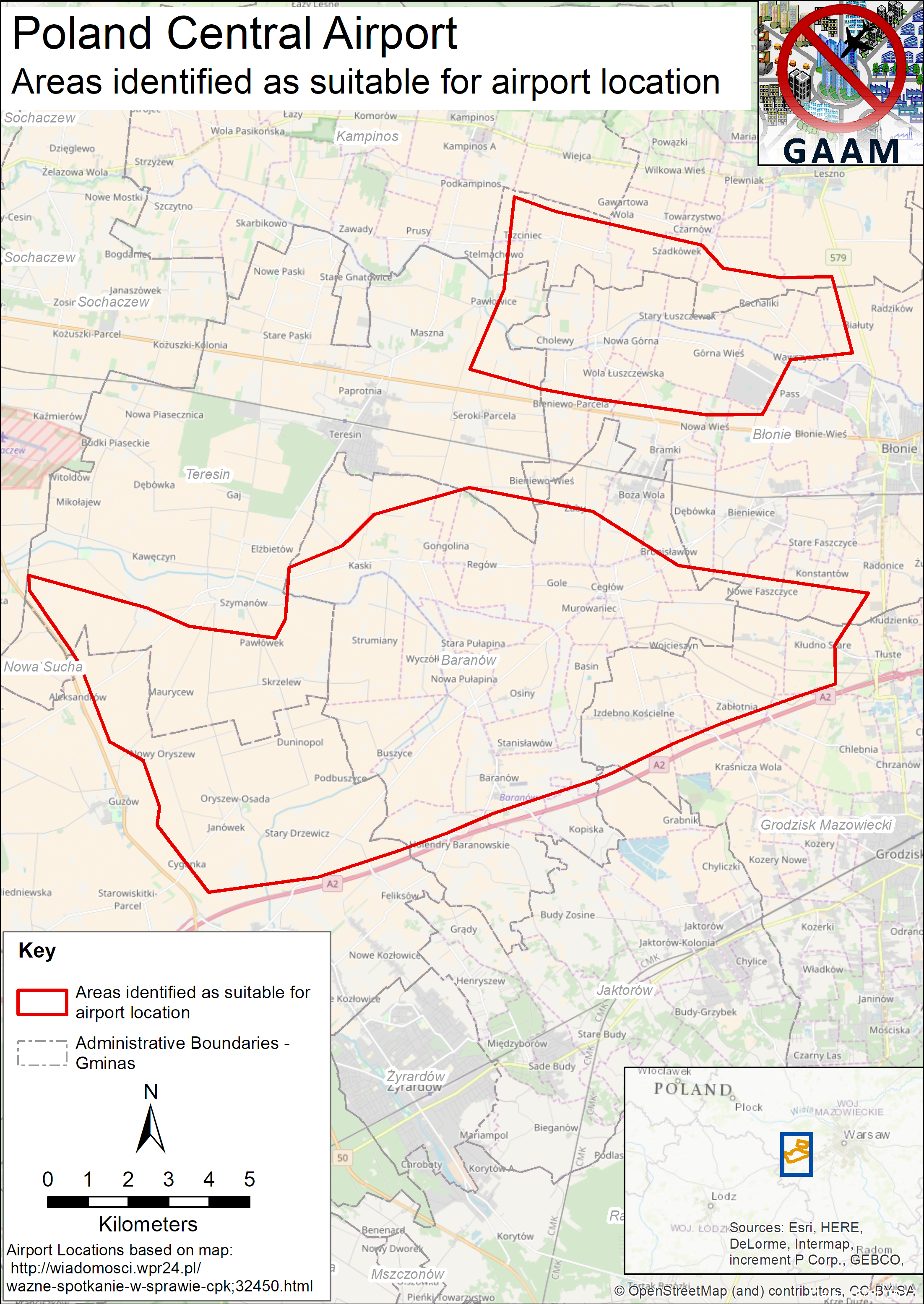
The proposed airport site is in Baranów, a rural gmina (administrative district) 40 kilometres to the west of Warsaw, Poland’s capital city. The map below, commissioned by Polski Fundusz Rozwoju (PFR) in 2008 and included in an article published on 8th October 2017, about a meeting on the airport between representatives of the government and Baranów municipality, shows two areas identified as suitable for the airport project: a 3,421 hectare area to the north of the map and a larger 11,338 hectare area to the south. Another variant of this map was included in a 100 page document discussed at the government meeting which adopted the airport plan, Poland’s biggest infrastructure project in recent years, on 7th November. At this meeting it was confirmed that the planned location of the airport is the Stanisławów village area, near the southern boundary of the area identified as suitable for the project.
Map commissioned by PFR showing areas suitable for Poland Central Airport
A map produced by GAAM shows the villages within the boundaries of the two areas identified as suitable for the airport project and the existing road and rail links.
A satellite image of the Stanisławów village area, confirmed as the planned location for the new central airport, shows the villages and small parcels of cultivated land that characterize the wider area.
A mega-airport, multi-modal transportation hub and an aerotropolis
The schedule for the new airport is for preparatory works to be complete by the end of 2019, then for construction to be complete and operations to commence by mid-2027. A mega-airport is planned, one of the largest in the world with four runways, initially serving 45 million passengers per year, rising to 100 million, a passenger throughput as high as the world’s busiest airports, almost as high as Atlanta in the US and higher than the current traffic levels at Dubai Airport and Beijing Capital Airport. A multi-modal transportation hub is planned, integrating the new mega-airport with existing and new road and rail infrastructure. Plans for the airport include a rail station and the project is also referred to as Centralny Port Komunikacyjny (CPK), which translates as Central Communication Port. The proposed airport site is between Warsaw and Łódź, Poland’s third largest city, and a high-speed rail line connecting the two cities is planned. The A2 motorway running between Poland’s western and eastern borders is immediately south of the proposed site. Immediately north of the airport site is the rail line between Berlin and Moscow, via Warsaw, providing a high-speed service that commenced operations in December 2016.
The 3,000 hectare land area for the new airport is far larger than would be required even if the number of passengers meets the projection of 100 million per annum. A 3,000 hectare site is more than 50 per cent larger than the world’s busiest airport, Atlanta in the US which handles 104 million passengers per year. Atlanta Airport’s site covers 1,900 hectares and encompasses substantial commercial development including more than 200 concession outlets such as retail, food and beverages. The oversized proposed land area for Poland Central Airport could be linked to plans for an ‘airport city‘ or aerotropolis. A 1,200 hectare new city is envisaged, with hotels and showrooms. Under the government resolution outlining plans for the new airport legal and infrastructural changes to Baranów would allow for construction of business parks, conference centres, an exhibition centre and office complexes.
A government financed megaproject
The budget for the airport project, combined with the road and rail infrastructure, is estimated at between €7 – 8 billion. Polish citizens will bear the brunt of the enormous cost of the project; the main investor is the government. The 7th November 2017 resolution announcing construction of the airport approved the financing structure as well as the location. An article in the second 2017 edition of Airport Development News, an industry newsletter published by Airports Council International, stated that two state-owned financial institutions, Polish Development Fund (Polski Fundusz Rozwoju – PFR) and Bank Gospodarstwa Krajowego (BGK), Poland’s national development bank, would be ‘heavily involved’ in financing the project.
Possibilities for European funding have been considered. The Airport Development News article states that between 75 and 80 per cent of airport construction will be financed by international institutions such as the EIB (European Investment Bank) and EBRD (European Bank for Reconstruction and Development). Such investment by the EIB and EBRD is doubtful as state aid rules preclude allocation of EU funds for construction of the airport. But a June 2017 article published by legal analyst firm Lexology stated that EU funds could be tapped for the road and rail elements of the project. The total cost of the rail infrastructure elements of the megaproject complex is estimated to be between €1.89 billion and €2.1 billion, the total cost of roads and highways between €424,000 and €1.6 billion.
Uncertainty over accessing EU funds has led to attempts to secure financing from Chinese sources. The airport was one of the vast transportation and energy infrastructure projects discussed at the May 2017 Summit of the Belt and Road in China, where the President of China repeated assurances about new credit lines by China Development Bank and China Exim Bank, and one of the outcomes was signing of a contract between Polish and Chinese state railways on facilitating container transport. The Asian Infrastructure Investment Bank (AIIB), a multilateral financial institution supporting construction of infrastructure in the Asia-Pacific region, is reported to have expressed an interest in co-financing the Poland Central Airport project, if it is in line with the bank’s policy of promoting ‘interconnectivity’ between continents, which would mean that the airport would have to promote passenger traffic with Asia. Potential benefits to Chinese exporters from the airport are evident. The project would support the Polish government’s intention to establish the country as a port of entry for Chinese goods into the EU single market.
Industry experts doubt feasibility of the new airport
Some industry experts are critical of the new airport, doubtful that a new global hub could compete with established European hub airports such as Schiphol and Frankfurt and saying that it would struggle to meet its traffic projections and fail to make a profit. And adoption of Poland Central Airport as a government priority reverses many years of sloughing huge sums of public money into several new small regional airports. A major new hub airport would compete with these regional airports, many of which are already struggling with low passenger levels and unprofitable. Some industry experts warn that opening a new hub airport would be likely to lead to the closure of several existing Polish airports.
Expenditure on a new airport that results in closure of established regional airports would be an astonishing waste of public funds. Between 2007 and 2015 Poland sank at least US$1.58 billion into building and expanding 14 regional airports, with 40 per cent of this funding coming from the European Union (EU). This was highlighted in a report Flights of fancy: A case study on aviation and EU funds in Poland published in 2012 by CEE Bankwatch Network which critiqued the development and operation of small regional airports which were not financially viable, placing a strain on regional and local government budgets, along with allocation of EU funds for rail connections to airports, arguing it should be redirected to serving mobility needs within regions.
Aviation industry consultancy CAPA (Centre for Aviation) reports that Poland Central Airport would replace Warsaw Chopin Airport, the city’s main airport located south of the city with limited room for expansion. Bloomberg also reports that, under the government plan for the new airport, Warsaw Chopin Airport would eventually be shut down. Closing Warsaw Chopin Airport would be a woeful example of enormous waste of public funds and short-sighted planning. A major, multi-million Euro programme of upgrades to Warsaw Chopin Airport, increasing its capacity to 10.4 million passengers per annum, was completed less than a year ago, in December 2016. The terminal was modernized including installation of new check-in desks and an observation deck, a new long-range fuel pipeline constructed and the runways, taxiways and apron have been upgraded. The airport upgrade programme cost €166,760,000 with the EU Cohesion Fund contributing €32,900,000.
Rafal Milczarski, CEO of Poland’s state-owned carrier, LOT Polish Airlines, has said that Warsaw Chopin Airport should be closed down and the land sold to real estate developers to help finance the new airport. This would certainly benefit LOT, a leading proponent of the central airport. Indeed, supporting growth of the national airline is part of the rationale for the project. But the role of LOT in the new airport is a factor in skepticism regarding its viability. LOT is a relatively small carrier with fewer than ten wide-bodied aircraft. A high level of investment would be required for LOT to become one of Central Europe’s main carriers, one of the goals of the the airport project. Critics are of the opinion that the LOT lacks the scale and financial capacity necessary for commercial viability of the new airport project. LOT Polish Airlines also has a history of government intervention to support ailing finances. The carrier was a direct beneficiary of state funds in 2012-2014 when it was rescued from bankruptcy with a €200 million state bailout.
There are serious doubts over the viability of the Poland Central Airport project. The only certainties are vast public expenditure on infrastructure and loss of a large area of farmland.
This means the villages have effectively bought time for a land and environmental impact assessment. Existing evaluations came under heavy criticism from many, including the some 15 environmental groups who joined the villagers’ action.
Initial studies were carried out unbeknownst to village leaders. At no point before official declaration of the new airport project were residents consulted. Most residents found out about the project when it was announced in local newspapers. ‘Aerotropolis’ projects are notorious around the globe for corruption and often get slated for areas where residents can mount little effective resistance.
Residents of five villages threatened with the loss of their homes for a second airport on Jeju island have set up a protest camp and their resistance is garnering support from many organizations.
Plans for a second airport in Jeju, an egg-shaped island off the south coast of South Korea, have met with vigorous and sustained resistance since the sudden announcement of the project two years ago, in November 2015. The proposed site is in Seongsan on the east coast of the island and residents of the five villages that would be affected, losing their homes and farmland – Susan-ri, Sinsan-ri, Nansan-ri, Goseong-ri and Onpyeong-ri – were not even consulted. Resistance has intensified in recent weeks and on 10th October a group of residents and representatives of civic groups opposing the new airport assembled a protest tent outside the Jeju island government hall and began a sit-in. The vice-chair of Seongsan people’s committee against the 2nd Jeju airport project, Kim Kyung-bae, began an indefinite hunger strike and fellow protesters began relay fasting to show their support.
Campaign against 2nd airport press conference outside Jeju Provincial Office launching the protest camp on 10th October 2017. Photo: 연합뉴스
The Jeju Provincial Government threatened to remove the protest tent, delivering a warning letter to the organizations protesting Jeju’s second airport, which stated that, if the protest tent was not removed by 17th October the government would forcefully dismantle it and claiming that the protesters are “illegally occupying the roads and causing traffic problems”. Protesters countered that their protest tent is located far enough from the road to avoid causing inconvenience to vehicles or pedestrians, as can be seen in the photo below.
Airport opponents only resorted to this sit-in protest because the Jeju Provincial Government refuses to communicate with them and the resistance camp remains, demonstrating protesters’ determination to maintain a visible presence, make their voice heard, and prevent imposition of the project. The photo below was taken on 21st October, marking the 12th day of the anti-airport sit-in and hunger strike. At the time of writing the protest continues on its 14th day, as does the succession of visitors finding out about the campaign and showing their support.
#강정 제주 성산 제2공항 백지화를 위한 12일째 단식! 단식을 하시는 김경배 대책 부위원장, 얼굴이 창백합니다. 성산의 어른들이 방문, 걱정합니다. 이제 부터 걱정됩니다. pic.twitter.com/8LcghiPMI1
Airport plans are being pushed forward without involving the people who would be most seriously affected, the villagers facing the threat of eviction from their homes and loss of agricultural livelihoods. The protest camp builds on a series of small victories, recent actions which have successfully stalled the airport project, blocking a land survey and environmental impact assessment. More recently, on 18th September 2017, demonstrators brought a briefing session on the 2nd Jeju airport to a halt. The briefing session was organized without consulting residents of Seongsan where the airport would be built and held far away in the city of Seogwipo, a distance of about 60 kilometers. More than 70 people, residents from the affected villages and representatives of civic groups, staged a protest, challenging the procedural legitimacy of the briefing session, criticizing it as merely a tool for advertising the project and demanding a complete reassessment of the airport plans. The video below shows protesters gathering outside the meeting with a display of banners, then attempting to take the stage to make their voices heard, only to be blocked by a large number of officials.
Two years of resistance against a second Jeju airport
Over the two years since the second airport plan was announced there has been a series protests and rallies, with the participation of hundreds of people. Most of the site earmarked for the proposed airport, about 70 per cent, is a farming area so the project threatens agricultural livelihoods and food production. If the airport is built over 75 per cent of villagers of Seongsan would lose their homes and other villages would also be severely impacted. Anti-airport actions have drawn on shamanic traditions, channelling a multitude of spiritual energies such as the three founding fathers of the island and Youngdeung, the goddess of the wind and sea. Two years of resistance have seen houses sporting posters in their windows and streets bedecked with red and yellow flags and banners extending as far as 20 kilometers along the roads leading to affected villages.
This slideshow requires JavaScript.
Scores of villagers face being forced to leave their homes and farmland, sustaining their battle against the airport as they persevere with the cycles of rural life. In February 2017, as villagers were busy harvesting radish crops, Kang Wan-bo, chair of the Seongsanup Second Airport Opposition Committee, said that the government had failed to make any concessions regarding affected villagers’ objections and was attempting to force the airport plan through, even though Jeju’s 15 environmental NGO’s had joined forces to oppose it. When Governor of Jeju Province, Won Hee-ryong, made his first visit to the area for a year, villagers told him they felt as if they were being sacrificed for the tourism industry. Kang argued that continuing to expand the tourism on the island would be “ridiculous”, that citizens’ rights and protection of the environment should take priority over pursuit of an increase in tourist dollars.
A poll purported to show that a majority of respondents, 63.7 per cent, agree with the second airport plan. But the poll result was skewed because it only offered the two options of agreeing or disagreeing with building the second Jeju airport. Organizations protesting the new airport said that, in order to get a result that is more representative of people’s opinions, a range of options should be considered: building a second Jeju airport, expanding the capacity of the island’s existing main airport or reusing Jeongseok Airport, a facility near Hallasan National Park that is mainly used by private jets. Results of a poll conducted by organizations opposing the second airport showed just 24.4 per cent of respondents agreeing to the second airport. A higher proportion of respondents, 36.6 per cent, supported expansion of Jeju Airport and 20.8 per cent supported reusing Jeongseok Airport.
Plans for tourism megaprojects and an ‘Air City’
Airport planners and proponents envisage a second airport bringing an enormous influx of tourists to Jeju. But it would jeopardize the pristine natural environment that makes the island such an attractive tourism destination. Honinji Pond, a sacred historical area where farming on the island is thought to have originated, is near the proposed site. In addition the tranquility of a most unusual geological feature, UNESCO protected Seongsan Ilchulbong, also called ‘Sunrise Peak’, a visually striking volcanic cone 182 metres high with a green crater rising from the sea, would be ruined if aircraft flew nearby. A second airport would also support a suite of mass tourism megaprojects. Mainstream commercial tourist traps are in the pipeline, such as retail complexes, casinos and golf courses, along with theme parks and resorts commodifying Jeju’s distinctive ecological assets and unique heritage.
Plans for a second airport are also of megaproject proportions. Jeju Governor, Won Hee-ryong, stated that the new airport would be the largest project in the history of the island, costing US$3.5 billion and scheduled to be complete by 2025. Planners envisage a single runway facility with capacity for 25 million passengers per year, equivalent to current traffic levels at Jeju’s existing airport but the airport could be expanded with the addition of a second runway.
The airport would be the beginning of and focal point for an even larger development; an ‘Air City’, another term for an aerotropolis, is planned around the airport, comprising shopping malls, convention facilities and financial centres. Anti-airport campaign leaders have voiced concerns that ecological destruction caused by the airport is set to be compounded by urban sprawl from the accompanying aerotropolis. Another tourism-oriented megaproject plan connected with the ‘Air City’ scheme, for a high speed network of rail and bus routes linking the island’s main established and upcoming tourism centres – with the second airport among the key nodes – has raised concerns regarding the environmental impacts of construction activities.
Solidarity with the Jeju peace movement
Anti-airport campaigners are also concerned that a second airport might be linked with militarization of the island. Many airport serve both civilian and military functions, and in March 2017 former Air Force Chief of Staff Jeong Gyeong-du, said the second airport should have a search and rescue facility (SAR), perceived by some commentators as code for an Air Force base. Military intentions were confirmed in when Air Force Director of Public Affairs, Lee Sang-gyu stated that a feasibility study into constructing an air base would commence in 2018. In 2012 a scheme for an air base near the southwestern tip of the island, using an airfield in Daejeong-eup, was abandoned after a public outcry and the proposal for an air base at the second airport met with equally fierce protest. The Ministry of Transport Plans hastily contradicted the statements made by senior military officials, denying plans for an Air Force base.
In spite of these denials and an apparent U-turn many people are still suspicious that a second Jeju airport would be used as an Air Force Base. These concerns have galvanized support for the airport opposition from peace campaigners active in the long-standing resistance campaign against Gangjeong Naval Base – Save Jeju Now. Gangjeong campaigners joined Seongsan residents at the briefing session protest on 18th September, and have made regular solidarity visits to support the current protest camp. Links have been forged between movements opposing overdevelopment and militarization and are becoming stronger.
Construction of the enormous naval base in the tiny fishing village of Gangjeong on the southern coast of the island, with capacity for 24 warships, met with a sustained non-violent struggle. A decade of campaigning and direct action, blocking bulldozers and delivery of equipment, at the site entrance and taking to the sea in kayaks, repeatedly stalled construction. Gangjeong Naval Base was approved against the will of the 94 per cent of the village population who voted against it in a referendum. Jeju has a deep rooted culture of peace activism, it is known as the ‘island of peace’, and the naval base goes against this by militarizing the area and strengthening the country’s alliance with US defence interests. Construction of the naval base also caused environmental damage. Unique and delicate marine ecosystems were destroyed with serious impacts on marine food sources such as abalone (sea snails) and fishing livelihoods.
Since the naval base became operational, with the first US Navy vessel docking at the facility in March 2017, resistance continues with peace campaigners maintaining a lively presence outside the entrance gates. Gangjeong Naval Base is also linked with expansion of mass tourism; as a joint military and civilian port it is anticipated to begin docking giant 150,000 tonne cruise ships in the near future. The second Jeju airport project is over ten times larger than the naval base and the budget four times higher. But hopefully the scale of the project can be outdone by the strength of the opposition it has triggered. Hopefully the determination of the Seongsan residents who do not want to leave the homes, combined with the convergence of many individuals and organizations expressing support for their struggle, will lead to the cancellation of the airport project.
The campaign against the 2nd Jeju airport has a Facebook page.
An 80 square kilometre aerotropolis is planned in Nijgadh, Nepal. The projects entails displacement of 7,380 people and felling of 2.4 million trees.
A major aerotropolis is planned in Nijgadh, in the Bara District in southeastern Nepal, 175 kilometers south of Kathmandu. If the megaproject proceeds as planned as many as 2.4 million trees will be felled, and 7,380 people living in the Tangiya Basti settlement within the site will be displaced. The government has repeatedly stated that Nijgadh Airport with a 80 square kilometer site, will be the largest, by area, in South Asia. An airport city adjoining the airport is planned. The map below shows the proposed Nijgadh Airport boundary as reported in the Nepal Gazette on 5th June 2015. The site is between two braided rivers, Pashah to the west and Bakiya to the east. The northern boundary is the Mahendra Highway between the two rivers. Most of the site, about 90 per cent, is densely forested land, predominantly consisting of Shorea robusta trees, which are also known as Sal or Sakhua. The settlement in the middle of the airport site, where about 7,380 residents living in 1,476 households face eviction, is called Tangiya Basti.
Nijgadh Airport site boundary , as described in Nepal Gazette, 5th June 2015
A series of government announcements underlined determination to pursue the project. In June 2014 the government emphasized determination to attract investors, reportedly ‘preparing to complete the pre-construction works to spare the investors all the hassles whether the government, private sector or foreign investors invest on the project’ as preparations were being made to fence off the land. January 2016 saw another high level push to commence construction of Nijgadh airport. The Ministry of Culture, Tourism and Civil Aviation (MoCTCA) was instructed to begin land acquisition, site clearance and resettlement of affected people and the Ministry of Soil Conservation was directed to fell trees and clear the site for the construction of primary and access roads to the airport site within two months.
It appears that a confirmed investor in the airport has proved elusive. Public funds will be used to develop the project. On 24th May 2016 the government allocated US$46.4 million for the construction of Nijgadh Airport, for land acquisition, resettlement of displaced people, environmental impact assessment and preparation of a detailed project report. The Tourism Minister said the project would be developed in phases, beginning with a single runway facility with capacity for 20 million passengers annually, with the accompanying airport city to be constructed at a later stage. In January 2017 the government assigned preparatory work on Nijgadh Airport to the Nepal Army, tasking it with building a perimeter road and an access road to the area earmarked for the runway, and clearing trees to make way for construction.
600,000 trees could be felled to fund Nijgadh Airport construction
By May 2017 forest earmarked for Nijgadh Airport remained unfelled, but vast numbers of trees could be transformed from an obstacle to airport construction into a source of funding for it. A news article entitled ‘Money grows on trees for Nijgadh airport project‘ reported a statement by officials that a vast swathe of the forest, about 600,000 trees, will be felled for the airport. The market value of the lumber was estimated at nearly US$581 million, which would be sufficient to pay for half of the US$1.172 billion construction costs for the first phase of the airport. The Forest Ministry permitted the Tourism Ministry to conduct an EIA (environmental impact assessment) on the condition that 25 trees are planted for every tree that is cut down.
Tourism Ministry officials pointed out that tree planting on this scale this would be difficult to implement, as felling 600,000 trees would require the planting of more than 15 million saplings. The suggestion that 15 million trees could be planted is more than merely ‘difficult’; it is completely unfeasible. Any such mega tree plantation could not replace the rich biodiversity of an long-established forest ecosystem and an enormous land area would be required, inevitably entailing the wholesale obliteration of an existing ecosystem in order to plant such a huge number of trees.
2.4 million trees could be felled for 80 square kilometre aerotropolis
Subsequent announcements in July and August 2017 threaten the felling of even more trees for Nijgadh Airport, over 2.4 million, to make way for the full 80 square kilometer aerotropolis. The first phase of the airport will spread over between 1,000 and 2,000 hectares, and CAAN has assigned the Nepal Army to clear trees at the airport construction site and to build access and perimeter roads. The government has allocated US$14.6 million for the project this fiscal year with CAAN setting aside an additional US$29.2 million to pay for initial works, if required.
A short video of the forest at risk of being destroyed for Nijgadh airport was posted on Twitter, by Milan Dhungana, who commented: “It’s very hard to believe that this beautiful dense forest is soon to be vanished to give way to a new airport.”
It’s very hard to believe that this beautiful dense #Sal forest is soon to be vanished to give way to a new airport. pic.twitter.com/6K8YVrnrRC
Residents of Tangiya Basti, 7,380 people living in the settlement in the midst of the forest land earmarked for Nijgadh aerotropolis, face displacement. In June 2014 MoCTCA was attempting to settle disputes over compensation for land acquisition and people’s demands for resettlement arrangements. By March 2016 the task of collecting land details had been completed, with land valuation about to commence, along with issuing public notices for land acquisition. Land had been categorized as under individual ownership, public land and ‘unidentified ownership’, the majority belonging in the latter category. A video shows the Civil Aviation Authority of Nepal (CAAN) sign erected at the Nijgadh Airport site.
A 35-day notice was published for landowners to apply for compensation in March 2017. The amount of compensation for land acquired for the airport had been confirmed and the notice required landowners to harvest their crops within a month, prohibiting them from cutting any trees or plants. But compensation is only available to a minority of residents who have recognized land ownership. A September 2016 project report by Tourism Secretary Prem Kumar Rai stated that 110 households were eligible for compensation, with between 80 and 85 of these households agreeing to the compensation and the remainder reluctant to accept the government’s offer. The majority of residents facing eviction, about 1,400 households, have been categorized as ‘squatters’. Chief of the airport project, Hari Adhikari, said that nothing had been done to resettle the ‘squatters’ living on the construction site. In July 2017 the Himalayan News Service reported that the government’s preparations to acquire land for Nijgadh Airport had left residents of the Tangiya settlement, about 7,380 people, fearing their displacement and in a state of panic over their resettlement.
Tangiya Basti residents are struggling for new homes and livelihood opportunities. The Tangiyabasti Stakeholders Committee stated that construction of the airport had made their future uncertain and held a press conference where they demanded rehabilitation. Residents facing eviction are insisting upon replacement land and food supplies, provision of water, electricity and education in the place where they will be relocated, and one job for each of the affected families. Chair of the Tangiyabasti Stakeholders Committee, Ramesh Kumar Sapotka, said that they would refuse to vacate the area unless their demands were addressed.
Tangiya Basti residents have been living in limbo for years, knowing they face eviction for the long delayed airport, which was proposed 20 years ago. The settlement was established by the government for flood victims in 1975 and the majority of people living there are from the marginalized Tamang ethnic group. For more than 40 years the government has failed to fund essential services for their established settlement, or to support their own efforts to develop these services. Tangiya Basti residents lack electricity, a reliable drinking water supply, electricity and roads. Construction of schools has been cancelled leaving pupils with a dangerous seven kilometer walk through dense forest to get to classes, with the risk of being trampled on by wild elephants that roam freely in the area. Many locals have to go to a neighboring town to make telephone calls and walk for several hours to reach healthcare facilities.
Fast-track to destruction
A 76 kilometer road, a ‘fast-track highway’, linking Nijgadh Airport with Kathmandu, has been on the drawing board since 1996. Reducing the travel time to the capital city to one-hour, is considered essential for the feasibility of the airport, but the road megaproject has also been plagued with delays. A Detailed Project Report (DPR) for the ‘fast-track’, a four-lane mega-highway, crossed by seven bridges and expanding to six lanes, was completed in August 2015.
Preparatory work for construction of the road was fraught with technical problems. The Nepal Army began excavation works without regard to the specifications for a four-lane expressway and the challenges of construction works on steeply sloping terrain, which could cause landslides. After years of delays the foundation stone for the expressway was laid on 28th May 2017, and the project handed over to the Nepal Army which will oversee construction. In the interim the road has fallen prey to the cost escalation common to megaprojects around the world. Over a seven year period the estimated construction cost of the expressway has doubled to over US$1 billion.
Megaproject mania, misplaced priorities
The Nepal government’s relentless pursuit of Nijgadh Airport and the fast-track continues in the face of criticism that the projects are draining funds from other regions of the country. Meanwhile, other megaprojects languish incomplete and have fallen far behind schedule, such as a 28 kilometer tunnel to bring water from Melamchi to Kathmandu and transmission lines. Massive deforestation looms to clear the designated site for the airport even though funding for construction has not been secured. Successive administrations have put forward different plans for financing Nijgadh Airport. As late as August 2017 no decision has been made on funding. Two financial models have been put forward. BOOT public-private partnership (PPP) would involve foreign investment or private financing. Alternatively, the government would develop the project under the engineering, procurement, construction and finance (EPCF) model.
Megaproject mania, in particular massive government expenditure on a gigantic airport, multilane highway and aerotropolis, is a serious case of misplaced priorities in one of the world’s poorest countries. Nepal is still reeling from a devastating earthquake on 25th April 2015 which killed nearly 9,000 people and destroyed over 700,000 homes. Political infighting has delayed reconstruction and, in spite of billions of dollars pledged in aid, outside of Kathmandu the majority of affected families are still living in desperate conditions, in tents or makeshift shelters, enduring harsh winter weather and heavy monsoons. In these circumstances, spending vast amounts of public money on a mega-airport that would displace over 7,000 people is nonsensical.
This paper for the 2016 HDCA (Human Development and Capability Association) conference documents the public hearings for land expropriation for Taoyuan Aerotropolis. The 4,771 hectare aerotropolis is the biggest megaproject planned by the Taiwan government, threatening to displace 46,000 people from their homes and farmland. It is part of wider picture of ‘Development-Induced Displacement’ – eviction, often forcible, for infrastructure projects. Following revision of the Land Acquisition Act in 2012, the Taoyuan Aerotropolis case is the first in Taiwan history to hold public hearings on land expropriation.
The paper argues that land expropriation must serve the community – evaluated on social, economic, cultural and ecological aspects – and be fully compensated, and considers the potential for these public hearings to bring deliberative democracy to the land expropriation policy and ensure that people who are, actually or potentially, displaced genuinely own development rights in the process. With the interpretation of public interest still controlled by the state and its allies, the authors conclude that, in their current form, the public hearings cannot achieve these goals.
GAAM has published a leaflet outlining the aerotropolis model of development and highlighting five examples around the world which are meeting with resistance from affected communities: Kertajati in Indonesia, Jeju Island in South Korea, New Mexico City Airport (NAICM), Istanbul’s third airport and Manchester Airport City. You are welcome to download the leaflet and print your own copies.

 Proposed airport in Bulacan | Photo by San Miguel Corp.








 antiaero.org