DR Congo: Evictions and demolitions for Mbuji-Mayi Airport rehabilitation and expansion

About 800 houses were demolished to make way for rehabilitation and expansion of Mbuji-Mayi Airport. Many affected people said compensation did not match the real value of their land plots.

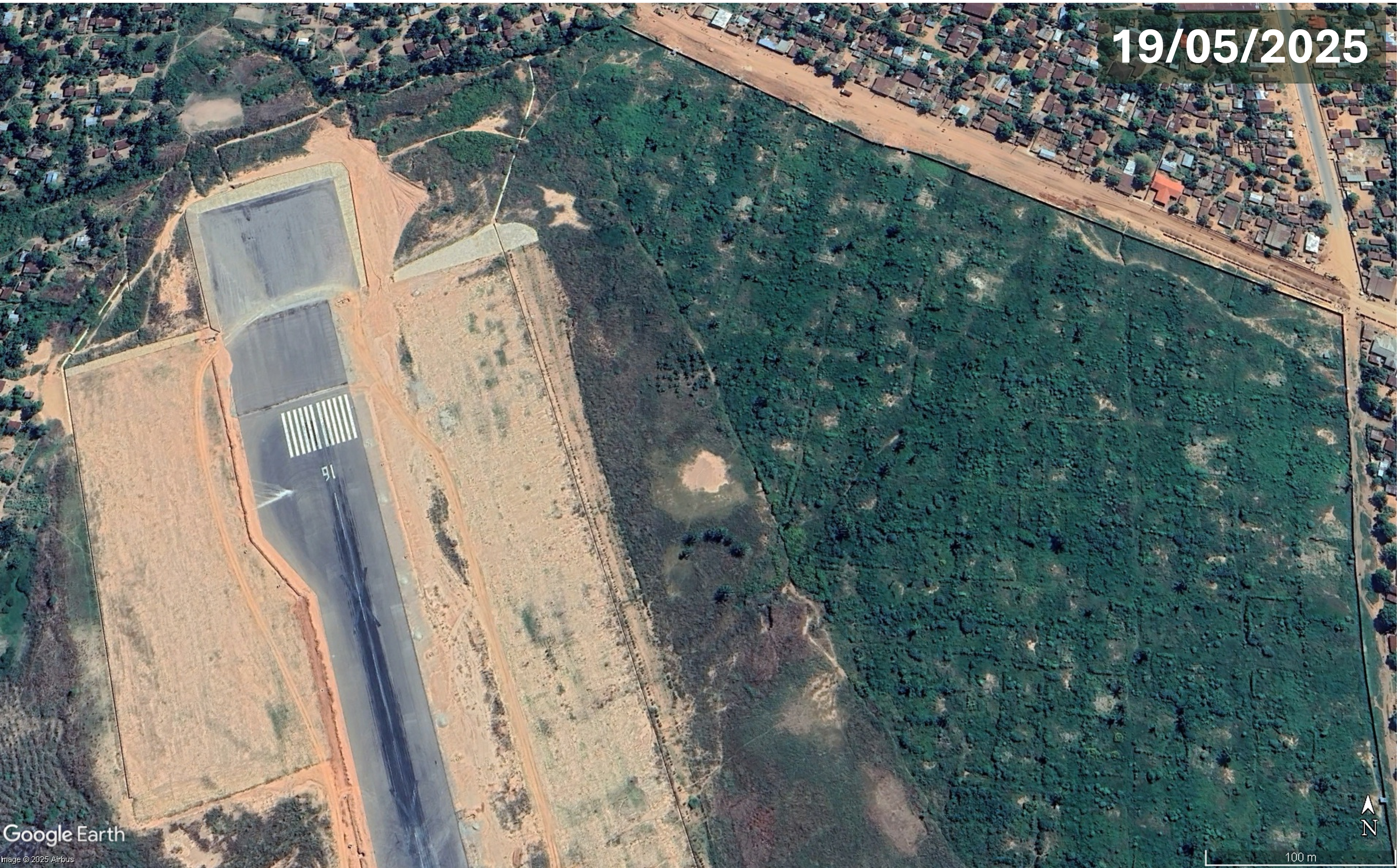
Aerial imagery of Mbuji-Mayi Airport, 17th June 2023Aerial imagery of Mbuji-Mayi Airport, 19th May 2025
Aerial imagery shows changes to the northern section of Mbuji-Mayi Airport between June 2023 and May 2025. In addition to runway works, roads have been widened and buildings next to the airport demolished and replaced with fast-growing vegetation.

Rehabilitation of Mbuji-Mayi Airport, located in the northeast of the city of Mbuji-Mayi, the capital of the Kasai-Oriental Province in south central DR Congo, is part of the Priority Air Safety Project – Phase 2 (PPSA 2) project financed by the African Development Bank (AfDB). Project components include runway extension, construction of aircraft parking aprons, control tower and works to improve aviation safety. AfDB’s 2018 Summary Environmental and Social Management Plans (ESMP) noted that the project area consists of neighbourhoods situated near the airport with dwellings and agricultural plots on the site; some activities including runway extension were postponed to enable studies and mobilisation of funding for involuntary resettlement. In February 2021 the mayor of Mbuji-Mayi set up a commission to identify all affected people who would be evicted, then in March he made reassurances that state obligations for the eviction of people who had built and rented houses would be followed.

Bulldozing of unauthorised buildings around Mbuji-Mayi Airport began on 7th November 2022. The airport project necessitated displacement of approximately 800 households but compensation of affected people was suspended in October 2023 because the census was inadequate and the process had not been accepted by all the residents with some continuing to resist. People whose land was expropriated began receiving compensation cheques on 13th October yet some voiced concerns about finding a new site, the compensation amount and demanded more transparency and guarantees regarding their property rights.

On 21st October 2023 residents whose land was expropriated for the airport project demonstrated in the street denouncing insufficient compensation, burning tyres at two road junctions before police attempted, unsuccessfully, to disperse them. An emergency meeting failed to reach an agreement satisfactory to plot owners who were given a 15-day ultimatum to relocate after receipt of compensation. In February 2024, as works at Mbuji-Mayi Airport were underway, owners of nearly 800 houses on the site were given two weeks’ notice to dismantle their homes. Occupants maintained that the compensation offer did not match the value of their assets.

On 17th July 2024 the mayor of Mbuji-Mayi announced imminent demolition of houses built on the airport site, in the name of expropriation for public purposes. Plot owners had been given tokens for replacement land on the outskirts of Mbuji-Mayi but had not vacated or demolished their houses; 800 families still contested expropriation due to lack of recognition of the market value of their plots. A delegation of residents living around the airport requested protection and support from the provincial authority and respect for expropriation law as recognised in the constitution.

Early on the morning of 29th October 2024 demolition of houses east of Mbuji-Mayi Airport, between Zaire and Dodoma avenues, began. Heavy machinery was escorted by police, as owners of the buildings demanded compensation matching the real value of their property. All their efforts, including marches, sit-in protest and suicide threats, had not dissuaded the government from expropriating the land plots. On the instructions of the president of DRC, Félix Tshisekedi, Minister of Social Affairs, Humanitarian Action and Solidarity, Nathalie Aziza Munana, visited Mbuji-Mayi on 10th November to investigate the demolition of 800 houses near the airport, collect information about evictions and meet with victims and civil society organisations. Minister of Justice, Constant Mutamba, said he had been contacted by several citizens who had not yet received the compensation they were promised, raising suspicions of misappropriation of funds allocated for this purpose.

For more information including references for all source material and photos see the case study on EJAtlas, the world’s largest, most comprehensive online database of social conflict around environmental issues – Mbuji-Mayi Airport rehabilitation, DRC

Houses demolished for Muhammadu Buhari International Airport expansion, Nigeria

Hundreds of people were displaced by a demolition exercise to make way for expansion of Muhammadu Buhari International Airport

On 30th January 2025 a number of residents of Shuwari 5 ward in Maiduguri, near the Muhammadu Buhari International Airport runway, reported that the Borno State Government was demolishing their houses. A bulldozer destroyed houses while residents retrieved essential household items. People whose houses were still standing but had been marked for demolition worked to remove roofs from their houses. One resident said people had received only three days’ notice before their homes were demolished and appealed to the Borno State Governor to provide compensation or alternative shelter for affected residents as they had no other place to go to.

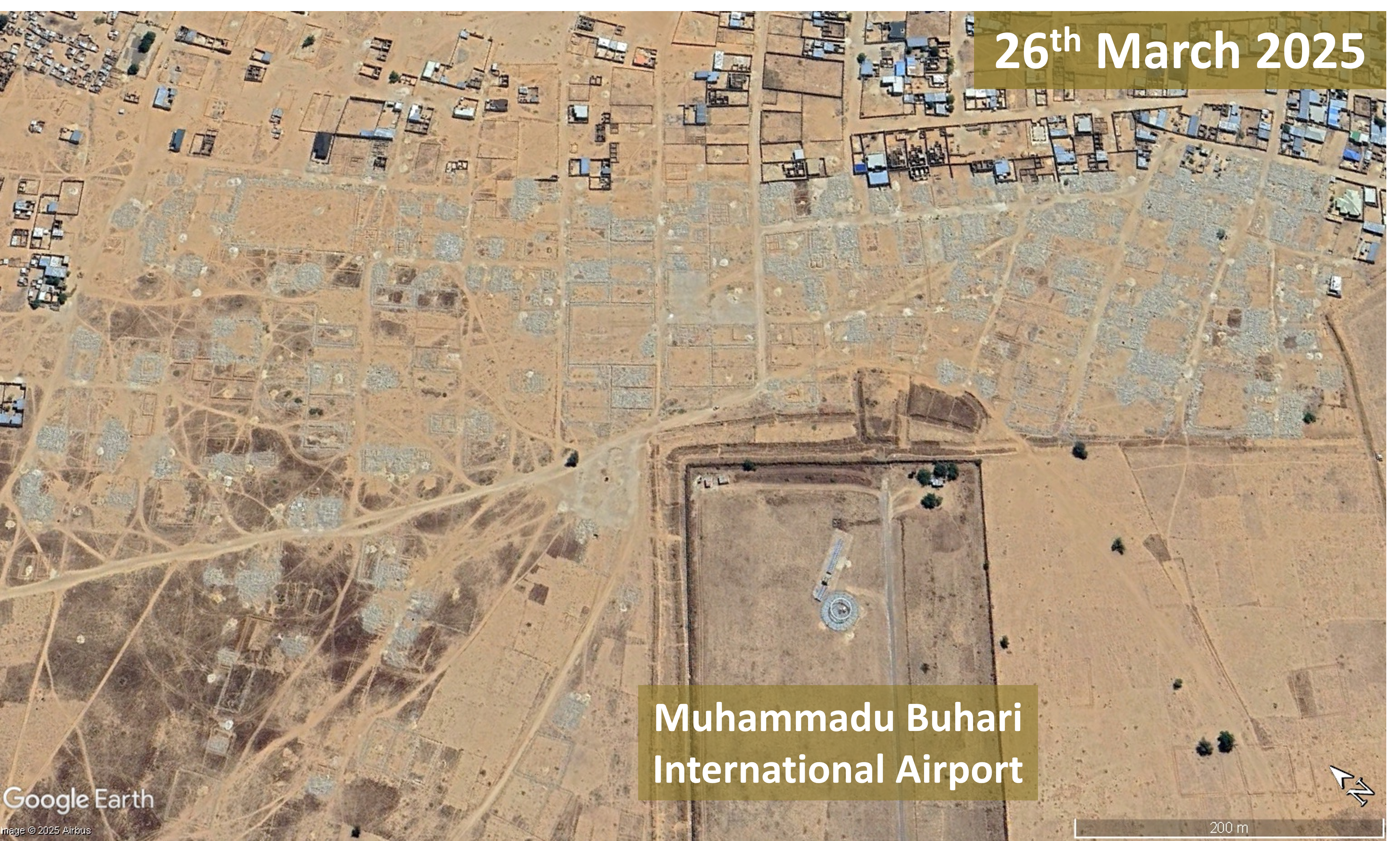
Aerial mage -Muhammadu Buhari International Airport runway, 14th July 2024
Aerial imagery of the Shuwari 5 area near the end of Muhammadu Buhari International Airport runway before and after the demolition exercise beginning on 30th January 2025 shows buildings reduced to rubble.

On a visit to Borno State in October 2024 Minister of Aviation and Aerospace Development, Festus Keyamo, had announced that Muhammadu Buhari Airport had been upgraded to international status and would commence operation as an international airport from 1st January 2025. The General Manager of Borno State Urban Planning Development Board, Liman Mustapha, said the purpose of the demolition exercise beginning on 30th January 2025 was to secure land for upgrade of the airport. He also said there would be no compensation for affected house owners and that residents had been informed that their occupation of the land was illegal in 2020 and since then authorities had attempted, unsuccessfully, to stop construction of houses on the land.

The demolition exercise targeted the area up to 500 metres from the airport fence, beginning with the area within 200 metres. Adamu Matankolo, Acting Regional Manager of the airport, said upgrade of the airport to international status by the federal government necessitated its expansion. He said, “We sympathise with the people who don’t want to obey this order. We have our plan and out plan is that the area slated for demolition is a buffer zone.”

Premium Times reported that more than 100 houses were demolished and many of the affected people had occupied the area for over 10 years having been displaced by the Boko Haram insurgency. The IDPs (Internally Displaced Persons) thought their resettlement was permanent until the state government demolished their houses. An IDP and single mother of three children said residents received a notice from the Borno State Geographical Information Service (BOGIS) just a few hours before the demolition exercise began.

Many people criticised the State government’s handling of the demolition exercise on social media, in the context of the Borno state’s socio-economic problems caused by the Boko Haram insurgency and a recent flood impacting 40% of the city of Maiduguri. Commenting anonymously a Maiduguri-based lawyer gave a detailed statement on the government’s obligations regarding compensation, concluding: “Thus, if a house is built on government land without approval, the owner is generally not entitled to compensation. However, if the government initially allowed of overlooked the development, there is scope for negotiation or legal redress.”

HumAngle, a media platform focussed on conflict, humanitarian, and development issues in Africa, reported that the demolition had displaced hundreds of people. One of them, a widow raising four children who had lived in Shuwari 5 for 17 years, said the government only notified people about the demolition two days before bulldozers arrived, not even giving enough time for gathering belongings. She said at least three affected people had died of shock and more than 20 had fallen ill due to trauma.

Liman Gana, head of Borno State Building Planning Authority, said 306 structures had been demolished, including 64 fully occupied houses, 42 incomplete structures and 17 incomplete buildings. A Federal Airports Authority of Nigeria (FAAN) official gave technical and safety reasons for the demolition exercise, saying structures built too close to the runway posed safety risks. Many displaced residents insisted that they were not informed of these risks before they bought or built their homes and said resettlement should have been planned and implemented before the demolitions took place.

For more information, including references for source material, see the case study on EJAtlas, the world’s largest, most comprehensive online database of social conflict around environmental issues – Demolition of houses for Muhammadu Buhari International Airport expansion, Nigeria

Dara Sakor Airport serves tourism zone taking up 1/5 of Cambodia’s coastline

In November 2023 Cambodia’s State Secretariat of Aviation (SSCA) announced that construction of Dara Sakor Airport (Cambodia’s fourth international airport after Phnom Penh Airport, Siem Reap Airport and Sihanouk Airport) was in its final stages. Dara Sakor Airport has been built to serve a gigantic tourism-oriented economic zone, the 451 square kilometre Dara Sakor project encompassing about one-fifth of Cambodia’s coastline. The Dara Sakor developer, Coastal City Development Group Ltd., calls the project ‘Coastal City’ and its website has pictorial maps indicating the many components of the project such as Dara Sakor Airport, a resort, tourism zone, golf courses and a port. The China-Global South Project reflected on the Dara Sakor project in 2023. Of all the anticipated infrastructure only the airport was completed. Yet the project continued with ‘considerable support from the government’. BBC reporters visiting Dara Sakor in September 2023 described unfinished roads and buildings as a stark contrast with ‘dazzling brochures for potential investors’.

Pictorial map of Dara Sakor project including tourism zone, resort, golf courses, development zone and Dara Sakor International Airport. Source: Coastal City Development Group Ltd.

Thousands of people have been forcibly displaced from their homes for the Dara Sakor project, losing their farming and fishing livelihoods. There have been many protests against eviction and inadequate compensation, in many instances met with repression. Unrest dates back to the inception of the project in 2008 when 360 sq km of land in the Botum Sakor and Kiri Sakor districts in the Koh Kong Province was reclassified as state-owned land. A 99-year lease contract was signed with Union Development Group (UDG) of China. Cambodian Human Rights and Development Association (Adhoc) reported that affected communities were not consulted about the project, some only becoming aware when officials arrived to measuring land. In 2011 the project site grew to 451 sq km when UDG was granted an additional 91 sq km land concession to develop a water reservoir and hydropower. During 2011 UDG began dismantling and burning down some villagers’ houses and destroying productive trees.

A key protest took place in February 2014 when about 140 people blocked the road to UDG’s offices leading to a clash with 40 UDG security guards and six soldiers carrying AK-47 rifles. Kiri Sakor District Governor said district authorities had ordered about 100 families to vacate their land for the Dara Sakor project’s hotels, golf courses and an airport. By September 2014 5,791 people had moved to a relocation site where they lacked access to former farming and fishing areas and suffered many problems including poor quality housing damaged by wind and rain, limited water that did not meet national standards, lack of electricity and health care facilities. Reports of destruction of houses and productive trees emerged again in 2018. In april April Koh Kong Provincial Court heard testimony from 13 families claiming that 60 UDG guards had burned their productive trees, seeking compensation for loss of cassava, jackfruit, mango, rubber and coconut crops.

On 27th May 2019 about 20 residents protested in front of the Chinese Embassy in Phnom Penh, calling for resolution of the 11-year land dispute. A report by the Community Legal Education Center stated that 1,143 families were forced to vacate about 100 sq km of land in the first five years fo the project but many families had resisted and fought for rights to the land. Four villagers were detained for 12 hours on 29th September 2020, after camping outside Koh Kong Provincial Hall calling for action over the 12-year land dispute with UDG. A year later 1,333 families rejected compensation offers of between 1 and 3.5 hectares and said they would fight to remain on their land. Protests against compensation offers continues into 2022; some declined the offer as it was insufficient and the village the government wanted to relocate people to was 100 km away and lacked infrastructure.

In June 2023, just four months before SSCA’s announcement about construction of Dara Sakor Airport entering its final stages, there was yet another protest by people affected by displacement for the Dara Sakor project. A group of villagers involved in a Dara Sakor related land dispute attempted to travel to Phnom Penh to submit a petition at the Ministry of Justice, but were met with a police roadblock. Eleven villagers were arrested, forced into a truck, returned to Koh Kong and charged with criminal incitement. Radio Free Asia reported that authorities threatened further arrests after about 20 villagers gathered outside the offices where the 11 people were being detained. Human rights organization Licadho said the protesters had not caused any social disorder and that police had been sent to the the area where many of them lived.

For more information including references for all source material see the case study on EJAtlas, the world’s largest, most comprehensive online database of social conflict around environmental issues – Dara Sakor project, Cambodia.

Demolitions for ‘airport zone’ (zone aéroportuaire Modibo Kéita), Mali

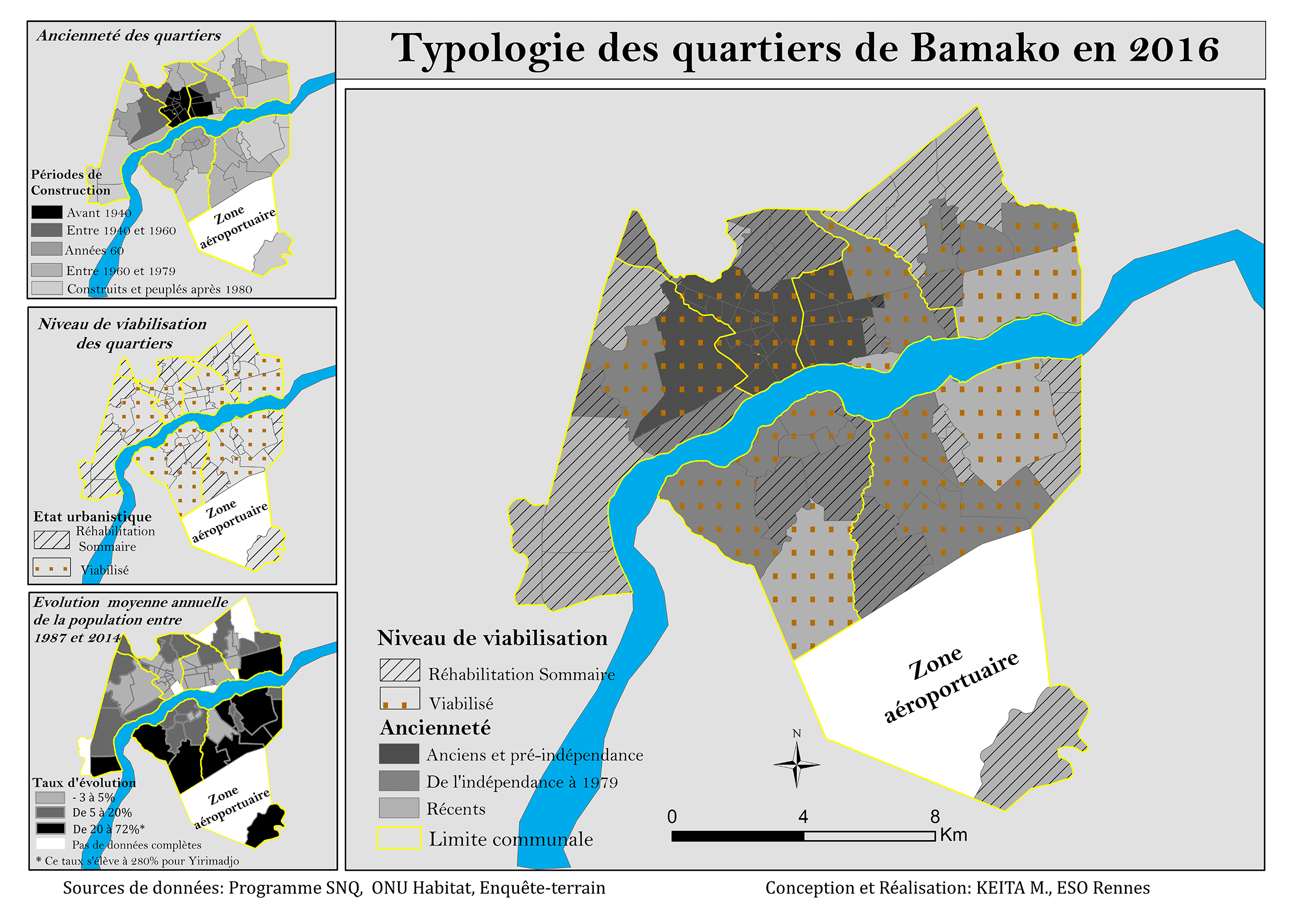
Mass evictions for an ‘airport zone’ next to Modibo Keita Airport, Mali’s main airport on the outskirts of Bamako, the capital city, began on 20th April 1995. Without warning, the government began bulldozing the Senou neighbourhood to make way for expansion of the zone. Demolitions continued for ten days and about 3,707 families, approximately 30,000 people, were forcibly evicted. Further waves of demolitions followed with many instances of land grabbing and speculation. Farmers were displaced for a fertilizer plant on the land in 2007-8 and in 2009 residents resisted instructions to leave the land. A drive to clear remaining communities began in 2021. Bulldozers arrived early in the morning of 14th January, in a major eviction drive covering 1,600 hectares; about 20,000 families in 11 neighbourhoods were impacted. About 800 evictees said they had permits to occupy the land and many affected people were left destitute without shelter.

zone aéroportuaire Modibo Kéita
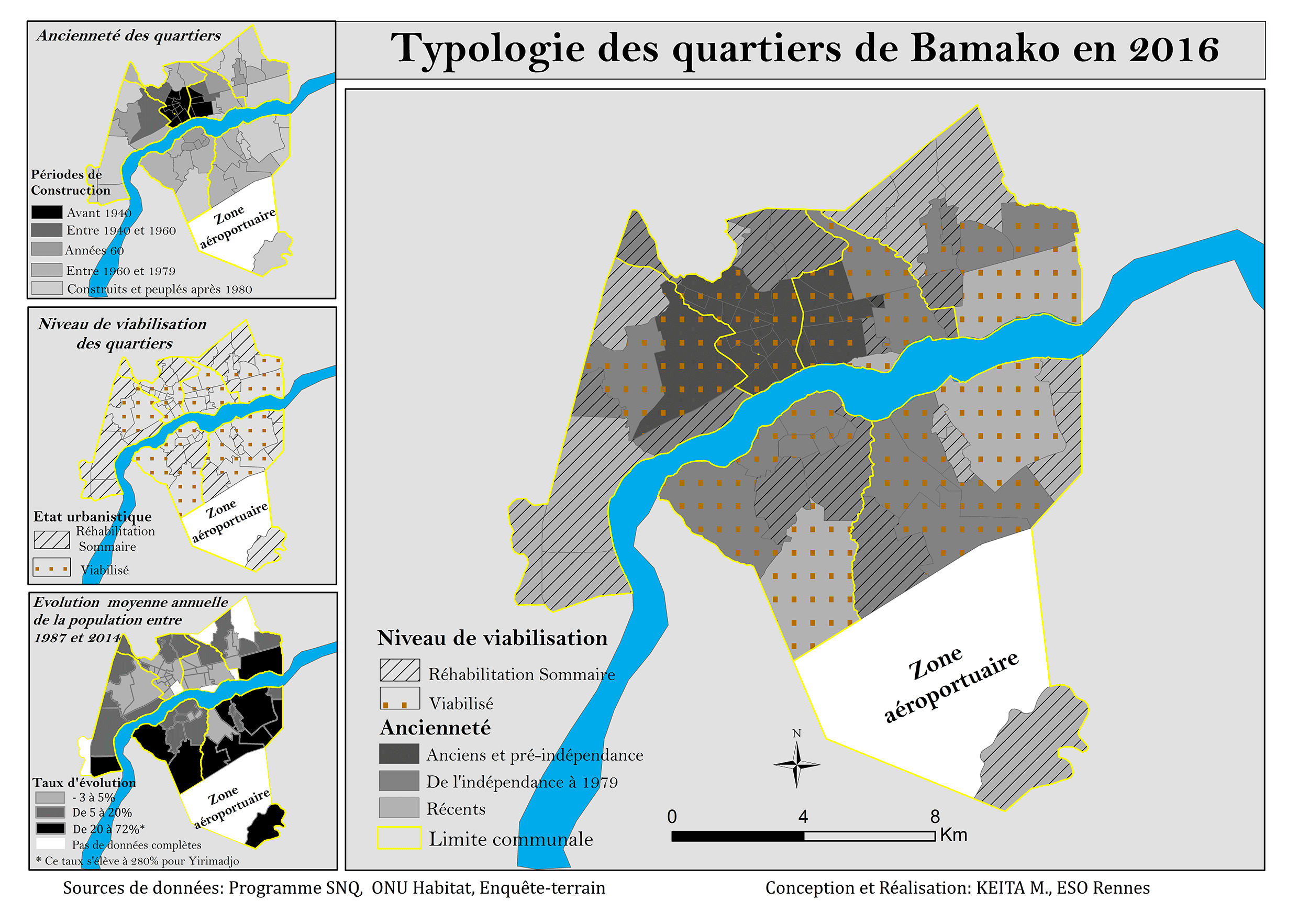
Map showing zone aéroportuaire Modibo Kéita. Source: https://journals.openedition.org/eps/docannexe/image/7707/img-3.png

The ‘airport zone’ – zone aéroportuaire Modibo Kéita – is vast, extending over 7,194 hectares northwest of the airport. It was classified as a plot of land for airport company use in 1999. Residents contest government claims that their occupation of the airport zone is illicit; they have lived on the land for several generations. An inhabitants’ organization – Plateforme deshabitants de la zone dite aéroportuaire (PHZA) – has been established with active groups, sometimes holding different views about land management, in many affected villages. Women, some of them elderly, play a prominent role in resistance against eviction from the ‘so-called airport zone’. The land struggle is supported by l’Union des Associations et Coordinations d’associations pour le Dévelopement et la Défense des Droits des Démunis (UACDDDD), a national federation fighting the injustices of dispossession. Demonstrations and meetings about the airport zone have been attended by hundreds of people. In November 2021 an independent national commission of inquiry to investigate demolitions in the airport area was established.

For more information about the Modibo Keita airport zone evictions see the case report on EJatlas, the world’s largest, most comprehensive online database of social conflict around environmental issues: Modibo Keith airport zone, Mali

Demolition of +300 houses on Kasompe Airstrip land

On 20th August 2022, beginning at 2am, more than 300 houses built on land surrounding Kasompe Airstrip were demolished by officers from Chingola Municipal Council and the Zambia Police Service. The Council stated it had not allocated the land in question and the buildings had been erected without planning permission. Residents appealed to the government to find them alternative land and some of them attempted to resist the demolition, burning tyres and breaking the windows of bulldozers. A video of the demolition shows houses in plots of land with gardens and trees being bulldozed, as displaced people looked on.

Completed houses as well as houses still under construction were demolished. A number of residents retaliated against destruction of their homes, setting fire to two properties – a guesthouse and servants’ quarters – owned by Johnson Kang’ombe, Mayor of Chingola, whom they accused him of selling them plots of land at Kasombe Airstrip. Two suspects thought to be involved in the arson were apprehended and detained. A group of women protested chanting slogans including “The Mayor must go”. One evicted woman said that her aunt whose home was also demolished had collapsed with suspected high blood pressure.

In the aftermath of the demolitions the only help given to displaced residents was food aid and space in a camping site, provided by the Chingola District Disaster Management and Mitigation Unit (DMMU). On 29th August it was reported that Chingola District Commissioner Raphael Chimupi had said that DMMU had given relief food items to 95 out of 98 families whose houses had been demolished. Chingola Member of Parliament Chipoka Mulenga visited affected residents and promised to help them, saying “I will do everything in my power to help resolve this issue, it is saddening to see a lot of houses demolished, which has left many families in the cold.” Mulenga said the government would provide alternative land to the victims of the demolition of 345 houses, but as of 27th September 2022 some people were still stranded with nowhere to relocate to.

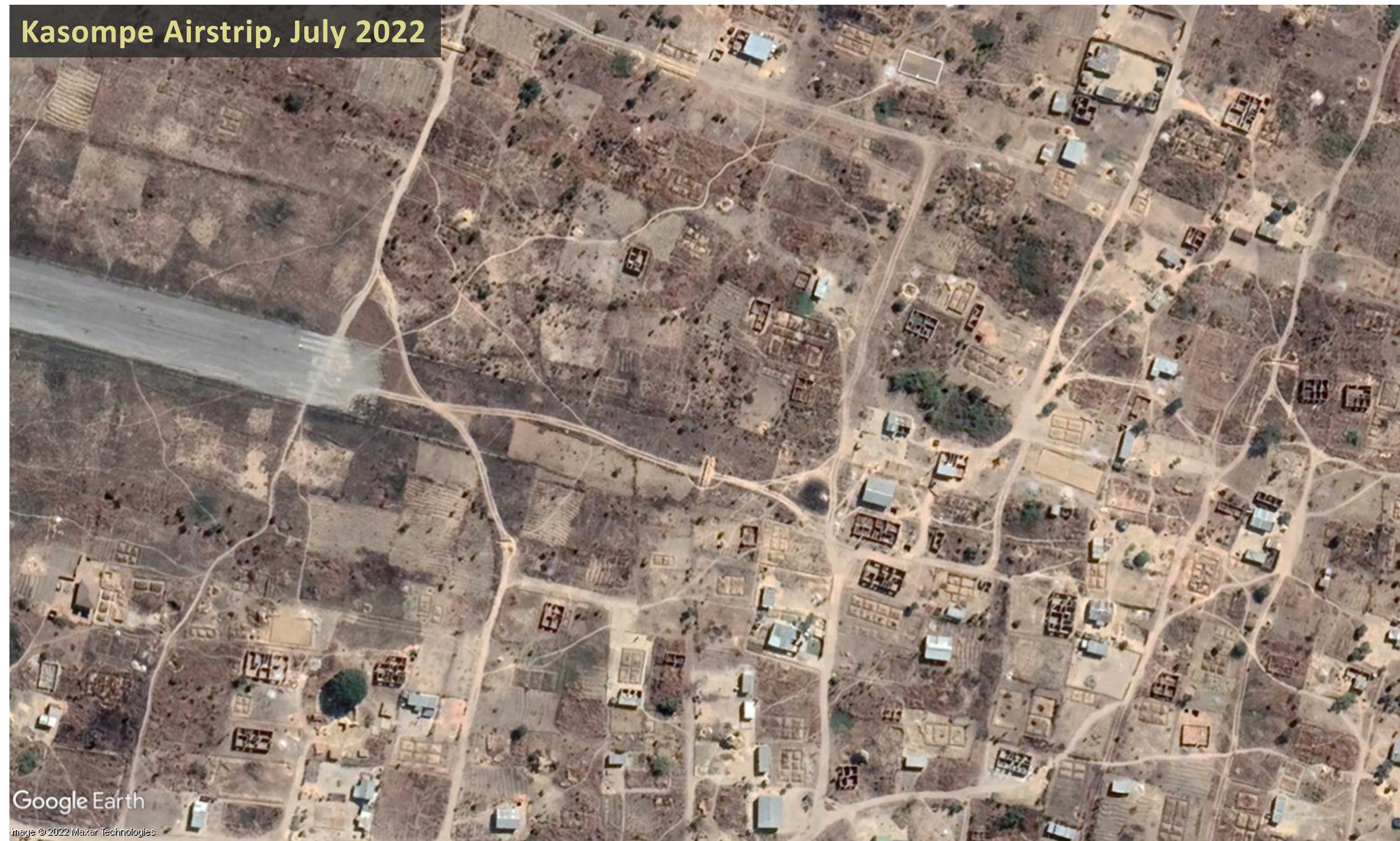
Satellite imagery of an area at the eastern end of the Kasompe Airstrip runway, dated 26th July and 8th September, shows some of the buildings which were destroyed on 20th August 2022. Slide the bar between the images below to compare the area before and after the demolitions.

The land conflict, inustice and human rights violations related to Kasompe Airstrip is documented on EJAtlas, the world’s largest, most comprehensive online database of social conflict around environmental issues. Kasompe Airstrip is located on the eastern outskirts of the city of Chingola, in the Copperbelt Province, a mineral rich area that is the main copper mining region in Zambia. President of the Equity and Economic Party, Chilufya Tayali, said information had surfaced indicating that the demolition of the houses was not driven by the purported illegality of allocation on plots of land but by foreign interests in a mine near Kasompe Airstrip. Aerotropolis-type plans were mentioned in 2019 when the then Mayor of Chingola, Titus Tembo, said Chingola aims to become a city with Kasompe Airstrip being part of this agenda.

The Zambia Air Force (ZAF) denied allegations that it has influenced or pressured Chingola Municipal Council to demolish the houses on Kasompe Airstrip land. ZAF Director Public Relations Lieutenant Colonel Helen Chota said rumours were incorrect and that none of the other ZAF airstrips had been encroached. Yet the day after the demolitions, on 21st August 2022, it was reported that ZAF Commander Lieutenant Colon Barry had alerted citizens to more house demolitions across the country, saying houses and other structures built within 500 metres of airport infrastructure would be demolished and that building civilian structures on or near airports is a threat to national security.

Evictions of communities close to Jacksons Airport

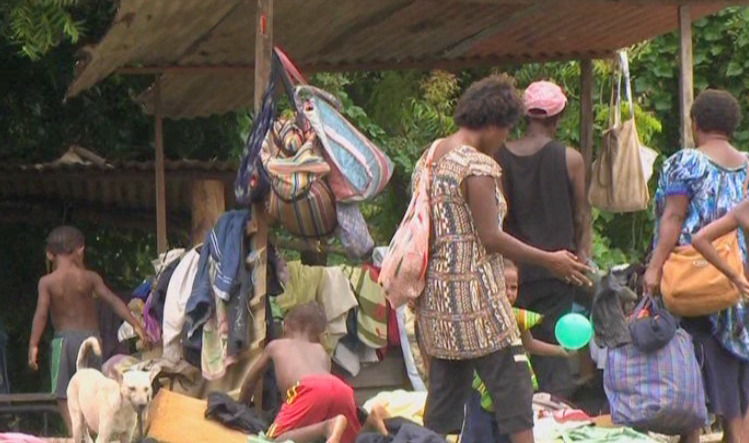
A drive to evict informal settlers living on parcels of land around Jacksons Airport, Papua New Guinea’s main airport located to the northeast of Port Moresby, was announced in the early days of 2022. Residents of the Saiwara community protested being issued with several eviction notices over the past year by the National Airports Corporation (NAC), the most recent giving them until the end of the month to vacate the area. A petition against the eviction was signed by 5,000 residents and a representative stated that they had been paying a traditional landowner for the land. Many tax-paying small and medium sized enterprises (SME’s) also urged the government to stop the evictions. A video by EMTV Online shows men, women and children protesting, some holding up placards with statements such as ‘No Eviction Please’, ‘No Eviction, What is Government doing For My Future’.

In January 2022 residents of the Saiwara community next to Jacksons Airport protested eviction notices issued by the National Airports Corporation (NAC)

Simultaneous with the eviction drive in Saiwara, NAC began pressuring residents to vacate Erima, another area adjacent to Jacksons Airport. A group of policemen visited communities and issued eviction notices. A long term resident said, “Police said the land close to the airport belongs to the National Airports Corporation and people must move out before the eviction date.” NAC managing director Rex Kiponge stated that the land belonged to NAC and that people must vacate the land by the end of January. He said, “I personally witnessed and heard from the police that any settlement or houses near the airport must be immediately moved out of force will be applied” and urged people living in the affected area to find a place to resettle.

Graphic from video showing parcels of land surrounding Jacksons Airport that the National Airports Corporation (NAC) lays claim to and where residents have been served with eviction notices. Image: Saiwara Eviction Notice, EMTV Online, 11/01/2022

A graphic in the EMTV Online video shows the parcels of land surrounding Jacksons Airport that the NAC lays claim to and where residents have been served with eviction notices. NAC managing director Rex Kiponge explained that the eviction drive was a strategic move to utilize the land for a non-aeronautical revenue stream, i.e. generation of revenue from sources other than airlines. (Typical sources of non-aeronautical revenue include retail, hotels, tourism facilities, business premises, real estate and car parking.) Kiponge also mentioned another hallmark characteristic of an aerotropolis/airport city: aspiriations for an airport to become a destination in its own right. He said that eviction of people from land around Jacksons Airport would support NAC’s new policy, namely ‘Converting Airports from Point of Transit to Point of Destination’. NAC’s focus on development of land for non-aeronautical purposes has been galvanised by a collapse in its revenue stream due to the drastic reduction in air traffic since the Covid-19 pandemic. Previously, NAC’s revenue had consisted of 80% from aeronautical business and 20% from non-aeronautical business. Kiponge said the NAC needed to start generating its own revenue and recouping its assets was in line with this aim.

Following questions in Parliament from member for Moresby North East, John Kaupa, PNG Prime Minister James Marape intervened, assuring settlers on airport-owned land at Erima and Saiwara that they would not be evicted by the NAC until a permanent solution was reached. He asked NAC to freeze their eviction plan. But the settlers are still under pressure to leave; Marape warned them not to move in onto state land and start building structures if they are not in possession of titles, saying that the Government would not step in to assist anyone on humanitarian grounds.

Over 200 families residing in Erima Bridge were evicted and left sleeping out in the open without food or water in February 2017. Photo: EMTV, 06/02/2017 (date accessed 06/02/2017)

The current drive to evict communities living around Jacksons Airport is the latest in a series. In February 2017 police evicted more than 200 families who were living on state-owned land in Erima Bridge. Some of them had lived in makeshift and semi-permanent housing for more than 20 years. The officer in charge of Jacksons Airport said the police were acting on the orders of the land owned by the NAC and that over the course of a week all the houses and tents in the area in question had been removed. It was reported that they were left sleeping out in cold, wet weather conditions for a few days. Their only shelter was wooden frames and roofing iron and they had no food, water or clothing. A settler who had moved to Erima from the Highlands region said some people whose homes were destroyed had not received an eviction notice. At the time of the Erima Bridge eviction the Asian Development Bank (ADB) confirmed support for expansion of Jacksons Airport, signing an agreement with NAC to develop a new international passenger terminal. In May 2015 a demolition exercise at another settlement near Jacksons Airport, 7 mile, left more than 200 people homeless. Some of them were beaten up by the eviction squad. Evictees lost all they owned during the demolition and some homes were burned down. The eviction was part of NAC’s development plan for Jacksons Airport.

Information about evictions of communities surrounding Jacksons Airport has been published on EJatlas, the world’s largest, most comprehensive online database of social conflict around environmental issues: Jacksons Airport and evictions from land claimed by National Airports Corporation, PNG

Residents impacted by Swaziland’s international airport still demanding compensation

In 2003 construction of an international airport in Sikhuphe, Swaziland was initiated by King Mswati III, who rules the country as sub-Saharan Africa’s last absolute monarch. From its inception commentators warned that the new airport was a waste of resources, diverting funding away from vital projects to fight poverty in Swaziland. In contrast with the one in seven of the coutnry’s inhabitants living in abject poverty King Mswati III enjoyed a lavish lifestyle with 13 palaces, fleets of luxury cars and a private jet.

September 2021 satellite imagery of King Mswati III International Airport and some of the surrounding road network

In March 2014, presiding over an expensive opening ceremony, King Mswati III unveiled the name of the new airport: King Mswati III International Airport. In the lead up to this event he had announced that a new town would be established to support the new airport, which would bring development to the surrounding communities, including Mbadlane, Hlane and Malindza. He proclaimed “After a radius of about five kilometres from the airport, urban structures will be constructed.” More than three years later, in October 2017, the Times of Swaziland reported that King Mswati III International Airport had ‘brought nothing but misery to hundreds of residents of Sikhuphe, in Malindza, where the airfield was constructed’. They had not received any compensation for their relocation, despite a consultant’s recommendation that a sum of approximately US$6 million be allocated for resettlement of 188 homesteads falling within the boundary of the so-called ‘airport city’.

There was a series of protests over impacts of airport and road construction and lack of compensation in 2021. In September, Malindza residents protested disruption of their water supply caused by construction of a road serving the airport, and demanded its restoration. They had been left struggling to access water to sustain their cultivation of vegetables and rearing of livestock after a dam was destroyed by Inyatsi, a firm with close connections to the government which was awarded construction contracts for King Mswati III International Airport along with a major highway connecting South Africa to Mozambique via the airport. In November a group of about 200 residents blocked Inyatsi’s trucks from entering the quarry near King Mswati III International Airport. It was their third protest in three months. In November 2021 some of the residents of Malindza who were displaced to make way for the project and whose houses were damaged by blasting works during construction – of the airport and road leading to it – were still demanding compensation. Blasting had caused cracks in their houses. A group of residents, mainly women, protested for almost a week and camped in the bushes. They had lost patience after struggling for compensation for almost 20 years.

Malindza residents demand compensation for damage to their houses causes by construction of King Mswati III Airport
Over 200 residents slept in the bushes demanding compensation for damage to their houses during construction of King Mswati III Airport. Photo: Swaziland News, 12/11/2021

This case of airport-related injustice is documented on EJAtlas, the world’s largest online database of social conflict around environmental issues: King Mswati II International Airport

Video – Aerotropolis: Evictions, Ecocide and Loss of Farmland, part 2

The second part of a two-part video, Aerotropolis: Evictions, Ecocide and Loss of Farmland, highlights damaging impacts of aerotropolis (airport city) projects on people and the environment. Evictions can be large scale and there are many instances of human rights violations. Allocation of large greenfield sites places farmland, forests, wetlands and coastal ecosystems at risk.

The video looks at 14 aerotropolis-type projects: Central Transport Port-CPK (Poland), Manchester Airport City (UK), Airport City Gatwick/Horley Business Park (UK), New Mexico City Airport (NAICM), (Mexico), Santa Lucia Airport (Mexico), Northwest Florida Beaches Airport (US), Vernamfield Aerotropolis (Jamaica), Hamilton Aerotropolis (Canada), Pickering Airport/Toronto East Aerotropolis (Canada), Mattala Airport (Sri Lanka), Nijgadh Airport (Nepal), Istanbul Airport (Turkey), Bulacan Aerotropolis (the Philippines) and Sanya Hongtangwan Airport (China). For further information see the comprehensive Reference list of all source material, including photos and other images. Part 1 of the video can be viewed here.

New Research: Airport projects responsible for human rights violations and ecological destruction around the world

Map of Airport-related Injustice and Resistance

Interactive map documents 80 cases of airport-related injustice and resistance

A new interactive map documents cases of airport-related injustice and resistance around the world. All across the globe airport projects are generating serious conflicts and social and environmental impacts: land acquisition, displacement of people, destruction of ecosystems, local pollution and health issues. A new map based on scientific research presents 80 cases as detailed examples of the conflicts generated by airport projects around the world. The research also identified more than 300 cases of airport projects where there is evidence of conflict, that merit further investigation. Research began in 2018 and has been jointly conducted by the EnvJustice project of the Environmental Science and Technology Institute at the Autonomous University of Barcelona (ICTA-UAB) and the Stay Grounded network. 

In many countries, airport planning, construction and expansion continues, in spite of the steep decline in air traffic since the beginning of the Covid-19 pandemic. All aviation expansion, wherever it takes place, contributes to the global problem of climate destruction. Aviation, being fossil fuel dependent and intensive, is a major and growing source of greenhouse gas emissions. By documenting a multitude of local struggles against airport projects the Map of Airport-related Injustice and Resistance contributes to a broad and diverse global movement for degrowth of aviation and transition to a just and sustainable mobility system.

Communities around the world struggle against eviction from their homes and farmland for aviation expansion, and to protect forests, wetlands and coastal ecosystems, our research shows. Our interactive feature map, the first of its kind, documents a multitude of airport-related injustices and inspirational resistance movements,” say Sara Mingorría of EnvJustice (ICTA-UAB) and Rose Bridger of Stay Grounded.

Many of the cases documented and analysed involve affected communities opposing  land acquisition for airport projects. In about half of those cases studied there were problems of land dispossession (50%) and displacement (47%). Many communities resisting displacement have suffered human rights violations and state repression: forced evictions, harassment, intimidation, arrests, imprisonment and violence. In around a third of the cases studied there were problems of repression (30%), militarization (29%) and the conflicts reached a high level of intensity (35.5%).

Site clearance for many airport projects also obliterates wildlife habitats and biodiversity. In 48 percent of the cases analyzed, problems of loss of landscape were registered, 41 percent involved deforestation impacts and 32 percent loss of biodiversity. 

The Map of Airport-Related Injustice and Resistance is a joint project by the EnvJustice (ICTA-UAB) and Stay Grounded. Information has been contributed by organizations, journalists, activists and academics. The research project is co-founded and coordinated by Rose Bridger (Stay Grounded/Global Anti-Aerotropolis Movement-GAAM/EnvJustice ICTA-UAB) and Sara Mingorría (Stay Grounded/EnvJustice ICTA-UAB); Yannick Deniau (Envjustice/GeoComunes) and Mira Kapfinger (Stay Grounded) joined the coordination team during the project. The 80 published cases are just the beginning of the mapping project. The research team anticipates that many more conflicts will be documented on the map as the project continues.

EJAtlas is an online database and interactive map documenting and cataloguing environmental conflict around the world. It started in 2011 and counted on the collaboration of hundreds of researchers and organizations. It is now coordinated by the ENVJUSTICE project at ICTA-UAB.

Stay Grounded is a network of more than 160 member organisations from all over the world, among them: NGOs, climate justice groups, indigenous organisations, labour unions and civil initiatives against airport noise and expansion. Together, they fight for climate justice and a fair reduction of aviation.

See the airport injustice cases on the Feature map

For more information see Voices from affected communities and overview of cases.

Aerotropolis: Evictions, Ecocide and Loss of Farmland, part 1

The first section of a two-part video, Aerotropolis: Evictions, Ecocide and Loss of Farmland, highlights damaging impacts of aerotropolis (airport city) projects on people and the environment. Allocation of large sites means that communities face displacement and entire ecosystems can be destroyed.

The video looks at 14 aerotropolis-type projects: New Yogyakarta International Airport, Kertajati Airport and Aerocity, Kualanamu Aerotropolis (Indonesia), 2nd Jeju Airport (South Korea), New Phnom Penh Airport (Cambodia), Long Thanh Aerotropolis (Vietnam), Taoyuan Aerotropolis (Taiwan), KXP AirportCity (Malaysia), Andal Aerotropolis, Bhogapuram Airport and Aerocity, Shivdaspura Aerocity (India), Anambra Airport City (Nigeria), Tamale Airport (Ghana) and Western Sydney Aerotropolis (Australia). For further information see the comprehensive Reference list of source material, including photos and other images.