Brazil: Forest around Fortaleza Airport felled for a logistics center

Sudden felling of forest next to Fortaleza Airport, in northeatern Brazil, to make way for a large logistics center met with protest from citizens and environmental groups, suspension of the project and proposals for an environmental protection zone around the airport.

On 23rd September 2025 it was reported that 32 hectares of forest adjacent to Fortaleza Airport (also known as Pinto Martins International Airport), an area known as Airport Forest, had been felled to make way for a logistics center. The trees had been removed before the requisite documentation, submitted by project developer Aerotrópolis Empreendimentos and airport operator Fraport Brasil, had been evaluated by Instituto Brasileiro do Meio Ambiente e dos Recursos Naturais Renováveis (IBAMA), (Brazilian Institute of the Environment and Renewable Natural Resources) which requested evaluation of documentation in response to allegations that the licensing process had violated Atlantic Forest Law.
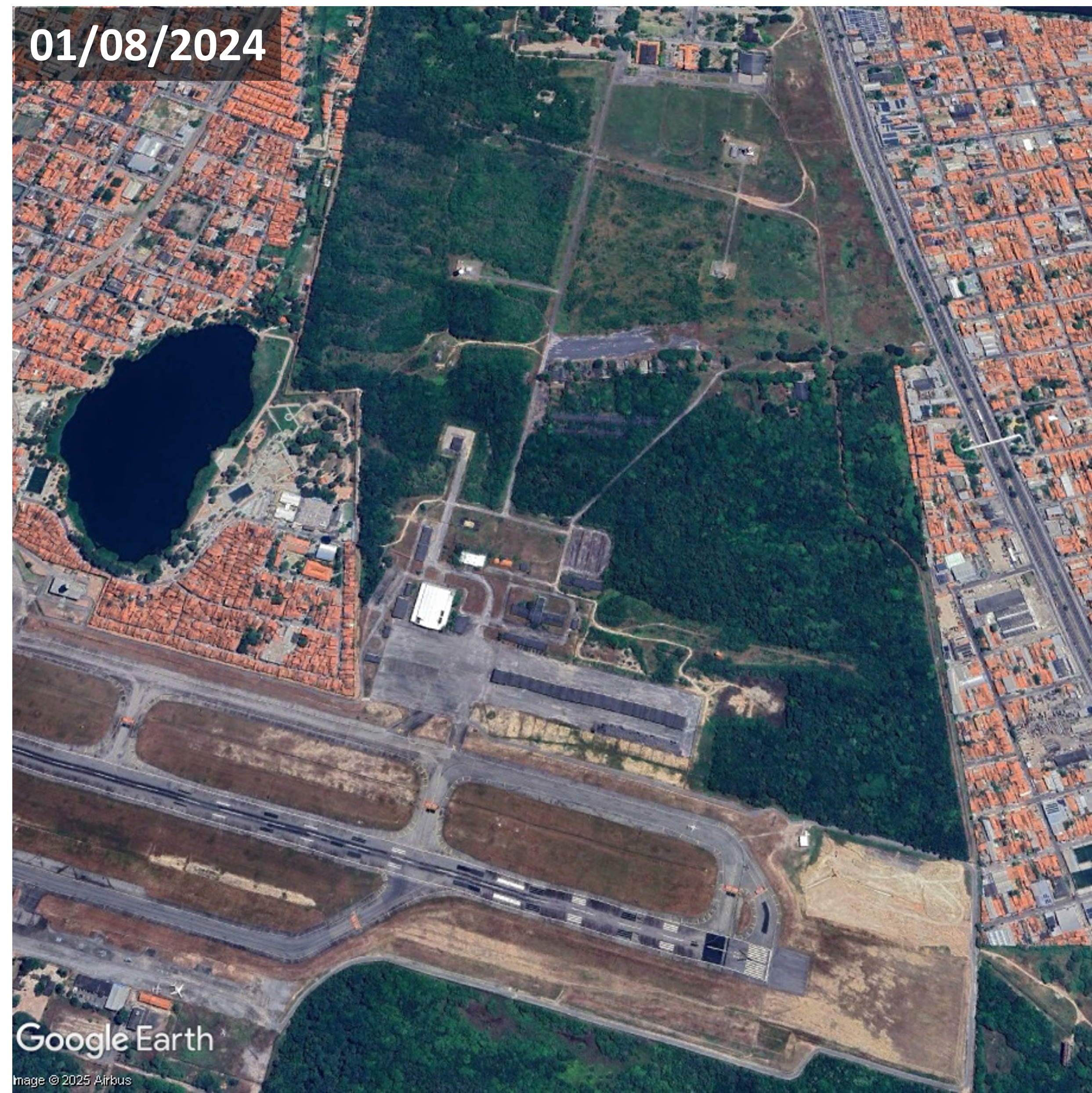
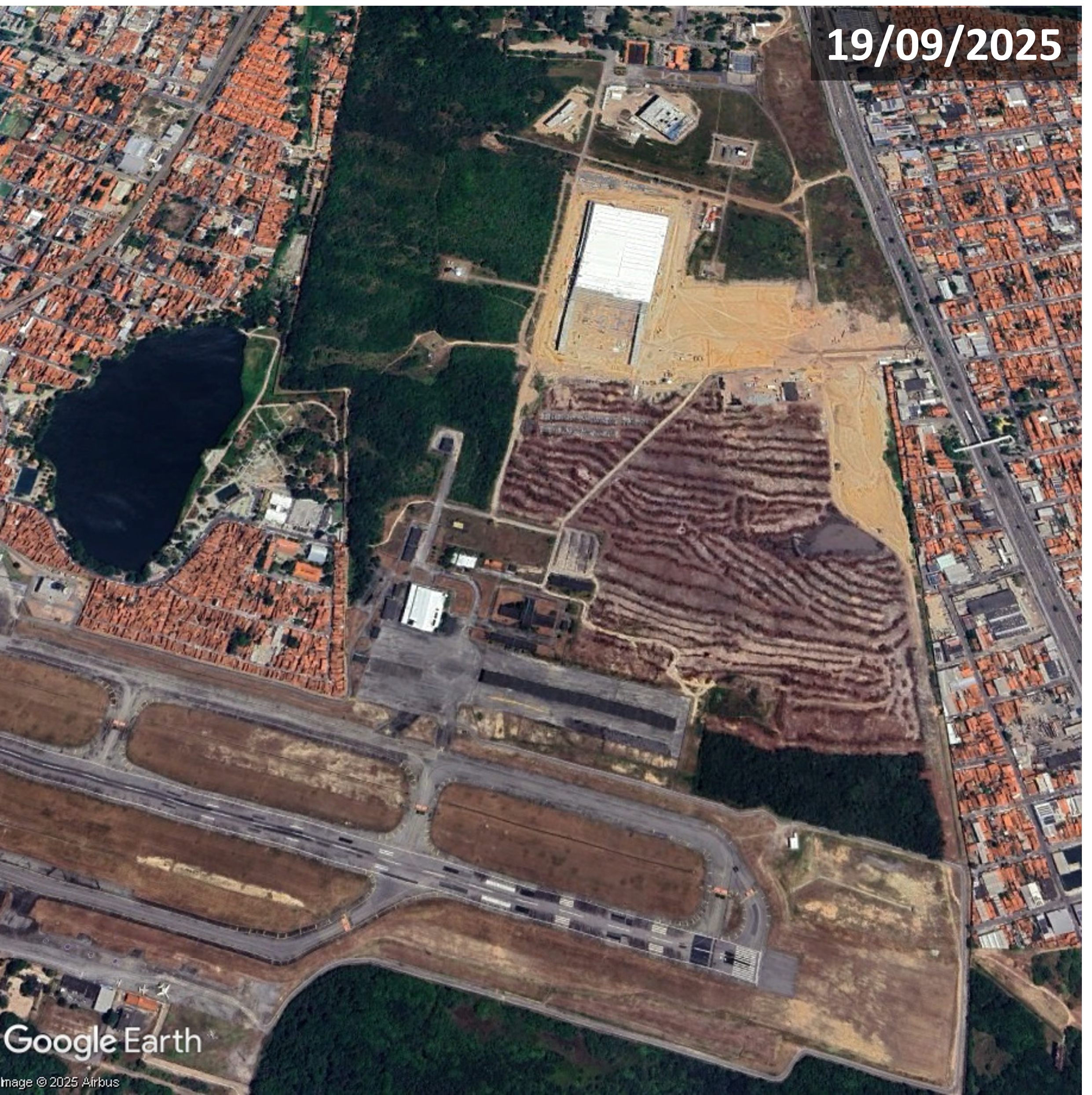
Fortaleza Airport, Aug 2024Fortaleza Airport, Sept 2025
Aerial imagery of Fortaleza Airport showing deforestation that was reported in September 2025

Deodato Ramalho, IBAMA superintendent, said the forest around Fortaleza Airport and Cocó state park are the only city’s only remains of the Atlantic Forest, extending along a long stretch of Brazil’s Atlantic coast and important for temperature regulation and flood prevention. Ecologist and Fortaleza city councillor Gabriel Aguiar said trees had been felled with chainsaws and reforesting the area would take many years. Daniel Pagliuca, an environmental lawyer and professor at Baturité Massif University Center, said forest clearance can be permitted for projects with public utility, but a logistics center would not directly benefit the local population. Animal rights experts raised concerns that many animals’ lives were in danger as forest clearance forced them into urban settlements. Images on social media showed animals climbing walls and poles around the airport.

Following analysis and site investigation Aerotrópolis Empreendimentos’ license and authorisation were suspended due to intervention in a Preservação Permanente (APP), (Permanent Preservation Area) and wildlife management inadequacies. Aguiar said the tree felling around the airport was the largest deforestation in a decade. Before and after satellite images showed total removal of trees and partial construction of a warehouse in the project area, immediately north of the western end of the runway. Residents and environmental and civil society organizations raised concerns over the logistics center project’s environmental impacts and demanded improved transparency in the licensing process.

During the 2nd October 2025 Encontro Nacional de Gerenciamento Costeiro (National Coastal Management Meeting) members of several social movements protested devastation of the Atlantic Forest around Fortaleza Airport. Environmental leaders from all over the country along with Ceará citizens called for revocation of Fraport’s license, accountability for the firms involved and reforestation of the deforested area. A banner read ‘Who killed the airport forest? 40 hectares of Atlantic forest devastated’ and signs stated that Atlantic Forest had been felled in the absence of a socio-environmental study or wildlife management. A total of 46-hectares had been cleared for construction of a logistics center, which has the potential to be one of the largest facilities of its kind in northeastern Brazil with seven warehouses, a truck service center, gas station and fuelling point. Residents around the impacted area were experiencing higher temperatures; preliminary research comparing surface temperatures from the same time period the previous year indicated an increase of at least 6 per cent, thought to be related to the deforestation.

After an inspection uncovered irregularities including removal of vegetation exceeding authorized limits SEMACE issued Aerotrópolis Empreendimentos with a USD37,315 fine and suspended land use permits in the affected area. At a conference considering amendments to the draft Fortaleza Master Plan a 200-hectare Zona de Preservação Ambiental (ZPA), (Environmental Protection Zone) around Fortaleza Airport, encompassing the deforested land, was approved. Professor Renato Pequero said the designation increased the possibility that the deforested area might be restored. Gabriel Aguiar welcomed the victory and called for the city’s biggest ever mobilization to ensure approval of the ZPA proposal.
Fortaleza Airport City
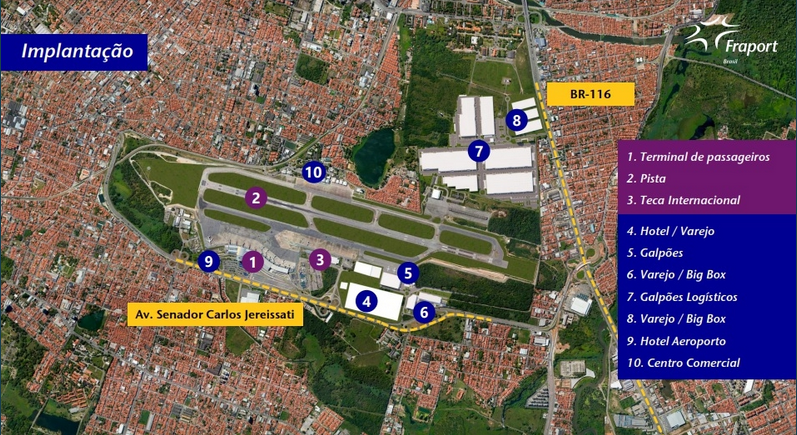
Fortaleza Airport City plan graphic – Fraport announced expansion on land adjacent to Fortaleza Airport in 2022.
Source: Fraport Brasil

The logistics center next to Fortaleze Airport is part of a larger airport city project. In July 2022, Fraport Brasil announced expansion onto land adjacent to the airport for Fortaleza Airport City, a development of over 80 hectares. Along with a logistics center planned facilities included two hotels with independent access to the airport, shopping mall and supermarket. A graphic published with the announcement shows logistics warehouses, big box retail, a hotel and commercial center.

For more information including references for all source material, photos and videos see the case study on EJAtlas, the world’s largest, most comprehensive online database of social conflict around environmental issues – Deforestation around Fortaleza Airport, Brazil

Residents of three villages oppose land acquisition for Guwahati Aerotropolis

Guwahati Airport and the villages of Azara, Garal and Mirzapur
Guwahati Airport and the villages of Azara, Garal and Mirzapur. Satellite imagery: 03/04/2024

A land acquisition notice for a proposed Aerotropolis near Guwahati Airport – the primary airport of northeast India located in the west of Assams’ largest city and also known as Lokpriya Gopinath Bordoloi International Airport (LGBI) – met with anxiety, anger and opposition from many affected residents. Issued on 25th July 2025 by the Kamrup Metropolitan District Administration the notice encompassed 400 bighas (101 hectares) of inhabited and uninhabited land in the villages of Azara, Garal and Mirzapur and impact upon more than a thousand families. Many villagers had given land for construction of Guwahati Airport decades ago and feared loss of their homes and livelihoods. An Azara resident said, “We have already given away vast stretches of land. Now this fresh move will leave many of us homeless.” In Garal village, where the district administration moved to acquire 70 bighas (17.7 hectares) of land for the Aerotropolis project, over 100 pattadars (landholders) were named in the land acquisition notice. Critics of the project claimed the land acquisition process lacked transparency, consultation or a clear plan to rehabilitate affected people and that the main beneficiary would be a private company. Guwahati Airport is owned by Adani, one of India’s largest multinational conglomerates. A local committee member said, “Guwahati Airport is now under Adani’s ownership. So the land being acquired in the name of an airport township will ultimately go to Adani.”

Affected families began to protest the land acquisition process, demanding transparency, a thorough impact assessment and guarantees that they would be rehabilitated. “We are not against development”, said an affected farmer, “But we deserve clarity, transparency and fair compensation. Right now everything feels juggled up and a lot is hidden from the public.” Protests took place in many affected areas. Leader of the Opposition Debabrata Saikia described the move to acquire land for the ‘Aerocity‘ as anti-indigenous and serving corporate interests. He said more than 1,116 families were affected, some of which had held land titles for nearly 200 years. He also warned that, in addition to the families facing displacement, local entrepreneurs in the area running guesthouses and restaurants would be adversely impacted. The location of the project site, near the Deepor Beel freshwater lake, a Ramsar site (designated as of international importance under the Ramsar Convention) raised environmental concerns.

Land acquisition for the aerotropolis had been requested by the managing director of the Assam Industrial Development Corporation (AIDC). Akan Chandra Das, president of Mirzapur Anchalik Bhumi Suraksha Samiti, the committee representing affected residents of Mirzapur, Azara and Garal villages, said, “Already nine to ten times, our families gave land to the government post-independence, for development of the airport, adjacent roads, and defence establishments near the Guwahati airport. If the remaining land is also taken for development projects, where will we go? How will our children survive if they don’t get jobs in other sectors?” Basudev Mali, a retired teacher and owner of 10 bighas (2.53 hectares) of land near the airport, in Mirzapur, said, “If the government continues to take over our lands for airport expansion or for aerotropolis development now, who will ensure the survival of our children? The remaining farmlands were our only hope, but the government wants to take that also.”

A residents’ delegation met with Chief Minister Himanta Biswa Samra, but his attempts to reassure them that only vacant land would be used, for public projects were unsuccessful. Locals remained reluctant to give up their land for either government or private projects. Villagers attending a public meeting in Mirzapur unanimously resolved not to give their land to the government under any circumstances, declaring, “Our land is our identity and livelihood. We will not give it away at any cost.” At the beginning of September 2025 the Guwahati Metropolitan Development Authority (GMDA) suspended building permits and land sales in the proposed aerotropolis area around Guwahati Airport. Additional restrictions were also imposed. The suspension affected Azara, Garal and Mirzapur villages where hundreds of indigenous families were unwilling to vacate their land for the aerotropolis project. They also opposed the notice issued by GMDA as it restricted their rights as landowners.

New book – Contested Airport Land in Asia and Africa

A new book draws attention to accelerating airport development in Asia and Africa, elucidating many factors underlying the political sensitivities frequently surrounding greenfield development, airport expansion and airport cities. Contested Airport Land: Social-Spatial Transformation and Environmental Injustice in Asia and Africa, edited by Irit Ittner, Sneha Sharma, Isaac Khambule and Hanna Geschewski, is published by Routledge.

Following a conceptual introduction and overview chapter in-depth case studies give nuanced insights into the complex socio-economic, political and administrative dynamics of seven airport projects: the suspended Nijgadh Airport (Nepal); Mattala Airport (Sri Lanka); Yogyakarta Airport (Indonesia); a critical review of airport land contestations in India focussing on Jewar and Dehradun airports; the airport reserve in Abidjan (Cote d’Ivoire); Durban Aerotropolis (South Africa) and Isiolo Airport (Kenya).

You can listen to a conversation with three of the co-editors on an episode of The Channel podcast from the International Institute for Asian Studies (IIAS) at Leiden University, hosted by Benjamin Linder.

Contested Airport Land: Social-Spatial Transformation and Environmental Injustice in Asia and Africa

Pacific Airport displaces communities, destroys agriculture and is intended to serve a planned Bitcoin City

In Conchagua, El Salvador, the Condadillo and Flor de Mangle communities are being displaced from their homes and farmland for construction of Pacific Airport. A linked ‘Bitcoin City’ on the slopes of an inactive volcano has yet to materialise.

Pacific Airport location map with respect to environmental zoning
Location of Pacific Airport project with respect to environmental zoning, Ministry of the Environment and Natural Resource (MARN), 09/2021. Source: Mala-Yerba

El Salvador’s Legislative Assembly approved a new law expediting procedures for building the Pacific Airport on 26th April 2022, allowing the Autonomous Executive Port Commission (CEPA) to acquire title to property deemed necessary. In June 2022 the Earth Journalism Network reported that vegetation was being cut to make way for the airport and eucalyptus trees had been marked for felling. Inhabitants who cultivated crops said government personnel had entered the land to cut plants, without reaching a sale agreement as had been promised. In November 2022 Mongabay reported that the airport faced backlash from local communities after breakdown of negotiations with the government. Residents said they were being pressured to accept buyouts for their properties. Mala-Yerba reported that works on the airport site had begun at the end of February 2023, before the environmental permit was issued by MARN on 21st March. A source from Condadillo expressed concern over irreparable damage to trees, mangroves, animals, birds and aquifers. Flor de Mangle residents, depending on sea fishing and harvesting molluscs from the nearby El Tamarindo mangrove will also be impacted, as the area is a nursery for crabs, molluscs and other crustaceans and many residents make an income from collecting and selling them.

Residents of Condadillo and Flor de Mangle recounted workers entering agricultural and housing land plots with machinery, in the absence of authorisation from landowners or a court order. Drilling and excavation left the area unsuitable for agriculture and unsafe for people and livestock. Residents also denounced pressure from CEPA to sell land at unfair prices. Farming families and MILPA (Indigenous Movement for the Integration of the Struggles of the Ancestral Peoples of El Salvador) representatives said that more than 225 families had been directly affected by being unable to produce crops – including watermelons, tomatoes, grains and chillies. At the beginning of July 2024 MILPA stated that human rights violations against Condadillo and Flor de Mangle inhabitants impacted by construction of Pacific Airport had worsened. More than 225 families said their rights to consultation, legal advice and compensation had been violated. Many inhabitants reported being threatened and intimidated by CEPA.

New laws, tax exemptions and an “air-tropolis”

On 29th September 2021 MARN issued a statement that the Pacific Airport was not environmentally feasible and the Autonomous Executive Port Commission (CEPA) submitted a request to MARN for reconsideration. Within 24 hours the MARN website changed the status of the airport project to ‘high impact’. New environmental zoning and a new eminent domain law approved by the Legislative Assembly on 17th November 2021 made legal provision to continue the project. Then, on 26th April 2022 the Legislative Assembly approved a new law expediting procedures for building the Pacific Airport, allowing CEPA to acquire title to property deemed necessary for construction of the airport. It is estimated that the new airport will handle 1 million passengers per year, possibly rising to 3 million within 25 years. Construction of Pacific Airport, for civilian and military use, is expected to cost $500 million over 10 years. Purchases made within the framework of the airport project will be granted exemptions from income tax, Value Added Tax (VAT) and municipal taxes for 25 years. According to CEPA’s projections, the airport will bring poles of economic development to El Salvador’s eastern zone. CEPA president, Federico Anliker, said the airport terminal will be converted into an “air-tropolis”: a city with industrial plants, resort centres, hospitality and factories for export of technological products. For more information about Pacific Airport, including references for all source material, see the case study on EJAtlas, the world’s largest, most comprehensive online database of social conflict around environmental issues: Pacific Airport (Aeropuerto del Pacífico), El Salvador

An airport for a planned Bitcoin City

Pacific Airport is linked with the Bitcoin City project announced by President Bukele in November 2021, two months after El Salvador became the first country to adopt Bitcoin as legal tender. Bukele unveiled a model and graphics showing a coastal circular city (the shape of a Bitcoin) on the slopes of the volcano, crammed with golden skyscapers radiating from a central plaza with the Bitcoin logo, along with images of an airport. In February 2022 CEPA President Federico Anliker said, “Bitcoin City, well, is going to have its own airport”. The proposed Bitcoin City site is in an inactive volcano in Conchagua and plans include a bitcoin mining complex to be powered by a new geothermal plant. Environmentalist Ricardo Navarro, from Cesta Amigos de la Terra, expressed concerns over geothermal energy generation for Bitcoin mining, saying “The big problem is that it consumes a large amount of electricity”. Lourdes Molina of the Central American Institute for Fiscal Studies said, “Here it is not only the operation of the servers but also that they demand a lot of energy, they have to be at certain controlled temperatures to be able to work, we are talking about the almost industrial use of air conditioning.”

Funding for Bitcoin City is as uncertain as the energy supply. As of July 2024 the ambitious plans for Bitcoin City, compared by Bukele to Alexandria, have not materialised, the ground has yet to be broken. Construction was supposed to be part-funded by $1 billion in government-issued ‘volcano bonds’ with a portion of the earnings to be invested in geothermal energy facilities. Initially scheduled to go on the market in February 2022, several deadlines were missed, most recently in the first guarter of 2024. The government has not announced an alternative source of funding for Bitcoin City. Bitcoin was central to Bukele’s promises of prosperity; three years after it became legal tender few citizens use it. Bitcoin was promoted as a way of making savings on fees for remittances from the US, but only 1.3% of remittances were sent through crypto wallets in the three year period and the amount of saved fees has not been disclosed. The future of Bitcoin City, anticipated to bring in an influx of wealthy crypto investors and returning expats buying luxury apartments and paying no income or property taxes, seems to depend upon construction of Pacific Airport. However, Bitcoin city could be revived by another transportation project. Turkish port operator Yilport Holdings has made the pargest private investment in El Salvador, committing $1.6 billion to two port projects, La Unión, near the Bitcoin City site, and Acajutla. which is the country’s main seaport.

Over 1,000 residents protest Taoyuan Aerotropolis relocation policies

More than 1,000 residents, along with several legislators, gathered to voice their discontent over government relocation policies for the Taoyuan Aerotropolis project, the largest land expropriation case in Taiwan.

The protest took place on 13th October 2023, after continued public appeals over the high cost of resettlement housing had gone unheeded. Huang Shih-chieh, the Democratic Progressive Party legislator, said the government should adjust relocation compensation in line with the price index and that the high cost of resettlement housing should be absorbed by the government, not shifted onto the affected people. In response, the Taoyuan City Government stated that the compensation budget had been increased by 20% but affected households said they have never felt adequately compensated. Kuomintang (KMT) Councillor Hsu Chi-wan said the government had repeatedly given the same resonse to appeals from households whose property was expropriated and suggested that compensation measures executed by Taoyuan’s Land Administration Department should be expedited.

Favourable ruling in Taoyuan Aerotropolis land expropriation case

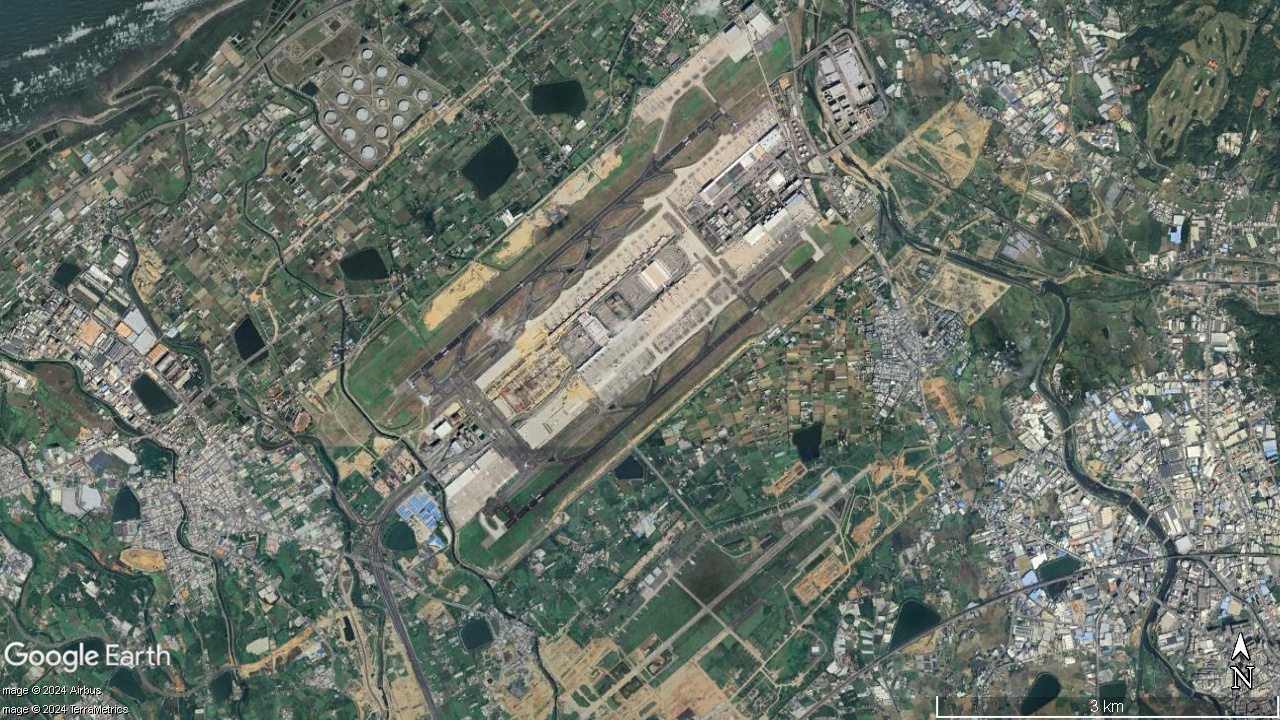
Taoyuan Aerotropolis is the largest zone expropriation case in Taiwan. The plan for development centred around Taoyuan Airport, the largest and busiest in Taiwan located 40km west of Taipei, encompasses over 4,500 hectares. The megaproject is fraught with controversies, not least because it is estimated that at least 6,000 households will be impacted by land expropriation for the first phase, covering an area of 2,599 hectares. But expropriation for Taoyouan Aerotropolis will be constrained by a June 2023 ruling from the Taipei High Administrative Court. The Taiwan Association for Human Rights reported that a lawsuit calling for cancellation of Taoyuan Aerotropolis land expropriation obtained a favourable ruling with most of the plaintiffs winning their cases.

The 4,500 hectare Taoyuan Aerotropolis plan is centred around Taoyuan Airport and includes a third runway to the north

The lawsuit discussed issues of public interest, necessity and proportionality principles regarding land expropriation. Representing the legal team, Xiong Yiling (熊依翎) expressed gratitude for the court’s judgement which allows for preservation of the plaintiffs’ land and homes. In this case it was found that clients’ land was not expropriated for public interest or necessity. Lu Xueshin (呂學信), representing plaintiffs from both sides of Yugang Road, north of Taoyuan Airport where a third runway is planned, said that their community was not within the scope of Taoyuan Aerotropolis for many years. But they were forcibly included after residents in a neighbouring area petitioned for their inclusion. Lu Xueshin said the land is not needed to construct a third runway and was expropriated due to others’ private interests. Wu Mingzhe (吳明哲), representing Ziqiang Community plaintiffs located near the airport entrance, stated that the area was supposed to remain residential. However, without the knowledge of residents, a large group of other residents expressed their wishes to be included in expropriation plans. As a result a large area of the community was included in expropriation plans, in spite of a 2019 plan for preserving the Ziqiang community and a public hearing establishing that those who refuse to be expropriated can be excluded.

Yu Yicha (余宜家), Deputy Secretary-General of the Taiwan Association for Human Rights, said that the locations of the plaintiffs were excluded from the expropriation plan for many years, or neighboured almost identical lands not requiring expropriation, demonstrating that these areas do not need to be expropriated and keeping their land does not hinder construction of Taoyuan Aerotropolis. Futhermore, Taiwan’s land expropriation system, a system rarely seen in democratic countries, has been heavily criticised becasue of the large areas and numbers of households affected and violation of people’s housing and property rights. The Taiwan Association for Human Rights welcomed the Taipei High Administrative Court’s careful consideration of the serious infringement of people’s basic rights and a verdict marking a significant milestone in Taiwan’s land expropriation system. They urged the relevant authorities to review the Taoyuan Aerotropolis plan as a whole and negotiate with residents to return expropriated land.

The land expropriation case is one of five lawsuits relating to Taoyuan Aerotropolis, assisted by non-governmental organisations including Taiwan Association for Human Rights, Taoyuan Aerotropolis Anti-Forced Eviction, the Environmental Jurists Assoication and the Environmental Rights Foundation.

Long term land tensions over Nadzab Airport Redevelopment Plan (NARP) and Airport City

Plans for airport city style development at Nadzab Airport – located 42km to the northwest of Lae, capital of the Morobe Province and Papua New Guinea’s second largest city – emerged in a 2011 masterplan for future growth of the airport both as an aeronautical hub and as a commercial and industrial centre. Nadzab Airport’s extensive land holding was earmarked for development and expansion over a time-frame of 50-70 years. The graphic below, showing a business hub next to the airport, is from Nadzab Central Strategic Plan, produced by Planpac and identifying development opportunities for 700 hectares of greenfield land.

Nadzab Central Strategic Plan. Graphic: PLANPAC
In 2012 PLANPAC developed a Strategic Land Use Masterplan for Nadzab Central Strategic Plan, a business hub next to Nadzab Airport, with 700 hectares of greenfield land on a 1,100 hectare site. Graphic: PLANPAC

Tensions between clans over ownership of land parcels date back to the inception of the airport project, in 1972 when the country was under Australian colonial administration. A loan agreement between the Japan International Cooperation Agency (JICA) and the PNG government – for ¥26,942 million (USD225.2 million) of an estimated project cost of ¥32,246 million (USD269.6 million) – was signed on 14th October 2015 and the project came to be known as Nadzab Airport Redevelopment Plan (NARP). Plans for an Airport City were mentioned in 2017 and in February 2020 NARP project manager said it was a major airport and city development and the provincial government must help address landowner issues. Prime Minister James Marape tasked Lands and Planning Minister John Rosso to start mobilising landowners in preparation for the project. In April 2021 PNG National Airports Corporation (NAC) managing director and chief executive Rex Kiponge said that upon completion of NARP the airport city concept would be rolled out, saying “When the airport is complete, the commercial aspects of the airport business hub must complement it.”

The village of Gabsongkeg is at the centre of NARP and landowners have made repeated calls for consultation, participation in the project and spin-off business opportunities. In 2020 landowners were disappointed that construction and security contracts were awarded to outsiders overlooking reputable local businesses. In January 2022 it was reported that only a small number of landowners were benefitting from leasing their customary land for associated businesses. Local people impacted by airport development still lack clean running water, electricity and adequate health facilities. NARP and other projects, such as a 4-lane highway and gold and copper mining, have triggered an influx of people, disrupting the social fabric and leading to increased social problems including violence, killings and drug & alcohol abuse. The area lacks a police station to address these issues.

Serious social problems of rape, underage marriage and prostitution specifically harm women. And women have been marginalized in land-related negotiations and decisions due to government assumptions of patrilineal land descent. Yet in the midst of these difficulties 60 Gabsongkeg women – planning ahead as most of the land in Gabsongkeg where coconut, plantain, cocoa and other trees are cultivated, is set to be taken over by the Nadzab township development – have established table markets selling food and other goods. They have increased their incomes and aim to grow their ventures into small-medium sized enterprises to support their families in the future.

Further information about contested land and other issues arising from Nadzab Airport has been published on EJatlas, the world’s largest, most comprehensive online database of social conflict around environmental issues: Nadzab Airport Redevlopment Plan (NARP) and Airport City, PNG

Video – Aerotropolis: Evictions, Ecocide and Loss of Farmland, part 2

The second part of a two-part video, Aerotropolis: Evictions, Ecocide and Loss of Farmland, highlights damaging impacts of aerotropolis (airport city) projects on people and the environment. Evictions can be large scale and there are many instances of human rights violations. Allocation of large greenfield sites places farmland, forests, wetlands and coastal ecosystems at risk.

The video looks at 14 aerotropolis-type projects: Central Transport Port-CPK (Poland), Manchester Airport City (UK), Airport City Gatwick/Horley Business Park (UK), New Mexico City Airport (NAICM), (Mexico), Santa Lucia Airport (Mexico), Northwest Florida Beaches Airport (US), Vernamfield Aerotropolis (Jamaica), Hamilton Aerotropolis (Canada), Pickering Airport/Toronto East Aerotropolis (Canada), Mattala Airport (Sri Lanka), Nijgadh Airport (Nepal), Istanbul Airport (Turkey), Bulacan Aerotropolis (the Philippines) and Sanya Hongtangwan Airport (China). For further information see the comprehensive Reference list of all source material, including photos and other images. Part 1 of the video can be viewed here.

Bill calls for repeal of Bulacan Aerotropolis franchise

On 12th April a bill was submitted to the House of Representatives of the Philippines calling for repeal of a franchise granted to San Miguel Aerocity Inc., a subsidiary of San Miguel Corporation (SMC), to contruct, develop, establish, operate and maintain an airport and an adjacent airport city in Bulacan, on the northwest shore of Manila Bay. The bill, HB 9191, cites evidence of negative environmental impacts including loss and reclamation of land, alteration of river and drainage pathways, removal of flora and fauna and air pollution from construction and operations. Four major geohazards were identified: earthquakes, tidal and fluvial flooding, storm surge and subsidence. The bill states that the Environmental Impact Statment (EIS) that was the basis for approval of an Environmental Compliance Certificate (ECC) issued to SMC’s contractor, Silvertides, has been concealed from the public and affected fisherfolk. Silvertides’ February 2019 announcement that 2,375 hectares of fishponds would be impacted by back-fill (the first stages of a land reclamation process) requiring 205 million cubic metres of fill materials, is an indication of the potential scale of the loss of fishing grounds and disruption of coastal ecosystems.

HB 9191 cites evidence from Pamalakaya, the national federation supporting the rights of small fisherfolk, stating that the aerotropolis project and the law granting the franchise are ‘undemocratic’ due to a lack of consultation, intimidation and militarization faced by about 700 affected fisherfolk families. Their concerns over displacement for the aerotropolis include food insecurity, livelihood and economic losses, loss of housing and privatization of communal areas. In April 2018 an attempt to submit a petition opposing the project and hold a peaceful protest was violently dispersed by local police. In June 2020 some affected residents were pressurized to demolish their own homes. When legislative measures were filed at the House of Representatives affected fisherfolk were not given opportunites to express their opinions about or opposition to the project. Passage of the bill is sought in order to ‘uphold the democratic rights of marginalized sectors particularly for the small fisherfolk sector; for the genuine rehabilitation of Manila Bay and preservation and conservation of the marine and fisheries resources’.

Aerotropolis: Evictions, Ecocide and Loss of Farmland, part 1

The first section of a two-part video, Aerotropolis: Evictions, Ecocide and Loss of Farmland, highlights damaging impacts of aerotropolis (airport city) projects on people and the environment. Allocation of large sites means that communities face displacement and entire ecosystems can be destroyed.

The video looks at 14 aerotropolis-type projects: New Yogyakarta International Airport, Kertajati Airport and Aerocity, Kualanamu Aerotropolis (Indonesia), 2nd Jeju Airport (South Korea), New Phnom Penh Airport (Cambodia), Long Thanh Aerotropolis (Vietnam), Taoyuan Aerotropolis (Taiwan), KXP AirportCity (Malaysia), Andal Aerotropolis, Bhogapuram Airport and Aerocity, Shivdaspura Aerocity (India), Anambra Airport City (Nigeria), Tamale Airport (Ghana) and Western Sydney Aerotropolis (Australia). For further information see the comprehensive Reference list of source material, including photos and other images.