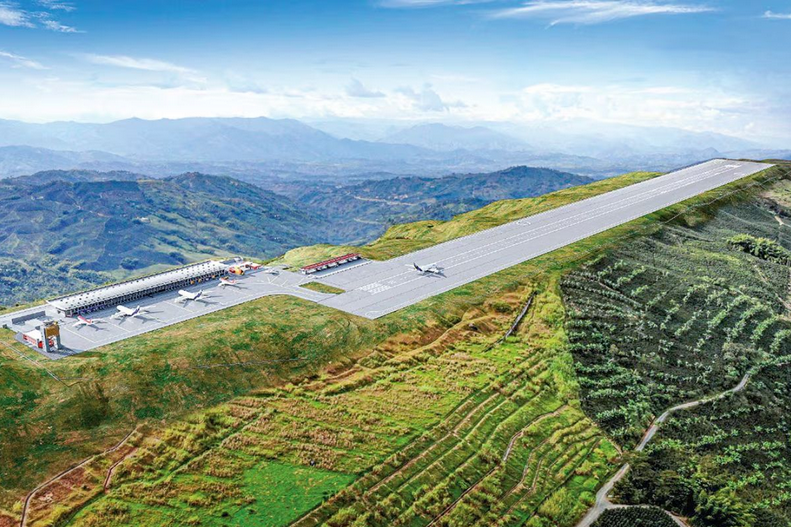
Rendering of Aerocafé Airport, now under construction in Palestina, Caldas. Image source: CPG Click Oil and Gas
Construction of Aerocafé Airport, in the municipality of Palestina in the south central region of the state of Caldas, part of Colombia’s coffee cultivating region known as the Coffee Triangle or Coffee Axis, is underway, The showcase infrastructure project is promoted as an engine for regional growth, anticipated to enable a 12 per cent increase in nature, adventure, cultural and gastronomic tourism. Exports including coffee, textiles and household appliances are envisaged. Yet Palestina residents in the affected area complain of uncertainty, displacement and disputes over compensation. In addition to economic concerns over resettlement the airport project has begun to impact on people’s local networks and sense of belonging. Authorities claim that the project complies with compensation and resettlement procedures. Construction of Aerocafé Airport, among the most complex and expensive in the history of the Caldas Department, is having major impacts on people occupying the area designated for the project. Land is being prepared for construction works and machinery moved in, directly affecting approximately 250 families living near the area earmarked for the runway and other structures. Entire communities will have to vacate their homes, rural property and small businesses. The Department of Caldas, Ministry of Transport and Civil Aeronautics of Colombia stated that affected residents should relocate to a planned neighbourhood providing equivalent or superior housing, with temporary compensation during the resettlement process. But this process necessitates environmental licenses, technical requirements and public hearings that are not yet completed.
These negative impacts on communities directly affected by construction are not what was promoted by the UK Government Prosperity Fund. In 2020 this scheme (a £25.5 million programme running from 2017 to 2022) provided USD1,265,000 for design studies for ‘Aerocafé, An Airport That Champions Economic Inclusion and Gender Equity’, claiming it would incorporate best practices exemplifying the principles of gender equity and social inclusion along with adherence to environmental standards. British Ambassador to Colombia, Colin Martin-Reynolds said, “This project will have a considerable impact on the economic development and livelihoods of communities in Caldas and the entire coffee producing region.” Manager of the Aeropuerto del Café Association, Amparo Sánchez Londoño, emphasised the strategic significance of the airport and foreign investment, saying, “thanks to this international cooperation, we have consultants with extensive experience in the airport sector, adding value to the design of the most important infrastructure project for the economic revival of the region.” Recent news on construction works raises serious concerns that Aerocafé Airport is failing to foster inclusive economic development for directly affected communities, or to support their livelihoods.
Plans for the Aerocafé Airport, originally named ‘Coffee Airport’, first emerged in 1977 but the project met with lengthy delays due to funding and administrative issues combined with engineering difficulties of constructing an airport on steeply sloping, unstable terrain. The site is on a plateau 1,600 metres above sea level which, following cut and grading works, could accommodate a runway more than 3 kilometres in length. In August 2021, during preparation of the site including grading (levelling the site), confirmation of sites for disposal of surplus materials and drainage works, the Civil Aeronautics of Colombia estimated that 5.8 million cubic metres of earth would need to be moved. In October 2024, 47 years after it was first mooted, the megaproject was revived when Aerocafé received a finance guarantee from the Colombian government, which meant that contracting for a further stage of construction works could commence. The investment for first phase of the project, with a 1,460 metre runway, taxiway, hangars, apron and a 6,000 square metre terminal with capacity for 1 million passengers per annum, is 828,423 million Colombian pesos (approximately USD197 million). The finance guarantee from the Ministry of Finance complemented funding from the Federal Government and Caldas State.
Construction of Africa’s biggest airport, a Mega Airport City, in Bishoftu, Ethiopia, is set to take up a vast 35 square kilometre site and a budget of USD6 billion just for the first phase and has met with resistance from farmers impacted by the resettlementprocess.
Artist rendering of planned Mega Airport City in Bishoftu, Ethiopia. Photo: Ethiopian Airlines, September 2024
Ethiopian Airlines announced plans for an airport city in Abusera (in Bishoftu, part of central Ethiopia’s Oromia region, about 40 kilometres southeast of Addis Ababa) in September 2018. CEO Tewolde Gebremariam said the location was selected because of its elevation; at about 1,900 metres above sea level it is considerably lower than Addis Ababa at 2,400 metres. This would bring the advantage of improved fuel efficiency for flights in comparison with Ethiopia’s existing main airport, Addis Ababa Bole International Airport. French engineering firm ADP Ingénierie (ADPI) conducted a site selection study and in February 2019 the Council of Ministers was set to endorse the proposed site in Abusera. Gebremariam said the mega-hub would not just be an airport, costing USD4 billion with four runways and capacity to handle 80 million passengers per year; it would include other infrastructures making it an airport city with a large duty-free shopping area, entertainment centres, hotels, business centre, logistics centres and real estate development. By January 2020 the airport city plans had become even more ambitious; passenger capacity had increased to 100 million per year. The anticipated cost had also risen significantly. Gebremariam said “We have identified 35sqkm land to be developed as an airport and it is about a $5bn project – larger than the Grand Ethiopian Renaissance Dam (GERD). It is going to accommodate 100m passengers; larger than Dubai and more or less equal to the new Istanbul airport.”
In February 2024 Ethiopian Airlines announced that the designated land for the airport city had been secured and that the project would encompass an area of 38 to 40 square kilometres. A spokesperson said the Oromia Regional Government, in collaboration with the Federal Government, was evacuating residents from the site to make way for construction to begin. The estimated cost of the megaproject had escalated again. In August 2024 Ethiopian Airlines was searching for USD6 billion in financing just for the first phase of what was now called a ‘Mega Airport City’. Projected passenger capacity increased again, to 110 million per annum, and the Dar Al-Handasah consultancy was awarded the contract for design and supervision of the Mega Airport City. At the signing ceremony Ethiopian Airlines stated, ‘The architectural team will incorporate elements of Ethiopian heritage to establish a people-centric, intuitive airport characterised by sustainability, resilience, and future-readiness.’
The claim to be ‘intuitive airport’, ascribing sentience to infrastructure, is just meaningless corporate guff. And the claims to be ‘people-centric’ boasting the qualities of ‘sustainability’, ‘resilience’ and ‘future-readiness’ disregard the airport city’s impacts on the people most directly affected, those who are being displaced to make way for it. Simultaneous with the search for USD6 billion to finance the airport city it was announced that construction could only go ahead if up to 2,500 farmers currently residing on and surrounding the site were resettled. Mesfin Tassev, CEO of Dar Al-Handasah, said a 740-hectare plot had been allocated by the Oromia Regional Government for this purpose, along with 17 billion Birr (USD172.5 million) for resettlement and development works. Design work was anticipated to be complete by December 2025 followed by construction of housing and other basic facilities along with development of employment opportunities for relocated residents by the end of 2026. Mesfin told The Reporter, “The construction of the airport city depends on the resettlement of the farmers. It will commence as soon as they move.”
The resettlement process is not proceeding smoothly. By January 2025 it was reported that Africa’s biggest airport was under construction but ‘faced significant challenges’ regarding coordination of finances, geopolitical dynamics, environmental concerns and the complex task of relocating affected communities. The airport city has triggered local resistance. Affected farmers, many of whom depend upon their land for subsistence and farming livelihoods, are concerned about compensation and resettlement. Many of them feel inadequately compensated and there are reports that the compensation offer was far less than the land’s market value. Resettlement has also caused discontent. Some farmers claim that clear plans for relocation and support for finding new livelihoods have not been provided. During a local meeting held to discuss the project one farmer said, “I’ve cultivated this land for decades. It’s not just my home. It’s my history and my family’s future.”
A new book draws attention to accelerating airport development in Asia and Africa, elucidating many factors underlying the political sensitivities frequently surrounding greenfield development, airport expansion and airport cities. Contested Airport Land: Social-Spatial Transformation and Environmental Injustice in Asia and Africa, edited by Irit Ittner, Sneha Sharma, Isaac Khambule and Hanna Geschewski, is published by Routledge.
Following a conceptual introduction and overview chapter in-depth case studies give nuanced insights into the complex socio-economic, political and administrative dynamics of seven airport projects: the suspended Nijgadh Airport (Nepal); Mattala Airport (Sri Lanka); Yogyakarta Airport (Indonesia); a critical review of airport land contestations in India focussing on Jewar and Dehradun airports; the airport reserve in Abidjan (Cote d’Ivoire); Durban Aerotropolis (South Africa) and Isiolo Airport (Kenya).
You can listen to a conversation with three of the co-editors on an episode of The Channel podcast from the International Institute for Asian Studies (IIAS) at Leiden University, hosted by Benjamin Linder.
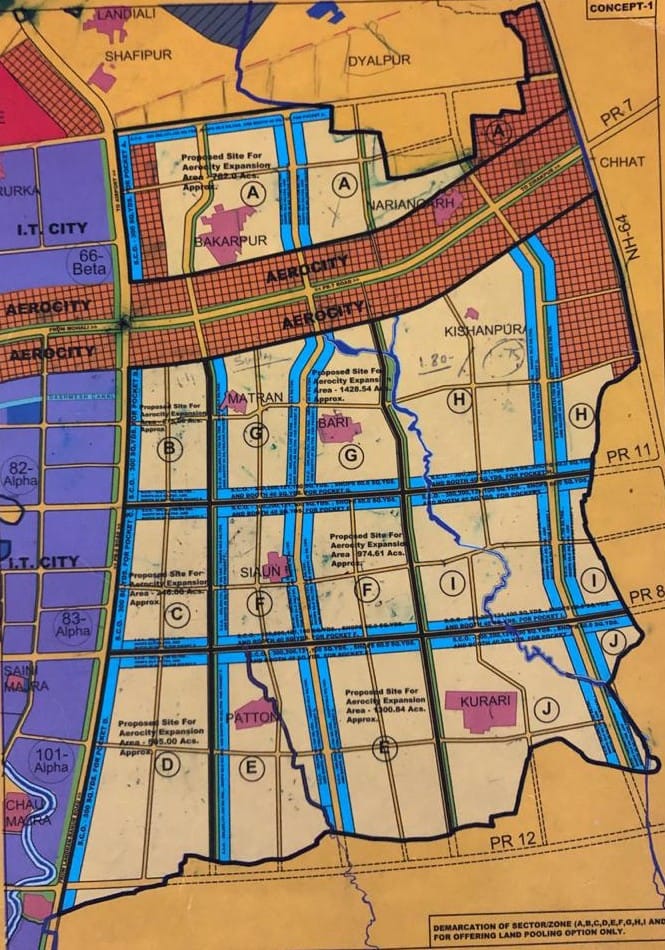
A study focussing on three villages affected by land acquisition for expansion Mohali Aero City, southwest of Shaheed Bhagat Singh International Airport, raised concerns over threats to rural livelihoods.
Proposed acquisition of 5,438 acres (2,200 hectares) of land from 14 villages – Bakarpur, Naraingarh, Kishanpura, Safipur, Rurka, Matran, Bari, Chatt, Saini Majra, Seon, Kurari, Chau Majra, Manauli and Paton – for AeroCity expansion, called ‘Aerotropolis’, was confirmed by Greater Mohali Area Development Authority (GMADA) in 2017. A 2021 article in the Journal of Land and Rural Studies by Thomas Reuter, Sarbjeet Singh, A.K. Sinha and Shalina Mehta, Land Grab Practices and a Threat to Livelihood and Food Security in India? A Case Study from Aerocity Expansion Project from S.A.S. Nagar, Punjab, analyses the project as an example of large-scale acquisition of highly fertile agricultural land. The authors describe ‘blatant land grab practices by the state authority in the name of development, which act as barriers to the food security and threaten the livelihoods of those whose land will be acquired’. The study focussed on three affected villages – Patton, Kurari and Seon. Fieldwork conducted in April 2019 included in-depth interviews with 50 displaced farmers.
A consolidated demographic profile of Patton, Kurari and Seon from the 2011 census showed that the total number of affected people was 3,031. A significant number, 955, belonged to the scheduled caste population, the most marginal rural people, many of them landless labourers, some of whom farm on leased land and other providing menial services. Land acquisition renders them homeless and they receive no compensation. The scheduled caste community of Patton village were marginal farmers owning only 1-2 acres of land. Scheduled caste people of Kurari and Seon did not own any land and depended entirely on agricultural activities. The working population was divided into two categories. ‘Main workers’ included marginalised individuals regularly hired by affluent farmers to work in their fields and people engaged in pastoral activities in a more favourable economic situation. ‘Marginal workers’ comprised migrant workers primarily from Uttar Pradesh and Bihar along with seasonal workers from other states coming to the area for work harvesting paddy and wheat. Agriculture was the primary economic activity in the three villages. Several farmers had modern equipment such as tractors, tillers and adequate irrigation with tube wells for which free electricity was provided by the state. Farmers getting cash compensation for surrendered land tend to lose these subsidies, along with minimum price support for cereal crops.
Narratives from three affected farmers
The article includes narratives from three farmers affected by land acquisition for the Aero City Expansion. A 59-year old man from Kurari village grieved that the pace of urbanisation would convert lush green fields into a concrete jungle. He worried that wheat, rice, maize and other cereal crops would disappear. GMADA and private builders offered different compensation packages, causing friction among those surrendering prime agricultural land and also between farmers and the state, resulting in litigations and delays in land acquisition and launch of construction activities. A respondent from Patton said that a decade ago the land was unsuitable for farming and nobody wanted to settle in the village. Residents worked hard and within two years had made all the available land suitable for agriculture. Most farmers grew vegetables and cereals which they sold at nearby farmers’ markets. When GMADA notified the village for land acquisition for the Aero City Expansion project farmers feared compulsory acquisition and sold their land to private builders. He said that when the government acquires land compensation is inadequate and the payment process often gets trapped in legislation. He had worked hard on the land he was forced to sell and was unsure of the productive capacity of new land he had purchased. A Seon villager whose land was acquired by GMADA for the Aero City Expansion had not been paid adequate compensation. He retained six acres but there was a possibility this would also fall under the proposed land acquisition, leaving him without any means of livelihood.
Loss of pastoral activities and social stability
Livestock provided an important subsidiary source of income in the three villages. Cows and buffalo were reared mainly for milk and cows also for manure. Pastoral activities in the three villages were mainly pursued by women waking up early to milk cows and buffalo. Land acquisition can deprive women of this primary economic activity making them far more vulnerable, especially when they run single-parent households. The case studies suggested that animal rearing as a livelihood became unviable because land used for pasture was no longer in villagers’ possession. Loss of agricultural land can cause cessation of pastoral activities, as most displaced households are not compensated with sufficient land to accommodate dairy animals.
Residents of the villages were content with acquisition of small portions of land along roads as it brought them improved connectivity. But acquisition of their fertile land for development of housing for wealthy urbanites and creation of infrastructure in which they were not equal stakeholders left locals feeling cheated. Their lives were marked with upheavals and displacement threatened close-knit social networks. The authors conclude that the Aero City Expansion project was ‘an ambitious ideas but executed without due diligence and groundwork’. Land acquisition brought revenue to the state but measures to support the interests of local residents were inadequate. Urban planners failed to foresee the risks of social tensions and the Aero City epxansion led to social and political instability. The article warned of agricultural decline and the prospect of food insecurity.
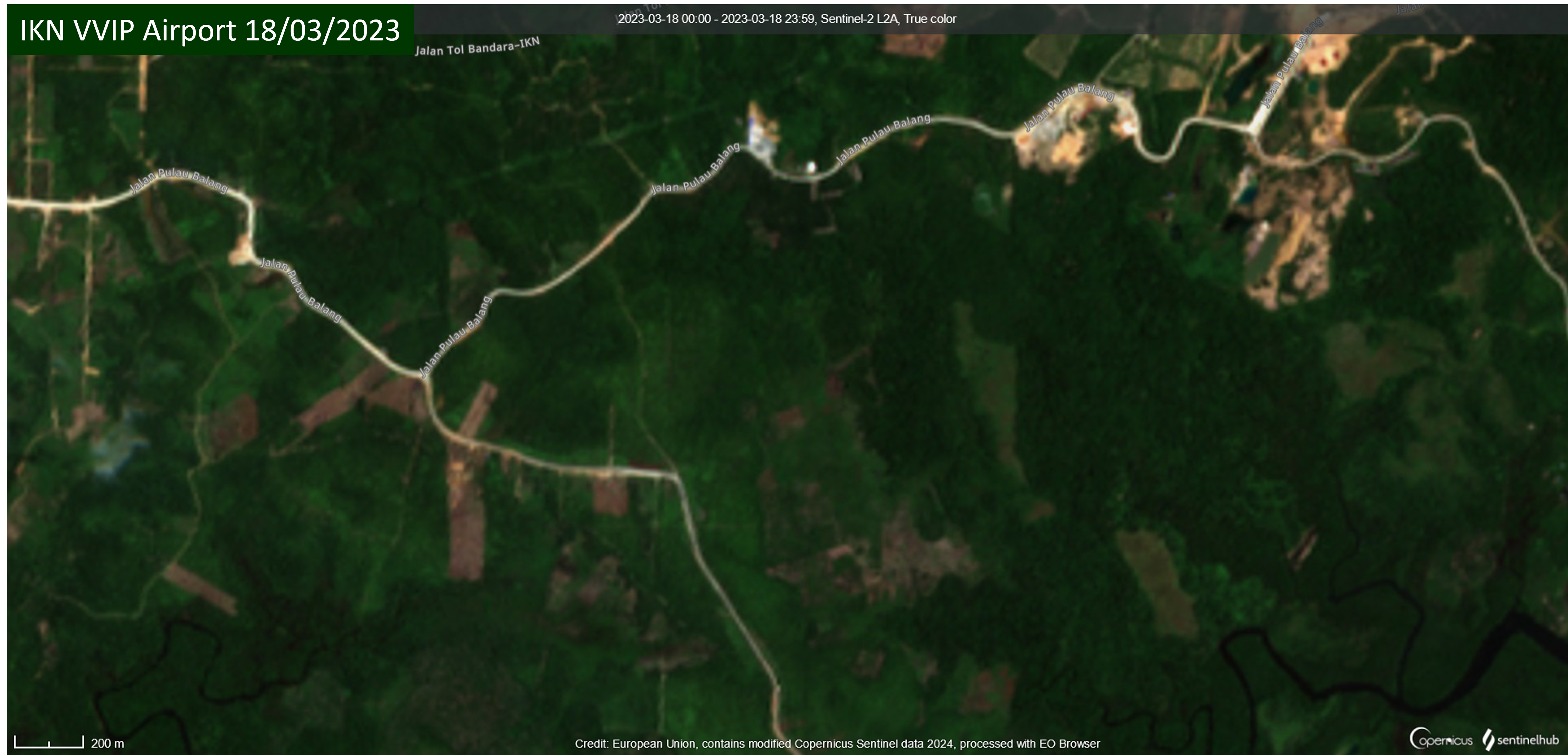
In East Kalimantan on the east coast of Borneo a new VVIP (Very Very Important Person) airport is being constructed to support development of Nusantara (IKN), the future capital city of Indonesia. With a VVIP and VIP terminal covering an area of 7,350 square metres and three helipads IKN VVIP Airport will support the mobility of the President, high-ranking officials, state guests and investors. The international airport will have a 3,000 metre runway to accommodate Airbus A400 military airaft and will be used in coordination with the Indonesian Air Force (IAF). Development of IKN VVIP Airport was accelerated by Presidential Regulation No. 31 on 6th June 2023.
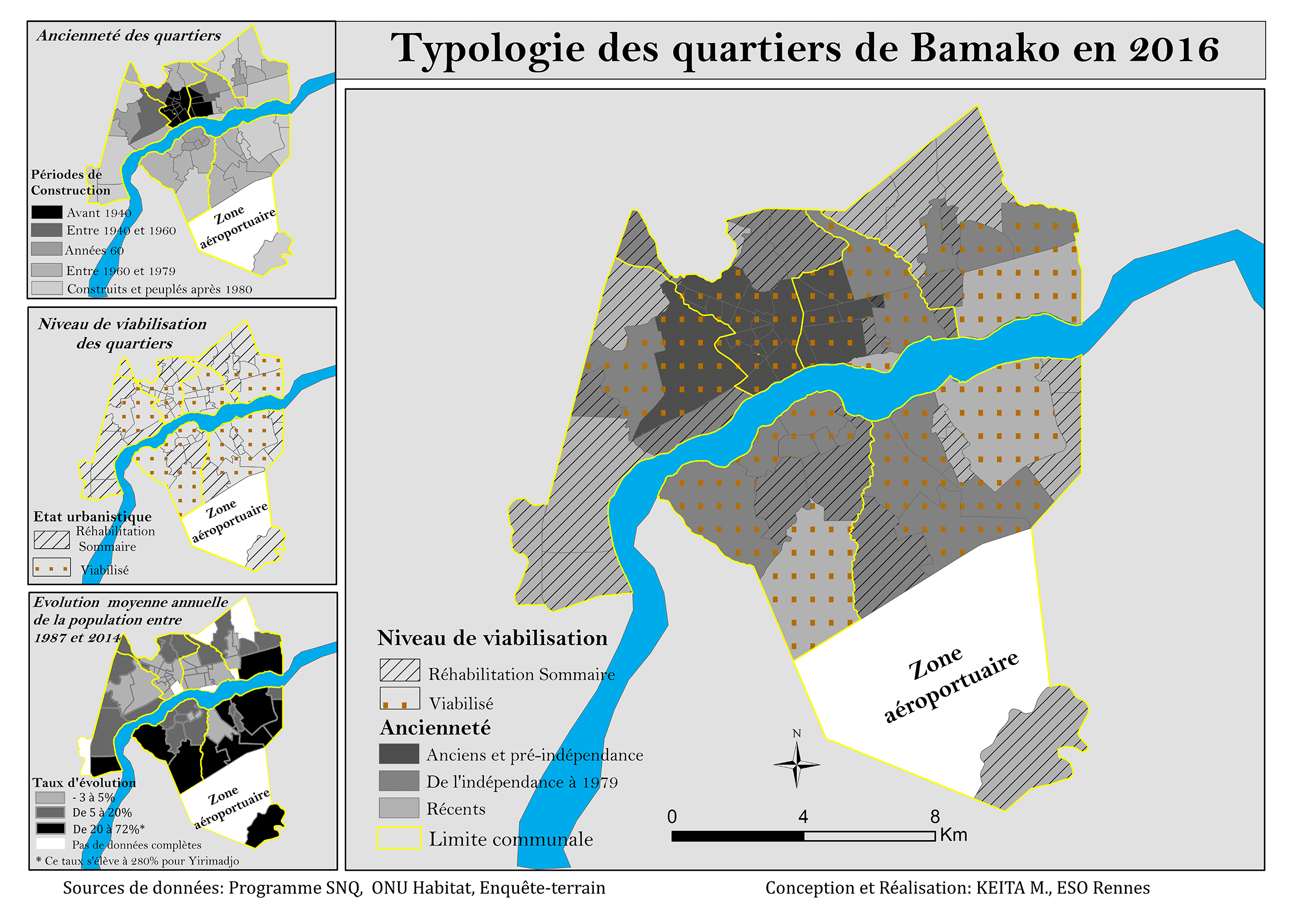
Satellite imagery shows land clearance and earthworks. The image on the left is from 18th March 2023 before works began. On the right is an image from 16th February 2024 where development of the IKN VVIP Airport terminal, runway and access road are clearly visible.
Demarcation of a 360-hectare site began within a few days and triggered reaction from some affected residents. On 30th June Muslimah News reported that hundreds of residents from five sub-districts – Gersik, Jenebora, Pantai Lango, Kelurahan Riko and the Maridan village area in Sepaku – were protesting take-over of land they occupied by the Land Bank Agency for construction of the VVIP airport. They refused to hand over their land to the Land Bank Agency because stakes were installed without prior notice and the government’s promise, made the previous year, to provide land for agrarian reform had not yet been fulfilled. There was a lot of evidence that construction was consuming residents’ land and authorities were ignoring their protests. Protest was not just in response to construction of the airport; there was also some controversy over whether the land bank serves public interest or corporate projects. The Land Bank Agency made reassurances that residents’ rights to replacement land would be accelerated and that agrarian reform land was being prepared for this purpose.
On 3rd August 2023 many palm farmers gathered at their former plantation area where they unfurled banners and made speeches demanding compensation for land affected by the VVIP airport construction project. A lawyer representing some of the residents said that oil palm land previously managed by them was suddenly cleared with heavy equipment. Palm oil trees had been damaged and razed to the ground but the farmers said they had not received compensation and there had been no discussions or meetings with authorities.
Land clearance and installation of boundary markers continued and on 10th January 2024, during socialisation for communities impacted by construction of the VVIP airport and access toll road, it was announced that 400 hectares of replacement land had been prepared for them. Yet complaints about the land acquisition process continued. On 14th January 2024 TribunKaltim reported that some farmers whose land was used for construction of the VVIP airport were unable to farm the land and had no clarity regarding replacement land. The land declared for the airport was the only land they owned and they relied upon it for their livelihoods. Many affected farmers owned one or two hectares of land. Many residents who lost their land had still not received compensation.
On 9th February 2024 Acting Regent of North Penajam Paser, Makmur Marbun, said the number of people whose land was allocated for the VVIP airport but had not yet been acquired had reduced from 80 to 22, explaining that the land of these 22 people is in the area that will be the runway and vital for the airport project. The residents had brought a lawyer to the airport site where they met with officials but Makmur Marbun said he would continue to attempt to resolve the issue through discussions. Completion of IKN VVIP Airport and commencement of operations is targeted for early August 2024.
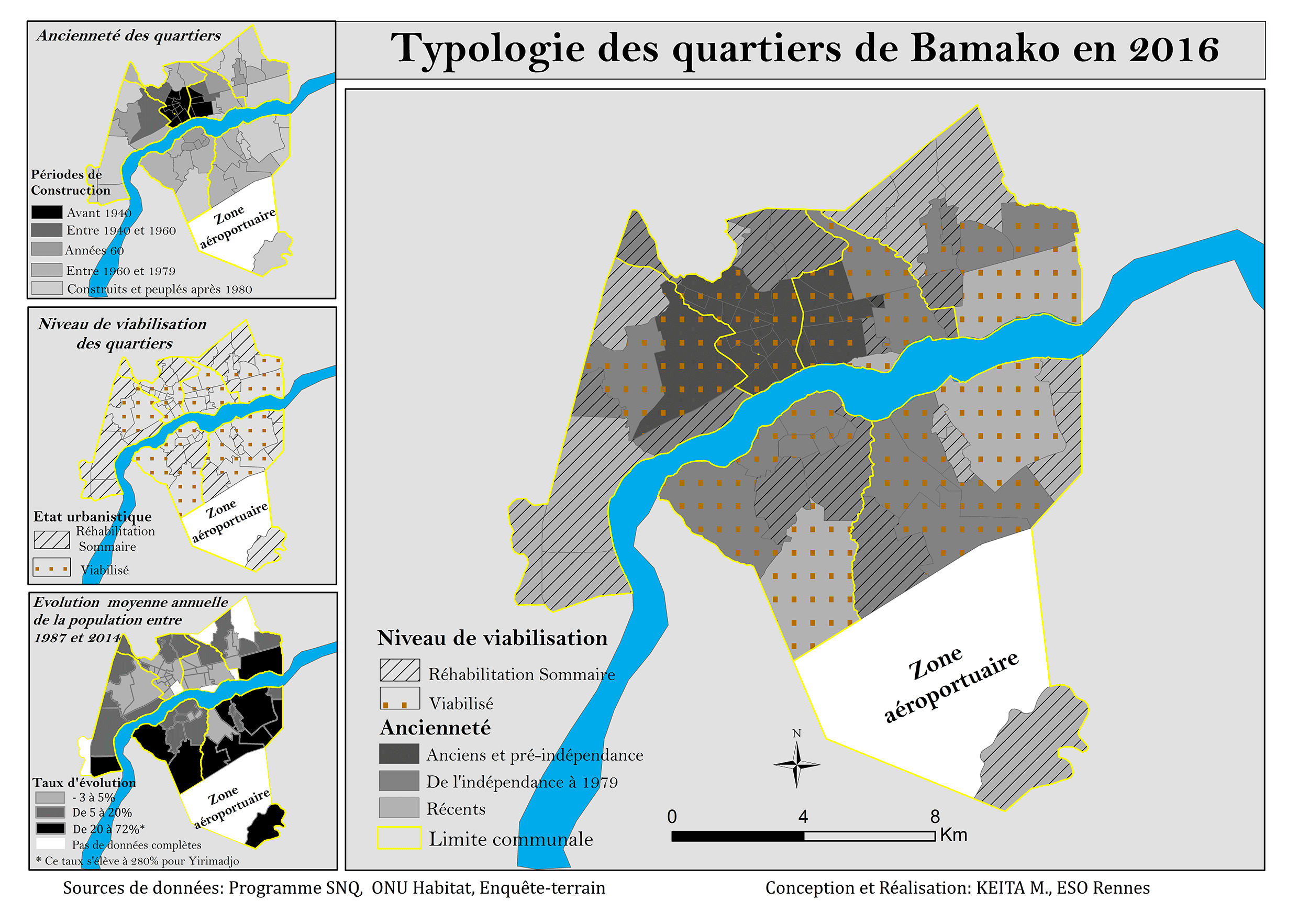
Mass evictions for an ‘airport zone’ next to Modibo Keita Airport, Mali’s main airport on the outskirts of Bamako, the capital city, began on 20th April 1995. Without warning, the government began bulldozing the Senou neighbourhood to make way for expansion of the zone. Demolitions continued for ten days and about 3,707 families, approximately 30,000 people, were forcibly evicted. Further waves of demolitions followed with many instances of land grabbing and speculation. Farmers were displaced for a fertilizer plant on the land in 2007-8 and in 2009 residents resisted instructions to leave the land. A drive to clear remaining communities began in 2021. Bulldozers arrived early in the morning of 14th January, in a major eviction drive covering 1,600 hectares; about 20,000 families in 11 neighbourhoods were impacted. About 800 evictees said they had permits to occupy the land and many affected people were left destitute without shelter.
The ‘airport zone’ – zone aéroportuaire Modibo Kéita – is vast, extending over 7,194 hectares northwest of the airport. It was classified as a plot of land for airport company use in 1999. Residents contest government claims that their occupation of the airport zone is illicit; they have lived on the land for several generations. An inhabitants’ organization – Plateforme deshabitants de la zone dite aéroportuaire (PHZA) – has been established with active groups, sometimes holding different views about land management, in many affected villages. Women, some of them elderly, play a prominent role in resistance against eviction from the ‘so-called airport zone’. The land struggle is supported by l’Union des Associations et Coordinations d’associations pour le Dévelopement et la Défense des Droits des Démunis (UACDDDD), a national federation fighting the injustices of dispossession. Demonstrations and meetings about the airport zone have been attended by hundreds of people. In November 2021 an independent national commission of inquiry to investigate demolitions in the airport area was established.
For more information about the Modibo Keita airport zone evictions see the case report on EJatlas, the world’s largest, most comprehensive online database of social conflict around environmental issues: Modibo Keith airport zone, Mali
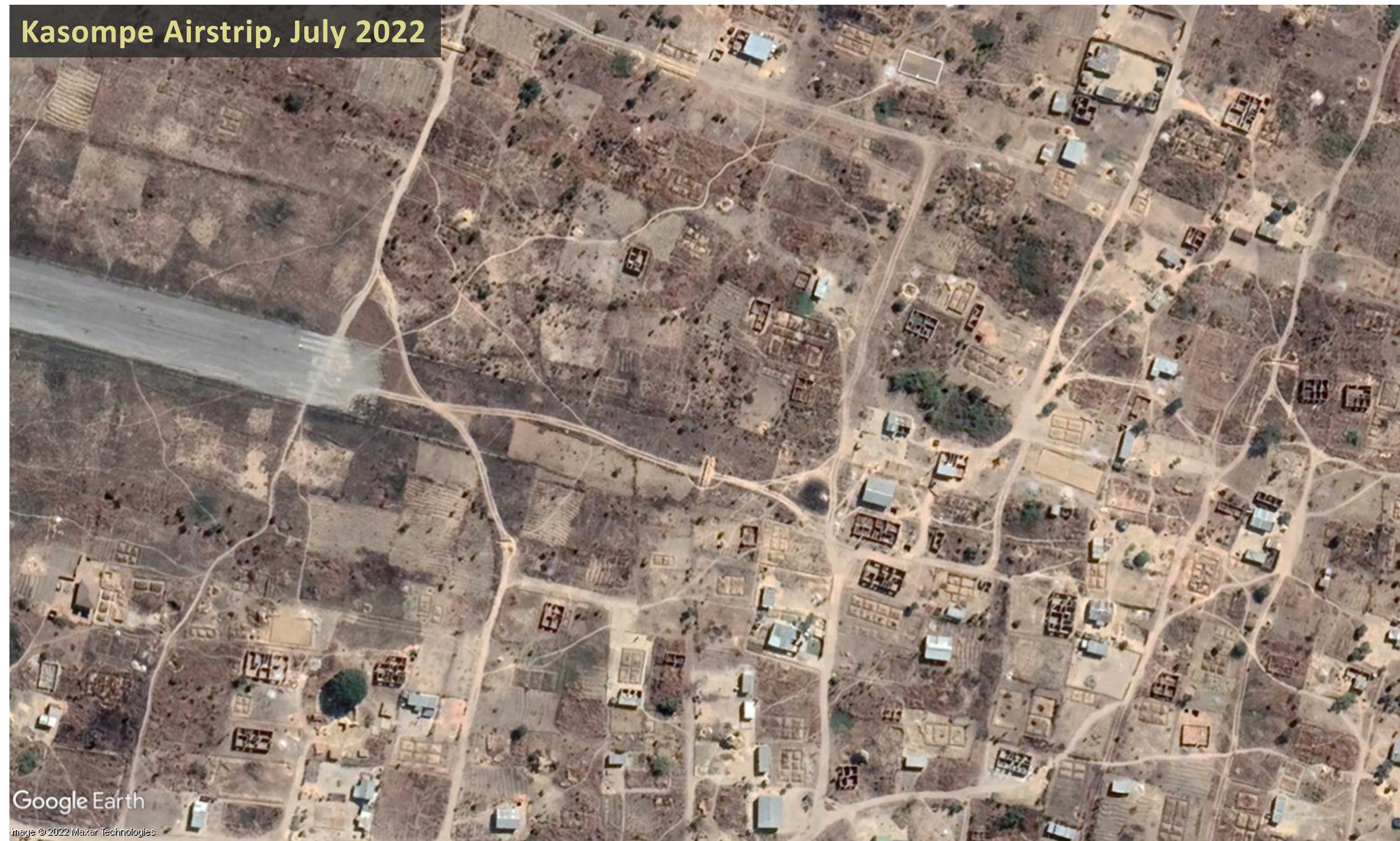
On 20th August 2022, beginning at 2am, more than 300 houses built on land surrounding Kasompe Airstrip were demolished by officers from Chingola Municipal Council and the Zambia Police Service. The Council stated it had not allocated the land in question and the buildings had been erected without planning permission. Residents appealed to the government to find them alternative land and some of them attempted to resist the demolition, burning tyres and breaking the windows of bulldozers. A video of the demolition shows houses in plots of land with gardens and trees being bulldozed, as displaced people looked on.
Completed houses as well as houses still under construction were demolished. A number of residents retaliated against destruction of their homes, setting fire to two properties – a guesthouse and servants’ quarters – owned by Johnson Kang’ombe, Mayor of Chingola, whom they accused him of selling them plots of land at Kasombe Airstrip. Two suspects thought to be involved in the arson were apprehended and detained. A group of women protested chanting slogans including “The Mayor must go”. One evicted woman said that her aunt whose home was also demolished had collapsed with suspected high blood pressure.
In the aftermath of the demolitions the only help given to displaced residents was food aid and space in a camping site, provided by the Chingola District Disaster Management and Mitigation Unit (DMMU). On 29th August it was reported that Chingola District Commissioner Raphael Chimupi had said that DMMU had given relief food items to 95 out of 98 families whose houses had been demolished. Chingola Member of Parliament Chipoka Mulenga visited affected residents and promised to help them, saying “I will do everything in my power to help resolve this issue, it is saddening to see a lot of houses demolished, which has left many families in the cold.” Mulenga said the government would provide alternative land to the victims of the demolition of 345 houses, but as of 27th September 2022 some people were still stranded with nowhere to relocate to.
Satellite imagery of an area at the eastern end of the Kasompe Airstrip runway, dated 26th July and 8th September, shows some of the buildings which were destroyed on 20th August 2022. Slide the bar between the images below to compare the area before and after the demolitions.
The land conflict, inustice and human rights violations related to Kasompe Airstrip is documented on EJAtlas, the world’s largest, most comprehensive online database of social conflict around environmental issues. Kasompe Airstrip is located on the eastern outskirts of the city of Chingola, in the Copperbelt Province, a mineral rich area that is the main copper mining region in Zambia. President of the Equity and Economic Party, Chilufya Tayali, said information had surfaced indicating that the demolition of the houses was not driven by the purported illegality of allocation on plots of land but by foreign interests in a mine near Kasompe Airstrip. Aerotropolis-type plans were mentioned in 2019 when the then Mayor of Chingola, Titus Tembo, said Chingola aims to become a city with Kasompe Airstrip being part of this agenda.
The Zambia Air Force (ZAF) denied allegations that it has influenced or pressured Chingola Municipal Council to demolish the houses on Kasompe Airstrip land. ZAF Director Public Relations Lieutenant Colonel Helen Chota said rumours were incorrect and that none of the other ZAF airstrips had been encroached. Yet the day after the demolitions, on 21st August 2022, it was reported that ZAF Commander Lieutenant Colon Barry had alerted citizens to more house demolitions across the country, saying houses and other structures built within 500 metres of airport infrastructure would be demolished and that building civilian structures on or near airports is a threat to national security.
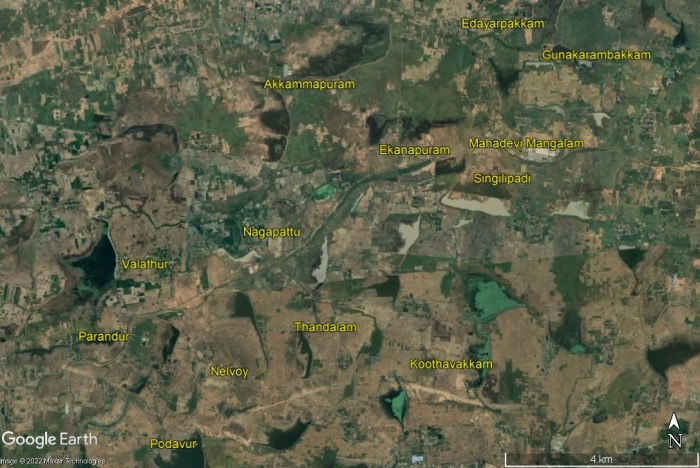
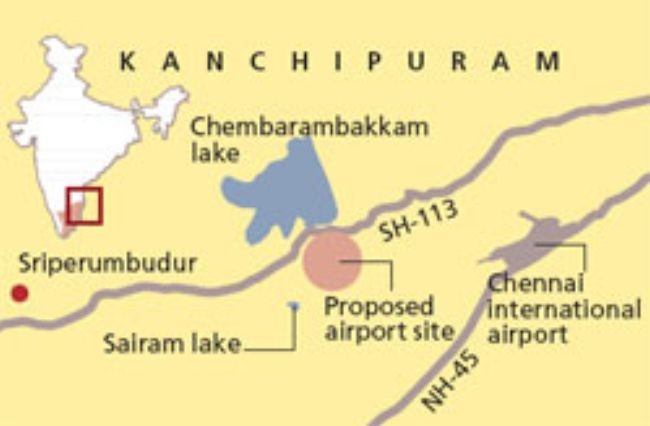
Thousands of farmers and residents have urged the Tamil Nadu state government and Central government of India not to implement a proposed second Chennai airport in Parandur that would destroy their agrarian activities and livelihoods. Parandur is an agricultural area in the Kanchipuram district and the State government plans to acquire land in 12 villages for the airport project. The proposed site in Purandur is approximately 57 kilometres eastwards of the existing Chennai Airport and to the north of the Chennai-Bangalore national highway which is being constructed in stages. Below is a slideshow of a map of the proposed airport site and Google Earth satellite imagery showing several of the villages that might be impacted by land acquisition.
A Times of India article states that the 12 villages from which land for the airport will be acquired are: Parandur, Valathur, Nelvoy, Thandalam, Polavur (Podavur), Madapuram, Ekanapuram, Akkammapuram, Singilipadi, Mahadevi Mangalam, Gunakarambakkam and Edayarpakkam. Other villages to be impacted by land acquisition are listed in other sources referenced in this blogpost, namely Nagapattu, Koothavakkam, Uthyarpakkam and OM Mangalam.
Concerns over acquisition of farmland and environmental issues
On 1st August Union Minister of State for Civil Aviation Vijay Kumar Singh announced that the Parandur site has been finalised after consultation with the Tamil Nadu government. Some Purandar residents demanded suitable replacement land and employment from the government in return for acquiring their land; others said that acquisition of their agricultural land will render them jobless as it is the only work they have known. Some villagers have spoken to media outlets about reluctance to give up their land and uncertainty over provision of compensation:
Ramasamy, from Ekanpuram village, said “A huge tract of our agricultural land would come under this project. We don’t want to lose our agricultural land for this project because farming is our sole source of livelihood.”
Jayakumar, a farmer from Singilipadi, said, “We have been living here for generations. We didn’t know that the airport is coming up here. No one has informed us. If the government suddenly takes away our homes and land, what would we do? Even if they provide compensation, we don’t know what that would be. I am shocked.”
Rajendran, a resident of Thandalam, said, “We are ready to give up land if needed. But we need assurance from the government about good compensation and employment.
Selvaraj from Parandur village said, “We’ve been here in the village for the last 50 years. As per the map released by the government, 5 villages would be destroyed for constructing a new airport. Even if the government gave us compensation for our land, we don’t know what to do for a living, since we know only farming. All of us are shocked by this decision and are planning for a big protest soon. Even last month, the district collector assured us that the airport would not be constructed in Parandur.”
Nachiyappan, a farmer from Koothavakkam, said, ”We are living by farming and if the government acquires our land what will we do for a living? I have small children and want to educate them and am the sole breadwinner for the family. The government will make all sweet talking, but in reality, nothing will happen and we will be the losers. We will protest strongly against this project that will destroy our livelihood as well as the flora and fauna of the area.”
A postgraduate in Economics from Koothavakkam, R. Bindu, said, “Around 800 houses would be demolished in the area and the agrarian economy will be totally destroyed. There are many people in this village who don’t have the patta or the legal rights of the land and they will be totally on the streets.”
Many villagers are employed by the Mahatma Gandhi National Rural Employment Guarantee Scheme (MNREGS) and are concerned that their livelihoods could be destroyed along with the agricultural fields.
An environmental expert pointed out several hydrological problems that might arise from construction of the airport, from decreased recharge of groundwater to deterioration of water quality and possible flooding during the monsoon. The 4,791-acre site is dotted with water bodies and a large proportion, 2,605 acres, is wetlands. A large number of migratory bird species, especially from eastern Europe, visit the site. Some of the birds fly south to Vedanthangal which would pose a bird strike risk to air traffic. Building a stable structure on wetlands would be challenging. Parandur has a lake where migrant birds – tufted ducks, flamingos and common pochards – are frequently spotted.
An airport on a 4,791-acre site, with a huge aerocity
The proposal is for the new airport, with two runways, to have capacity to handle 100 million passengers annually, almost five times higher than the capacity of the existing Chennai Airport, at 22 million passengers per year. Capacity at Chennai Airport is being increased to 35 million in a seven-year expansion project. The runways at the airport in Purandar would be larger than at Chennai Airport, enabling it to handle larger aircraft carrying more than 600 passengers. Tamil Nadu chief minister Muthuvel Karunanidhi Stalin said the initial estimated cost of the proposed airport is Rs20,000 Crore, more than USD2.5 billion. Details of the break-up of this sum, and the funding route, have yet to be made public.
A Times of India article states that ‘The plan is to develop a huge aero city with facilities for maintenance and repairs, aviation ancillary units, and commercial establishments’. Confederation of Indian Industry (CII) Tamil Nadu Chapter chairman Satyakam Arya has pushed for an aerocity around the new airport, which in addition to aviation related facilities could have a convention centre for global conferences and exhibitions. Shankar Vanavarayar, vice-chairman of CII Tamil Nadu, said the state may introduce special schemes and incentives for industries in order to spur industrialization from Chennai towards Parandur.
The proposed site for the Parandur airport, 4,791 acres (1,939 hectares), is certainly large enough to allocate a significant portion of the site for non-aviation facilities. It is larger than the world’s largest airport, Hartsfield Jackson in Atlanta USA, which, with five parallel runways and a site of 1,902 hectares, handled more than 110.5 million passengers in 2019, before traffic reduced worldwide due to the response to Covid-19. In addition to the 4,791-acre site a further 200 acres of land is required for construction of two airstrips, for which the process of surveys and land acquisition is likely to start soon.
Difficulties acquiring thousands of acres for the airport
Land availability has been the main hurdle stalling the second Chennai airport project since it was first mooted, in 1998. Many attempts at large-scale land acquisition failed until authorities zeroed in on Parandur and an article in The Hindu provides a timeline. In November 2000 a ‘futuristic terminal’ was anticipated on a 3,000-acre site likely to be at Porur in west Meenambakkam, north of the existing Chennai Airport. In May 2007 the then Chief Minister of Tamil Nadu, Muthuvel Karunanidhi, said that 4,820 acres would be acquired for the airport in Sriperumbudur. In 2016 the proposed greenfield airport, still planned in the vicinity of Sriperumbudur, was mired in land procurement problems. Union Minister of State for Civil Aviation Jayant Sinha said the thousands of acres required for the new airport were difficult to procure.
In January 2022 the Airports Authority of India (AAI) began to study four potential alternative sites identified by the State government: Pannur, Parandur, Padalam and Thiruporur. Subsequently this list was narrowed down to Pannur and Parandur. On 1st August 2022 Minister of State for Civil Aviation Vijay Kumar Singh said the Tamil Nadu government had shortlisted Parandur as the site for development of a second Chennai airport. The State government will now submit a proposal to the Ministry of Civil Aviation for ‘grant of site clearance’ for the finalised site. The State is also set to begin preparation of a detailed project report. Land acquisition is likely to begin once the State receives approval from the Centre. State government officials have confirmed they will conduct sittings in all affected villages allowing people to express their views to officials.
2010 protest against land acquisition in Sriperumbudur
The article with the project timeline in The Hindu does not mention that the 2007 identification of land for the airport in Sriperumbudur triggered mass protest by villagers resisting land acquisition. In 2010 Moverment against SEZs in Tamil Nadu reported that a 6,921-acre (2,800-hectare) site in Sriperumbudur, located eastward of Parandur and just 30 kilometres from Chennai’s existing airport, had been earmarked for a greenfield airport. The proposed land acquisition for the new airport threatened to displace 2,800 families, about 37,000 people, from 20 villages. Village representatives opposed the airport project and were not interested in compensation from the government. They said agriculture was viable in the proposed site where they cultivated rice paddies, mangos, jasmine trees and vegetables. The site also containing 77 lakes, 120 ponds and 10,000 trees which would be felled. Six village panchayats – Thirumanaikuppam, Vadamangalam, Vayalur, Thirupandiyur, Kottaiyur and Kiloy – passed resolutions opposing land acquisition in a gram sabha meeting.
Proposed site for a 2nd Chennai airport in Sriperumbudur, triggering mass protest in August 2010. Image: Down to Earth, 15/09/2010
Villagers drove away officials sent to survey the land on at least three occasions. On 12 August 2010, 3,000 people from 26 villages demonstrated against the project. Police attacked them with a lathi (baton) charge. Villagers who went to meet the District Officer and attempted to present a petition were beaten and around 20 of them had to be admitted to hospital. A jet fuel pipeline to Chennai Airport, routed through Sriperumbudur, seemingly hardwired the area for development of a new airport. Inaugurating the fuel pipeline in 2009 Praful Patel, Minister of State for Civil Aviation from 2004 to 2011, said, “This (pipeline) also passes through Sriperumbudur where another airport is planned. Once it comes up, the pipeline will be extremely useful.”
Plans for airport city style development at Nadzab Airport – located 42km to the northwest of Lae, capital of the Morobe Province and Papua New Guinea’s second largest city – emerged in a 2011 masterplan for future growth of the airport both as an aeronautical hub and as a commercial and industrial centre. Nadzab Airport’s extensive land holding was earmarked for development and expansion over a time-frame of 50-70 years. The graphic below, showing a business hub next to the airport, is from Nadzab Central Strategic Plan, produced by Planpac and identifying development opportunities for 700 hectares of greenfield land.
In 2012 PLANPAC developed a Strategic Land Use Masterplan for Nadzab Central Strategic Plan, a business hub next to Nadzab Airport, with 700 hectares of greenfield land on a 1,100 hectare site. Graphic: PLANPAC
Tensions between clans over ownership of land parcels date back to the inception of the airport project, in 1972 when the country was under Australian colonial administration. A loan agreement between the Japan International Cooperation Agency (JICA) and the PNG government – for ¥26,942 million (USD225.2 million) of an estimated project cost of ¥32,246 million (USD269.6 million) – was signed on 14th October 2015 and the project came to be known as Nadzab Airport Redevelopment Plan (NARP). Plans for an Airport City were mentioned in 2017 and in February 2020 NARP project manager said it was a major airport and city development and the provincial government must help address landowner issues. Prime Minister James Marape tasked Lands and Planning Minister John Rosso to start mobilising landowners in preparation for the project. In April 2021 PNG National Airports Corporation (NAC) managing director and chief executive Rex Kiponge said that upon completion of NARP the airport city concept would be rolled out, saying “When the airport is complete, the commercial aspects of the airport business hub must complement it.”
The village of Gabsongkeg is at the centre of NARP and landowners have made repeated calls for consultation, participation in the project and spin-off business opportunities. In 2020 landowners were disappointed that construction and security contracts were awarded to outsiders overlooking reputable local businesses. In January 2022 it was reported that only a small number of landowners were benefitting from leasing their customary land for associated businesses. Local people impacted by airport development still lack clean running water, electricity and adequate health facilities. NARP and other projects, such as a 4-lane highway and gold and copper mining, have triggered an influx of people, disrupting the social fabric and leading to increased social problems including violence, killings and drug & alcohol abuse. The area lacks a police station to address these issues.
Serious social problems of rape, underage marriage and prostitution specifically harm women. And women have been marginalized in land-related negotiations and decisions due to government assumptions of patrilineal land descent. Yet in the midst of these difficulties 60 Gabsongkeg women – planning ahead as most of the land in Gabsongkeg where coconut, plantain, cocoa and other trees are cultivated, is set to be taken over by the Nadzab township development – have established table markets selling food and other goods. They have increased their incomes and aim to grow their ventures into small-medium sized enterprises to support their families in the future.
Further information about contested land and other issues arising from Nadzab Airport has been published on EJatlas, the world’s largest, most comprehensive online database of social conflict around environmental issues: Nadzab Airport Redevlopment Plan (NARP) and Airport City, PNG
A drive to evict informal settlers living on parcels of land around Jacksons Airport, Papua New Guinea’s main airport located to the northeast of Port Moresby, was announced in the early days of 2022. Residents of the Saiwara community protested being issued with several eviction notices over the past year by the National Airports Corporation (NAC), the most recent giving them until the end of the month to vacate the area. A petition against the eviction was signed by 5,000 residents and a representative stated that they had been paying a traditional landowner for the land. Many tax-paying small and medium sized enterprises (SME’s) also urged the government to stop the evictions. A video by EMTV Online shows men, women and children protesting, some holding up placards with statements such as ‘No Eviction Please’, ‘No Eviction, What is Government doing For My Future’.
In January 2022 residents of the Saiwara community next to Jacksons Airport protested eviction notices issued by the National Airports Corporation (NAC)
Simultaneous with the eviction drive in Saiwara, NAC began pressuring residents to vacate Erima, another area adjacent to Jacksons Airport. A group of policemen visited communities and issued eviction notices. A long term resident said, “Police said the land close to the airport belongs to the National Airports Corporation and people must move out before the eviction date.” NAC managing director Rex Kiponge stated that the land belonged to NAC and that people must vacate the land by the end of January. He said, “I personally witnessed and heard from the police that any settlement or houses near the airport must be immediately moved out of force will be applied” and urged people living in the affected area to find a place to resettle.
Graphic from video showing parcels of land surrounding Jacksons Airport that the National Airports Corporation (NAC) lays claim to and where residents have been served with eviction notices. Image: Saiwara Eviction Notice, EMTV Online, 11/01/2022
A graphic in the EMTV Online video shows the parcels of land surrounding Jacksons Airport that the NAC lays claim to and where residents have been served with eviction notices. NAC managing director Rex Kiponge explained that the eviction drive was a strategic move to utilize the land for a non-aeronautical revenue stream, i.e. generation of revenue from sources other than airlines. (Typical sources of non-aeronautical revenue include retail, hotels, tourism facilities, business premises, real estate and car parking.) Kiponge also mentioned another hallmark characteristic of an aerotropolis/airport city: aspiriations for an airport to become a destination in its own right. He said that eviction of people from land around Jacksons Airport would support NAC’s new policy, namely ‘Converting Airports from Point of Transit to Point of Destination’. NAC’s focus on development of land for non-aeronautical purposes has been galvanised by a collapse in its revenue stream due to the drastic reduction in air traffic since the Covid-19 pandemic. Previously, NAC’s revenue had consisted of 80% from aeronautical business and 20% from non-aeronautical business. Kiponge said the NAC needed to start generating its own revenue and recouping its assets was in line with this aim.
Following questions in Parliament from member for Moresby North East, John Kaupa, PNG Prime Minister James Marape intervened, assuring settlers on airport-owned land at Erima and Saiwara that they would not be evicted by the NAC until a permanent solution was reached. He asked NAC to freeze their eviction plan. But the settlers are still under pressure to leave; Marape warned them not to move in onto state land and start building structures if they are not in possession of titles, saying that the Government would not step in to assist anyone on humanitarian grounds.
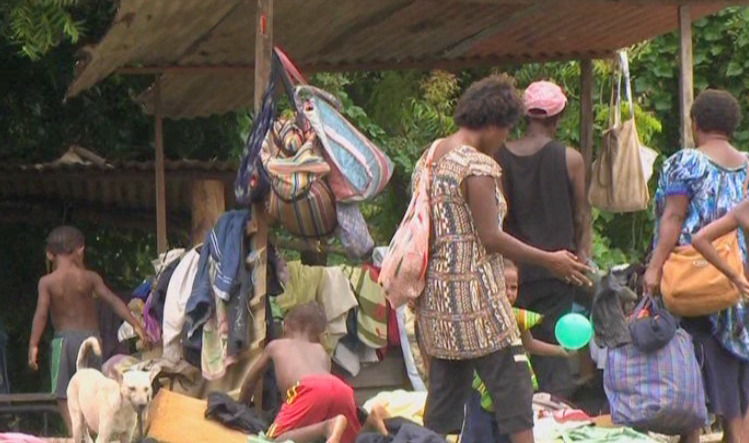
Over 200 families residing in Erima Bridge were evicted and left sleeping out in the open without food or water in February 2017. Photo: EMTV, 06/02/2017 (date accessed 06/02/2017)
The current drive to evict communities living around Jacksons Airport is the latest in a series. In February 2017 police evicted more than 200 families who were living on state-owned land in Erima Bridge. Some of them had lived in makeshift and semi-permanent housing for more than 20 years. The officer in charge of Jacksons Airport said the police were acting on the orders of the land owned by the NAC and that over the course of a week all the houses and tents in the area in question had been removed. It was reported that they were left sleeping out in cold, wet weather conditions for a few days. Their only shelter was wooden frames and roofing iron and they had no food, water or clothing. A settler who had moved to Erima from the Highlands region said some people whose homes were destroyed had not received an eviction notice. At the time of the Erima Bridge eviction the Asian Development Bank (ADB) confirmed support for expansion of Jacksons Airport, signing an agreement with NAC to develop a new international passenger terminal. In May 2015 a demolition exercise at another settlement near Jacksons Airport, 7 mile, left more than 200 people homeless. Some of them were beaten up by the eviction squad. Evictees lost all they owned during the demolition and some homes were burned down. The eviction was part of NAC’s development plan for Jacksons Airport.







 antiaero.org