ACTION ALERT: A new appeal from residents and groups resisting construction of a new airport in Mexico City
AMBITION, CORRUPTION, FOOLISHNESS, IMPOSITION, PLUNDER, AGGRESSION, IRRESPONSIBLE DEBT AND COLLECTIVE IRREVERSIBLE ENVIRONMENTAL DAMAGE, ARE THE CONSTANTS IN PRELIMINARY WORKS FOR THE CONSTRUCTION PROJECT OF THE NEW AIRPORT IN MEXICO CITY.
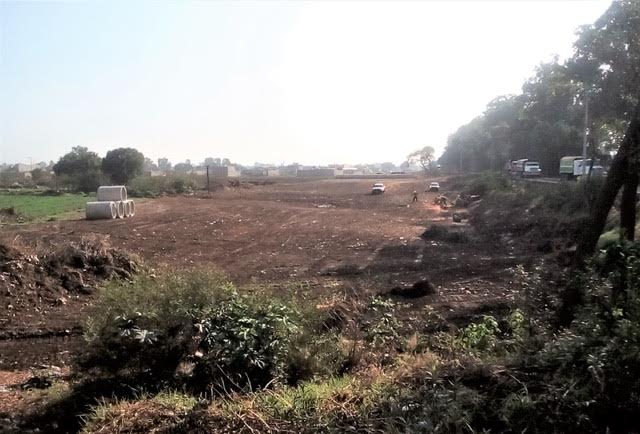
In order to start the construction of the New Mexico City International Airport (NAICM) on the bed of the historic Texcoco Lake, several associated works have been developed, such as highways, railway, river canalization and land granting for industrial parks, housing units and shopping areas. Likewise, new roads are being opened in farmland ejidos and on the banks of the San Juan and Papalotla rivers, which has involved removal of a large number of mature trees to expand the already existing rural roads and allow the entry of thousands of trucks and trailers which introduce materials such as volcanic rock (tezontle), teyolote, tepetate and stone extracted from the destruction of hills throughout Mexico’s Valley, in an attempt to replace the lake natural soil, destroying its nature, its biodiversity and its regulatory function of temperature (Climate Change), rain water and runoff from the higher parts of the Valley; in addition to affecting the residents of nearby communities, stripping them of their property and demolishing their houses, causing a forced displacement of families, destroying their patrimony and putting at risk their food, housing and economic security.
In addition, sprinkler irrigation network systems are being installed on the ejidos, that reach the perimeter of works prior to the construction of the New Airport as the perimeter wall, pretending to be in support of farmers but which in reality aim to deprive communities of the irrigation water flow from wells to benefit developers of housing, industrial, hotel, commercial, etc., as well as impacting parceled grounds of the river side communities.
In a very few days, were have witnessed and documented the drastic landscape alteration in the area of Texcoco Lake by the works for the New Airport, mainly due to indiscriminate tree cutting, the introduction of pipelines, houses demolition, destruction of wells for agricultural irrigation, the canalization of rivers, the severe ecological damage caused by the construction of the highway Mexico-Tuxpan in the section Ecatepec – Pyramids–Peñon-Texcoco and the development of railroad tracks that is expected to accelerate the introduction of thousands of tons of stone materials from the devastation of the hills, which daily are transported and emptied to cover the fertile soil, vegetation, and the water patches of the lake, destroying life of endemic plants and animal species, the cultivation of healthy food and ancestral nutritional treasures such as Spirulina, the sanctuary of migratory birds, the remnants of the prehistoric remains considered by renowned archaeologists unique in the world and the tranquility and subsistence means of the native population today being attacked, intimidated and submitted through the use of public force and the PRI paramilitary group “antorcha campesina”.
For over 4 years, our non-partisan and anti-capitalist organizational effort, a member of the Indigenous National Congress-CNI, of the Global Action against Airport Projects and Aviation Expansion and the World Social Forum-FSM, has conducted forums, colloquiums, seminars, cultural festivals, itinerant work meetings, press conferences, radio interviews, videos and publications that contribute to the spreading of the problem and to sensitize the population on the infeasibility and illegality of this mega-project of death, as well as the real very high risk of hydric system collapse and the affectation level throughout the Valley and center region of the country, including Mexico city.
While in countries of the first world, their airports have only 2 runways and Austria celebrates the final cancellation decision of the Vienna airport third runway on the basis of the fight against climate change, the New Airport in Mexico is projected to have 6 runways, so that while some function others undergo maintenance, which explains the folly and interest to do so in the Texcoco Lake, for the benefit of companies linked to the large transnational conglomerates involved in the project and to political power groups.
We make an urgent appeal to all society sectors in Mexico, Latin America and the rest of the world, to massively pronounce in defense of life and heritage of Texcoco Lake and of the peoples and communities that depend on it; because as people we cannot agree on such a project that is due to decisions of the high corruption in Mexico, that could even point to shady dealings and that should not be built in any part of our country.
June 14, 2017.
PLEASE SUPPORT APPEAL
You can help us to stop the largest ecocide in Mexico and Latin America by sending letters, e-mails and twitters and/or making phone calls to responsible government instances, to demand the definitive cancellation of this mega-project of death.
Because the life and nature are above the interest of money and alleged jobs…
NO! TO THE UNNECESSARY, ECOCIDAL AND UNAFFORDABLE
NEW MEXICO CITY INTERNATIONAL AIRPORT
Enrique Peña Nieto, President of México, Los Pinos, Parque Lira s/n, Col. Chapultepec 1ª sección, Deleg. Miguel Hidalgo, 11850 CdMx, 0052-55 5093-53-00, 01-800 080-11-27, enrique.penanieto@presidencia.gob.mx, @EPN y @PresidenciaMX
Miguel Ángel Osorio Chong, Secretary of the Interior, Bucareli #99, Col. Juárez, 66000 CdMx, 0052-55 5728-74-00, 55 5728-73-00 Secretary ext. 32401 and Citizen Attention Module ext. 34397, secretario@segob.gob.mx, @osoriochong
Gerardo Ruíz Esparza, Communications and Transport Secretary, Xola and Universidad s/n, cuerpo C, floor 1, Col. Narvarte, Deleg. Benito Juárez, 03020 CdMx, 0052-55 5723-93-00, 01-800 888-10-13 Secretary exts. 10402, 10403, secretario@sct.gob.mx, buzon_ucg@sct.gob.mx, @gruizesp y @SCT_mx
Roberto Ramírez de la Parra, National Water Commission Director -CONAGUA, Insurgentes Sur #2416, Copilco el Bajo, 04340 CdMx, 0052-55 5174-40-00 and 01-800 2662-482, http://www.gob.mx/conagua, @RobRmzdelaParra and @conagua_mx
Federico Patiño Márquez, México City Airport Group (Director del Grupo Aeroportuario de la Ciudad de México, S.A. de C.V.), Floor 2-Oficina 203, Insurgentes Sur #2453, San Ángel, 01090 CdMx, mark from a cell pone to Commutator 0052 55 9001-40-00, Managing Director 0052 55 9001-40-01, Citizen Attention Module 0052 55 9001-40-02, dirección.general@gacm.mx, @FedericoPatiño_
Miguel Ángel Mancera Espinosa, México City Governor, Plaza de la Constitución #1, planta baja, Col. Centro, Deleg. Cuauhtémoc, CdMx, Citizen Attention Module 0052 55 5345-80-00 ext. 1263 and General Coordination of Citizen Attention ext. 1460, jefaturadegobierno@cdmx.gob.mx, @ManceraMiguelMX, @ManceraConecta y @GobCDMX
Eruviel Ávila Villegas, Mexico State Governor, Palace of the Executive Power, Lerdo Pte.#300, PB door 216, Toluca downtown, State of Mexico, 0052 72 2276-00-51, eruviel.avila@edomex.gob.mx, @eruviel_avila, @Gestion_Eruviel y @edomex
Andrés Ruíz Méndez (PRI-antorcha campesina), Atenco Municipal President, State of Mexico, 27 de septiembre St. s/n, cabecera municipal, 0052 595 95 3-65-06, atencopres.2016@gmail.com, @Andres_Atenco
Higinio Martínez Miranda (MORENA), Texcoco Municipal President, Nezahualcóyotl St. #22, Texcoco centro, State of Mexico, 0052 595 95 2-00-00 ext. 2006 y 2004, secretaria.particular@texcoco.gob.mx, @higinio_mtz
Rosalba Pineda Ramírez, Chimalhuacan Municipal President (PRI-antorcha campesina) I. Zaragoza Square s/n, cabecera municipal, 0052 55 5852-57-71 and 0052 55 5852-57-72 ext. 104, http://chimalhuacan.gob.mx/gobierno_direccion?DR=2, @Rosalba_PinedaR
NON-PARTIES WIDE FRONT vs. THE NEW AIRPORT AND OTHER MEGA-PROJECTS IN MEXICO’S VALLEY ORIGINAL INHABITANTS AND NGO’s EASTERN STATE OF MEXICO COORDINATION IN DEFENSE OF LAND, WATER AND CULTURE
Coordinadora de Pueblos y Organizaciones del Oriente del Estado de México
Photos by Coordinadora de Pueblos y Organizaciones del Oriente del Estado de México:
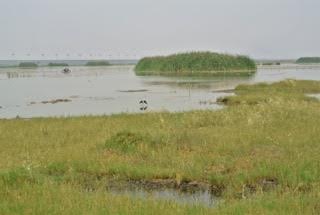
1) Current View of Lake Texcoco and migratory birds2) The advance of the devastation on the vegetation and the lake, in the background the Cerro de Chiconauhtla threatened in principle with cut it lower 40 meters in height by clogging the overflight of aircraft but could be blown up and pillaged in its entirety.3) Indiscriminate felling of trees by staff of the companies hired by the Grupo Aeroportuario, introduction of pipelines, transit of trucks and trailers.4) Machinery in the area of Texcoco Lake, implementation of a white powder (chemicals) to the fertile land.5) Recent View of Texcoco Lake, migratory birds and in the background the perimeter fence of the New Airport which is adjacent to the highway Peñón-Texcoco to which are intending to connect the expressway Mexico-Tuxpan highway in its tier Ecatepec-Piramides-Peñón-Texcoco by dividing communities, dispossession them and destroying everything in its path: arable land, agricultural irrigation wells, trees, animals, etc.
An article about resistance to eviction from their homes and productive agricultural land for a new airport in Java, Indonesia, has been published by The Ecologist online magazine: Indonesia: Villagers resist eviction for 50 sq.km ‘aeropolis’ / Airport city on their land. Ten villages, and a vast area of farmland, have already been wiped from the map for Kertajati Airport, which is currently under construction. But Sukamulya village remains. Residents have sustained their resistance to displacement for the airport for over 12 years, since the project was first mooted in 2004. The Front Perjuangan Rakyat Sukamulya (FPRS) was formed to resist eviction for the airport.
Sukamulya villagers have blocked officials from measuring land for Kertajati Airport on many occasions. Starting in August 2016 a series of attempts to measure the land were successful blocked by residents. But on 17th November 2016, when people had gathered yet again to protect their farmland, 2,000 police rushed onto the fields to disperse them and enforce the land measurement. Twelve protesters were injured and the barbaric eviction attempt has been widely condemned by Indonesian human rights organizations and NGOs. Land rights and agrarian reform NGO Konsorsium Pembaruan Agraria (KPA) highlighted resistance against Kertajati Airport as one of Indonesia’s key land rights struggles.
This slideshow requires JavaScript.
A video by AGRA Indonesia Alliance of Agrarian Reform Movement/Aliansi Gerakan Reforma Agraria shows the firing of teargas at Sukamulya residents attempting to defend their land and resist eviction.
If development of the project goes ahead as planned Kertajati Airport will be the starting point for an even larger development, an aerotropolis. An Aerocity adjoining the airport site is planned. In total, 50 square kilometres of land, predominantly productive farmland, has been earmarked for Kertajati aerotropolis: 1,800 hectares for the airport and 3,200 hectares for the Aerocity.
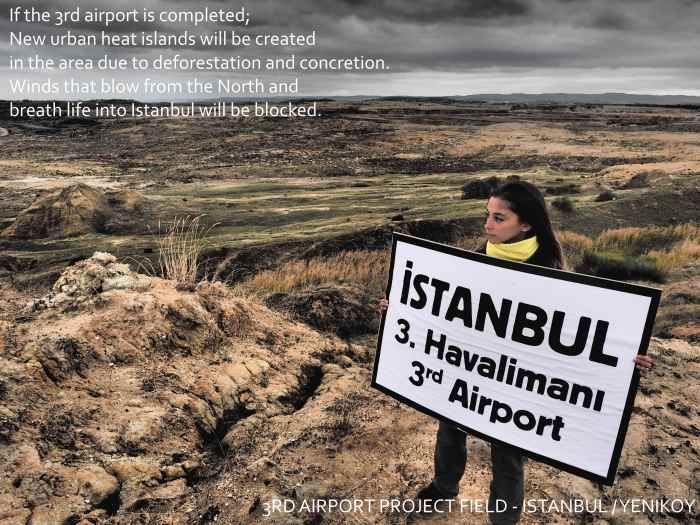
In order to show the damage inflicted by the 3rd Airport and the kind of future awaiting Istanbul, a group of Northern Forests Defense (KOS) activists picniced at Yeniköy, one of the villages in the 3rd Airport area.
The location of the picnic was Yenikoy meadows. A large portion of the area which used to be as green as grass had been destroyed for the construction of the Airport in less than 2 years. As for husbandry, one of the main economic resources of the village, it had almost come to a halt.
In their written statement about the picnic, KOS activists expressed that in order to attain a liveable Istanbul, Istanbulites need to close ranks and confront all projects that set eye on Northern Forests, first and foremost against the 3rd Airport.
They expressed that the following will ensue in case the 3rd Airport project is completed:
It will destroy millions of trees together with all living beings that live dependent on the regional ecosystem. Villagers who make their livelihood from the area will be displaced.
The airport project area 90% of which comprises lakes and forests will be turned into concrete through the creation of new cities and other construction projects. Istanbul’s already dense population will be multiplied as a result.
New urban heat islands will be created in the area due to deforestation and concretion. Winds that blow from the North and breath life into Istanbul will be blocked.
It will speed up the climate change we have been passing through currently by contributing to the acceleration of carbon emissions generated by the aviation sector.
It will tear apart Istanbul and Northern Forests that have existed together since archaic times from each other. Istanbul will turn into an unsustainable, unliveable dystopia.
The full statement of the picnic event carried out as part of Global Action Week (September 28th- October 8th 2016) against the aviation sector is as follows:
Welcome to the Dystopia “The New Istanbul”
Northern Forests have been the source of life to all living creatures for thousands of years.
In the Northern Forests, with their ancient sand dunes, rich meadows and beautiful ponds in which fish lived, they say that once upon a time there used to be hidden heavens where only migratory birds could land.
And one day, the human, one of the guests of this hidden heaven, fell under the illusion that he could be the master of all creatures. He fattened as he consumed; he consumed as he fattened. As the monuments of arrogance he constructed mushroomed in cities, cities sprawled and started occupying hither and thither.
The place where we came today for the picnic used to intermingle with Northern Forests once but now falls within the area of the 3rd Airport which is being propagated through the construction of a falsehood of ‘development’. The picnic area which used to be as green as grass till two years ago has now been contaminated by human hands; ravaged by construction machines.
Then, what kind of a future awaits us if the 3rd Airport project is completed?
The project will destroy millions of trees together with all living beings that live dependent on the regional ecosystem.
Villagers who make their livelihood from the area will be displaced.
The airport project area 90% of which comprises lakes and forests will turn into concrete through the creation of new cities and other construction projects. Istanbul’s already dense population will be multiplied as a result.
New urban heat islands will be created in the area due to deforestation and concretion. Winds that blow from the North and breath life into Istanbul will be blocked.
The project will speed up the climate change we have been passing through currently by contributing to the acceleration of carbon emissions generated by the aviation sector.
It will tear apart Istanbul and Northern Forests that have existed together since archaic times from each other. Istanbul will turn into an unsustainable, unliveable dystopia.
If we do not struggle against the eco-cide projects planned in the Northern Forests, and first and foremost against the 3rd Airport, our picnic as the representation of dystopia may become the future of Istanbul.
Wishing that all defenders of life close ranks in order to resist against the 3rd Airport project and make our picnic which presented a cross-section from the future of Istanbul NOT possible.
Residents of Sukamulya village in the regency of Majalengka, a predominantly rural administrative area in the West Java province, Indonesia, are resisting eviction for Kertajati Airport. They are fighting for their land and water, blocking officials from entering the village to measure land in order to acquire it for the airport. The stand-off between officials and villagers refusing to be displaced, which began on 8th August, is the latest chapter in twelve years of resistance. A plan for a major airport, taking up a land area of approximately 50 square kilometres, first surfaced in 2004.
The Front Perjuangan Rakyat Sukamulya (FPRS), which translates as the Sukamulya People’s Struggle Front, was formed to resist eviction for the airport and the campaign is supported by Indonesian land rights and agrarian reform NGO Konsorsium Pembaruan Agraria (KPA). As shown in a video by FPRS, hundreds of people are participating in the protests and women are playing a leading role. Sukamulya is bedecked with flags and banners. Road entrances to the village are being monitored day and night and blocked with tyres, preventing officials accessing land in order to measure it for the airport. A protest camp with a communal kitchen, using food harvested in Sukamulya and donated by villagers, helps maintain high spirits.
At the time of writing the blockade has been successful and the latest in several attempts at land measurement have been cancelled. Hundreds of residents blocked entry to the village, succeeded in holding back officials from the land agency, Badan Pertanahan Nasional (BPN) and police. On 1st September, hundreds of Sukamulya residents stated that they were ready to die in order to defend their land and demanded that the government treat them humanely. The action has garnered support from students and Majalengka farmers’ organization. Affected villagers are determined to avoid the fate of people whose land has been acquired for the airport; the level of compensation offered was insufficient for them to afford to buy land and build a house in nearby villages. But the government remains determined to impose the airport project. On 5th September, KPA reported that BPN was preparing to make another attempt to enter Sukamulya village to undertake land measurement, and that officials would be accompanied by a greater number of security officials.
12 years of resisting eviction for the airport
Over the twelve years since announcement of the Kertajati airport project there have been a great many protests. On 8th June 2007 hundreds of demonstrators rallied to protest against the threat of eviction facing at least 16,000 people from five villages. Speeches were followed by a mock trial of the Majalengka Regent, the head of the Regency. Demonstrators objected to lack of information about the airport project, including how much compensation they would receive from the government, and refused to be relocated.
Some residents have accepted compensation for their land and moved away, but the majority refuse to give land for the airport without fair land acquisition respecting their rights to accurate land measurement and appropriate compensation. Many reject the airport project entirely and are united in their refusal to give up their land for it. KPA maintains that the majority of the population of the 11 affected villages have opposed acquisition of their land and construction of the airport.
The FPRS video above documents a major protest on 25th January 2016. Hundreds of residents and their supporters rallied in front of the Majelengka land office and State Attorney office, arriving for the march in a procession of motorbikes and trucks carrying banners and posters. Rousing speeches voiced residents’ opposition to the construction of Kertajati Airport and the land acquisition process, protesting that it was not being conducted according to regulations. Villagers vowed that they would remain in Sukamulya. Hundreds of residents marched again on 22nd February 2016, demanding that delayed land compensation be paid to nearly 400 families and outraged that members of the community were being intimidated by officials. A video of the protest by the Majalengka police shows the presence of a large number of officials maintaining tight control of the demonstrators.
On 1st March 2016 the International Land Coalition (ILC) reported that conversion of the land for Kertajati Airport had resulted in the eviction of 10 villages. A tweet by ILC Asia showed a photograph of Iwan Nurdin, Secretary General of KPA, addressing a large group of evicted farmers from the affected villages.
On 2nd May 2016 hundreds of Sukamulya residents, supported by FPRS and KPA, rallied at the district government office demanding a fair land settlement. Speakers at the rally protested dishonesty in the land acquisition process including an inaccurate EIA (Environmental Impact Assessment) which stated that crop yields are far lower than are actually harvested. Intimidation by officials had forced some residents to flee from their homes and some had been detained.
Sukamulya villagers and their supporters defending homes and farmland from land acquisition for Kertajati Airport have good reason to be concerned that intimidation and harassment by officials may escalate into violence. There have been many clashes between security officials and people protesting against the airport and blocking access to land. A serious incidence of state brutality occurred on 18th November 2014. Without warning, hundreds of officials, surveyors escorted by armed police, arrived to measure land in the villages of Sukamulya and Sukakerta. Hundreds of residents attempted to block officials from entering the village area. Police responded with violence, firing tear gas and rubber bullets. Many citizens were injured from being trampled on and dragged away and some were beaten. At least five people were detained. A video shows a few minutes of the clash between authorities and villagers. Residents, distressed and angry, attempt to block officials from entering their village to conduct land measurement for the airport. Police and army officers herd people away from the village and confine them behind a fence. Many people are handled roughly by officials, pushed and shoved, and several are dragged along the road.
A mega-airport and an ‘Aerocity’
The developer of Kertajati Airport is PT. Bandarudara Internasional Jawa Barat (BIJB), referred to in English as West Java Airport and Aerocity Development Company. The planned airport land area, 1,800 hectares, far exceeds that which would be required should the airport meet its ambitious traffic projections of between 8 and 10 million passengers per year in the first phase of development, rising to 40 million passengers per year by 2035. It is larger land area than the world’s busiest airport, Atlanta in the US. In comparison, Atlanta Airport has a smaller 1,518 hectare site which includes a considerable amount of commercial development such as retail and warehouses. Yet Atlanta Aiport handles two and a half times the number of passengers planned for Kertajati Airport, just over 101 million in 2015. It is clear that land is being acquired for non-aviation purposes in addition to the area required for airport operations.
The proposed size of the airport creeps upwards. According to a BIJB video, by the beginning of August 2,500 metres of the planned 3,500 metre runway had been developed. But on 16th August the West Java province revealed plans to lengthen the runway even further, to 4,000 metres. The pale grey rectangle near the centre of the airport site is a completed section of the airport apron. The airport terminal is under construction adjoining the southern edge of the apron, and some of the farmland around it that is being destroyed, is shown in a tweet by BIJB:
Kertajti Airport is envisaged as the first phase of a larger ‘aerotropolis’ project, an airport surrounded by aviation dependent commercial and industrial development that is deigned to maximize use of air services. The full aerotropolis plan, with Kertajati Airport covering 1,800 hectares plus the proposed Kertajati Aerocity adjoining the airport site taking up 3,200 hectares, matches the 5,000 hectare project that was first mooted in 2004.
The Aerotropolis plan – a 50 sq km megaproject
A GAAM map shows the proposed boundary of Kertajati Aerotropolis that was indicated in a November 2015 presentation by a representative of BIJB entitled ‘KERTAJATI INTERNATIONAL AIRPORT & AEROCITY: INTRODUCTION & OPPORTUNITIES‘ at the Indonesia-Australia Business Week 2015. This event, aiming to develop closer investment and bilateral trade ties, was Australia’s largest ever business delegation to visit Indonesia. GAAM’s map superimposes the project boundary indicated in this document onto a 10th August 2016 satellite image of the aerotropolis site.
The map shows the area earmarked for the aerotropolis consists of farmland divided into strips and squares, villages and wooded areas. The rectangular area is the proposed site for Kertajati Airport. Adjoining the airport area is the Aerocity area, its southern boundary following the path of a river. In the BIJB presentation the claimed area of the Aerocity is larger than the 3,200 hectares stated by the project and government bodies, at 3,480 hectares. It could be significant that the land area indicated by the map in the BIJB presentation is even larger than stated in the text: 2,665 hectares for Kertajati Airport and 3,583 hectares for Kertajati Aerocity.
The first runway can be seen along the northeastern edge of the airport site. A second runway, parallel to the first and near the other edge of the airport site, is planned. Satellite imagery shows that earthworks have already prepared an area of land adjacent to the first runway for construction. The southernmost point of this area corresponds with the access road shown in the BIJB presentation. The footprint of the airport, and obliteration of farmland, threatens to extend beyond the site boundary with construction of access roads to the north and south of the airport area. A major road already runs through the planned aerotropolis site; the Cikampek-Palimanan Toll Road, part of the 653 kilometre Trans-Java Toll Road, runs through the Aerocity area, inside the southern boundary.
The Aerocity plan described in the BIJB presentation consists of typical aerotropolis components. Space would be allocated for hotels, retail, conference and exhibition centres, entertainment complexes, business park, offices, industrial and warehousing area, logistics and distribution facilities, aviation ancillary industries including MRO (Maintenance, Repair and Overhaul – of aircraft) and in-flight catering, plus a facility for Hajj and Umrah pilgrims. An ‘attractive incentives plan’, meaning subsidies for investors, is promised.
As a greenfield airport, and an aerotropolis, BIJB is not being constructed to serve established urban development, but to spur commercial and industrial development on the farmland surrounding the airport. Plans have been outlined for Kertajati Airport to become a ‘gateway’ to West Java; the airport and Aerocity would be an economic centre for the region, with direct access to the established Karawang industrial zone. Kertajati Airport is just one of 84 large scale infrastructure projects planned in West Java, including power plants, ports and roads, criticized by environmental forum WALHI West Java for the loss of farmland and triggering social conflict. Dianto Bachradi, Vice Chair of Komnas HAM (the Indonesian Commission for Human Rights), highlighted the private sector interests served by megaprojects. Specifically regarding airports he pointed out that employment opportunities for local people facing the loss of their livelihood from agriculture would be restricted to poor quality jobs such as baggage handler or parking attendant, and that the projects benefit large companies, not the local community.
As Sukamulya holds out against eviction recent announcements reveal more about the strategic significance of the aerotropolis to government and corporate interests. There is a military component as Indonesia’s state owned aerospace manufacturer, PT Dirgantara Indonesia (PTDI), a firm servicing both civilian and military aircraft, intends to relocate from its current location in Bandung to a larger 300 hectare site on the land surrounding Kertajati Airport, anticipating that the new facility will be operational by 2019. And the aerotropolis scheme has spawned a plan for yet another megaproject; a power plant. This 190 hectare energy complex is planned for the aerotropolis to meet its own energy requirements, as the electricity supply currently under construction will only be sufficient to supply the airport, not the Aerocity.
Allocation of government funds for construction
Land acquisition, displacement of villagers, destruction of farmland, construction of the runway, taxiway and apron and earthworks to prepare land for construction of the terminal and access road have proceeded in the absence of confirmed financing to actually build the airport. Repeatedly, the government announced offers and interest from investors, from China, Korea and Turkey and from airport operator/developers including GMR Infrastructure (based in India) and Schiphol Group. In December 2015 President Director of BIJB, Virda Dimas Ekaputra, stated that no less than 40 domestic and foreign investors, from Switzerland, Turkey, Germany, Qatar and India, had expressed interest in development of ground infrastructure, such as the terminal.
As yet, foreign investment has failed to materialize, and there has been a series of announcements on financing of construction costs, all of which will fall on the government. On 18th January 2016 it was announced that construction of Kertajati Airport will cost about US$267.4 million, to be paid by central government through the transport ministry. Indonesian President Joko Widodo announced this financing decision during a visit to Majalengka. It was also stated that the West Java government is to pay for clearing 1,800 hectares of land. The government had withdrawn its search for an investment partner for development of the airport, redirecting potential investors to the proposed Aerocity adjoining it.
On 16th August it was announced that an as yet unspecified amount of provincial government allocated to the project had increased, the project having already spent most of the US$38 million in provincial finds already contributed. The most recent announcement of state financing is that the first phase of airport construction will be funded by mutual funds including the social security agency for labour. The financing scheme would be underwritten by state owned financial services firm Danareksa. Whilst this funding scheme would spare the government from spending the state budget on construction of Kertajati Airport the state would be liable for the debt incurred.
Farmland bulldozed and concreted over
BIJB videos show the progress of Kertajati Airport construction. A video dated 4th February 2016 begins with footage of the airport toll road, already a long ribbon of smooth tarmac. Next there is a shot of road grading for the access road. Bulldozers are shown in a puddled field of mud next to all that remains of a community that has been systematically erased, a tiny cluster of dwellings, and a single tree.
The camera pans away to show construction in the midst of a patchwork of green fields and bare earth where vegetation has been stripped away. At this stage, concrete has been laid for 2,500 metres of the runway. A bulldozer gouges at the earth, preparing a level surface for the airport apron, a gigantic rectangle of concrete. The tranquil soundtrack is at odds with what must be a roar of earth moving trucks, bulldozers and heavy machinery.
The BIJB video shows development of the taxiway, with drainage channels running parallel. It is evident that the hydrological conditions of the airport site, low level land with a high water table, makes construction difficult. Adjacent to the apron, foundations for the terminal are being laid, and drainage channels dug into the flooded surface. Piles, long concrete posts, here called ‘pickets’, are being inserted deep into the ground. A total of 2,413 of these pickets are being driven down through weak layers of loose ground to reach rock or compacted soil that is strong enough to support the weight of the terminal building.
Water and food security concerns
A waterlogged site makes airport construction problematic, and drainage management will be challenging once the airport is operational, but airport operations require large volumes of water. There is a reservoir within the land that has been expropriated for the airport, the pale rectangular area near the southeastern corner. In June 2016, BIJB stated its intention to source its water requirements, initially about 30 litres per second but possibly rising to 60 litres per second, from within Majalengka.
Water may be plentiful in the area earmarked for Kertajati Aerotropolis, but it is a limited and precious resource. In Indonesia, the bigger picture is of water scarcity concerns, in particular on the densely populated island of Java. Diversion of water supplies from agriculture to industrialization impacts on irrigation of crops and therefore on food security. Kertajati Aerotropolis also poses a direct threat to food security due to loss of farmland to urban development. In May 2016 concerns were raised over food security implications of development on Majalengka farmland, in particular the prospect of the loss of 5,000 hectares for Kertajati Airport and Aerocity. Urban development on Majalengka wetlands could lead to a reduction in rice yields of 75,000 tonnes per year. Social and economic problems loom because of the loss of farmers’ livelihoods. In addition to rice many other crops are cultivated on the fertile Majalengka farmland, including beans, peppers, watermelons and mangoes.
A tweet posted on 19th July shows sheep grazing on green fields next to the terminal construction site, in the background is a skyline of piles and pile drivers pushing them into the soil. If Kertajati Aerotropolis progresses as planned this fertile farmland will soon be paved over.
Land conflict and Indonesia’s aviation expansion drive
Recent years have seen several airport-related land tensions and conflicts in Indonesia, in addition to the Kertajati case. About 300 kilometres to the southeast of the Kertajati Airport site, near the south coast of Central Java, Kulon Progo residents have struggled against loss of land and livelihood for a new Yogyakarta airport since 2011. Opposition to land clearance stalled construction of Kuala Namu Airport. It was expected to commence operations in 2009. In May 2013, as the airport prepared for opening, residents were still refusing the compensation on offer for eviction to make way for toll roads serving the airport. A week before the Kuala Namu opened, in July 2013, land disputes continued in five villages and more than 100 residents blockaded an arterial road.
A proposal for a second Bali airport, in the north of the island in the Buleleng Regency, was criticized due to pending displacement of agricultural communities and the sociocultural shock that would be inflicted on nearby villages, leading to an alternative plan for an offshore ‘floating’ airport. Yet the latest report on the new Bali airport plan still entails acquisition of populated land, stating that 656 hectares is required, predominantly residential land. The coastal villages of Pejarakan and Bumberkima would be affected and 3,335 people relocated, in order to offer wealthy tourists ‘panoramic views of white sandy beaches’. The elitist project aims to ‘cater to deep pocketed clients, servicing private jets’. Along with the airport investors intend to build aerotropolis-style development: hotels, restaurants and a yacht port.
In West Papua, dozens of families are refusing to be evicted for development of Manokwari Airport, and Sentani Airport finally agreed to pay compensation for acquisition of customary land in May 2016, after members of the four affected tribes blocked the taxiway with banana trees. In 2013 operations at Sorong Airport were disrupted by a rally demanding compensation for land.
Anti-airport movements in Indonesia are mindful of the long history of state brutality against people protesting confiscation of farmland for Lombok Airport. In the mid-1990s hundreds of families were evicted from 800 hectares of farmland for the airport. Oppression continued and in 23rd August 2005 a further 2,631 people were forcibly evicted for the airport. Then, on 18th September police, without provocation, fired into a crowd of 1,000 people who had gathered to commemorate Indonesia’s National Peasant’s Day and protest construction of Lombok Airport on fertile farmland. Thirty-three protesters were injured, 27 of them by gunshots, six from being beaten by police.
Kertajati aerotropolis is part of a wider Indonesian government drive for massive aviation growth. A target has been set to build 62 new airports over the next 15 years, in particular in isolated areas, which would bring the country’s total number of airports to 299. Inevitably, a number of these new airport projects will impact on rural communities and trigger resistance to displacement.
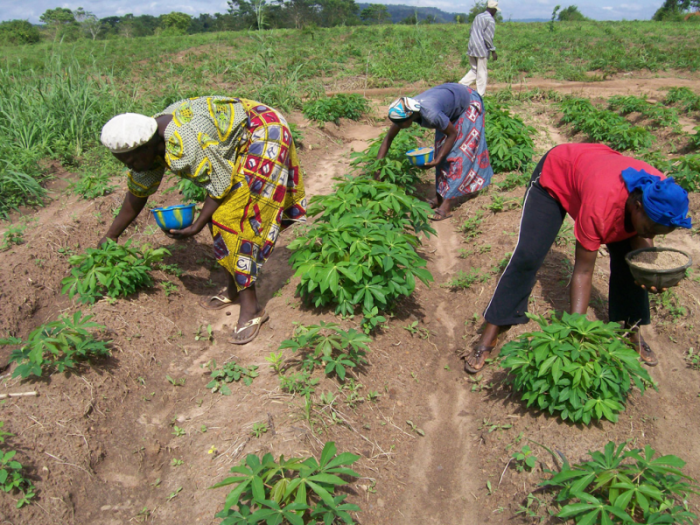
An article in The Ecologist, Nigerian farmers win High Court victory in fight against Ekiti airport, is a story of a successful struggle against a land grab for an airport. On 2nd October 2015 the state government of Ekiti, in western Nigeria, sent in bulldozers to clear 4,000 hectares of farmland for an airport. Bulldozers were sent in and began destroying crops, without even warning the farmers, never mind making provision for compensation for their loss of land and livelihood. Affected farmers from the five affected villages fought back, organizing a protest and filing a suit.There was widespread criticism of the airport project, allocated an enormous amount of public funds in a state where many residents are impoverished. The viability of the project was dubious as many airports in Nigeria, including one in the neighbouring state, are underutilized.
The plan for Ekiti airport was not, to my knowledge, referred to as an ‘aerotropolis’. But the land area allocated, 4,000 hectares, is far more than would be required even for an enormous global hub airport (an unlikely prospect in an agrarian state). In comparison, Atlanta Airport, in the USA, the busiest passenger airport in the world handling over 100 million passengers in 2015, covers an area of about 1,600 hectares. As well as land used for airport operations.this includes considerable commercial space, such as retail and warehouses.
On 20th January 2016 farmers held a protest, storming the Ekiti airport project site and demanding that work cease immediately, in respect of the suit that they had filed. They held placards with slogans reading: “Gov Fayose, Please Leave Us Alone, Don’t Damage Our Life”, “This Land Is The Major Cocoa Plantation, Please No Trespass”, “Please Relocate Your Airport to Government Forest”, “We All Say No To Illegal Airport Project”, “Iwajo, Aso Say No To Illegal Airport”, and “Igbogun Cries Over Illegal Destruction of Our Property”. They also stated that at least ten farmers, including three women, had ‘died of shock’ caused by the destruction of their farms.
In 22nd March the Ekiti farmers secured victory in the High Court, which ordered that forcible take-over of their land for the airport was unconstitutional, illegal, null and void. But there are plans for major new airports all over Nigeria, in the states of Osun, Bayelsa, Abia, Ogun, Anambra and Nasarawa, all of which are being vigorously opposed. Citizens are calling on governments to use the vast amounts of public funds being allocated to these airports to infrastructure that will benefit ordinary people – to repair roads and bridges and support small businesses. And yet another major airport plan is looming. The Yobe state government plans to build a N6 billion (over US$30 million) cargo airport in Damaturu, to act as a gateway for investment in the state and facilitate export of meat, dairy produce and gum arabic (acacia gum). The scheme which is meeting with criticism and goes against state commitments to prioritise water supply, schools, clinics and roads to benefit local communities.
In northern England, Leeds City Council plans to release 36.2 hectares of land to enable expansion of Leeds Bradford Airport, supporting its goal of doubling passenger numbers to 7.1 million by 2030. The land is currently designated as ‘greenbelt’ – green space surrounding urban areas that is protected from development, in order to ensure than urban dwellers have access to countryside and prevent urban sprawl. Adjacent to the airport terminal, the land in question is currently used for farming. In addition to an increase in terminal capacity to accommodate more passengers the land would be used for commercial development to support the growth of Leeds Bradford Airport – an ‘airport village’ consisting of a hotel, restaurants and shops, an air freight park and an ‘air innovation park’.
On 15th July opponents to Leeds Bradford Airport’s plans to concrete over greenbelt land gathered to protest outside the Leeds City Council Executive Board meeting which discussed the plans for a few minutes. As documented in the minutes of the meeting, attendees emphasized the Council’s continued support for expansion of the airport. The only note of caution was an assurance that consultation with ‘all relevant parties’ would be widespread and thorough.
Protest against allocation of greenbelt land for commercial development to support growth of Leeds Bradford Airport, 15th July 2015
The report proposing allocating the 36.2 hectares of greenbelt land to Leeds Bradford Airport had already been discussed at the Development Plan Panel on 26th June 2015. Its a lengthy document – 176 pages long. On page 5, the issue that land at the airport is already allocated for ’employment’ so therefore available for development, with most of it remaining under occupied, is raised. Airport supporters’ response to this point is that the scale of land allocation proposed will make it an attractive location, and it will be supported by promotion and marketing internationally to prospective tenants. Bizarrely, the supposed solution to vacant business space is supposedly to provide even larger space, and the established business space should have received more promotion and marketing support to reduce the risk of it languishing unoccupied.
This map shows the greenbelt land, currently used for farming, that Leeds City Council wishes to release for commercial development to support expansion of Leeds Bradford Airport – the area within the red line
It is not as if there is a shortage of business space in Leeds or Bradford. Both cities have plenty of vacant business premises, already constructed or on land with planning permission for industrial/warehouse development. An industry website lists 157 industrial properties available to rent in Leeds. The largest is a new development, Leeds Distribution Park, adjacent to Junction 47 of the M1 Motorway, with planning permission for industrial/warehouse development up to a maximum single footprint of 750,000 sq ft (17 acres). The website lists 40 industrial properties available to rent in Bradford. The largest is Bronte Business Park, boasting 16 acres of development land allocated for employment use.
Leeds Bradford Airport, and its supporters at Leeds City Council, aims to support commercial development on greenbelt land with more than just promotion and marketing. They are angling for ‘Mini-Enterprise Zone’ status, as stated on the the document submitted to the Development Plan Panel, see page 13. This is already in place elsewhere in England, including at Manchester and Newquay airports. Designation as an ‘Enterprise Zone’ is a subsidy, as tenants are gifted a Business Rate tax exemption of up to £275,000 per eligible business. This tax break is unfair and unwarranted preferential treatment for tenants that are fortunate to be in the Enterprise Zone. In the case of airports, space in the Enterprise Zone is granted to businesses that are aviation dependent, thus maximizing use of the airport’s passenger and/or cargo facilities and facilitating airport growth.
Businesses which do locate in the Enterprise Zone may not even create jobs, as firms will be incentivized to relocate from other premises in order to take advantage of the tax break. The argument that the airport-linked commercial development will boost the economy for neighbouring communities and the wider region, which the proponents of the project are most insistent about, is flawed. The shops, restaurant and hotel that are planned would result in air passengers spending more of their time, and money, on airport land, instead of stimulating economic activity in Leeds Bradford Airport’s host community.
Another aspect of the rationale for commercial development on green space is to strengthen the case for more ‘surface access’ to Leeds Bradford Airport. This means construction of another road link, a dual carriageway from the A65 in Rawdon to the A658. It would not come cheap and taxpayers would have to foot the bill. It is anticipated that public sector funding will be confirmed for the new link road. The route of this road plan is not revealed. Figure 13 in the report discussed by the Development Plan Panel entitled ‘Indicative Alignment of New LBIA Road Link’ is not actually included in the report, it is ‘TBC’, left blank. Already, Rawdon Greenbelt Action Group is campaigning against the link road; they are concerned that enormous swathes of greenbelt land will be damaged or lost altogether, along with the special landscape character of the area.
Leeds Bradford Airport’s ‘airport city’ plans are a smaller scale version of aerotropolis development that is already underway across the Pennine hills, at Manchester Airport. This is opposed by the Stop Expansion at Manchester Airport campaign group. There is also a Facebook page. Airport-linked business premises is being constructed on land formerly designated as ‘greenbelt’ and, under the guise of alleviating traffic congestion, construction of a link road, costing £290 million in public funds, has commenced. Calling the road a ‘relief road’ does not disguise the fact that it is designed to increase traffic to and from the airport. Most recently, hundreds of residents of High Lane village in Stockport, on the route of the new road, turned up to an exhibition to express their concerns over increased air pollution, noise and vibration from heavy vehicles.
There is strong opposition to aerotropolis development on green space, and associated road infrastructure, at both Leeds Bradford and Manchester airports. Linking up these campaigns will strengthen them.




 It will destroy millions of trees together with all living beings that live dependent on the regional ecosystem. Villagers who make their livelihood from the area will be displaced.


 The plan for Ekiti airport was not, to my knowledge, referred to as an ‘aerotropolis’. But the land area allocated, 4,000 hectares, is far more than would be required even for an enormous global hub airport (an unlikely prospect in an agrarian state). In comparison, Atlanta Airport, in the USA, the busiest passenger airport in the world handling over 100 million passengers in 2015, covers an area of about 1,600 hectares. As well as land used for airport operations.this includes considerable commercial space, such as retail and warehouses.


