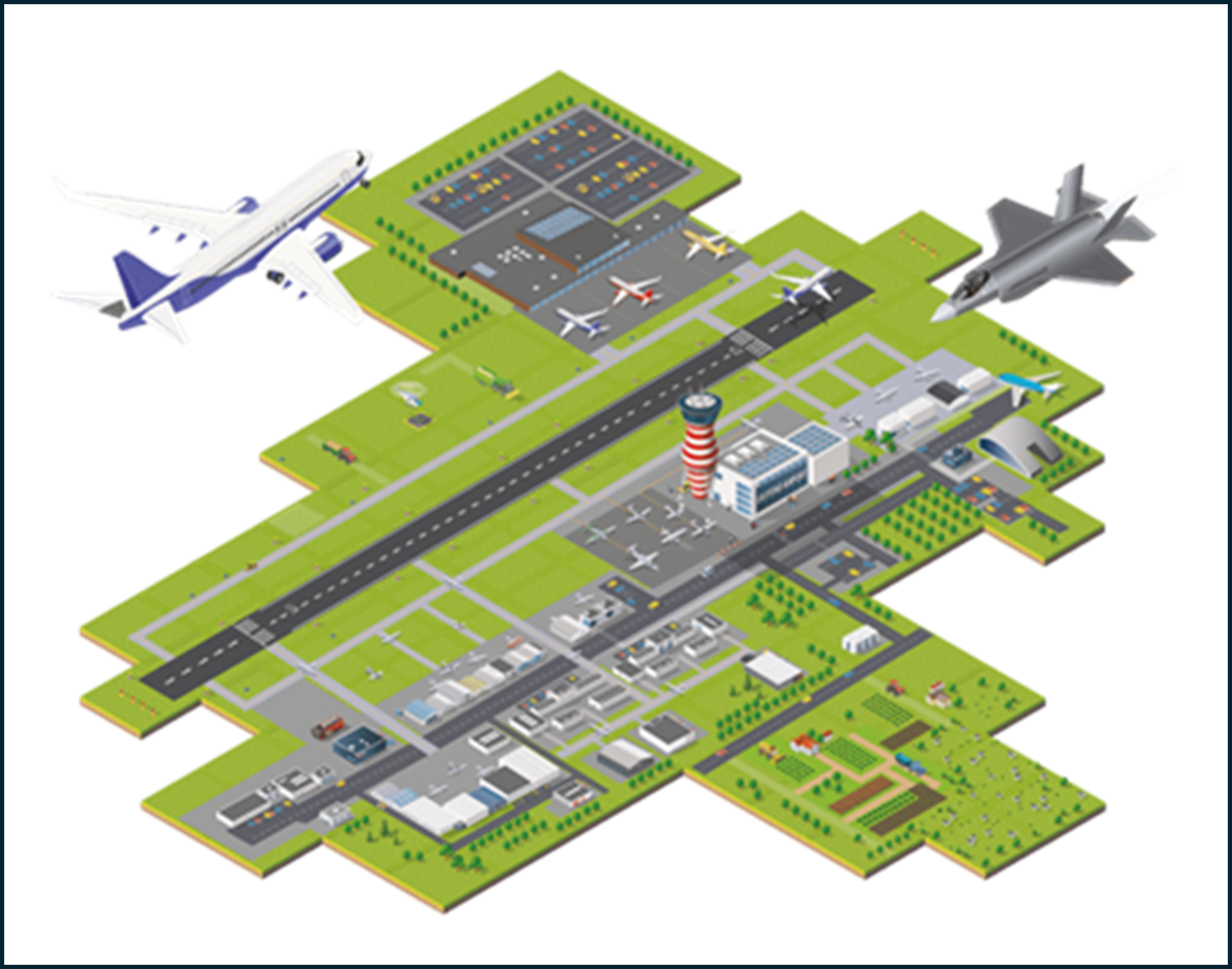
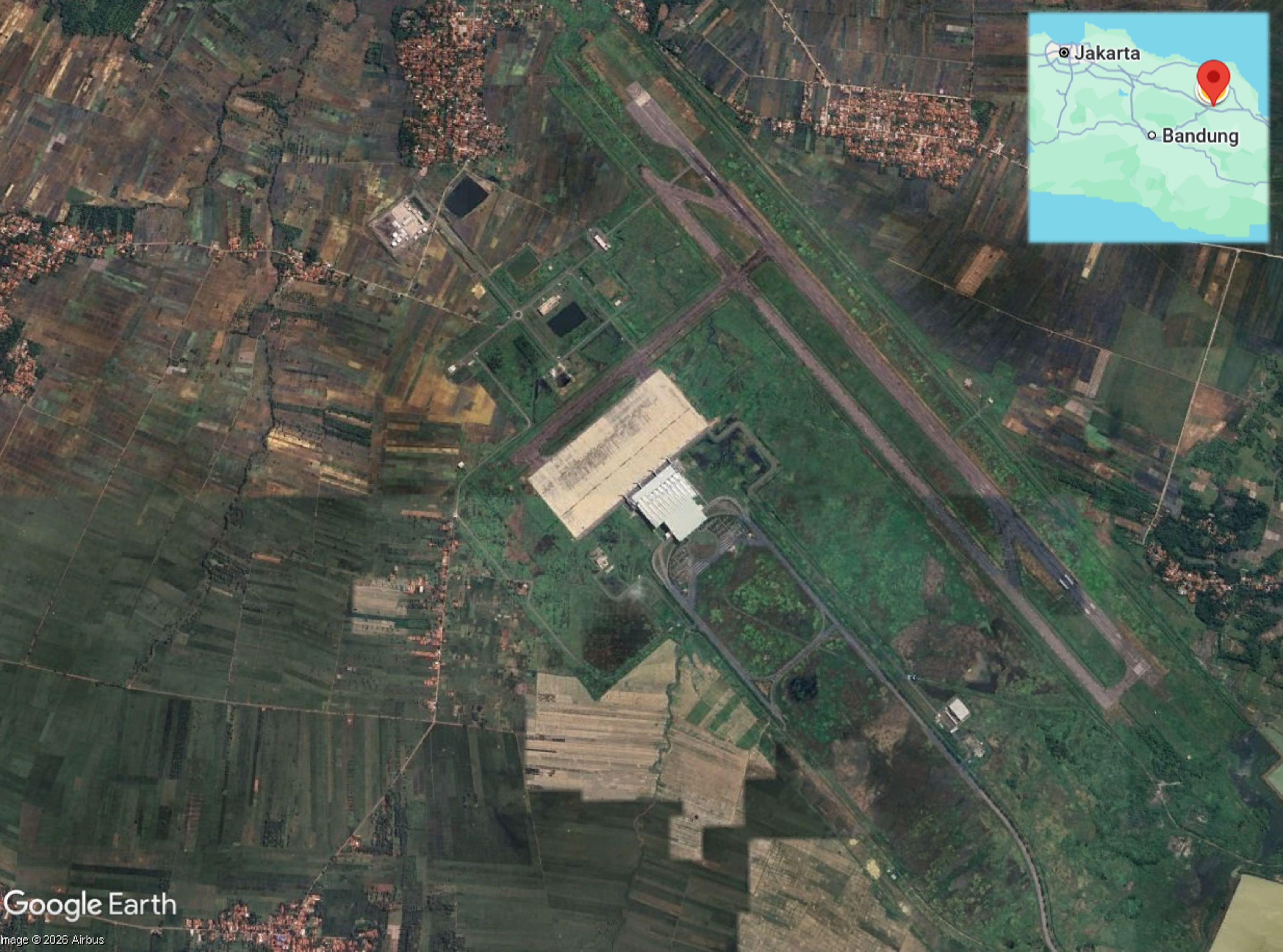
Kertajati Airport, a major airport built on Majalengka farmland, is a white elephant draining public funds and an adjoining Aeorcity is still in the planning stages; now a military aircraft maintenance hub for C-130 Hercules and Indonesian fighter jets is planned.
Sukamulya villagers resisted eviction
Ten years ago, on 17th November 2016, 2,000 police officers firing teargas rushed onto rice fields in Sukamulya village, in Majalengka, a predominantly rural administrative area of West Java, where residents had gathered to resist eviction for Kertajati Airport, forming a line around land to be measured for the airport site. The police response was brutal; twelve residents were injured, one suffering an open wound from forceful blows to their head. Crops and several homes were damaged. Tensions over land acquisition for the new airport had simmered throughout 2016. Hundreds participated in protests beginning on 8th August; over the following weeks residents repeatedly blocked entry to the village and several attempts at land measurement were cancelled. Earlier in 2016 the Kertajati Airport project was highlighted when food security concerns were raised over loss of fertile Majalengka farmland to urban developments. In addition to rice, many other crops were cultivated on the site, including beans, peppers, watermelons and mangoes. Previously, residents of ten villages had been forcibly evicted for the airport and inadequately compensated for loss of their homes and farmland. Another incidence of serious state brutality had occurred on 18th November 2014 when hundreds of officials and surveyors, escorted by armed police, had arrived, without warning, to measure land for the airport in the villages of Sukamulya and Sukakerta. Police responded to attempts to block entry to the villages with tear gas and rubber bullets. Several residents were injured from being trampled on, dragged along the road and beaten. Plans for Kertajati Airport dated back to 2004 and project opponents pointed out that the proposed 5,000 hectare site was far larger than would be required, even for the ambitious traffic projections. The rationale for the large site became clear upon publication of plans for a 3,200 hectare Kertajati Aerocity, adjoining the 1,800 hectare Kertajati Airport site.
An under-utilised airport
Only a month after the violent eviction of Sukamulya villages, on 30th December 2016, a video by the airport operator, West Java province-owned enterprise Bandara Internasional Java Barat (BIJB) showed construction of a runway, taxiway, air traffic control tower and terminal. Kertajati Airport was inaugurated on 24th May 2018, an occasion marked by the arrival of Presidential aircraft Indonesia-1 with President Joko Widodo plus his entourage on board, welcomed by Transportation Minister Budi Karya Sumadi and other senior officials. But the projected passenger numbers did not materialise. Just over a year later, in June 2019, Kertajati Airport, which had cost US$245 million, was ‘mostly deserted‘ and the government decreed that all domestic flights to Sastranegara Airport in Bandung must land at Kertajati Airport. In November 2019, with about 60 flights per week, a utilisation rate of only 20%, logistics specialist Valkyn Dmello said Kertajati Airport, with its 3km runway that could be extended, had a ‘golden opportunity’ to become a regional and national air cargo hub and was working with local government and other stakeholders on setting up a task force. Passengers complained about inadequate access roads but cargo would not complain. West Java Governor Ridwal Kamil said the administration was turning Kertajati Airport into a cargo airport and air traffic would increase upon completion of a toll road. Construction of a toll road between Bandung and Majalengka, to reduce travel time to Kertajati Airport from about 2.5 hours to 1 hour, had come up against land acquisition obstacles and difficulties carrying out excavation works on the hilly terrain. The first cargo arrival at Kertajati Airport, on 28th January 2025, delivering 900 sheep from Australia on a Maskargo aircraft owned by Malaysia Airlines, was welcomed by West Java Acting Governor Bey Machmudin as.part of efforts to revive the airport.
A white elephant draining public funds
The empty airport attracted critical commentary. A Jakarta Post editorial published on 18th July 2025, Kertajati’s hard lesson, explained that the country’s second largest airport by land area, measuring 1,800 hectares, had not handled any domestic flights since 2nd June. The government had attempted to ‘shift West Java’s economic gravity away from the overcrowded Bandung Metropolitan Area’ but absence of the infrastructure intended to support Kertajati Airport made the facility’s operations unviable. Closure of Husein Sastranegara Airport, located only 3.5 km from Bandung city centre, in an attempt to reroute flights to Kertajati Airport, had made hardly any difference. The editorial states ‘Kertajati was a bet on future growth that never arrived. Overambitious planning and poor demand forecasting have turned it into a white elephant’. Constructing an enormous airport ‘in the middle of nowhere’ expecting economic activity to spring up around it without the requisite planning and organisation had led to a failed project. A Travel Mole article, Indonesia’s ghost airport: Is Kertajati about to be shut down? highlights Kertajati Airport as the largest of four white elephant airports in Java, the others being Sudirman airport in Purbalingga, Ngloram Airport in Blora and Wiriadinata Airport in Tasikmalaya. By January 2026 domestic flights from Kertajati Airport, large enough to handle 11 million passengers per year, had been halted for six months and there were just two international flights per week, on the Singapore route. Vast amounts of public funds were being poured into the underused Kertajati Airport; operational costs, paid by the Regional Revenue and Expenditure Budget (APBD) of West Java, were about IDR 70 billion (US$3.9 million) annually and management accrued debts had reached approximately IDR 2 trillion (US$111 million). The West Java Provincial Government had allocated a further IDR 100 billion (US$5,580,000) to cover Kertajati Airport’s 2026 operational costs.
Kertajati AeroCity
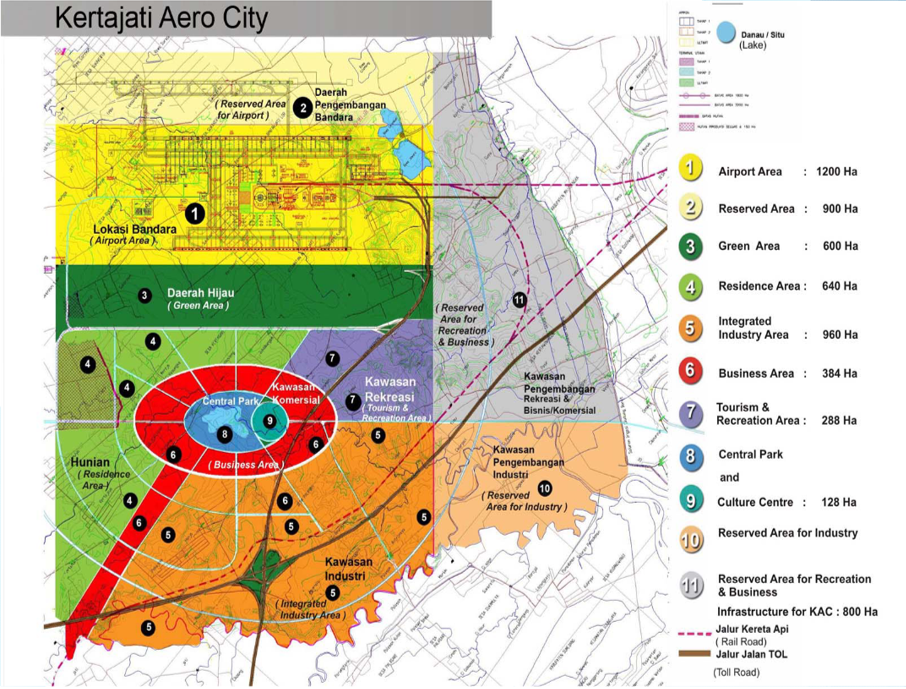
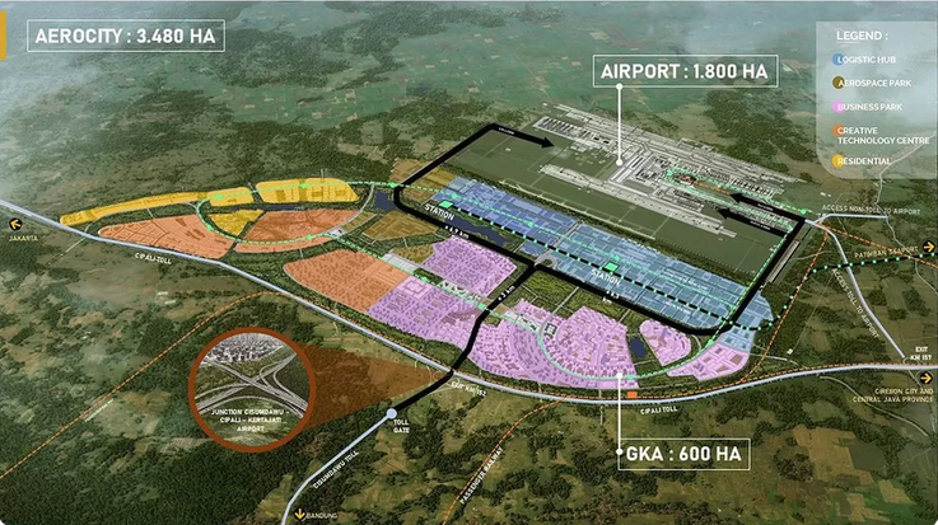
The adjoining Kertajati Aerocity – incorporating typical airport city/aerotropolis components such as hotels, shopping malls, conference and exhibition centres, industrial and warehousing areas, business parks, offices, logistics and distribution facilities, and in-flight catering – is still in the planning stage. Differing plans have been published but there is little sign of development. A 2015 Kertajati Aero City Master Plan graphic indicates areas for industrial, business, residential, tourism and recreation, a central park and culture centre, a green area between the Aero City, and areas reserved for the airport, industry, business and recreation.
In 2017 BIJB stated that non-aeronautical revenue from development on land allocated for Kertajati Aerocity, including retail and food and beverage outlets, will be utilised to lower fees for airlines. Established in 2018, PT PPRO BIJB Aerocity Development manages Grand Kertajati Aerocity comprising development of ‘residential areas, offices, hotels, malls and commercial equipped with various supporting facilities and supported by an integrated infrastructure accessibility plan’ and promoted as ‘The First Aero City’ at the 2022 B20 Indonesia Summit. An October 2020 map of Kertajati Aerocity shows a different site covering 3,480 hectares, divided into zones for industrial and warehousing, offices and commercial space, residential zone, public facilities, mixed-use and green/blue areas. BIJB and West Java officials said the Aerocity would specialise in several sectors including aviation, aerospace, defense, electronics, logistics and warehousing and pharmaceuticals and emphasised proximity to Jatawangi Industrial Zone, other upcoming industrial zones and several planned, under construction and operational road and rail projects.
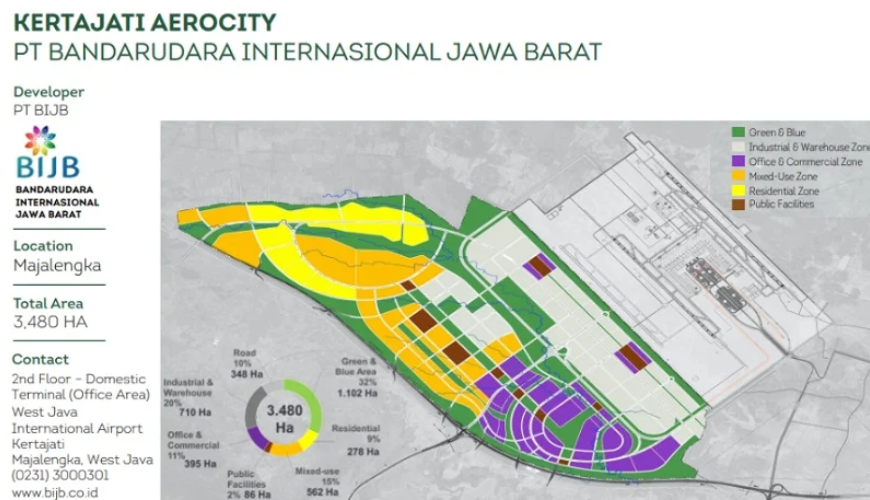
A similar development site and layout for Kertajati Aerocity is shown in July 2024, when BIJB reported interest in the project from many global investors and its focus on infrastructure readiness, land acquisition and permits. Chinese investors had expressed strong interest in development of a ‘green industrial area’. The nearby Umrah Park project, anticipated to become West Java’s largest religious tourism destination, attracting Hajj and Umrah pilgrims, was seen as complementing the Aerocity.
Military aircraft MRO plans
Plans for an aerospace hub on land surrounding Kertajati Airport, mentioned by Indonesian aerospace firm PT Dirgantara Indonesia (PTDI) in 2016, are moving forward. On 20th November 2025 West Java Governor Dedi Mulyad proposed development of Kertajati Airport into a National Defense Industrial Zone, pointing out that the airport’s existing facilities already meet operational standards required for handling military aircraft. BIJB and GMF AeroAsia, Indonesia’s largest MRO firm, hosted the groundbreaking ceremony for Kertajati Aerospace Park on 8th December 2025. In June 2026 possible plans for a maintenance hub for Hercules military aircraft sparked debate over whether Indonesia was drawing closer to US military architecture in the Indo-Pacific region. Defense Minister Sjafrie Sjamsoeddin said that during a meeting with his US counterpart, Secretary of War Pete Hegseth, at the ASEAN (Association of Southeast Asian Nations) Defense Ministers Meeting, Hegseth had offered to centralise maintenance of C-130 Hercules in Indonesia and he had suggested Kertajati Airport. Ministry of Defense spokesperson Rico Sirait said discussions regarding MRO facilities for C-130 Hercules aircraft (four engine turboprop military transport aircraft built by Lockheed Martin) were “still in the early and exploratory stages”. In July 2026 Transportation Minister, Dudy Purwagandhi, said central government supported the proposal to develop Kertajati Airport as a hub for defense related military aircraft operations. Plans for an Asia-wide Hercules MRO at Kertajati Airport were confirmed during a meeting between Defense Minister Sjafrie Sjamsoeddin and other senior officials held on board a C-130 Hercules, on 19th August 2026. Sjafrie said the plans for fighter jet maintenance followed an order from President Prabowo Subianto. Recent completion of a heavy maintenance operation on a Hercules aircraft by GMF AeroAsia and PTDI had led to the two firms being selected to participate in development of the Kertajati MRO facility. On the same day, Defense Ministry spokesperson Brigadier General Rico Ricardo Sirait confirmed plans to Develop Kertajati Airport as an MRO facility for Indonesian Air Force fighter jets. Sirait said “Kertajati will be developed to strengthen the Indonesian Air Force’s aircraft maintenance capabilities, extending beyond transport aircraft like the Hercules to gradually support fighter jets.” The Ministry of Transportation stated that, as the military facilities are developed, Kertajati Airport will continue to serve Hajj and Umrah flights to Mecca.