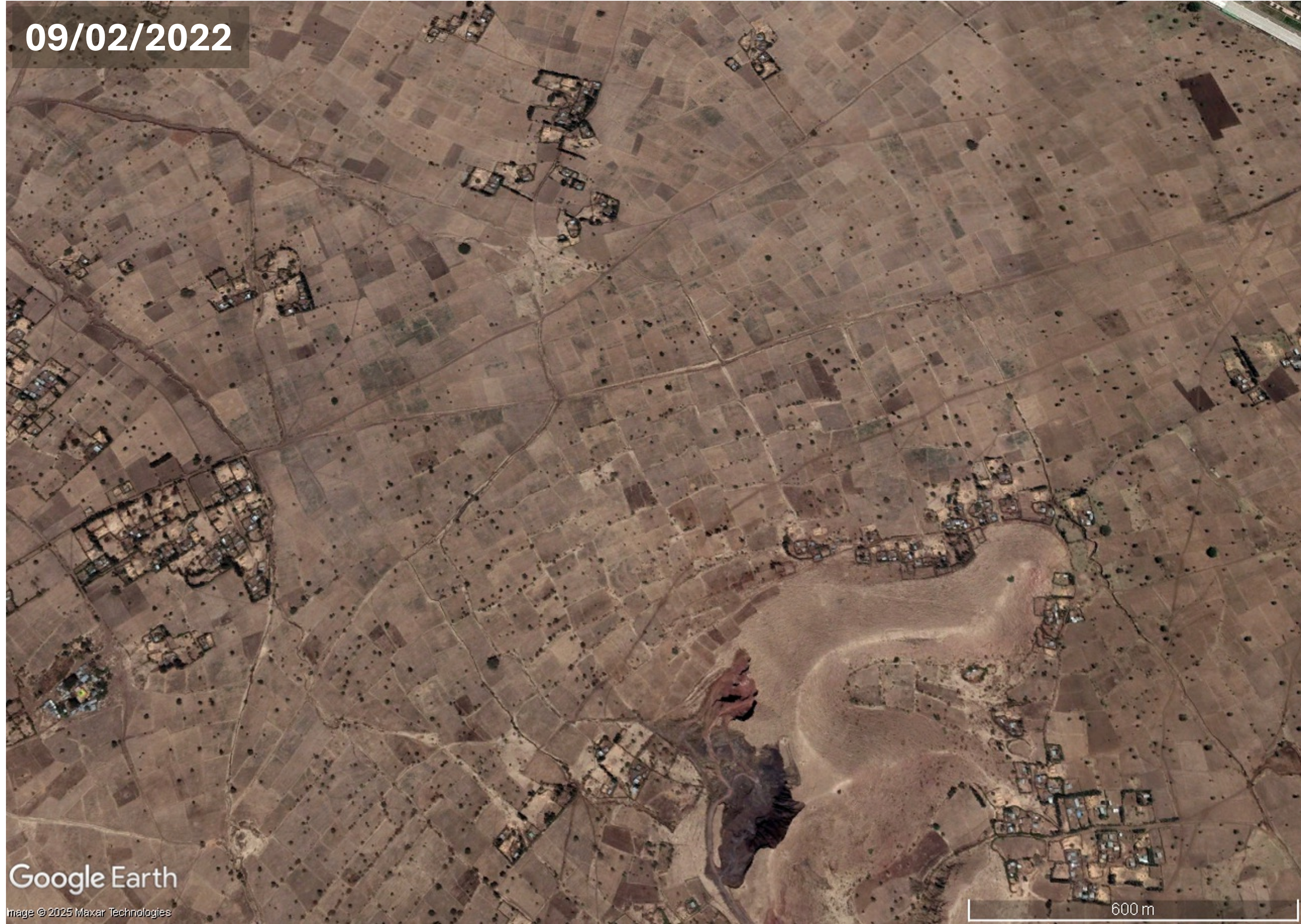
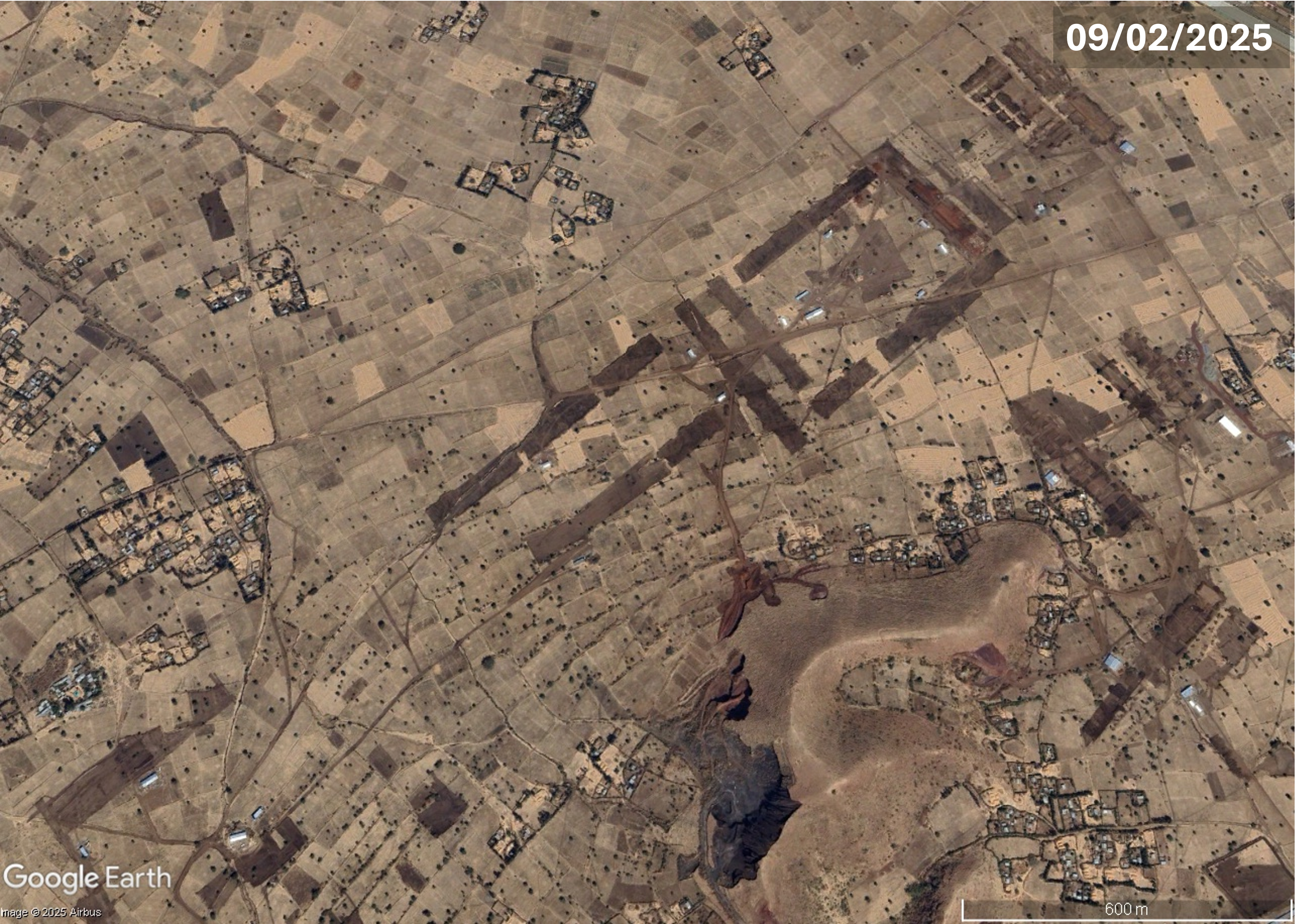
Mega Airport City in Bishoftu, Ethiopia

Construction of Africa’s biggest airport, a Mega Airport City, in Bishoftu, Ethiopia, is set to take up a vast 35 square kilometre site and a budget of USD6 billion just for the first phase and has met with resistance from farmers impacted by the resettlement process.

Mega Airport City, Bishoftu, Ethiopia
Artist rendering of planned Mega Airport City in Bishoftu, Ethiopia. Photo: Ethiopian Airlines, September 2024

Ethiopian Airlines announced plans for an airport city in Abusera (in Bishoftu, part of central Ethiopia’s Oromia region, about 40 kilometres southeast of Addis Ababa) in September 2018. CEO Tewolde Gebremariam said the location was selected because of its elevation; at about 1,900 metres above sea level it is considerably lower than Addis Ababa at 2,400 metres. This would bring the advantage of improved fuel efficiency for flights in comparison with Ethiopia’s existing main airport, Addis Ababa Bole International Airport. French engineering firm ADP Ingénierie (ADPI) conducted a site selection study and in February 2019 the Council of Ministers was set to endorse the proposed site in Abusera. Gebremariam said the mega-hub would not just be an airport, costing USD4 billion with four runways and capacity to handle 80 million passengers per year; it would include other infrastructures making it an airport city with a large duty-free shopping area, entertainment centres, hotels, business centre, logistics centres and real estate development. By January 2020 the airport city plans had become even more ambitious; passenger capacity had increased to 100 million per year. The anticipated cost had also risen significantly. Gebremariam said “We have identified 35sqkm land to be developed as an airport and it is about a $5bn project – larger than the Grand Ethiopian Renaissance Dam (GERD). It is going to accommodate 100m passengers; larger than Dubai and more or less equal to the new Istanbul airport.”

In February 2024 Ethiopian Airlines announced that the designated land for the airport city had been secured and that the project would encompass an area of 38 to 40 square kilometres. A spokesperson said the Oromia Regional Government, in collaboration with the Federal Government, was evacuating residents from the site to make way for construction to begin. The estimated cost of the megaproject had escalated again. In August 2024 Ethiopian Airlines was searching for USD6 billion in financing just for the first phase of what was now called a ‘Mega Airport City’. Projected passenger capacity increased again, to 110 million per annum, and the Dar Al-Handasah consultancy was awarded the contract for design and supervision of the Mega Airport City. At the signing ceremony Ethiopian Airlines stated, ‘The architectural team will incorporate elements of Ethiopian heritage to establish a people-centric, intuitive airport characterised by sustainability, resilience, and future-readiness.’

The claim to be ‘intuitive airport’, ascribing sentinence to infrastructure, is just meaningless corporate guff. And the claims to be ‘people-centric’ boasting the qualities of ‘sustainability’, ‘resilience’ and ‘future-readiness’ disregard the airport city’s impacts on the people most directly affected, those who are being displaced to make way for it. Simultaneous with the search for USD6 billion to finance the airport city it was announced that construction could only go ahead if up to 2,500 farmers currently residing on and surrounding the site were resettled. Mesfin Tassev, CEO of Dar Al-Handasah, said a 740-hectare plot had been allocated by the Oromia Regional Government for this purpose, along with 17 billion Birr (USD172.5 million) for resettlement and development works. Design work was anticipated to be complete by December 2025 followed by construction of housing and other basic facilities along with development of employment opportunities for relocated residents by the end of 2026. Mesfin told The Reporter, “The construction of the airport city depends on the resettlement of the farmers. It will commence as soon as they move.”

The resettlement process is not proceeding smoothly. By January 2025 it was reported that Africa’s biggest airport was under construction but ‘faced significant challenges’ regarding coordination of finances, geopolitical dynamics, environmental concerns and the complex task of relocating affected communities. The airport city has triggered local resistance. Affected farmers, many of whom depend upon their land for subsistence and farming livelihoods, are concerned about compensation and resettlement. Many of them feel inadequately compensated and there are reports that the compensation offer was far less than the land’s market value. Resettlement has also caused discontent. Some farmers claim that clear plans for relocation and support for finding new livelihoods have not been provided. During a local meeting held to discuss the project one farmer said, “I’ve cultivated this land for decades. It’s not just my home. It’s my history and my family’s future.”

Lucknow Airport expansion, land acquisition, protest and Aerocity plans

Satellite image of Lucknow Airport (Chaudhary Charan Singh International Airport) dated 20/10/2024. Location of Terminal 3 and some of the villages affected by land acquisition for airport expansion are shown.

Lucknow Airport (also known as Chaudhary Charan Singh International Airport), located 14km southwest of the capital city of Uttar Pradesh, is already the 11th busiest airport in India and traffic will increase with recent and ongoing expansion. A third terminal began operations on 30th March 2024, with capacity for 8 million passengers per year, set to rise to about 13 million upon completion of phase two. Land from Bhaktikhera village was used for the third terminal and runway extension and in March 2018 the Airports Authority of India (AAI) agreed to pay Rs 32 crore for relocation of about 600 residents. Compensation for acquisition of 70 acres of land from Bhaktikhera, Gurera and Aurangabad Jagir villages, for runway extension and other facilities, was still being negotiated in June 2018. Airport expansion had been stalled for a decade due to difficulties with land acquisition. But in June 2019 the AAI announced that ‘decks are cleared for the construction of the wall around the airport and expansion of the runway’. The district administration committed to helping AAI build the wall to keep out people ‘trespassing the area’ and stray animals posing safety risks.

Demolition notices and farmers protest boundary wall construction

Construction of houses near Lucknow Airport also raised safety concerns. At the end of August 2024 authorities served demolition notices on 50 houses which had been built next to the airport boundary without authorization. A Lucknow Development Authority (LDA) official said a builder had posed as a contractor without obtaining the requisite No Objection Certificate (NOC) from the airport administration, acquired land directly from farmers and pocketed the money. A month later construction of the airport boundary wall led to a clash between a group of farmers and police. After commencement of excavations works, with two JCBs in the presence of police, a large number of farmers, between 150 and 200, gathered and began to protest, saying the airport administration was forcibly occupying their land. The farmers, from Rahimabad and Mohammadpur Bhakti Kheda villages, said a disputed land petition was pending adjudication in the Allahabad High Court.  The protest forced authorities to temporarily halt land reclamation operations for airport expansion. Farmers argued that the land had been cultivated for many generations and that land acquisition notification in the 1950s lacked important details including plot numbers, land area and the names of the landowners, thus raising questions about the legitimacy of the acquisition process.

In response to the protest the district administration postponed the land reclamation drive until 15th October. The owner and operator of Lucknow Airport, Adani, one of India’s largest multinational conglomerates, plans to reclaim approximately 260 acres on the southern edge of the airport for extension of the runway to 3,500 metres to accommodate large, wide-body aircraft and construction of two parallel taxiways. Speaking anonymously, an official stated that a total of about 400 acres owned by the airport for over 70 years would be reclaimed for airport expansion and a survey would be conducted to compensate farmers with crops growing on the land. The principal petitioner against the land reclamation said the farmland had not been legally acquired, farmers had not received any compensation and Adani was attempting to forcibly construct the airport boundary wall. 

Boundary wall construction continues and Aero City plans

On 25th October the Supreme Court dismissed the farmers’ plea against expansion of Lucknow Airport, allowing LDA to proceed with the project. Lucknow Development Index announced on X that, after deployment of a ‘heavy police force’ in response to resistance, ‘work is still progressing amid farmers clashes’. A ‘massive area’ was being reclaimed and construction of the boundary wall had re-commenced. An official source said a 400-acre area was being reclaimed and a fourth terminal and an Aero City was planned on the land.

 Few months previously, on 5th February 2024 Times of India had reported ‘ambitious plans’ for Lucknow Aerocity, a 1,500 acre development with ‘an array of upscale amenities, such as world-class convention centres, large parks and seven-star hotels’, announced by Uttar Pradesh finance minister Suresh Kharna. The LDA was tasked with identifying land for the project, likely to be located in Rahimabad and Gahru villages. In addition to Lucknow, Adani owns several airports in India including Mumbai, Mangaluru, Jaipur, Ahemedabad, Thiruvanthapuram and Guwahati. Plans for aero cities adjoining Adani’s airports were reported in July 2022. The Economic Times stated that Adani plans to develop ‘aero cities’ on more than 500 acres at all its airports, with hotels, convention centres, retail, entertainment, healthcare, logistics, offices and other real estate sectors.

Locals resisted eviction for Guwahati Airport expansion

At the beginning of September 2021, a month before operation of Guwahati Airport (the busiest airport in northeast India) was handed over to Adani, there were reports of locals resisting eviction to make way for expansion. An eviction notice was served to 54 households, outside the walled area of the airport in Koitasidhi village. An airport official said the land, adjacent to the runway, was to be developed as an approach area, especially for larger aircraft on international flights. Villagers said that several plots of land had been acquired for construction and expansion of the airport since 1962. Some villagers said, “We would rather give our blood than give up our land”. Continuing protest was reported on 8th September; a local person said “We heard that the Adani group which has been given charge of the Airport for 50 years under a lease agreement by the Government of India wants to do expansion work here. But we want to clarify that we will not leave our land even if we are given adequate compensation”. Some other locals said they would not give their land to Adani. On 15th September 2021 the Times of India reported that villagers were fiercely resisting giving up land for airport expansion. A tearful farmer in his late 70s said his family had been compelled to give up land for airport expansion in the 1960s, which if sold today would fetch a much higher price. His family was left with ownership of just one residential plot. More recently, in June 2024, announcing the schedule for opening of a new terminal at Guwahati Airport in April 2025, Chief Airport Officer Utpal Baruah said plans for subsequent expansion phases included a maintenance, repair and overhaul (MRO) facility, aerocity and helipad.

Bulacan Aerotropolis threatens fishing livelihoods

Approval of plans for Bulacan Aerotropolis in Manila Bay, one of the biggest megaprojects in the Philippines, threatens 700 families with displacement and loss of their fishing livelihoods. Thousands more fisherfolk would be affected by land reclamation for the 2,500 hectare airport and ‘airport city’ complex.

On 25th April the National Economic and Development Authority (NEDA) of the Philippines approved plans for a new airport and metropolis, i.e. an aerotropolis, in Bulacan province, Manila Bay. Residents of the village of Taliptip and seven other areas will be affected by the project and at least 700 families face displacement. They make their living from selling their fishing catch in a nearby town and from making fishing nets. Their income is low but life is good and they do not want to leave. A woman who has lived in Taliptip for 43 years is worried for the future of her children and grandchildren. They were not informed about the airport plans and have been told they will be relocated, but not where, or how they might make an alternative livelihood.

Local communities resisting loss of their homes and incomes for the airport project are being supported by environmental and church groups and people can follow the local people’s struggle on the Save Taliptip Facebook page. Leon Dulce, national coordinator of the Kalikasan-People’s Network for the Environment, writes that the Bulacan aerotropolis plan is being pursued aggressively and was kept hidden from Taliptip residents until news broke of President Duterte’s approval of the project. The seas surrounding Taliptip support the livelihoods of about 5,000 fisherfolk and salt-makers, who face being displaced for the project.

Living in hardship has made Taliptip’s people resourceful, they live off the grid using solar power and batteries for their modest electricity needs. The fishing catch has dwindled but they are determined to remain in their homes maintain their established communities. A fisherman from Sitio Kinse, an island community in the midst of the mangroves along the shoreline said: “So long as the sea is here, there is hope … What will we fish if all this were turned into cement?” Fisherfolk take care of mangroves, a vital habitat for many bird species including egrets, terns, kingfishers and swallows, along with shellfish living among its roots. At the beginning of May there was a ‘massive mangrove cutting spree’ in Taliptap, reportedly undertaken by SMC, possibly without the required environmental clearance and thought to be connected with Bulacan aerotropolis. On 12th May Pinoy Weekly posted a photo of Taliptip mangroves that had been cut.

National fisherfolk alliance Pamalakaya also opposes the new airport. Chairperson Fernanado Hicap said the project will cause environmental disaster in Manila Bay; destruction of marine ecosystems would threaten the livelihoods of more than 20,000 fisherfolk in Bulacan and neighbouring towns. Hicap also lambasted the broader Build, Build, Build (BBB) infrastructure development programme that the new airport is part of, for selling coastal waters and public lands to large developers and foreign investors. Constructing an airport in Manila Bay would require extensive land reclamation works, creating new land from the sea and wreaking destruction on fishing grounds.

Developers and governments often opt for land reclamation, as an alternative to building on farmland and obviating the loss of productive agricultural land and displacement of rural communities. But dredging up vast volumes of sediment from the ocean bed exacts a terrible ecological toll; ecosystems including mangroves, coral reefs and coastal flats are eradicated when sediment is dumped on top them. The new airport is just one of five land reclamation projects Duterte’s administration has approved in Manila Bay, described by Hicap as disregarding the “socio-economic rights of hundreds of thousands of fisherfolk and coastal settlers”. Land reclamation for the Bulacan airport project is likely to impact not just on the town of Balakan but on the neighbouring towns of Hagonoy and Paombong and the city of Malolos.

A mega-airport and a new metropolis

A mega-airport is planned, with six parallel runways and initial capacity for 100 million passengers annually, more than double the passenger throughput at the existing main Manila airport, Ninoy Aquino International Airport, the busiest in the Philippines. With a budget of P735.63 billion (US$14.2 billion) the new airport in Bulacan is the country’s most expensive transport project to date, by far the most costly of eight infrastructure projects approved as part of the Build, Build, Build (BBB) programme on 25th April by the National Economic and Development Authority (NEDA) Board, chaired by President Rodrigo Duterte.

San Miguel Corp (SMC), the Philippines’ biggest company by revenue – a conglomerate with interests spanning infrastructure, real estate, mining, petroleum, power and food & beverages – is set to build, operate and maintain Bulacan airport and aerotropolis. The plan spans 2,500 hectares, comprising 1,168 hectares allocated for the airport and 1,332 hectares for an adjoining ‘airport city’. The video below includes a graphic showing the basic layout.

SMC’s unsolicited proposal to build Bulacan Airport, revealed after scrutiny by the Department of Transportation in November 2017, featured additional SMC projects, in the form of the obligatory surface transportation network that is inherent to the aerotropolis development model. An SMC-built expressway linking the airport to the North Luzon Expressway is planned, which would in turn link to SMC-backed Metro Rail Transit Line-7. By the time NEDA approved the Bulacan airport proposal in April 2018 the expressway project specified a revenue stream for SMC, an 8.4 kilometre airport toll road. NEDA gave SMC’s proposal for Bulacan airport the green light in spite of Department of Finance concerns that the project is to be implemented by SMC subsidiary San Miguel Holdings Corp, whose capitalization is smaller than the airport project.

Clark Airport – another aerotropolis, another new metropolis

Some potential Bulacan Airport investors were cautious about the project because expansion of Clark Airport could serve similar markets. NEDA has approved US$241 million expansion of Clark Airport as another priority under Build, Build, Build. Finance Secretary Carlos Dominguez highlighted Clark Airport growth at an Asian Development Bank briefing saying “Clark will will soon be the showcase of the Duterte administration’s economic strategy”. In December  2017 the government awarded the GMR-Megawide consortium the construction contract for trebling Clark Airport’s capacity from current 4 million passengers annually to 12 million by 2020. President and CEO of Clark Airport, Alexander Cauguiran, has stated larger-scale expansion plans, for increasing capacity to 80 million passengers annually upon completion of a fourth phase of development.

A former US military base which is already an economic hub, Clark Airport is also being developed as an aerotropolis, encompassed within a wider area already primed with surface transportation infrastructure and lavish incentives for investors. Clark Airport is part of Clark Freeport, a 4,400 hectare tax and duty incentivized area. Further development of Clark Freeport is prioritized in NEDA supported infrastructure projects; the US$957 million Subic-Clark railway, connecting to the Philippines other freeport zone, has been approved. Clark Freeport adjoins a larger area, the 27,600 hectare Clark Special Economic Zone, where firms can avail themselves of a generous suite of tax breaks including income tax and corporate income tax holidays of up to eight years and exemptions from local government taxes.

In April 2015, as the government infused P1.2 billion (US$27 million) for a low cost passenger terminal, it was reported that the government was ‘pouring investments into Clark aerotropolis’ development’. Nearly three years later, in March 2018, the Bases Conversion and Development Authority (BCDA) pitched Clark Airport to global investors as an ‘airport city’ and ‘growth center’. BCDA senior vice president John Bingcang said “Clark is on its way to becoming Asia’s next aerotropolis with the development not only of the airport, but the Clark Freeport as well” and invited investment in construction of a US$67 million access road to another airport city component, the “smart, green, and resilient” New Clark City. At completion covering an area of 93 square kilometres, planners envisage that New Clark City will be larger than Manhattan, housing 2 million people. Claims that the new metropolis will be sustainable, reduce carbon emissions and ‘pollution-free’, are undermined by aviation dependence. New Clark City is regarded by BCDA as complementing expansion of the airport.

Land disputes and displacement

Development of Clark Airport within Clark Freeport, in the 2,367 hectare Clark Civil Aviation Complex (CCAC), has triggered land disputes. In July 2016 117 farmers cultivating about 200 hectares of CCAC land appealed to President Duterte, drawing attention to their request to Clark International Airport Corporation (CIAC) to grant them ‘Disturbance Compensation‘. The president of a farmers’ cooperative said construction of factories and an industrial complex had begun without prior consultation. Farmers protested at the construction site, stating that they were willing to surrender farmlands but demanding just compensation plus reimbursement for loss of farm buildings and crops. Almost a year later, in June 2017, cultivation of grains, vegetables and spices in the CCAC appeared to be attracting birds. A Commission on Audit (COA) report blamed farming activities of people it referred to as ‘illegal settlers’ on 647 hectares of land for an increase in bird strikes, collisions with aircraft that can pose a safety risk.

GMR-Megawide is keen on bidding for the operation and management contract of Clark Airport, and already operates Mactan-Cebu Airport, the second busiest in the Philippines. A second terminal is scheduled to open within a few weeks and GMR-Megawide Cebu Airport Corp (GMCAC) plans for further expansion, a third terminal and second runway that would increase airport capacity from the current level of approximately 10 million passengers per year to 28 million passengers by 2039. The project entails reclaiming 300 hectares of Magellan Bay. This option, chosen in a proposal supported by some Cebu congressmen, was seen as preferable to expanding over land as that would have impacts upon between 10,000 and 12,000 households.

SMC, through its subsidiary Trans Aire Development Holdings Corp (TADHC) holds the concession to operate Boracay Airport, the main gateway to the Philippines’ most well-known tourist island. On 16th September 2015 residents facing land expropriation for expansion of the airport protested against plans to purchase their land at a fraction of its market value. The president of Caticlan Land Owners Association said the market rate for real estate in the area was between five and ten times higher per square metre than residents were being offered. Yet some residents had already received court orders instructing them to vacate their homes. Demonstrators gathered outside the airport terminal with placards reading: ‘No To Expansion Caticlan/Boracay Airport’, ‘Stop Harrassment’, ‘Airport Expansion is Killing us’, ‘Expropriation is Oppression’, ‘No to Expropriation, Yes to Fair Negotiation’, ‘CAAP / San Miguel Have Mercy ON US’ and ‘Government for the People, Not Government for San Miguel Corp’. About 200 families were affected by expansion of the airport and in November 2015 the Commission in Human Rights (CHR) in Western Visayas took cognizance of the complaints raised by landowners.

Some residents had no choice but to accept the low compensation offer. By April 2016 a number of families had been evicted to make way for airport expansion and become squatters. Local residents asked TADHC and the Civil Aviation Authority of the Philippines (CAAP) for clarification of the scope of Boracay Airport expansion plans, estimated to affect about 8,000 people. By October 2017 SMC was building a new terminal at Boracay Airport and, separate from airport development, expanding the footprint of its tourism related development on 130 hectares of land. Groundbreaking for a 400 room Marriott Hotel was imminent and plans included more hotels, an entertainment complex and an ocean park.


Farmers resist land-grabbing for cargo airport in Ogun State, Nigeria

5,000 farmers from 20 villages are being displaced for a cargo airport in Ogun State, Nigeria. Residents of Igbin-Ojo and seven other communities have protested over land-grabbing. Crops have been bulldozed and they fear forcible eviction.

A major cargo airport is planned in the Wasimi area (also referred to as Wasinmi) of Ewekoro Local Government Area of Ogun State, near Nigeria’s southeast coast. On 18th December 2017 hundreds of farmers from the village of Igbin Ojo and seven other communities in Ogun State protested against land-grabbing for the airport. Appealing to the Ogun State Governor Ibikunle Amosun to intervene community leader Ademola Tiwalade Adisa stated that, on three occasions, groups of people came onto their land. Adisa reported that, on 17th November a group of people with a bulldozer invaded their land, then, on 24th November and 8th December a larger group of people encroached onto their land and began mapping portions of it. Below are photos of the 18th December protest published by The Sun Newspaper.

Narrating their ordeal of 8th December 2017 Adisa said that heavily armed men of the Rapid Response Squad (RRS) had forcefully arrested a number of people and, at gunpoint, forced him and his elder brother to sign an undertaking stating that they would not disturb work on their land. Villagers claim that the land trespassing and mapping was led by former chair of the Ewekoro Local Government Area, Mr. Dele Soluade, but he has repeatedly denied all the allegations, dismissing the claims he had illegally invaded the land as “unfounded” and insisting that he was acting under the instructions of Governor Amosun.

Affected villagers had undertaken a survey before the trespassing and mapping exercise began, clarifying the status of their land with the state government. They had obtained a land information certificate dated 13th December 2017 which confirmed that the land in question is completely free of all known acquisitions. The land information certificate was published in the The Sun Newspaper. Farmers’ land rights claims were fortified by this document and Abisa said: “We, therefore, appeal to Governor Ibikunle Amosun to come to our aid before he wipes our communities out in his desperation to grab our lands.”

Farmers dispossessed and crops destroyed

A 4th February an article in The Guardian Sunday Magazine painted an alarming picture of the plight of residents of Igbin Ojo, ‘fighting the battle of their lives’ to resist displacement from their ancestral land. Over the course of a few weeks crops worth millions of Naira, including cassava and pineapple plantations, had been destroyed by bulldozers and caterpillars. Farmland measuring nearly 164 hectares serving as their providing main source of income had been leveled and forcibly taken away. Fear had enveloped other farmers, including people who had invested heavily in poultry facilities which they feared losing. Farmers were distraught, dispossessed of their land and anticipating being evicted from their homes, desperately worried about their own survival and the future for their children. One woman said that that the entire community was living in fear and hunger and that children were unable to attend school because parents were unable to afford the fees.

One of the community elders, Pa Emmanuel Olukunle Opeagbe, said that the community had enjoyed ownership of the land from time immemorial up until 17th November 2017 when the first land invasion took place. He confirmed community leader Abisa’s account of land invasions by a group of people, which he described as “fierce-looking thugs”, and a bulldozer. He backed up community leader Adisa’s allegations of Soluade leading the land invasions and resorting to abuse, harassment, intimidation and threats to bulldoze people along with the crops. Opeagbe reported that Soluade had told villagers that their community would cease to exist. Along with Adisa, Opeagbe had been arrested and forced at gunpoint to sign an undertaking not to interfere with trespassing on the land.

Residents appealed to the Federal Government, Amnesty International and human rights activists for support. On 16th February the Civil Liberties Organisation (CLO) responded, petitioning Governor Amosun over the unlawful acquisition of land and threat to their lives. State chair of CLO, Joseph Enitan, said intervention of the governor is urgently needed because Soluade is acting under his instructions to trespass and grab lands. Farmland was being invaded and destroyed, in the name of constructing a cargo airport. Community members including council chairman Kehinde Adepegba were shocked by recent developments. New areas of land had been claimed for the airport project and encroached upon, even though the land required for the airport was allocated to the project many years previously.

A large portion of land had already been acquired for the proposed Ogun cargo airport, which was first conceived in 2005. Yet, shortly before the reports of land grabbing, in May 2017, the project languished abandoned; the only physical infrastructure that had materialized was a perimeter fence around an area of land measuring 5 x 5 kilometers. Farmers from about 35 communities, who had grown crops like rice and high-yield cassava had been displaced for the project, but they had not received compensation for the loss of their land and livelihoods. Opeagbe said the large portions of land that were “compulsorily taken for the project years back are yet to be compensated for” and that people had not protested against the airport because they believed it would bring development to their area and they would benefit from it.

Farmland is being destroyed, and farmers displaced, for an airport project which aims to export farm produce; the Ogun airport project has been described as an ‘agro-cargo airport‘. It appears that the primary purpose of the airport is envisaged as ‘transportation of agricultural products to other parts of the world’, also referred to as export of perishable (temperature controlled) goods. Only cursory mention has been made of other potential functions for the airport such as import of consumer goods, machinery and industrial raw products, pilot training school, aircraft maintenance facility, helicopter and air taxi services.

Compensation and a possible court case

At the end of February Governor Amosun announced that 500 million Naira (nearly US$1.4 million) had been allocated for payment of compensation to farmers losing their land for the airport, saying that the money would be disbursed to 20 villages directly affected by the airport project. He also said that affected farmers would be relocated to an appropriate location where they could continue their farm business, making assurances that his administration would not bring hardship to the people. It was then reported that 1,000 farmers had been compensated for loss of their agricultural land and crops and the remaining 4,000 would receive compensation within the next few weeks. If it is indeed the case that US1.4 million has been earmarked for compensation of 5,000 farmers, then assuming the same amount is to be allocated per farmer this adds up to a mere US$280 each. Igbin Ojo is one of the villages listed as beneficiaries of the first phase of compensation, along with Pataleri, Igbagba, Mosan, Igbin Orola, Igbin Arowosegbe, Idele and Balagbe.

Since this announcement GAAM has not found any reports of affected villagers’ response to the compensation offer, aside from a single resident of Igbagba village reportedly appreciative of prompt payment. There have been newspaper reports of officials making statements urging people to support the project, and exhorting its supposed benefits of employment for local people, economic development and attracting foreign investors. But it is evident that land acquisition for the airport is not supporting development, it is destroying communities. As officials proclaim potential positive impacts of the airport GAAM has not found any information on such vital matters as how the project will be funded and which firms and/or government bodies will be responsible for constructing, operating and managing the facility. But it is evident that a truly gargantuan megaproject is in the works. As he again implored residents to support the cargo airport Governor Amonsun said that ‘thousands of hectares‘ would be required for the project.

Communities resisting loss of their land for Ogun cargo airport are dragging Soluade to court in an attempt to bring the land grabbing to a halt. Their struggle has parallels with farmers’ resistance to the Ekiti airport project, north of Ogun state. In October 2015 the state government of Ekiti sent in bulldozers to clear 4,000 hectares of farmland for an airport, without even discussing the project with affected farm owners in five villages. Farmers succeeded in stalling the land clearance and suspending the airport project. Opponents from within the state government supported the farmers, arguing that the project had begun illegally without adhering to due process and criticized the high level of state funding. The farmers protested and filed a suit seeking damages for unlawful land acquisition, and in March 2016 were vindicated with a court victory upholding their claims. But in the interim ten Ekiti farmers died. Community members attributed their deaths to the terrible trauma of the injustice perpetrated by the state.