Zimbabwe: More than 7,000 people forcibly evicted from Willdale Farm

Forcible eviction of informal settlements from Willdale Farm, to make way for residential units, an industrial park and to support expansion of Charles Prince Airport, led to a humanitarian crisis. Over 7,000 people were left stranded by the roadside without shelter, food, water or sanitation.

WIlldale Farm and Charles Prince Airport
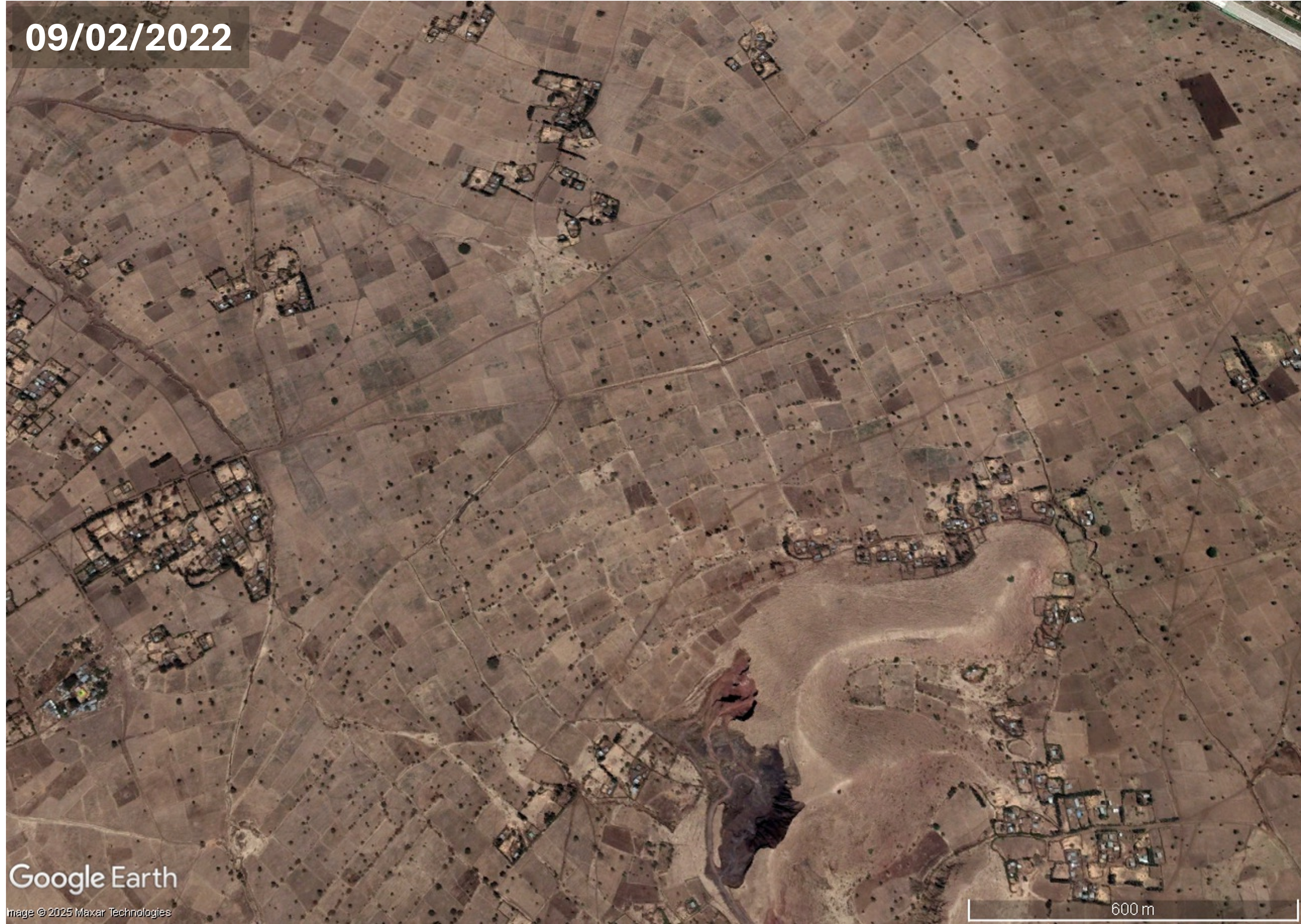
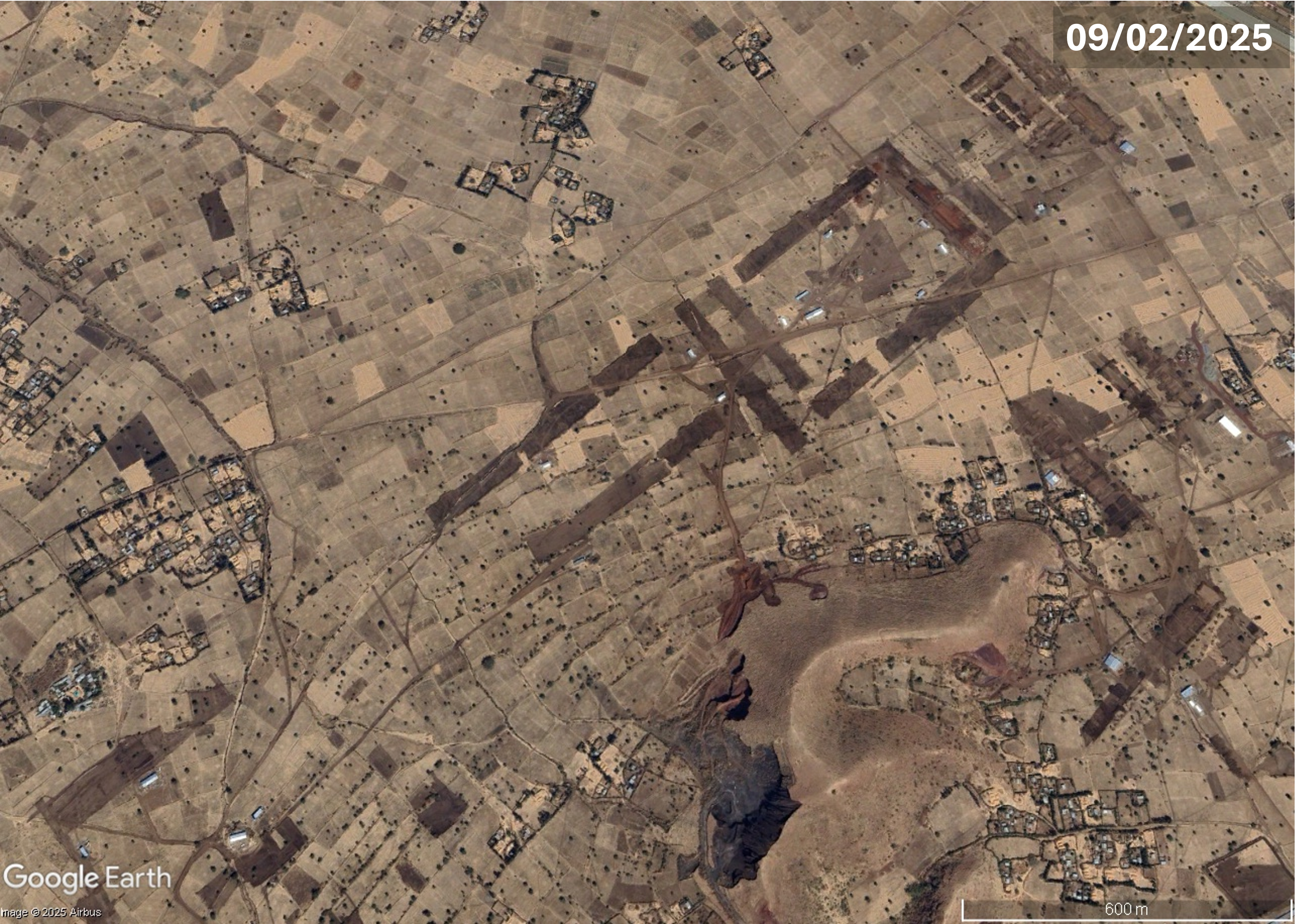
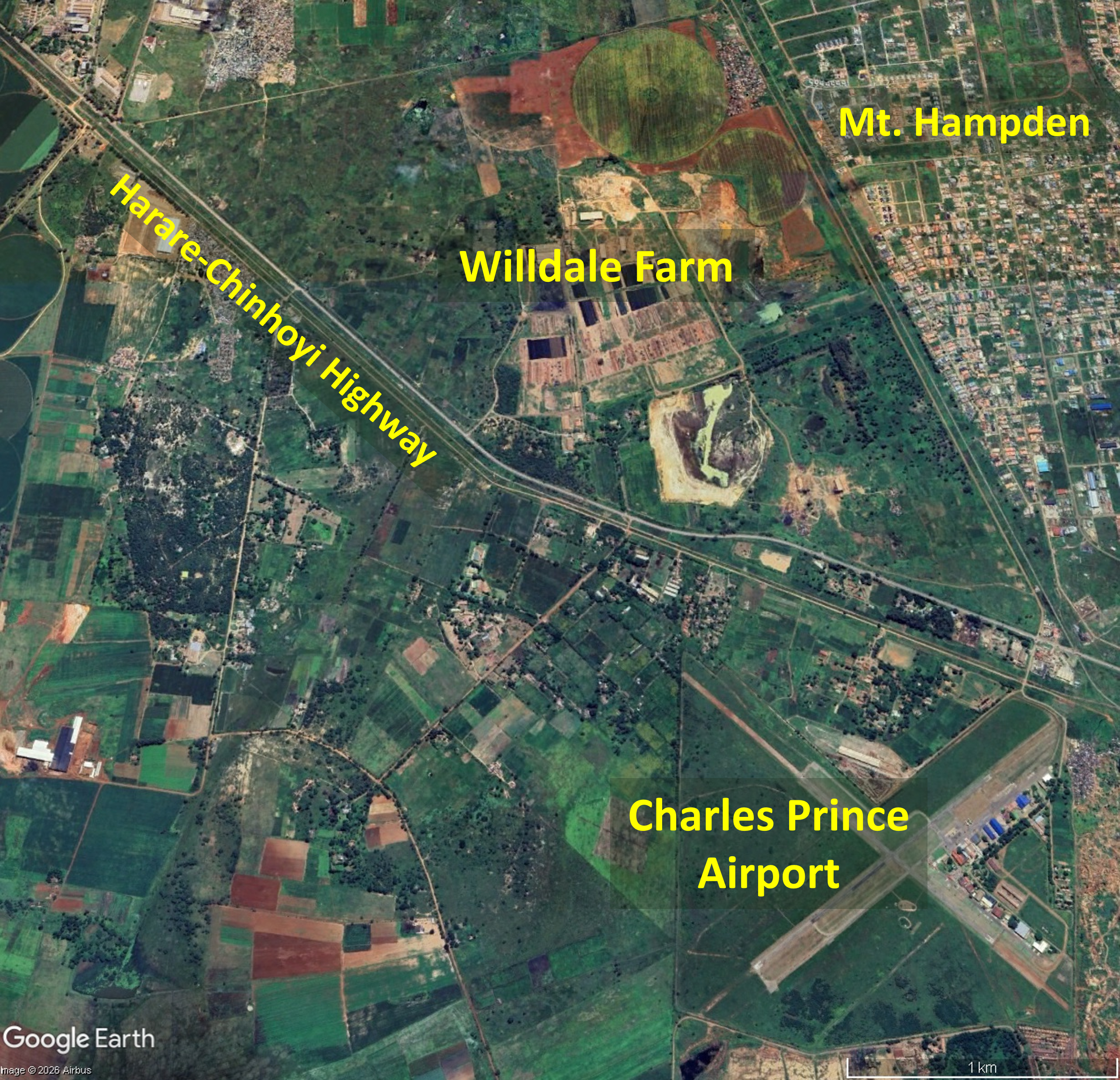
Willdale Farm and Charles Prince Airport. Aerial imagery: 7th March 2025

In September 2025 more than 7,000 families residing on Willdale Farm, in the Mount Hampden area northwest of Harare, on land used for extracting clay for brick manifacturing, were served with eviction orders. Addressing the thousands of affected residents on 28th September Zimba East MP Kudakwashe Mananzva made reassurances that the government was committed to resettling all affected families and nobody would be rendered homeless. But people threatened with eviction complained that the landowner, brickmaking firm Willdale, was exerting pressure to force them to leave. On 29th November Zimbabwe Human Rights Association (ZimRights) reported that forced eviction had ’created an urgent protection crisis’. Evicted people had been left without shelter in heavy rains raising serious human rights concerns including rights to adequate housing and protection from inhumane treatment. On 2nd December New Zimbabwe reported that the ‘humanitarian crisis at Willdale Farm has deepened’; more than 7,000 residents had been evicted and were camped alongside the Harare-Chinhoyi highway to the south of Willdale Farm. The Department of Civil Protection acknowledged the scale of the eviction and said a temporary relocation site had been identified, about 14km northwest of Willdale Farm in Nyabira. State of the Nation reported widespread concerns over a ’humanitarian crisis’ affecting a vulnerable population including children and elderly people.

Zimbabwe Human Rights Commission (ZHRC) expressed serious concerns over the Willdale Farm mass eviction, flagging legal failings. On a 29th November site visit chairperson Jessie Majome saw hundreds of evicted people camped out along the road in the open air without water, sanitation or water. A 2nd December follow-up visit by the ZHRC secretariat confirmed that about 7,000 people including children, the elderly and disabled were still stranded. ZHRC said civil procedures had been violated, including the right to be heard, which might constitute a breach of constitutional rights pertaining to the right to a fair hearing and freedom from arbitrary eviction. ZHRC acknowledged efforts by the government to provide temporary alternative land in Nyabira but the relocation process was ‘extremely slow’, at this juncture nearly 8,000 people had been evicted but only 36 families had been relocated. A monitoring report by Zimbabwe Peace Project (ZPP) highlighted the Willdale Farm eviction, with families granted less than one hour to leave their homes before bulldozers arrived, as one of the most serious incidences of 123 human rights violations recorded in November 2025.

On 8th December Willdale announced that it had gained vacant possession of the 123.6314 hectares of land that had been occupied by third parties and the appointed contractor began mobilising equipment for construction of the project, an industrial park to support an emerging new city and expansion of Charles Prince Airport, located to the south of Willdale Farm and currently used by light aircraft and flights schools, into a regional hub for trade and commerce. An agreement for expansion and upgrade of Charles Prince Airport, was established between Zimbabwe and China during President Mnangagwa’s visit in 2024. Transport and Infrastructure Development Minister Felix Mhona highlighted the land and space for development around Charles Prince Airport, saying, “Once completed, the airport will serve as an international airport”, mentioning the airport’s proximity to the new Cyber City and new parliament building, located northeast of Willdale Farm. The Airports Company of Zimbabwe (ACZ) December 2025 announcement of airport infrastructure projects for the following five years highlighted upgrade of Charles Prince Airport, estimated to cost USD1 billion and supporting the government drive to establish new business and administrative hubs in the Mount Hampden area.

For more information including references for all source material, photos and videos see the case study on EJAtlas, the world’s largest, most comprehensive online database of social conflict around environmental issues – Willdale Farm mass eviction, Zimbabwe

DR Congo: Evictions and demolitions for Mbuji-Mayi Airport rehabilitation and expansion

About 800 houses were demolished to make way for rehabilitation and expansion of Mbuji-Mayi Airport. Many affected people said compensation did not match the real value of their land plots.

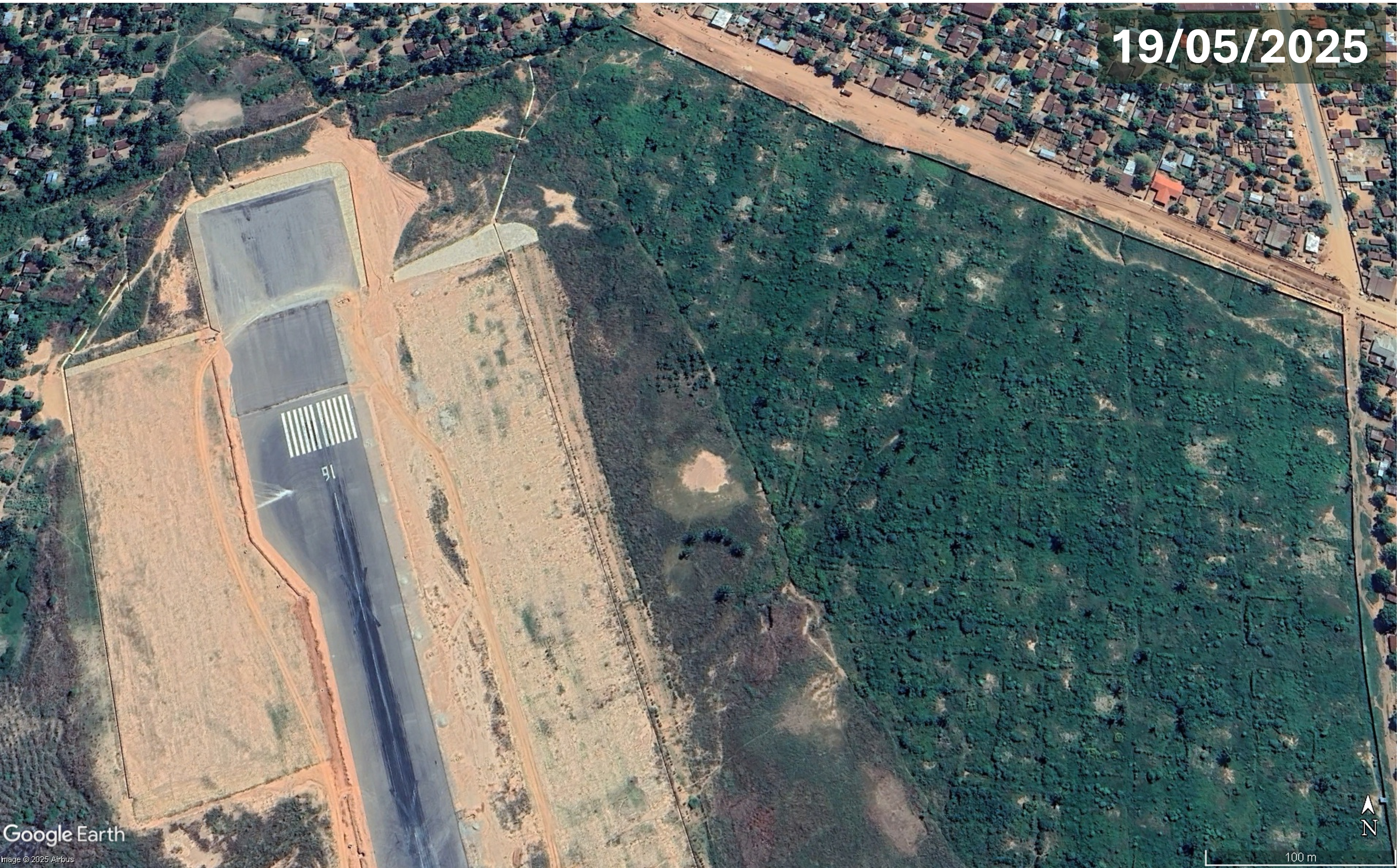
Aerial imagery of Mbuji-Mayi Airport, 17th June 2023Aerial imagery of Mbuji-Mayi Airport, 19th May 2025
Aerial imagery shows changes to the northern section of Mbuji-Mayi Airport between June 2023 and May 2025. In addition to runway works, roads have been widened and buildings next to the airport demolished and replaced with fast-growing vegetation.

Rehabilitation of Mbuji-Mayi Airport, located in the northeast of the city of Mbuji-Mayi, the capital of the Kasai-Oriental Province in south central DR Congo, is part of the Priority Air Safety Project – Phase 2 (PPSA 2) project financed by the African Development Bank (AfDB). Project components include runway extension, construction of aircraft parking aprons, control tower and works to improve aviation safety. AfDB’s 2018 Summary Environmental and Social Management Plans (ESMP) noted that the project area consists of neighbourhoods situated near the airport with dwellings and agricultural plots on the site; some activities including runway extension were postponed to enable studies and mobilisation of funding for involuntary resettlement. In February 2021 the mayor of Mbuji-Mayi set up a commission to identify all affected people who would be evicted, then in March he made reassurances that state obligations for the eviction of people who had built and rented houses would be followed.

Bulldozing of unauthorised buildings around Mbuji-Mayi Airport began on 7th November 2022. The airport project necessitated displacement of approximately 800 households but compensation of affected people was suspended in October 2023 because the census was inadequate and the process had not been accepted by all the residents with some continuing to resist. People whose land was expropriated began receiving compensation cheques on 13th October yet some voiced concerns about finding a new site, the compensation amount and demanded more transparency and guarantees regarding their property rights.

On 21st October 2023 residents whose land was expropriated for the airport project demonstrated in the street denouncing insufficient compensation, burning tyres at two road junctions before police attempted, unsuccessfully, to disperse them. An emergency meeting failed to reach an agreement satisfactory to plot owners who were given a 15-day ultimatum to relocate after receipt of compensation. In February 2024, as works at Mbuji-Mayi Airport were underway, owners of nearly 800 houses on the site were given two weeks’ notice to dismantle their homes. Occupants maintained that the compensation offer did not match the value of their assets.

On 17th July 2024 the mayor of Mbuji-Mayi announced imminent demolition of houses built on the airport site, in the name of expropriation for public purposes. Plot owners had been given tokens for replacement land on the outskirts of Mbuji-Mayi but had not vacated or demolished their houses; 800 families still contested expropriation due to lack of recognition of the market value of their plots. A delegation of residents living around the airport requested protection and support from the provincial authority and respect for expropriation law as recognised in the constitution.

Early on the morning of 29th October 2024 demolition of houses east of Mbuji-Mayi Airport, between Zaire and Dodoma avenues, began. Heavy machinery was escorted by police, as owners of the buildings demanded compensation matching the real value of their property. All their efforts, including marches, sit-in protest and suicide threats, had not dissuaded the government from expropriating the land plots. On the instructions of the president of DRC, Félix Tshisekedi, Minister of Social Affairs, Humanitarian Action and Solidarity, Nathalie Aziza Munana, visited Mbuji-Mayi on 10th November to investigate the demolition of 800 houses near the airport, collect information about evictions and meet with victims and civil society organisations. Minister of Justice, Constant Mutamba, said he had been contacted by several citizens who had not yet received the compensation they were promised, raising suspicions of misappropriation of funds allocated for this purpose.

For more information including references for all source material and photos see the case study on EJAtlas, the world’s largest, most comprehensive online database of social conflict around environmental issues – Mbuji-Mayi Airport rehabilitation, DRC

Brazil: Forest around Fortaleza Airport felled for a logistics center

Sudden felling of forest next to Fortaleza Airport, in northeatern Brazil, to make way for a large logistics center met with protest from citizens and environmental groups, suspension of the project and proposals for an environmental protection zone around the airport.

On 23rd September 2025 it was reported that 32 hectares of forest adjacent to Fortaleza Airport (also known as Pinto Martins International Airport), an area known as Airport Forest, had been felled to make way for a logistics center. The trees had been removed before the requisite documentation, submitted by project developer Aerotrópolis Empreendimentos and airport operator Fraport Brasil, had been evaluated by Instituto Brasileiro do Meio Ambiente e dos Recursos Naturais Renováveis (IBAMA), (Brazilian Institute of the Environment and Renewable Natural Resources) which requested evaluation of documentation in response to allegations that the licensing process had violated Atlantic Forest Law.

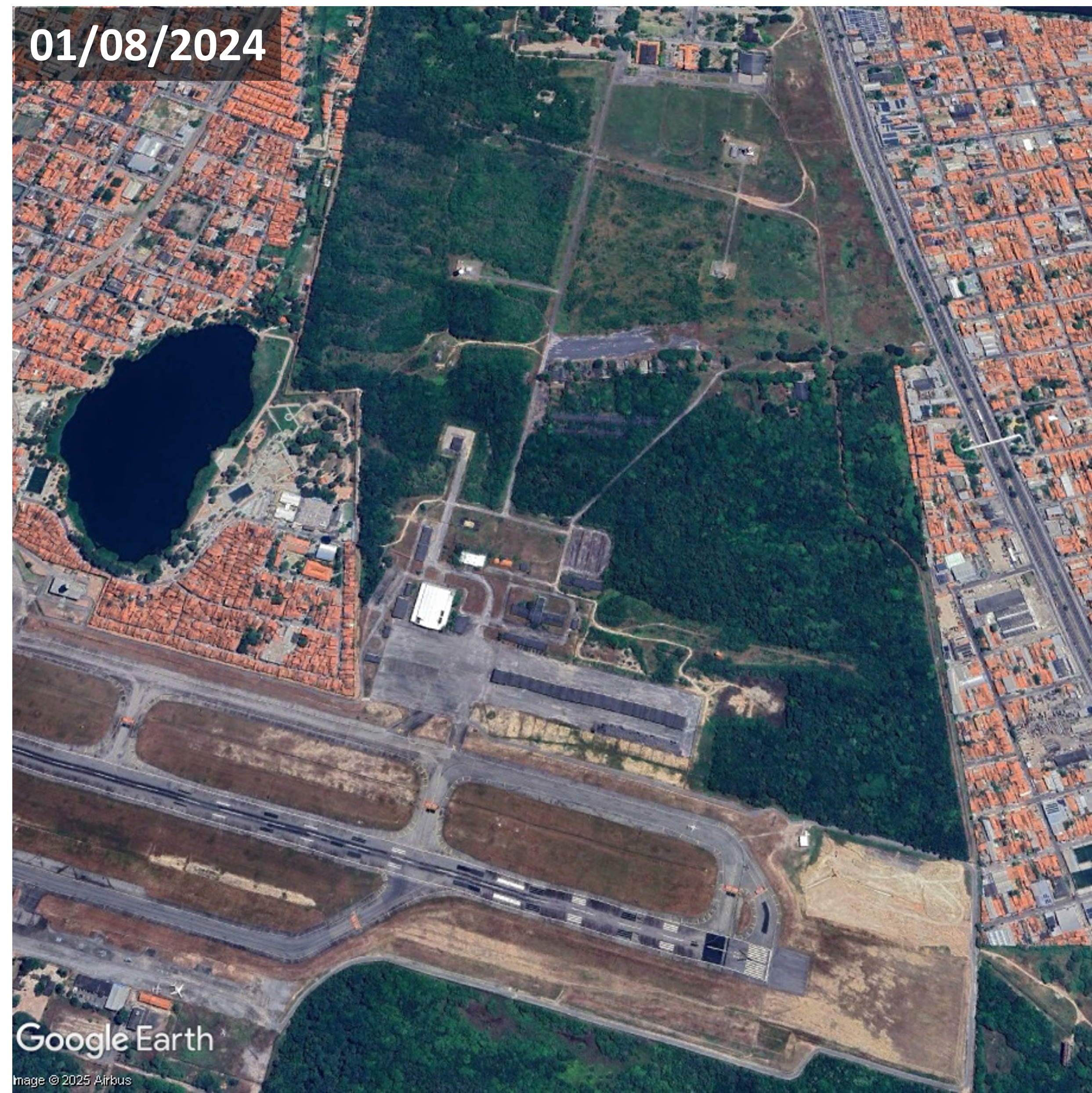
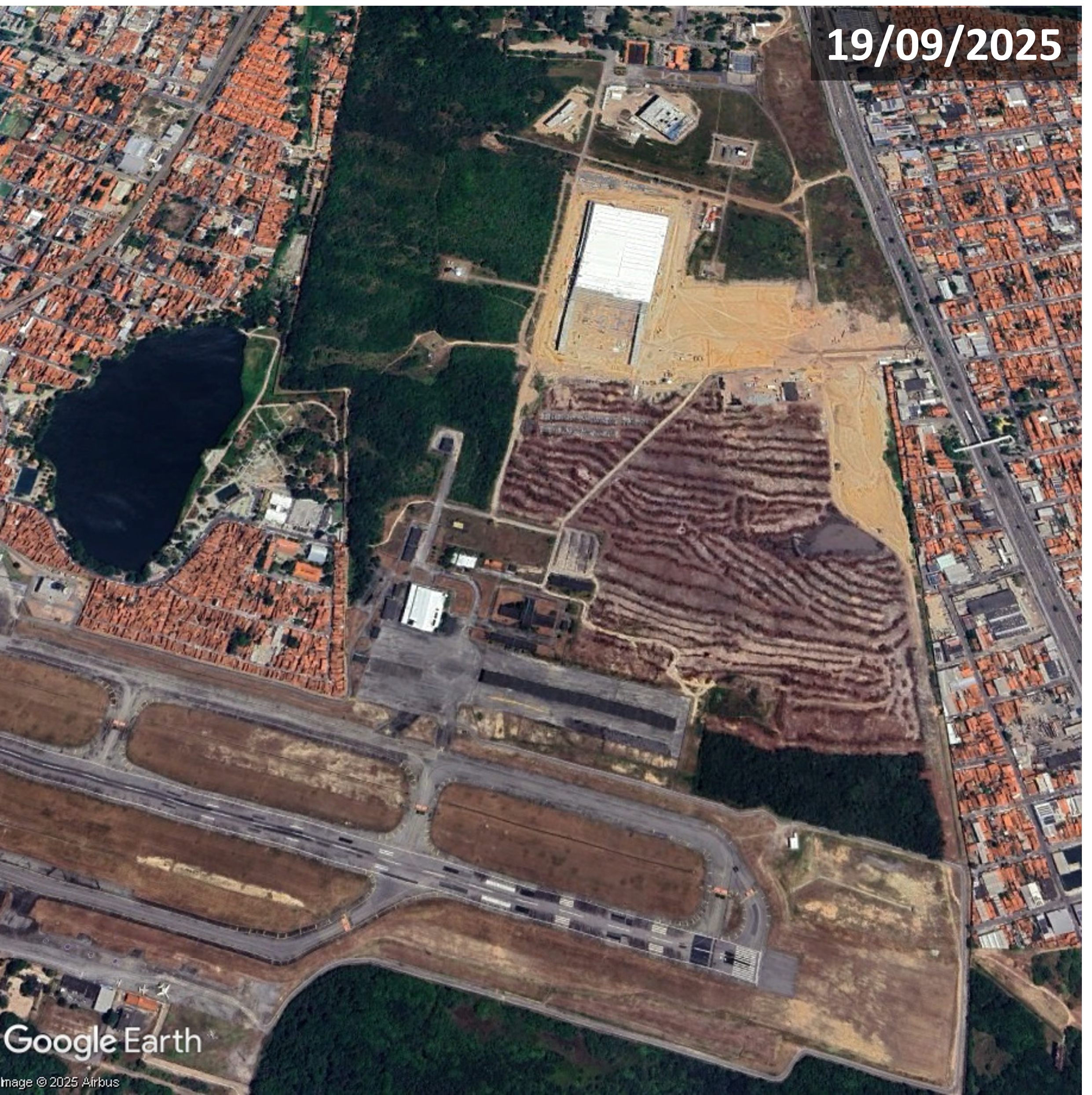
Fortaleza Airport, Aug 2024Fortaleza Airport, Sept 2025
Aerial imagery of Fortaleza Airport showing deforestation that was reported in September 2025

Deodato Ramalho, IBAMA superintendent, said the forest around Fortaleza Airport and Cocó state park are the only city’s only remains of the Atlantic Forest, extending along a long stretch of Brazil’s Atlantic coast and important for temperature regulation and flood prevention. Ecologist and Fortaleza city councillor Gabriel Aguiar said trees had been felled with chainsaws and reforesting the area would take many years. Daniel Pagliuca, an environmental lawyer and professor at Baturité Massif University Center, said forest clearance can be permitted for projects with public utility, but a logistics center would not directly benefit the local population. Animal rights experts raised concerns that many animals’ lives were in danger as forest clearance forced them into urban settlements. Images on social media showed animals climbing walls and poles around the airport.

Following analysis and site investigation Aerotrópolis Empreendimentos’ license and authorisation were suspended due to intervention in a Preservação Permanente (APP), (Permanent Preservation Area) and wildlife management inadequacies. Aguiar said the tree felling around the airport was the largest deforestation in a decade. Before and after satellite images showed total removal of trees and partial construction of a warehouse in the project area, immediately north of the western end of the runway. Residents and environmental and civil society organizations raised concerns over the logistics center project’s environmental impacts and demanded improved transparency in the licensing process.

During the 2nd October 2025 Encontro Nacional de Gerenciamento Costeiro (National Coastal Management Meeting) members of several social movements protested devastation of the Atlantic Forest around Fortaleza Airport. Environmental leaders from all over the country along with Ceará citizens called for revocation of Fraport’s license, accountability for the firms involved and reforestation of the deforested area. A banner read ‘Who killed the airport forest? 40 hectares of Atlantic forest devastated’ and signs stated that Atlantic Forest had been felled in the absence of a socio-environmental study or wildlife management. A total of 46-hectares had been cleared for construction of a logistics center, which has the potential to be one of the largest facilities of its kind in northeastern Brazil with seven warehouses, a truck service center, gas station and fuelling point. Residents around the impacted area were experiencing higher temperatures; preliminary research comparing surface temperatures from the same time period the previous year indicated an increase of at least 6 per cent, thought to be related to the deforestation.

After an inspection uncovered irregularities including removal of vegetation exceeding authorized limits SEMACE issued Aerotrópolis Empreendimentos with a USD37,315 fine and suspended land use permits in the affected area. At a conference considering amendments to the draft Fortaleza Master Plan a 200-hectare Zona de Preservação Ambiental (ZPA), (Environmental Protection Zone) around Fortaleza Airport, encompassing the deforested land, was approved. Professor Renato Pequero said the designation increased the possibility that the deforested area might be restored. Gabriel Aguiar welcomed the victory and called for the city’s biggest ever mobilization to ensure approval of the ZPA proposal.

Fortaleza Airport City
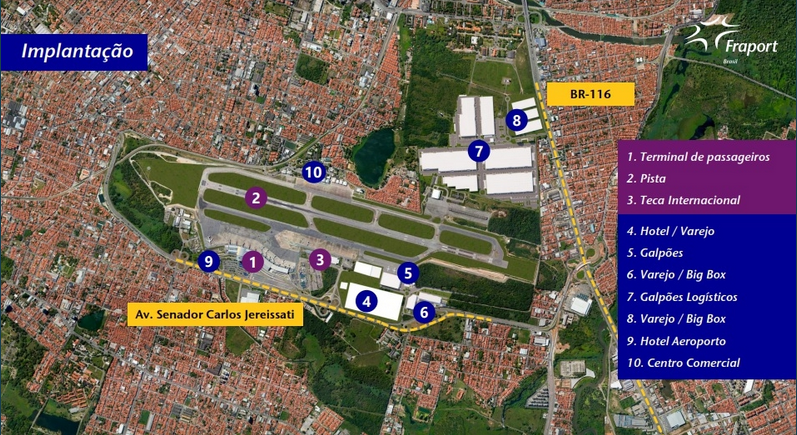
Fortaleza Airport City plan graphic – Fraport announced expansion on land adjacent to Fortaleza Airport in 2022.
Source: Fraport Brasil

The logistics center next to Fortaleze Airport is part of a larger airport city project. In July 2022, Fraport Brasil announced expansion onto land adjacent to the airport for Fortaleza Airport City, a development of over 80 hectares. Along with a logistics center planned facilities included two hotels with independent access to the airport, shopping mall and supermarket. A graphic published with the announcement shows logistics warehouses, big box retail, a hotel and commercial center.

For more information including references for all source material, photos and videos see the case study on EJAtlas, the world’s largest, most comprehensive online database of social conflict around environmental issues – Deforestation around Fortaleza Airport, Brazil

Egypt: Tourism megaproject in St. Catherine displaces Bedouin people and damages ecosystems and heritage

Construction of the Great Transfiguration Project – a mega tourism development n the St. Catherine area comprising luxury hotels, villas, chalets, visitors centre, shopping bazaars, housing and roads is linked to expansion of St. Catherine Airport.

Great Transfiguration Project (GTP), Egypt
Great Transfiguration Project (GTP) area, Egypt. Aerial imagery: 2nd July 2023

The Great Transfiguration Project (GTP), a mega tourism development project including hotels, villas, chalets, private housing, shopping bazaars, other facilities and roads in and around the St. Catherine area – a designated UNESCO World Heritage Site which includes St. Catherine’s Monastery and Mount Sinai – was announced by the Egyptian government in March 2021. Within weeks demolitions and construction works by private companies began. An August 2022 statement by the Egyptian Human Rights Forum (EHRF) detailed the project components, situation on the ground, impacts on and response from local communities and NGOs and comments from experts. Many contributors confirmed that GTP implementation had already caused serious, irreversible damage of nature, ecosystems, heritage and negative impacts on local people. EHRF’s statement said authorities had not included the local Jebeleya Bedouin tribe or the wider local community and that local organisations, community representatives, experts and representatives of St. Catherine’s Monastery (one of the oldest continuously inhabited monasteries in the world) and its inhabitants had not been consulted. A St. Catherine’s expert said homes were being demolished without compensation, part of the mosque had been demolished and the cemetery dug up. An eyewitness said many old olive and pistachio trees had been removed and some locals had worked together to replant them in different gardens. Construction of a 70km highway connecting St. Catherine with Al-Tur, on the Gulf of Suez, raised concerns over the environmental impacts. An expert on St. Catherine’s natural environment said, “This highway destroys an area designated by Egypt’s government as a nature protectorate, it cuts through the protected area and splits it in two, causing environmental ruin.”

In March 2022 a Middle East Eye correspondent gathered testimony from several local people concerned about the impacts of the GTP. One resident spoke of concern for the future of the heritage site, saying, “What is sold to us as development is in fact ruining this ancient and beautiful city.” A tourism worker, one of several people commenting on social media and posting photos of demolished buildings, said, “The view to most of the ancient sites of the city will be blockade by the concrete buildings now constructed in it”. One resident spoke of bulldozers tearing down important buildings, replacing them with blocks of concrete. Another resident said, “We wake up every day to discover that some buildings have been demolished and other made of cement constructed instead of them.” Mada Masr reported that two anonymous sources said the government began implementation of the project before submitting environmental impact assessments. A resident raised concerns over the project’s water consumption in a city reliant on wells and tanker trucks from Al-Tur saying, “Where will you get water for those employed in hotels, chalets and homes? They’re building swimming pools while people still wait for the water trucks once a week.” Accommodation built for relocation of residents, apartments in multi-storey buildings, some of which were already housing displaced residents, were very different from Bedouin’s traditional single-floor dwellings with gardens. One resident said, “These do not look like our homes nor do they align with our customs. We would not know how to live comfortably. But when they relocate us, we will have no other choice.”

Concluding a 10th March 2024 inspection tour in St. Catherine to assess the development projects Prime Minister Mostafa Madbouli said the GTP would be Egypt’s gift to the entire world. He said the state had made significant efforts to implement the project, beginning with development of St. Catherine International Airport, located 20km northeast of the city, into an international airport. A World Heritage Watch press release entitled ‘Mount Sinai: A Sacred Landscape Disfigured by a Megatourism Project’, issued on 18th December 2024 stated, “A new urban world is being built around a people of nomadic heritage,” It stated that the site surrounding St. Catherine’s monastery had been transformed. Landscapes had been damaged, the rights of indigenous people violated, houses demolished, important cultural sites destroyed and Bedouins had lost tribal territories. Heritage groups around the world had raised the alarm about the scale of commercial and infrastructure development in St. Catherine. Fourteen plots of land confiscated from the monastery by the Court of Appeals included agricultural land, gardens and buildings protected as antiquities including Saint Panteleimon Church on Mount Sinai which dates back to the 6th-7th centuries. In 2023, UNESCO had asked the Egyptian government to halt further development projects, evaluate the impacts and prepare a conservation plan for the area. The requests were ignored and construction of concrete buildings including luxury hotels, new roads and development of St. Catherine’s Airport into an international facility with a 3km runway, enlarged terminal and VIP lounge continued. Speaking to New Lines Magazine in June 2025 an anonymous resident said, “the fate of personal property that falls in the way of this construction remains unclear. Assurances and fake promises change day by day.” An anonymous expert said Jebeleya people’s homes were being demolished with no compensation. The aforementioned bulldozed cemetery had been paved over to create a parking lot. Plans for 700 new housing units caused worries that Bedouins might be displaced. An anonymous expert said, “Many fear they could be compensated with an apartment, which does not suit their way of life. They need outdoor space – for their livestock and to plant.”

For more information including references for all source material see the case study on EJAtlas, the world’s largest, most comprehensive online database of social conflict around environmental issues – Great Transfiguration Project, Egypt

Houses demolished for Muhammadu Buhari International Airport expansion, Nigeria

Hundreds of people were displaced by a demolition exercise to make way for expansion of Muhammadu Buhari International Airport

On 30th January 2025 a number of residents of Shuwari 5 ward in Maiduguri, near the Muhammadu Buhari International Airport runway, reported that the Borno State Government was demolishing their houses. A bulldozer destroyed houses while residents retrieved essential household items. People whose houses were still standing but had been marked for demolition worked to remove roofs from their houses. One resident said people had received only three days’ notice before their homes were demolished and appealed to the Borno State Governor to provide compensation or alternative shelter for affected residents as they had no other place to go to.

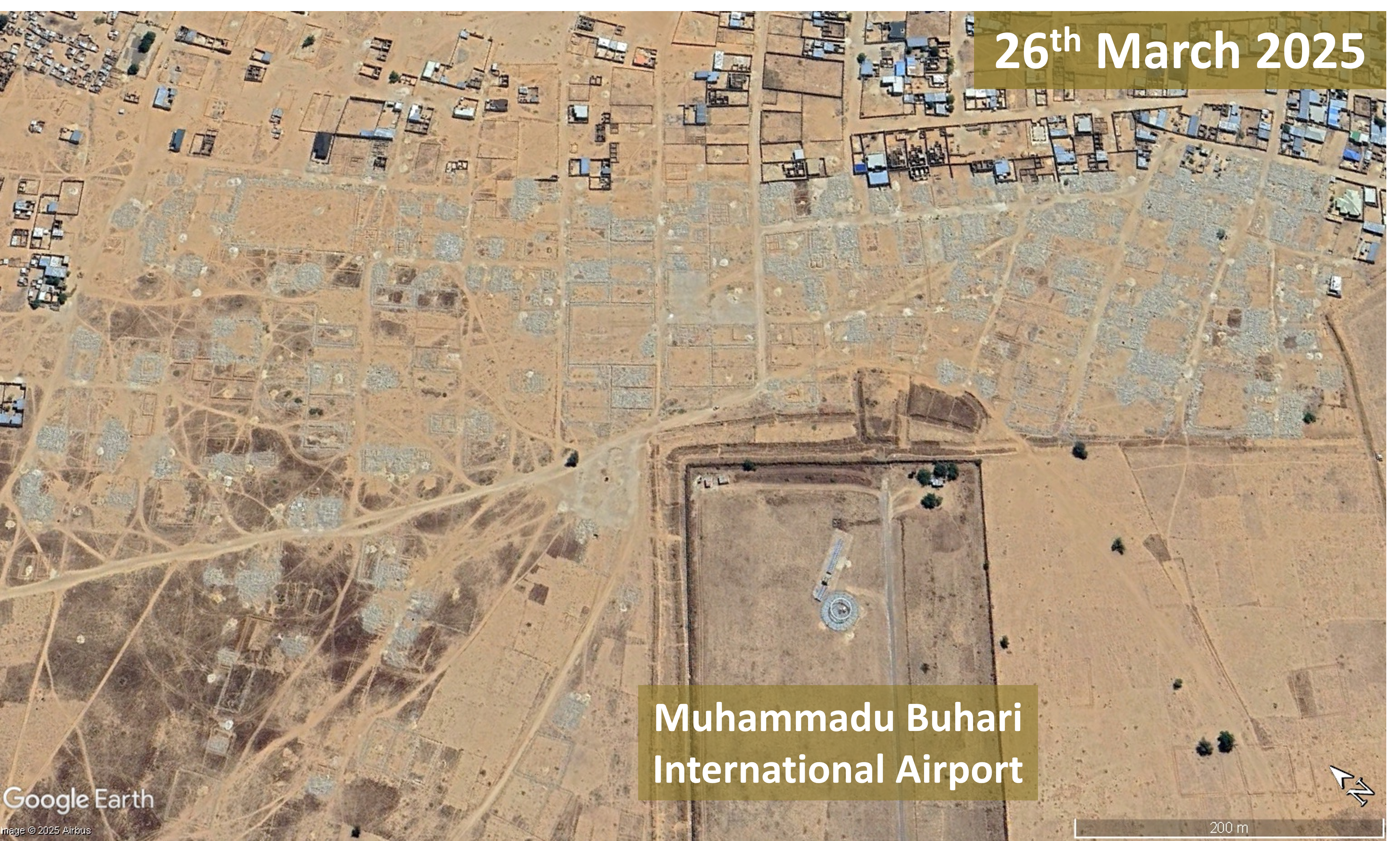
Aerial mage -Muhammadu Buhari International Airport runway, 14th July 2024
Aerial imagery of the Shuwari 5 area near the end of Muhammadu Buhari International Airport runway before and after the demolition exercise beginning on 30th January 2025 shows buildings reduced to rubble.

On a visit to Borno State in October 2024 Minister of Aviation and Aerospace Development, Festus Keyamo, had announced that Muhammadu Buhari Airport had been upgraded to international status and would commence operation as an international airport from 1st January 2025. The General Manager of Borno State Urban Planning Development Board, Liman Mustapha, said the purpose of the demolition exercise beginning on 30th January 2025 was to secure land for upgrade of the airport. He also said there would be no compensation for affected house owners and that residents had been informed that their occupation of the land was illegal in 2020 and since then authorities had attempted, unsuccessfully, to stop construction of houses on the land.

The demolition exercise targeted the area up to 500 metres from the airport fence, beginning with the area within 200 metres. Adamu Matankolo, Acting Regional Manager of the airport, said upgrade of the airport to international status by the federal government necessitated its expansion. He said, “We sympathise with the people who don’t want to obey this order. We have our plan and out plan is that the area slated for demolition is a buffer zone.”

Premium Times reported that more than 100 houses were demolished and many of the affected people had occupied the area for over 10 years having been displaced by the Boko Haram insurgency. The IDPs (Internally Displaced Persons) thought their resettlement was permanent until the state government demolished their houses. An IDP and single mother of three children said residents received a notice from the Borno State Geographical Information Service (BOGIS) just a few hours before the demolition exercise began.

Many people criticised the State government’s handling of the demolition exercise on social media, in the context of the Borno state’s socio-economic problems caused by the Boko Haram insurgency and a recent flood impacting 40% of the city of Maiduguri. Commenting anonymously a Maiduguri-based lawyer gave a detailed statement on the government’s obligations regarding compensation, concluding: “Thus, if a house is built on government land without approval, the owner is generally not entitled to compensation. However, if the government initially allowed of overlooked the development, there is scope for negotiation or legal redress.”

HumAngle, a media platform focussed on conflict, humanitarian, and development issues in Africa, reported that the demolition had displaced hundreds of people. One of them, a widow raising four children who had lived in Shuwari 5 for 17 years, said the government only notified people about the demolition two days before bulldozers arrived, not even giving enough time for gathering belongings. She said at least three affected people had died of shock and more than 20 had fallen ill due to trauma.

Liman Gana, head of Borno State Building Planning Authority, said 306 structures had been demolished, including 64 fully occupied houses, 42 incomplete structures and 17 incomplete buildings. A Federal Airports Authority of Nigeria (FAAN) official gave technical and safety reasons for the demolition exercise, saying structures built too close to the runway posed safety risks. Many displaced residents insisted that they were not informed of these risks before they bought or built their homes and said resettlement should have been planned and implemented before the demolitions took place.

For more information, including references for source material, see the case study on EJAtlas, the world’s largest, most comprehensive online database of social conflict around environmental issues – Demolition of houses for Muhammadu Buhari International Airport expansion, Nigeria

Climate refugees face displacement to make way for Cox’s Bazar Airport and Air Force Base expansion

Up to 70,000 climate refugees face displacement to make way for Cox’s Bazar Airport and Air Force Base expansion and more than 20,000 could be ineligible for replacement flats in the Khurushkul Ashrayan Project. On 7th January 2025 thousands of people protested against eviction.

Map of Cox's Bazar Airport and Bangladesh Air Force (BAF) base.
Map of Cox’s Bazar Airport, Bangladesh Air Force (BAF) base and Khurushkul Ashrayan Project. Satellite imagery 25th March 2025

Since 1981 climate refugees – people displaced by cyclones, river erosion and tidal surges from many of Bangladesh’s coastal areas – have resettled in Ward 1, Cox’s Bazar Municipality. The area is government-owned ‘khas’ land between the Bay of Bengal and Cox’s Bazar Airport and the adjoining Bangladesh Air Force (BAF) base. The largest influx of climate refugees occurred in the aftermath of a cyclone and tidal wave on 29th April 1991 when about 40,000 people displaced from Kutubdia Island settled in the area. In February 2011 several local leaders demanded cancellation of a project to expand Cox’s Bazar Airport. Officials had moved to acquire 16 areas in Ward 1 – including Kutubdiapara, Samitypara, Fadnerdail, Bandarpara and Naziraratek – and 40,000 people would become homeless. In 2012 the Civil Aviation Authority of Bangladesh (CAAB) began a project to extend Cox’s Bazar Airport runway. In 2021 an agreement for another runway extension, lengthening it northwards into the Maheshkhali Channel through land reclamation, was signed.

Climate refugees face eviction

An in-depth investigation of the climate refugees from Kutubdia Island who had settled in Ward 1 was published in December 2024. They were still vulnerable to extreme weather; storms would leave many homes flooded with seawater and the area lacked cyclone shelters. Neither Cox’s Bazar Municipality nor the Chittagong District had precise data on the number of people living in Ward 1 but Akter Kamal, elected three times to represent Ward 1 and now a former councillor, said at least 52,000 people resided there. The investigation found that ‘Every household in the climate refugee camp lives inconstant fear of eviction. All the khas land in the area has been acquired for the expansion of Cox’s Bazar Airport’s runway and the construction of an air force base’.

Resettlement in the Khurushkal Ashrayan Project

The Khurushkal Ashrayan Project, located 3 kilometres east of Cox’s Bazar Airport, was described as ‘the world’s biggest climate refugee rehabilitation project’ when the then Prime Minister Sheikh Hasina inaugurated the first phase, housing 600 families, on 23rd July 2020. It was stated that upon completion 139 five-storey blocks would rehabilitate 4,409 families, the majority living in the Cox’s Bazar Airport area since being displaced by the 1991 cyclone. By December 2024 another 85 buildings had been completed which would accommodate 2,270 families. But former councillor Akter Kamal said that at least 20,000 climate refugees living in Ward 1 were ineligible for flats. Changes to the list of project beneficiaries had caused anxiety to between 20,000 and 22,000 climate refugees who were excluded from the resettlement plan.

Thousands protest eviction plan

On 7th January 2025 thousands of climate refugees, including residents of Samitypara and Kutubdiapara, held a protest demanding cancellation of the eviction plan linked to Cox’s Bazar Airport expansion. Demonstrators blocked roads causing traffic disruption with several thousand people blocking the main city road for 2½ hours, protesting eviction and calling for long-term settlement and holding a rally in front of the Deputy Commissioner’s office. They had lived in their settlements in Ward 1 for 20-30 years but instead of rehabilitating them plans were being made to evict them. Former councillor Akter Kamal told Prothom Alo that between 60,000 and 70,000 climate refugees were living in the area and land had been acquired for Cox’s Bazar Airport runway expansion and air force base construction. He estimated the number of families not entitled to flats in the Khurushkal housing project as approximately 4,000. Protestors said they would bring the city to a standstill if the government did not reverse its decision to evict them.

Clash between locals and BAF personnel

On 24th February 2025 Shihab Kabir Nahid, a 30-year-old local trader, was killed in a clash between locals and BAF presonnel. His mother said he was standing in the doorway of their house and died after being shot in the head. The Inter Services Public Relation Directorate (ISPR) stated that Cox’s Bazar Air Base had come under a “sudden attack” by unidentified people from the neighbouring Samitypara area. But local residents alleged that the clash was triggered by altercations over BAF’s attempts to acquire land and relocate residents for expansion of Cox’s Bazar Airport and the air base. A Samitypara resident said the clash began as local representatives were on their way to a scheduled meeting with BAF officials about relocation for airport expansion. The Borderlens published an account of the violent incident and the circumstances leading up to it. Climate refugees in Ward 1 had lived in fear for many years, their homes on land earmarked for air base expansion and denied land ownership rights or resettlement. In recent months the eviction drive for air base expansion had intensified. Families’ appeals to the district administration went unanswered and BAF personnel were making threats. Gunfire began after a scuffle and social media footage showed air force personnel firing at unarmed protesters throwing bricks and stones.

Runway expansion impacts on waterway navigability

By March 2025 the runway expansion was 84% complete and aircraft navigation aid lights had been installed on concrete piles extending across the mouth of the Maheshkhali Channel. On multiple occasions the Bangladesh Inland Water Transport Authority (BIWTA) had raised concerns about lack of approvals, consultation and surveys pertaining to the risk of loss of navigability for waterway traffic, but the warnings had been ignored. A report by a committee of experts stated that the pillars in the river obstructed water flow and caused accumulation of sediment at the base of the pillars, narrowing the mouth of the Maheshkhali Channel and reducing navigability. An alternative channel that had been dug out was expanding westwards, posing risks to residents of Sonadia Island. The BIWTA report warned that sediment build-up could affect water routes along the coast from Chattogram to Cox’s Bazar along with the southward route to Saint Martin’s. The report recommended removal of the piling in the Maheshkhali Channel.

For more information, including references for source material, see the case study on EJAtlas, the world’s largest, most comprehensive online database of social conflict around environmental issues – Cox’s Bazar Airport and Air Force Base expansion

‘Entertainment destination’ in forested park would generate non-aeronautical revenue for Raleigh-Durham Airport

For more than 30 years hikers, cyclists and other recreational users have enjoyed a 14.5km network of forested trails in Lake Crabtree County Park, Wake County, North Carolina, USA. The trails are located on land managed by Raleigh-Durham Airport Authority (RDUAA) and leased to Wake County Parks and Recreation which manages and maintains the trails in partnership with Triangle Off-Road Cyclists (TORC), a non-profit organisation. Concerns that RDUAA might consider developing the land were heightened in 2014 when RDUAA commissioned a report on revenue generating possibilities for 809 hectares of land, including the park, which it manages but cannot utilise for aeronautical purposes. In June 2016 a 25-year land-use concept plan for RDUAA’s surrounding property was unveiled and park users were disappointed to see an office park and luxury hotels on land occupied by the trails. Dozens joined a rally opposing the plan and cyclists protested outside the airport CEO’s speech to the Greater Raleigh Convention and Visitors Bureau.

Raleigh-Durham International Airport wants to develop 136 acres of land
Raleigh-Durham International Airport proposes development on a 55 hectare (136 acre) site in Lake Crabtree County Park. Source: Raleigh-Durham Airport, Request for Information – Lake Crabtree Park Development, July 2024

Raleigh-Durham Airport published a Request For Information (RFI)  Lake Crabtree Park Development, for potential developers interested in leasing and developing a portion of its real estate, in July 2024. The RFI includes a map (above) showing the property in Lake County Park available for lease. The goals are stated as follows:

The Authority seeks to:
a. Create a unique and innovative entertainment destination which will be
appealing to the greater Triangle Region and may include community
assets such as food and beverage, retail, hospitality / boutique hotel,
recreational facilities, etc.
b. Develop in a manner consistent and appropriate with the natural
surroundings of the site
c. Ensure recreational users are considered in the development
d. Increase non-aeronautical revenue to the Authority

In January 2025 the possible threat to the Lake Crabtree County Park trails became imminent as notes were published for a meeting of the RDUAA Board to hear public comments on a proposal to lease 55 hectares (136 acres) within the park for commercial development, with one of the main goals being ‘to increase non-aeronautical revenue to the Authority’. TORC emphasised government responsibility for the airport lands, pointing out that RDUAA is governed by a Board comprising members from Wake County, Durham County and the cities of Raleigh and Durham. The map, shown above, reveals that most of the trails in the park are within the proposed development area.

RDUAA stated intentions to ‘develop in a manner consistent and appropriate with the natural surroundings of the site’, compatibility with established park uses and consideration of recreational users in the plans. TORC spokesperson Dave Anderson questioned these statements, saying, ‘We’re going to take three-quarters of the forest and develop something there. It’s not known that that’s going to be…but that kind of development is going to just fundamentally change what it is right now. It’s incredibly effective right now as forested outdoor recreation.” Public documents described plans for ‘a unique and innovative entertainment destination’ that might contain hotels, restaurants, shopping and recreational facilities. Anderson and other TORC leaders said there were already many similar mixed-use commercial centres nearby.

The 29th January 2025 RDUAA public comment session on potential development of Lake Crabtree County Park was packed with people with more lined up outside. Hundreds of people attended the meeting which lasted for over two hours as more than 100 had signed up to give public comment. Many of the speakers emphasised that the trails are unique to the area. RDUAA Board Members said the authority recognised the park as a community asset which the authority would not diminish, but park users at the meeting were sceptical and called for the trails to be maintained and enhanced. Researcher Natalie Lew said, “This is the heart of the community because this has been planned since the 50’s and then RDUA wants to just swoop in and take it away.” Jennifer Shetler of the TUFF Run Club group of trail and long-distance runners, read out a poem reading in part, “We do not need another store. We have restaurants and shops galore. Why trade the trails for steel and glass. These forests must be left to last.”

The Umstead Coalition, working to preserve Umstead State Park which is located immediately north of Crabtree Lake County Park and also contains many forested hiking and cycling trails, launched a letter writing campaign: Protect Lake Crabtree County Park – Demand Transparency and Inclusion of the Public with Non-Aeronautic Lands Under RDU Airport Authority. A template letter recommended rejection of the current proposals, negotiation of lease renewal, consideration of a full master plan for all lands not used for aeronautical purposes and for Wake County to purchase the lands. By 12th February more than 18,000 letters had been sent.

For more information about the campaign to preserve Lake Crabtree County Park’s forested hiking and biking trails, including references for all source material, see the case study on EJAtlas, the world’s largest, most comprehensive online database of social conflict around environmental issues – Entertainment Complex Development in Lake Crabtree County Park, NC, USA

Demolition of Nuwalege homes for Presidential Air Fleet expansion

On the morning of 15th January 2024 dozens of police and soldiers stood guard as over 200 homes in the Nuwalege community, a settlement in a rural area adjacent to the Presidential Wing of Nnamdi Azikiwe International Airport (the main airport of Abuja, capital city of the Federal Capital Territory of Nigeria) were demolished to make way for expansion of the Presidential Air Fleet (PAF). Police fired teargas to disperse residents and they were prevented from entering their homes. Officials threatened to seize people’ phones and one person who took photos of the demolition was manhandled. Some Nuwalege residents including community leaders said that the demolition happened without warning.

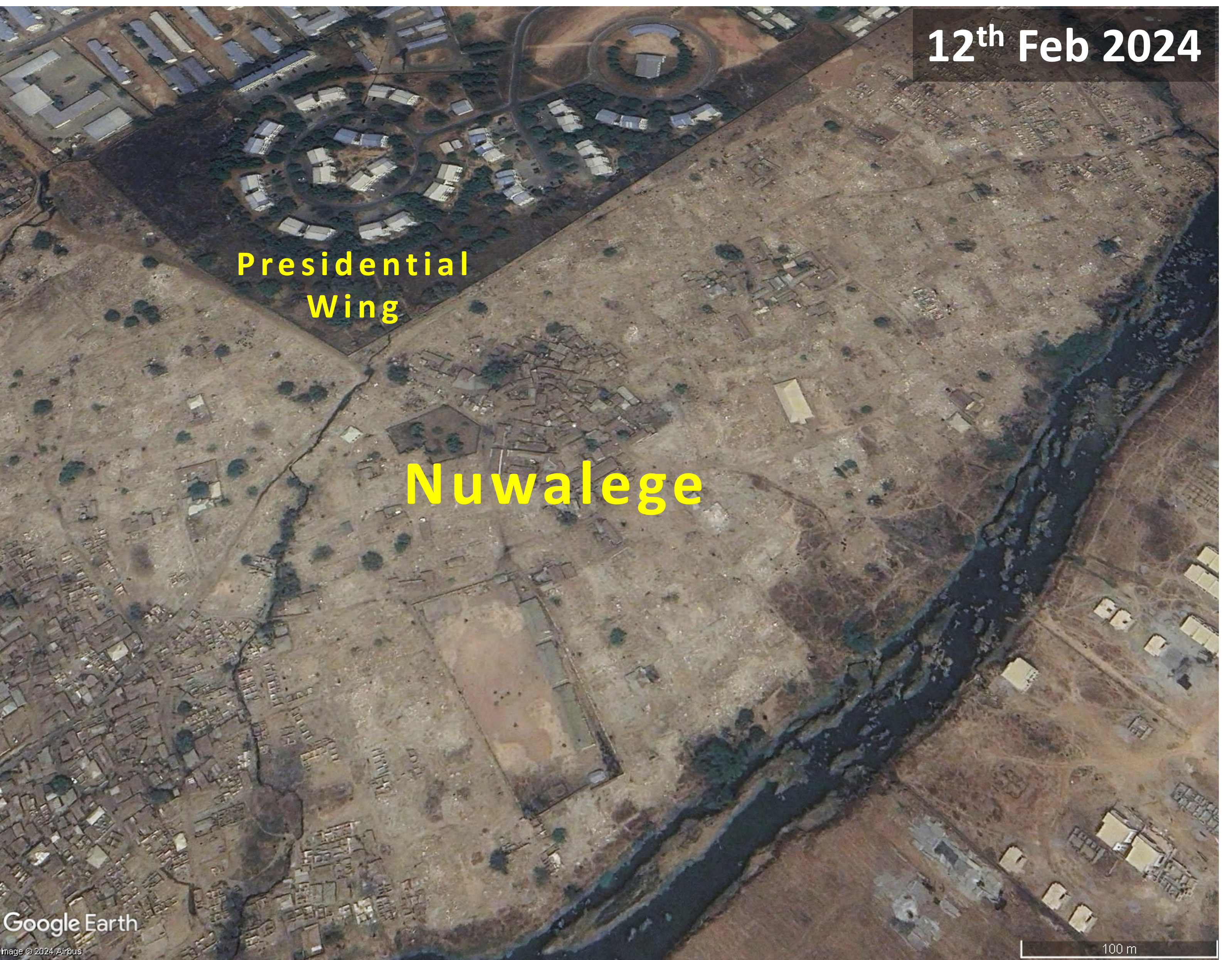
Satellite imagery shows Nuwalege homes demolished for expansion of the Presidential Air Fleet. The image on the left is from 2nd May 2023, the most recent Google Earth imagery before the demolition exercise. On the right is an image from 12th February 2024, nearly a month after the demolition began.

Demolition of more than 200 houses in the Nuwalege community had been ordered by the Federal Capital Territory Administration (FCTA) on 18th December 2023 and a thorough investigation of compensation for affected people, involving the FCTA, the Department of Resettlement and Compensation and the Nigerian Air Force (NAF), was promised. Peter Obi, Labour Party candidate in the 2023 presidential election, spoke out against the planned demolition in a statement on his X account: “I am again pained that we are embarking on such an inconsiderate project at this critical time when the country is going through such hardship…We cannot continue to encourage those who have kept us suffering to enjoy a luxurious lifestyle far beyond our legitimate means…I therefore, advise that we have a rethink, and, most importantly, ensure that our fellow Nigerians are not rendered homeless for the sake of an unproductive presidential fleet.” He also argued that instead of expanding the Presidential Air Fleet the government should explore ways of reducing or getting rid of it to reduce costs.

Seven months after the demolition, in August 2024, The Punch reported that Nuwalege landowners who were forcibly ejected following demolition of their homes were still calling for compensation. Residents denied Department of Development Control claim that the structures belonging to indigenous people had been left intact, saying that no houses had been spared from demolition and the Director of the Department of Development Control’s claim that they had been given a two-month notice period before the demolition took place. Many displaced residents had been forced to seek shelter in nearby communities including Zamani, Sauka, Giri, Iddo and Gwagwalada.

Resource Centre for Human Rights and Civic Education (CHRICED) issued a statement expressing dismay at widespread destruction of indigenous settlements in the FCT on 1st September 2024, making specific reference to the forcible demolition of over 200 homes in Nuwalege. Urging the government to engage in dialogue with affected residents CHRICED Executive Director Ibrahim M. Zikirullahi said, “The demolition reportedly executed by the Federal Capital Development Authority (FCDA) to accommodate the luxurious lifestyle of the presidency demonstrates gross irresponsibility and insensitivity to the plight of the Abuja natives. This prioritization of luxury and expansion for a select few over the basic rights and needs of ordinary citizens is an affront to democratic values and the principles of social justice.”

Works in the demolished area have not commenced but on 1st November 2024 a N9.8bn (USD5.9m) contract for rehabilitation of facilities in the Presidential Wing was awarded to Nigerian construction firm Julius Berger. Executive Secretary of the Federal Capital Development Authority (FCDA) said the project – including rehabilitation of the link road, access road to the presidential kitchen, hangar housing presidential aircraft and holding centre for visiting presidents – would take six months. A number of civil society organisations condemned the contract. Peluola Adewwale, National Secretary of the Democratic Socialist Movement, said, ”The N9.8bn presidential wing rehabilitation contract is a misplacement of priority, frivolous and insensitive.” The Committee for the Defence of Human Rights (CDHR) described the Presidential Wing rehabilitation as an ‘unnecessary project’. CDHR chairman in Osun State, Emmanuel Olowu, said, “the Tinubu’s government prioritises a luxurious lifestyle against the welfare of the people.”

For more information including references for all source material see the case study on EJAtlas, the world’s largest, most comprehensive online database of social conflict around environmental issues – Nuwalege homes demolished for Presidential Air Fleet expansion, Nigeria.

Construction of an ‘Eco-Tourism Airport’ on Koh Rong island

Earthworks for construction of an airport on Koh Rong island, 25 km from the city of Sihanoukville on Cambodia’s south-west coast, began in January 2024. Satellite imagery shows the airport site, located in a flat area in the centre of the island. The new airport with a 2.650 metre runway will have capacity to handle 138,000 passengers annually upon completion of the first phase and the MoU signed in January 2023 formalised a budget of $300 million. The necessity and viability of Koh Rong International Eco-Tourism Airport seems questionable with two major international airports nearby. Newly constructed Dara Sakor Airport, with capacity for 10 million passengers per annum and scheduled to begin operations in November 2024, is only 21km away. Sihanouk Airport is 45 km away. Also, Koh Rong is already well served by boat; the ferry journey from Sihanoukville only takes about 45 minutes.

Satellite imagery of Koh Rong dated 1st November 2023, showing location of the four coastal villages, Royal Sands resort, long beach, major roads and Koh Rong International Eco-Tourism Airport construction site.

The new airport will be named ‘Koh Rong International Eco-Tourism Airport’. While an airport enables people to visit and explore protected beaches, forests and native wildlife habitats, it does the very opposite of protecting ecosystems, concreting over a vast area for runways, terminals and access roads. Then there is the issue of climate disrupting greenhouse gas emissions from flights, with aviation being energy intensive and dependent upon fossil fuels. And tourism development on Koh Rong has damaged ecosystems and the people depending on them. In 2008, Royal Group, one of the largest investment and development companies in Cambodia, was granted a 99-year land concession to develop the 78 square kilometre island. Realisation of the masterplan – featuring resorts, casinos, marinas, golf courses, two fishing villages and an airport – was delayed but commenced in 2015 with clearance of sites along the southwestern coast including forests along with construction of a road. On 3rd July 2015 Koh Touch villagers held a sit-in protest, blocking construction crews, excavators and a bulldozer, in response to construction of a road which they said would cut through their village and affect their homes. Later that month opposition to development of Koh Rong became more vocal in response to construction equipment and workers appearing on the island. Hundreds of residents began to speak out on social media. As well as cutting trees cliffs and rocky outcrops had been flattened for development, including a new pier on Long Beach, on the southeast of the island.

In August 2015 a number of Koh Kong residents called on officials to review what they called “abusive activities” by Royal Group. Construction had accelerated in recent weeks and workers and machinery had been photographed clearing large areas of forest. Residents accused Royal Group of destroying farmland and crops, including cashew, jackfruit, coconut and mango trees. A village leader said destruction could impact the livelihoods of over 100 families, who had lived on the island since 1995. Villagers said the destruction of their livelihoods was illegal and authorities should monitor the situation. Human rights and environmental campaigners supported residents’ calls for improved oversight and local groups were preparing petitions and other documents to file with provincial and national authorities. Protest groups had been formed in response to a breakdown in communications between residents and Royal Group. One villager said, “They come in and do their work, take whatever they want, but there is no communication”. 

Controversy over land titles for Koh Rong villagers was reported in 2017. Some residents who had lived on the island since before 2008 had land titles, although it was uncertain whether these titles would be upheld amid disputes. Those arriving after 2008 did not have land titles. By 2018 over 1,000 land plots, belonging to 500 families, had been recognised by the government, but in April 2018, during the inauguration of the luxurious, five-star Royal Sands Koh Rong resort, about 50 people who had not yet received land titles attempted to join the event but were prohibited from doing so. Prime Minister Hun Sen ordered the Ministry of Land Management to bring an end to the Koh Rong land dispute. In June 2020 53 families protested land clearance; a 35-hectare site they believed rightfully belonged to them was being bulldozed. A Preah Sihanouk Provincial Administration spokesperson called on the protesting families to cooperate with authorities by providing relevant documents and warned them that if they caused chaos legal action would be taken against them. A member of one of the protesting families claimed they had lived in the area since 1992 and said: ”We won’t go anywhere. I will gather to protest at this site. We dare not enter the bulldozing site. I want Prime Minister Hun Sen to see and tackle this issue for us. We all have ownership documents.”

In June 2024 Mongabay reported that a new map of Royal Group’s plans for Koh Rong showed golf course zones, commercial zones, accommodation zones, casinos zones and an international airport. The latest plans did not appear to impact fishing villages but included clearing some of the Koh Rong’s protected forests to make way for golf courses. In total, project plans entail clearing more than 3,100 hectares of the island’s forests. A photo showed bulldozers and trucks working on the airport site. Sixteen years after the land was leased to Royal Group there was still no publicly available social or environmental impact assessment and islanders’ future was uncertain. Some Koh Rong residents hoped to sell their land to Royal Group while others feared that it would be taken from them.

For more information about the airport and tourism projects on Koh Rong island, including references for all source material, see the case study on EJAtlas, the world’s largest, most comprehensive online database of social conflict around environmental issues: Koh Rong island tourism development, Cambodia.

Pacific Airport displaces communities, destroys agriculture and is intended to serve a planned Bitcoin City

In Conchagua, El Salvador, the Condadillo and Flor de Mangle communities are being displaced from their homes and farmland for construction of Pacific Airport. A linked ‘Bitcoin City’ on the slopes of an inactive volcano has yet to materialise.

Pacific Airport location map with respect to environmental zoning
Location of Pacific Airport project with respect to environmental zoning, Ministry of the Environment and Natural Resource (MARN), 09/2021. Source: Mala-Yerba

El Salvador’s Legislative Assembly approved a new law expediting procedures for building the Pacific Airport on 26th April 2022, allowing the Autonomous Executive Port Commission (CEPA) to acquire title to property deemed necessary. In June 2022 the Earth Journalism Network reported that vegetation was being cut to make way for the airport and eucalyptus trees had been marked for felling. Inhabitants who cultivated crops said government personnel had entered the land to cut plants, without reaching a sale agreement as had been promised. In November 2022 Mongabay reported that the airport faced backlash from local communities after breakdown of negotiations with the government. Residents said they were being pressured to accept buyouts for their properties. Mala-Yerba reported that works on the airport site had begun at the end of February 2023, before the environmental permit was issued by MARN on 21st March. A source from Condadillo expressed concern over irreparable damage to trees, mangroves, animals, birds and aquifers. Flor de Mangle residents, depending on sea fishing and harvesting molluscs from the nearby El Tamarindo mangrove will also be impacted, as the area is a nursery for crabs, molluscs and other crustaceans and many residents make an income from collecting and selling them.

Residents of Condadillo and Flor de Mangle recounted workers entering agricultural and housing land plots with machinery, in the absence of authorisation from landowners or a court order. Drilling and excavation left the area unsuitable for agriculture and unsafe for people and livestock. Residents also denounced pressure from CEPA to sell land at unfair prices. Farming families and MILPA (Indigenous Movement for the Integration of the Struggles of the Ancestral Peoples of El Salvador) representatives said that more than 225 families had been directly affected by being unable to produce crops – including watermelons, tomatoes, grains and chillies. At the beginning of July 2024 MILPA stated that human rights violations against Condadillo and Flor de Mangle inhabitants impacted by construction of Pacific Airport had worsened. More than 225 families said their rights to consultation, legal advice and compensation had been violated. Many inhabitants reported being threatened and intimidated by CEPA.

New laws, tax exemptions and an “air-tropolis”

On 29th September 2021 MARN issued a statement that the Pacific Airport was not environmentally feasible and the Autonomous Executive Port Commission (CEPA) submitted a request to MARN for reconsideration. Within 24 hours the MARN website changed the status of the airport project to ‘high impact’. New environmental zoning and a new eminent domain law approved by the Legislative Assembly on 17th November 2021 made legal provision to continue the project. Then, on 26th April 2022 the Legislative Assembly approved a new law expediting procedures for building the Pacific Airport, allowing CEPA to acquire title to property deemed necessary for construction of the airport. It is estimated that the new airport will handle 1 million passengers per year, possibly rising to 3 million within 25 years. Construction of Pacific Airport, for civilian and military use, is expected to cost $500 million over 10 years. Purchases made within the framework of the airport project will be granted exemptions from income tax, Value Added Tax (VAT) and municipal taxes for 25 years. According to CEPA’s projections, the airport will bring poles of economic development to El Salvador’s eastern zone. CEPA president, Federico Anliker, said the airport terminal will be converted into an “air-tropolis”: a city with industrial plants, resort centres, hospitality and factories for export of technological products. For more information about Pacific Airport, including references for all source material, see the case study on EJAtlas, the world’s largest, most comprehensive online database of social conflict around environmental issues: Pacific Airport (Aeropuerto del Pacífico), El Salvador

An airport for a planned Bitcoin City

Pacific Airport is linked with the Bitcoin City project announced by President Bukele in November 2021, two months after El Salvador became the first country to adopt Bitcoin as legal tender. Bukele unveiled a model and graphics showing a coastal circular city (the shape of a Bitcoin) on the slopes of the volcano, crammed with golden skyscapers radiating from a central plaza with the Bitcoin logo, along with images of an airport. In February 2022 CEPA President Federico Anliker said, “Bitcoin City, well, is going to have its own airport”. The proposed Bitcoin City site is in an inactive volcano in Conchagua and plans include a bitcoin mining complex to be powered by a new geothermal plant. Environmentalist Ricardo Navarro, from Cesta Amigos de la Terra, expressed concerns over geothermal energy generation for Bitcoin mining, saying “The big problem is that it consumes a large amount of electricity”. Lourdes Molina of the Central American Institute for Fiscal Studies said, “Here it is not only the operation of the servers but also that they demand a lot of energy, they have to be at certain controlled temperatures to be able to work, we are talking about the almost industrial use of air conditioning.”

Funding for Bitcoin City is as uncertain as the energy supply. As of July 2024 the ambitious plans for Bitcoin City, compared by Bukele to Alexandria, have not materialised, the ground has yet to be broken. Construction was supposed to be part-funded by $1 billion in government-issued ‘volcano bonds’ with a portion of the earnings to be invested in geothermal energy facilities. Initially scheduled to go on the market in February 2022, several deadlines were missed, most recently in the first guarter of 2024. The government has not announced an alternative source of funding for Bitcoin City. Bitcoin was central to Bukele’s promises of prosperity; three years after it became legal tender few citizens use it. Bitcoin was promoted as a way of making savings on fees for remittances from the US, but only 1.3% of remittances were sent through crypto wallets in the three year period and the amount of saved fees has not been disclosed. The future of Bitcoin City, anticipated to bring in an influx of wealthy crypto investors and returning expats buying luxury apartments and paying no income or property taxes, seems to depend upon construction of Pacific Airport. However, Bitcoin city could be revived by another transportation project. Turkish port operator Yilport Holdings has made the pargest private investment in El Salvador, committing $1.6 billion to two port projects, La Unión, near the Bitcoin City site, and Acajutla. which is the country’s main seaport.