Since founding of the project in 2018 more than 150 cases, in 63 countries, have been documented on the EJAtlas Map of Airport-related Injustice and Resistance. The interactive map documents a diversity of injustices and community actions to protect human rights and the environment.
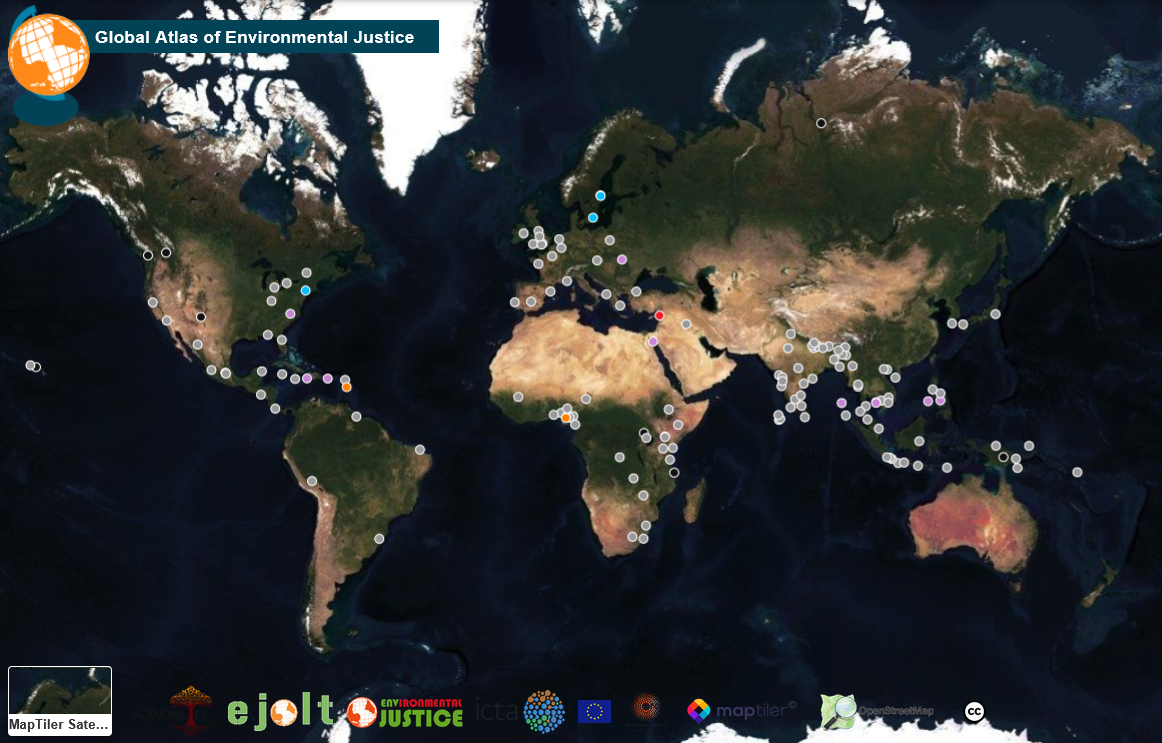
Around the world airport projects generate conflicts relating to land acquisition, displacement of people, destruction of ecosystems, pollution and noise. The Map of Airport-related Injustice and Resistance, an online interactive feature map, brings together over 150 case reports, in 63 countries, of socio-environmental conflicts. Community opposition arises in response to different types of airport projects. Passenger-oriented airport projects aiming to increase tourism include Fainu Airport in the (Maldives), Aeropuerto International de la Zona Sur (Costa Rica), Malindi Airport (Kenya), Tulum Airport (Mexico) and Chinchero Airport (Peru). Examples of opposition to expansion of private jet facilities include Farnborough Airport (UK) and Owen Roberts Airport (Cayman Islands). Conflicts arising from cargo airports include Liège Airport (Belgium), Ebonyi Airport and Ogun Cargo Airport (Nigeria), expansion of Porto Alegre Airport (Brazil) and Suai Airport (Timor-Leste) serving oil platforms off the coast. Military airports facilities triggering socio-environmental conflict include Camp Saga (Japan) and Airstrip expansion in Ocala National Forest (USA). Examples of allocation of large sites for aerotropolis (airport city)) projects leading to land disputes include Nijgadh Airport (Nepal), Kertajati Airport and New Yogyakarta International Airport (NYIA) (Indonesia), KXP AirportCity (Malaysia), Bhogapuram Airport and Aerocity, Shivdaspura Aero City, Mohali Aerotropolis and Andal Aerotropolis (India), a second airport on Jeju Island (South Korea), New Phnom Penh Airport (Cambodia), Anambra Airport City (Nigeria), Vernamfield Aerotropolis (Jamaica), Nadzab Airport Redevelopment Project (NARP) and Airport City (Papua New Guinea), Bishoftu International Airport and Mega Airport City (Ethiopia) and Solidarność Transport Hub (CPK) (Poland).
Forcible evictions and conflicts escalating to violence
Forced evictions for airport projects can be sudden and brutal, with bulldozers arriving and demolishing people’s homes and farmland. In January 2021 over 100 families were forcibly evicted for expansion of Douala Airport (Cameroon); houses were bulldozed and protesters teargassed. In August 2022 more than 300 houses on land around Kasompe Airstrip (Zambia) were demolished and victims were not provided with alternative land. Beginning in February 2021 about 800 households were impacted by moves to evict them for rehabilitation and modernisation of Mbuji-Mayi Airport (DRC); a number of buildings deemed ‘unathorised’ were bulldozed. Hundreds of people were displaced when more than 100 houses were demolished to make way for Muhammadu Buhari Airport Nigeria). In October 2015 the state government sent in bulldozers to clear farmland for Ekiti Airport (Nigeria) before discussions on compensation with farm owners. There are instances of escalating conflicts between affected communities and state forces resulting in deaths and injuries, including The Sanrizuka struggle over Narita AIrport (Japan), a proposed airport on the Arial Beel wetlands (Bangladesh), Mieu Mon military airport and a proposed airport and residential complex in Hai Phong (Vietnam), New Pokhara Airport (Nepal), Obudu Airport (Nigeria) and Lombok Airport (Indonesia). Local organisations opposing construction of Creel Airport (Mexico) denounced the death of an indigenous leader, days before a planned demonstration at the site, as a state crime. One of the most serious human rights violations occurred in Atenco in 2006, related to New Mexico City Airport; two young people were killed and 26 women were tortured and raped.
Destruction of forests and other ecosystems
Site clearance for many airport projects obliterates wildlife habitats and can entail large-scale destruction of ecosystems. Acquisition of farmland is a major factor in many cases, such as Pacific Airport (El Salvador), Karad Airport (India) and Mandalay Airport (Myanmar). One of the most serious cases of deforestation in Sri Lanka occurred in the area where Mattala Airport was subsequently constructed and the stalled Nijgadh Airport in Nepal raised the prospect of 2.4 million trees being felled. Forests were felled for Istanbul Airport (Turkey), Mopa Airport (India), Fortaleza Airport (Brazil) and the abandoned site of Sagarmatha Airport (Nepal). Tea plantations were bulldozed for construction of a greenfield airport in Silchar (India). Land reclamation for coastal airports also destroys ecosystems. Expansion of Noonu Maafaru Airport (Maldives) was temporarily halted as land reclamation threatens loss of a large area of lagoon and places sea turtles and other marine species at risk. Land reclamation for construction of Hoarafushi Airport (Maldives) triggered significant concerns over coastal integrity and ecosystem disruption. Mangroves in Manila Bay were cut for Bulacan Aerotropolis. New Mexico City Airport was halted after construction works destroyed a large swathe of wetlands, only for the project to be relocated to Santa Lucia. Successive phases of expansion on El Prat Airport (Spain) have encroached on the Delta del Llobregat wetlands. Construction of Vlora Airport (Albania), within the Vjosa-Narta Protected Landscape, endangers the habitat of many bird species.. Construction of Northwest Florida Beaches Airport (USA) on wetlands caused a decline in habitat and water quality. Sanya Hongtangwan Airport (China) was halted for over two years due to concerns over land reclamation impacts on protected dolphins.
Negative impacts from airport construction and operation
Airport construction can have serious negative environmental and health impacts on neighbouring communities. Residents living in the midst of earthworks for Navi Mumbai Airport were injured by flying rocks from blasting works and suffered high levels of dust pollution. Dust pollution from sand mining for expansion of Cheddi Jagan Airport (Guyana) and earthworks for Long Thanh Airport (Vietnam) posed risks to respiratory health. Komo Airport (Papua New Guinea) and Pakyong Airport (India) are notable instances of the use of enormous volumes of aggregates for construction causing unstable ground and landslips. Operational airports expose neighbouring communities to pollutants emitted by aircraft and high noise levels. Severe noise and vibrations from Hmeimim Airbase (Syria) led some residents to flee their homes. Communities concerned over impacts from a proposed cargo facility at San Bernardino Airport (USA) formed a broad-based coalition. Ultra-fine particles and noise pollution from Schiphol Airport (the Netherlands) reduces life expectancy of people in the area surrounding it. Major jet fuel leaks from Kirtland AFB and Red Hill Bulk Storage Facility in Hawaii are documented and a new facility supplying aviation fuel to Vancouver Airport (Canada) brings the risk of polluting the Fraser River. Drinking water in Ronneby and Uppsala (Sweden) and the City of Newburgh (USA) has been contaminated with PFAS (polyfluoroalkyl substances) ‘forever chemicals’ originating from military bases. Disused airports can trigger conflict over alternative uses for abandoned sites. A proposed dig-out port on the Durban Airport site (South Africa) would displace farmers cultivating the land. A campaign emerged to stop private development on the former Hellinikon Airport site (Greece) and create a metropolitan park instead. Disputes over ownership of land allocated for the abandoned Oba Airport (Nigeria) led to protests and violence.
Invitation to participate in mapping project
The airport conflict mapping project began in 2018 and is constantly evolving as case reports are added and updated. All the cases are fully referenced, include photos and other graphics, and are reviewed by EJAtlas moderators. The EJAtlas platform enables analysis of several codified variables including environmental, social and health impacts (visible or potential), forms of mobilisation and actors, project details such as investors and financing, policy and legislative drivers and conflict outcomes. A July 2025 analysis compared airport-related cases with all EJAtlas cases across ten sectors (4,592 at the time of writing). Contributors to the Map of Airport-related Injustice and Resistance include journalists, activists, academics, citizens and the EJAtlas team. More participation is welcome. If you would like to contribute and need guidance on how to add and update cases send an email: airportconflictsmap@gmail.com


It’s shameful that human rights are excluded when airports are involved. We experience a painful level of air traffic noise in our area of NC. When we notified the multiple surrounding airports that the planes and helicopters are being flown low and slow – very loudly- between 5am and midnight daily, the response we received was that the government has given air traffic, free rain to do whatever they want without curfew. We quite literally have no rights even in our own home. It’s disgusting.
LikeLike