The oil supply crunch reduced deliveries of the vast volumes of diesel required for expansion of Phu Quoc Airport, including a second runway and passenger teminal, plus a luxurious VVIP terminal, scheduled for completion in time for the APEC 2027 forum.
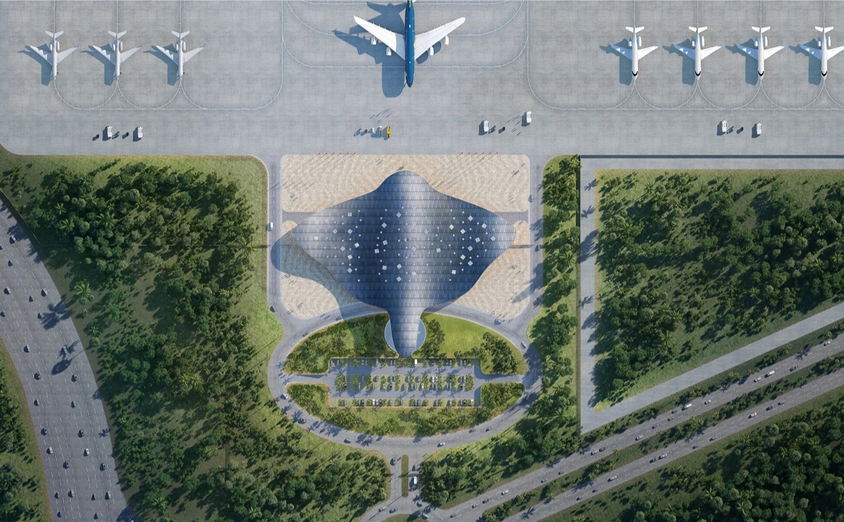
Artist’s rendering of Phu Quoc Airport VVIP terminal as seen from above, resembling a sea eagle. Image: VnExpress
Within days of the US and Israel launching strikes on Iran restrictions on oil shipments through the Strait of Hormuz, a key transit route for diesel supplies to the Vietnamese island of Phu Quoc, had drastically reduced delivery of the volumes required for expansion of Phu Quoc Airport. The ambitious expansion plan aims to increase passenger handling capacity fivefold, from the current 4 million per year to 20 million by 2027 in the first phase, rising further to 50 million per year by 2050. The oil supply crunch had major impacts on construction works. Operation of between 160-180 items of heavy equipment for runway 2 works required 10,000 liters of diesel per day. Earthworks on 2,700 hectares of the runway 2 area, with 130 pieces of equipment, had been consuming about 27,000 liters per day. More than 60 per cent of the equipment had been shut down and 70 machine and vehicle operators temporarily laid off. Tankers carrying 200,000 liters of diesel had been arriving from the mainland every 7-10 days, but since 2nd March the supplier was only fulfilling existing orders and was no longer taking new orders. Yet publicity for the airport expansion continued. On 18th March 2026 Phu Quoc Airport unveiled more details of the VIP terminal design, with graphics depicting an exclusive lounge and luxurious, spacious arrival and departure halls that are markedly different from cramped and crowded facilities for regular travellers, with floor-to ceiling windows giving a ‘sweeping view of the sea’, ‘glossy black obsidian surfaces’, gold accents and a glass and gold sculpture of an eagle ray in flight.
Luxury aviation facilities for APEC 2027
Less than four months previously, on 28th November 2025, rapid progress of Phu Quoc Airport expansion was reported to be an aviation industry record with a second runway, closely followed by the ‘VVIP terminal’, then a second terminal, T2, all on schedule. The expanded airport is envisaged as a ‘gateway’ to a ‘Phu Quoc megacity of the future’ and on 31st December 2025 it was announced that airport construction was moving at an unprecedented pace; the steel framework for the 6,000 square meter VVIP terminal was in place. Initially, the VVIP terminal will host heads of state and high ranking delegations to the 2027 APEC (Asia-Pacific Economic Cooperation) Leaders Week meeting, a key event in the APEC 2027 forum themed ‘Connecting: Building Inclusive and Resilient Economies’. Exclusive facilities are being fast-tracked for an event purporting to promote inclusivity. Both the VIP terminal and Terminal 2 are being built ‘with the aim of delivering luxury standards and a premium passenger experience’. Luxurious passenger facilities will be accompanied by a new luxury airline, Sun PhuQuoc Airways, which ordered up to 40 Boeing 747 Dreamliner planes for international flights to its hub at Phu Quoc Airport. Boeing’s announcement emphasised the aircraft’s ‘superior comfort to passengers’ and described Sun PhuQuoc Airways as ‘well positioned to capture the next wave of premium tourism’. Two mega hotel projects reshaping the skyline to host global leaders and high ranking officials for APEC 2027 are similarly exclusive, designed for ‘diplomatic events, international conferences and high-end tourism’.
Forest land conversion for tourism projects
Conversion of 0.46 hectares of protected forest land for use in Phu Quoc Airport expansion was approved in February 2026. This small forest loss for tourism-related infrastructure is a continuation of a pattern affecting large swaths of the island. Elsewhere on Phu Quoc 286 development projects are planned and, as reported by Mongabay, since July 2024, authorities have permitted conversion of over 180 hectares of forest, most of it categorised as ‘special use’ due to ecological value or scientific importance. A key development, Rạch Tràm Ecotourism and Residential Project on the island’s north coast, required forced relocation of 508 households and clearance of 57.7 hectares of special use forest in Phu Quoc National Park. Development of Phu Quoc as an island tourism city was approved by the Prime Minister in 2022 and the 286 projects, at various stages of planning and development, span over 9,600 hectares, nearly 17 per cent of the island. Legal changes in 2024, expanding the type of developments for which forest land can be converted to include industrial parks and clusters in addition to ecotourism, resorts and recreation projects, facilitated a spike in forest conversion approvals. Since the amendments to land laws conversion of nearly 182 hectares of Phu Quoc forest, 77 per cent of this being special use forest, has been approved and the land designated for tourism projects.
More than 15,000 people are being displaced and losing agricultural and livestock livelihoods for Bishoftu International Airport, ‘Africa’s largest airport’ with an adjoining Airport City. Affected people have concerns about inadequate compensation and resettlement and there are reports of forced eviction, harassment and intimidation.
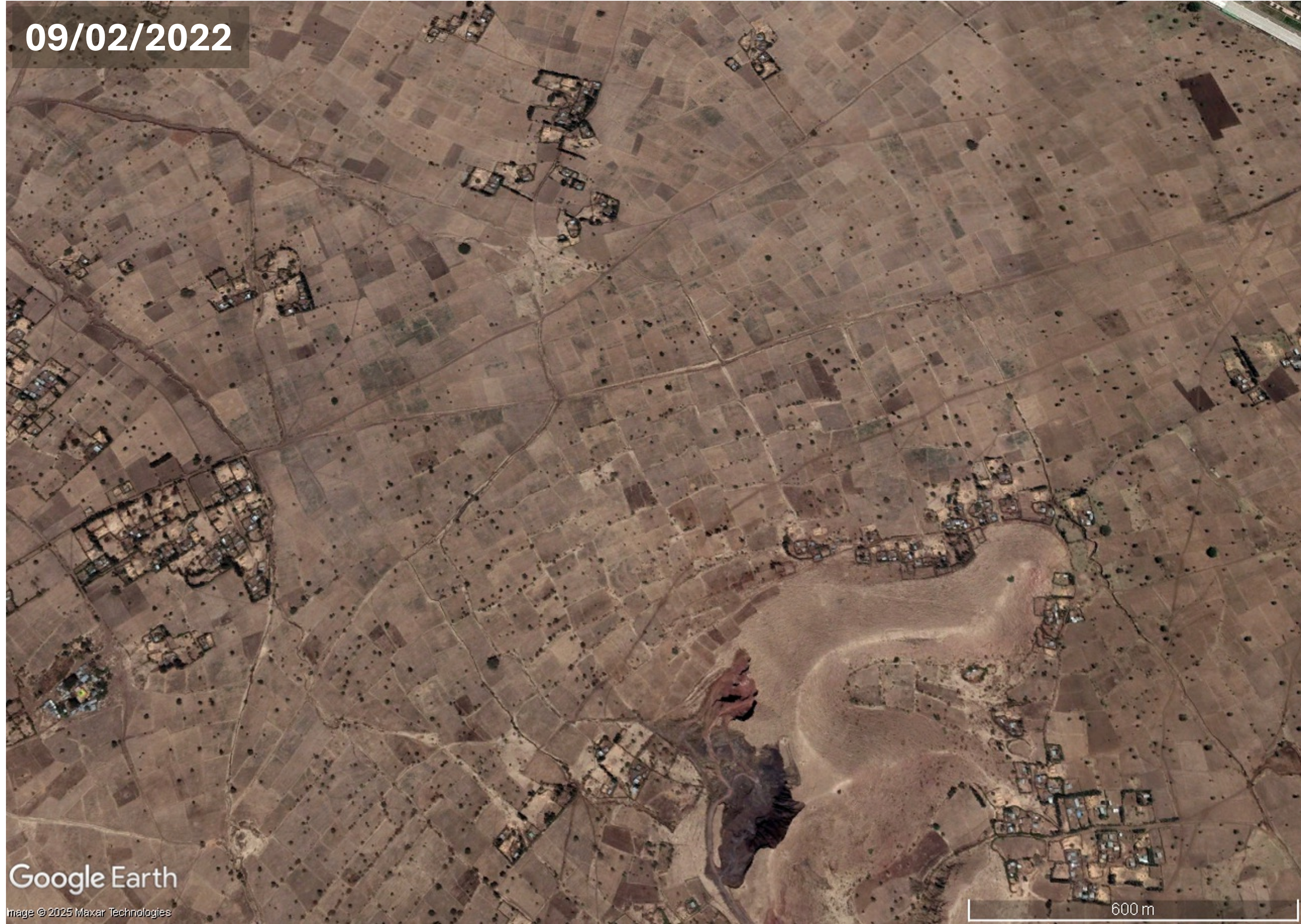
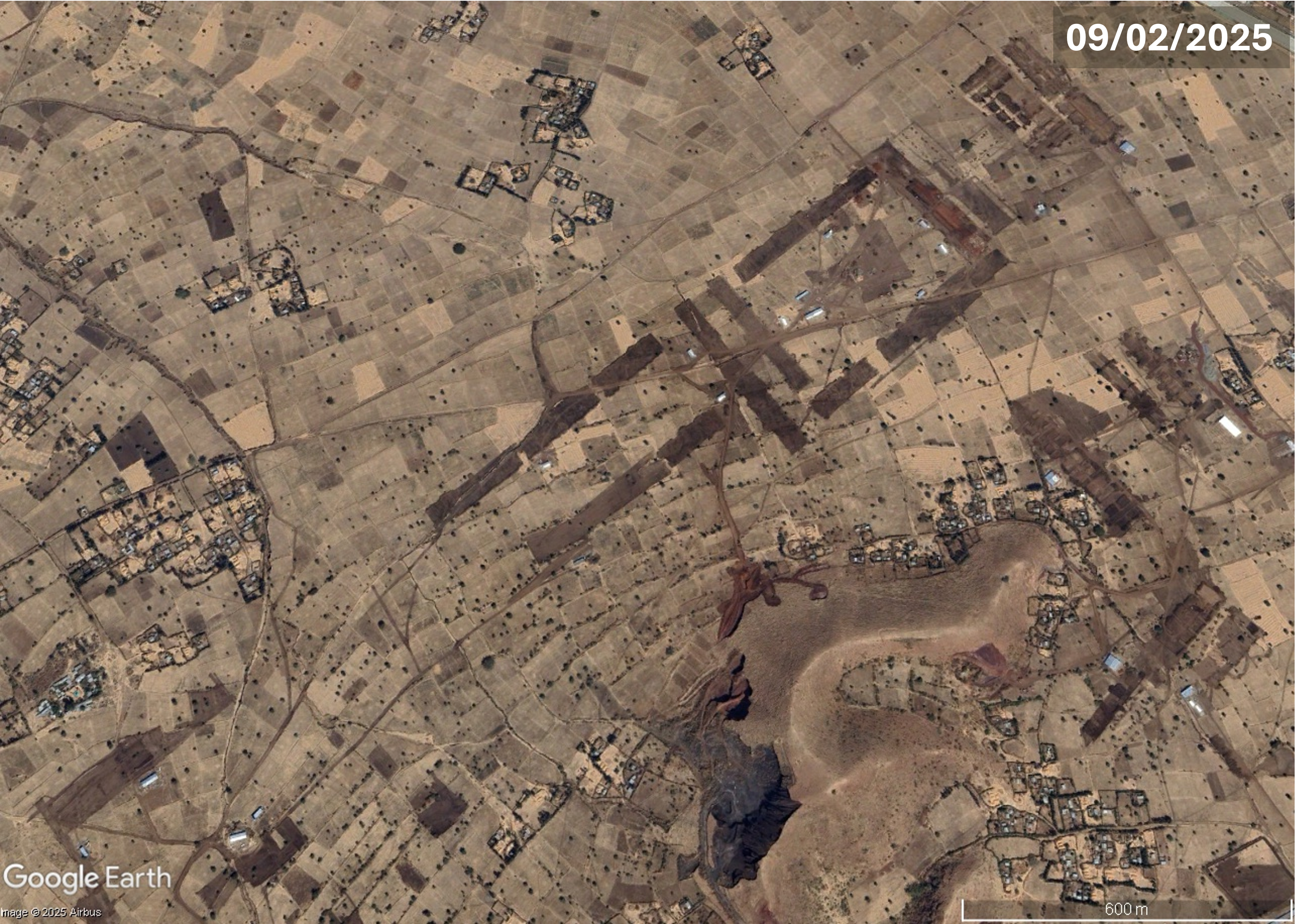
Aerial imagery of the Bishoftu International Airport site, the 9th February 2025 image shows construction site preparatory works
On 24th March 2025 Ethiopian Airlines Group (EAG) and African Development Bank (AfDB) signed a Letter of Intent for development of Abusera International Airport Project, USD7.8 billion project on a site about 40 kilometres southeast of Addis Ababa, near the town of Bishoftu. EAG allocated funds for preparation of a 35 square kilometre plot of land for the new airport, with budgets earmarked for land clearance, resettlement and preparing the site for construction. Demolishing structures and relocating residents was anticipated to be completed by September. Previously, in August 2024, EAG CEO Mesfin Tassew said that construction of what was described as a ‘Mega Airport City’ could only proceed with resettlement of up to 2,500 farmers residing on the site. In January 2025 concerns of affected farmers over inadequate compensation, resettlement and support for finding new livelihoods were reported.
Dispossession in the name of development
Oromia Today responded to the agreement between EAG and AfDB with an article titled ‘Development Draped in Dispossession: The Tragedy Behind the Abuu Seeraa Airport Deal’, focussing on more than 15,000 Tuulama Oromo people, indigenous to the regional state of Oromia, facing displacement for the airport. The article reported ‘families being harassed, homes being marked for removal and livelihoods being uprooted’ with no relocation process and eviction orders ‘delivered by undisciplined militias’. The article called for the AfDB to be held accountable and made three demands:
A thorough re-evaluation of the airport project considering impacts on local people, heritage and the environment
For development in Abuu Seeraa to ‘embody a thoughtful integration’ preserving, not erasing, the area’s history and environment with no forced eviction
Fair compensation for displaced people not just with single payments but via a long-term scheme recognising them as stakeholders in the airport with a share in the project reflecting the value of the land acquired
Environmental and Social Impact Assessment (ESIA) Report
The Environmental and Social Impact Assessment (ESIA) Report for the airport, now called Bishoftu International Airport Project, was completed on 10th August 2025, several months after reports of resistance to the project had emerged. Major impacts detailed in the ESIA included acquisition of approximately 3,979 hectares of land displacing 2,731 households comprising 15,320 people. The local economy is predominantly rain-fed agriculture and livestock rearing. Common crops include teff, wheat, barley, maize and various legumes including chickpeas, beans, soya beans and peas. Livestock including cattle, sheep, goats, donkeys, mules and horses are integral to local livelihoods providing milk, meat and hides. About 2,518 hectares of agricultural land, where staple crops including teff, wheat, and barley are cultivated, will be lost. In addition, 163.1 hectares of grazing land will be affected and the livelihoods of pastoralists disrupted by loss of seasonal grazing lands. Schools, roads, health and water facilities will be lost and cultural and religious sites including several churches will be impacted.
Stakeholder Engagement Plan (SEP)
A Stakeholder Engagement Plan (SEP) for Bishoftu International Airport, completed on 2nd October 2025, outlines a ‘comprehensive’ framework for engaging relevant stakeholders during pre-construction, construction and operation. The report states a ‘commitment to effective stakeholder engagement to ensure that community voices are heard and considered in decision-making processes’ with particular attention to vulnerable groups such as women, youth, the elderly and people with disabilities. Several serious risks and concerns were identified during consultations undertaken for the SEP. Project Affected Persons (PAPs) highlighted problems including disputes arising from inaccurate land demarcation, concerns over the fairness of compensation, loss of farmland and impacts on and restoration of livelihoods. Young people are identified as a vulnerable group due to worries about unemployment, loss of land inheritance and exclusion from benefit-sharing mechanisms.
Project implications for communities
In November 2025 Global Oda Nabe Association (GLONA), a USA based non-profit, civil society organisation published The New Mega Airport Project in Aabbuu, Oromia, Ethiopia: The Project Implications on Aabuu Communities. Sources from the affected community said neither the government nor EAG had engaged with them to discuss detailed resettlement plans, ‘They do not know when, where, what their rights are, the process involved for relocation, and what their fate will be following the eviction from their ancestral land. So, the affected communities are now in limbo.’ The community sources also said people raising questions and voicing concerns relating to the airport, demanding full disclosure of the project and how it would affect them, in particular regarding compensation for land, were being intimidated. Many concerning environmental consequences were identified such as deteriorating air quality and waste and sewage from the site which might pollute rivers and groundwater.
Reports of forced eviction
In December 2025 The Economist reported that the airport was expected to displace approximately 15,000 people. Reports indicated that some affected residents had received promises of housing but others were in fear of their land being taken without receiving compensation. There were also reports that activists voicing concerns about the project had been harassed and arrested. A January 2026 statement by the Oromo Liberation Front (OLF) condemned the planned ‘mega airport’ and adjoining ‘airport city’ as the most recent and serious chapter of displacement spanning many decades, warning of the eviction of 15,000 people from six villages. Despite allocation of ETB17 billion (USD110 million) for resettlement and rehabilitation of farmers, the situation on the ground was reported to be ‘brutal’ with OLF reporting, ‘farmers…have been forcibly ordered, in the manner of war, to leave without harvesting their crops, moving their property, or even selling their cattle’. OLF rejected rehabilitation limited to cash compensation and demanded equity instead of eviction with displaced communities granted equity shares as co-owners of the airport and intergenerational rights extending benefits to landowners’ descendants.
Displacement in the absence of Free, Prior and Informed Consent
The Oromo Federalist Congress (OFC) issued a statement, ‘Development Without Dignity is Dispossession’, to ‘address the grave and escalating situation’ regarding the airport project. The OFC acknowledged an appeal from the Aabbuu Seeraa community and expressed solidarity with 3,000 households ‘facing imminent eviction from their ancestral lands’. OFC described the displacement, in the absence of Free, Prior and Informed Consent (FPIC), as a legal crisis, violating Article 40 of the Constitution protecting farmers’ rights to land. A call to action included demands for a moratorium on evictions, institutional dialogue, equity not eviction, cultural protection and due diligence from AfDB to ensure compliance with international human rights provisions pertaining to Development-Induced Displacement (DID). The statement concludes, ‘The Oromo Federalist Congress reiterated that we are not anti-development, we are anti-theft. We are anti-erasure. A project of this magnitude, intended to be the “Pride of Africa”, cannot begin with the shame of destroying the very people who host it.‘
Construction of ‘Africa’s largest airport’ begins
Construction of Bishoftu International Airport began on 10th January 2026. The total cost for phase 1 was stated at USD12.5 billion, accommodating 60 million passengers per year, rising to become Africa’s largest airport with a total capacity of 110 million passengers per year. Reuters reported that some young residents being displaced for the airport were worried because their parents had been given houses but they had not and renting a house is expensive. On 30th January 2026 Oromia Today published an in-depth report, ‘Aabbuu Seeraa: Building Progress on Indigenous Erasure’, decrying the displacement of approximately 15,000 people for the airport, the ‘overwhelming majority’ of whom had not received replacement housing or new livelihoods. People protesting their post-eviction situation had been incarcerated. Communities using social media to document discrepancies between the official account of their displacement and their lived reality were punished. A few new houses had been constructed but about 95 per cent of displaced people had been left without land, shelter or an alternative income. The report called for replacement housing and livelihood restoration before displacement, transparent management of compensation with auditable records, protection of the environment and heritage, sensitivity regarding demographic impacts, permanent stakeholder status for affected people and an independent international assessment to evaluate compliance with human rights standards.
Displaced residents suffer hardship
On 9th February 2026 Addis Standard reported that Abusera residents displaced for construction of Bishoftu Airport were suffering from hardship having received neither the compensation nor replacement housing they had been assured of. An affected resident said she had documentation for three inherited plots, but, since the land was acquired for the airport had not received compensation or housing. She said, “It is not only compensation, even the houses given to others were not provided to us. I am raising my grievance with government officials and I have proof of ownership.” Another resident said he had been displaced from three inherited plots of land, for which he had a court order confirming his ownership, and was living in rented accommodation having difficulties providing for his two children. On 10th February EAG stated it had built housing in Bishoftu for residents displaced by airport construction and livelihood support for had been prepared. Yet some affected residents continued to claim they had not received compensation or adequate support for resettlement.
For more information including references for all source material, photos and graphics see the case study on EJAtlas, the world’s largest, most comprehensive online database of social conflict around environmental issues – Bishoftu International Airport and Mega Airport City, Ethiopia
An alliance of community and environmental organizations, led by TechnoparcOiseaux, works to protect the highly biodiverse Technoparc Montréal wetlands, north of Montreal-Trudeau Airport, from development. There is widespread support for conferring protected status to the welands through inclusion in a national urban park.
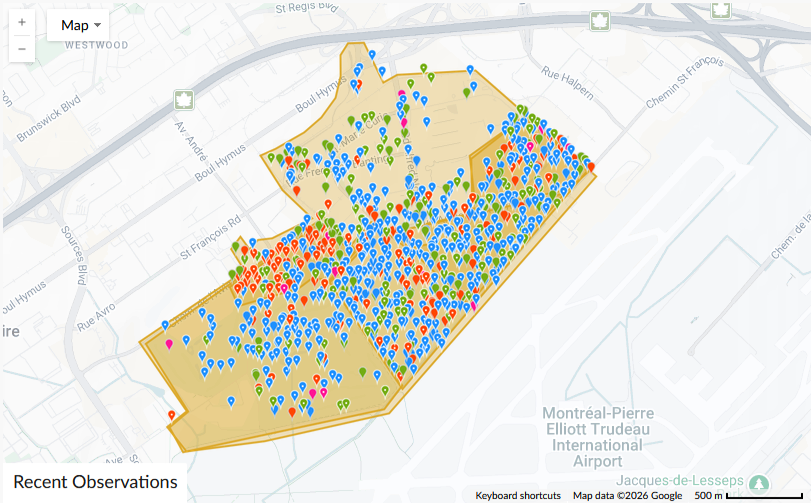
Map of citizen observations of plant and animal wildlife species at Technoparc Montréal wetlands near Montreal-Trudeau Airport. Image source: iNaturalist
Technoparc Montreal, a high-tech industrial park near Montreal-Trudeau International Airport, is situated in the most biodiverse wetlands on Montreal Island, known as the Technoparc wetlands. Many citizens’ observations of plant and animal species are recorded on the Technoparc:Montreal Wetlands section of the iNaturalist crowdsourced identification system. By March 2026, 17,929 observations of 1,302 species by 549 observers had been recorded. But there is a long history of encroaching development which has been opposed at every stage. In July 2016 conservationists urged Technoparc to reconsider development of Eco Campus Hubert Reeves, for cleantech startup companies, on an area of the wetlands containing a marsh hosting a wide variety of birds; 160 species had been spotted. Bird Protection Quebec said development on the Technoparc wetlands, ‘an oasis in the heart of Montreal’, posed threats to uniquely biodiverse wetlands and woodlands, with the number of bird species among the highest in the Montreal region and including 19 categorized as threatened. Les Amis du Parc Meadowbrook passed a resolution, endorsed by Green Coalition and Sauvons la Falaise, calling on authorities to impose an immediate moratorium on Technoparc Montreal expansion and to consolidate undeveloped areas into a protected wildlife refuge. Extension of a road into the wetlands continued despite the presence of a few least bitterns, a small species of heron thought to be at risk in the Montreal area, leading members of the Green Coalition, Sauvons la Falaise and the Green Party to hold a news conference at the site.
In March 2018 Joel Coutu, leading birders on regular walks in the wetlands drew attention to Red-shouldered hawks, merlins and other birds of prey, indicating a richly biodiverse environment and mammals including coyotes, foxes, beavers rabbits and skunks. Bird enthusiasts and environmental groups intensified pressure to preserve the wetlands in August 2018 with a petition demanding a halt to works on sensitive areas in and around the Technoparc and to protect the sites as a ‘Sources Nature Park’ conservation area attracting over 68,000 signatures. Bird species nesting on the site that activists were concerned about included four at-risk species: Least Bittern, Wood Thrush, Eastern Wood-Pewee and Barn Swallow. Tree cutting for a Réseau express métropolitain (REM) light metro station at the Technoparc began in September 2018. TechnoparcOiseaux, Trainsparence and Montreal Climate Coalition had led a legal attempt to halt the project, appealing a previous lawsuit demanding a halt to the works that had been thrown out, but the provincial government had passed a special law enabling its construction. Matthew Chapman, president of Montreal Climate Coalition, said, “The biggest project in the last half century went forward in a very undemocratic way” and that it would facilitate development eroding the area’s remaining green space. The previous month, environmentalists had noted the irony of Eco-Campus Hubert Reeves being named after a renowned ecologist and astrophysicist, as preparation of the site included removing 3,000 trees for extension of a road anout 500 meters into natural space.
In September 2021, while Covid-19 restrictions were in place, dozens of local residents gathered near the Technoparc in a demonstration organized by TechnoparcOiseaux, protesting a proposed 15,000 square meter facility for production of surgical masks on part of the wetlands called Monarch Field. Efforts to expand the Des Sources Nature Park to include the Technoparc wetlands received a setback in February 2025 when Aéroports de Montréal (ADM), operator of Montreal-Trudeau Airport, stated concerns over bird strikes in the aftermath of a 29th December 2024 air crash in South Korea in which 179 people died. Air accident investigations had concluded that bird strikes were a factor and ADM stated, “It is inconceivable to ask an airport authority to assign a nature park use to such a large land located so close to the airfield and runways, as it would increase the presence of wildlife on site.” Katherine Collin of TechnoparcOiseaux rejected this argument saying, “We believe that ADM is overstating the dangers posed by the bird population here”. John Gradek, an aviation expert, said ADM was being too cautious as it can deploy technology such as blank cannons, along with falconry, to control birdlife around the airport.
ADM said it planned to develop a “decarbonization support center” on part of the land, Lot 20, in the following 10-20 years, claiming that any development of the site would protect areas that are of high ecological value and safeguard endangered species. Its 2023-2043 master plan includes solar panels, storage for ‘fuels of the future’ and other development on the site and the adjoining Dorval golf course. TechnoparcOiseaux’s Katherine Collin said, “What we see is worse than we imagined. Development is planned over vital habitat for endangered and threatened species, there are no buffer zones planned around current conservation areas, there will be a massive loss of green space – 130 hectares.” At ADM’s May 2025 annual public meeting president and director general, Yves Beauchamp, said the primary concern was passenger safety, “So a park of this expanse, near the runways, is not compatible with the safety goals we have. So will we change our opinions? No.” Yet hopes that the federal government might select the lands north of Montreal-Trudeau Airport as a national urban park, conferring protected status on 200 hectares of green space, were raised by a letter from the minister responsible for Parks Canada, Steven Guilbeault, stating, “The federal government is open to creating a national park on those lands”. A letter to Transport Minister Steven MacKinnon from Communauté métropolitaine de Montréal (CMM) executive director Massimo Iezzoni and Montreal’s executive committee chai Émilie Thuillier stated, “Few subjects enjoy such unanimous support within the CMM as the importance of protecting the natural areas around Montreal-Trudeau International Airport” and pointed out that the CMM represents 82 municipalities and 4.3 million people, nearly 50 per cent of the population of Quebec’s population.
For more information including references for all source material, photos and videos see the case study on EJAtlas, the world’s largest, most comprehensive online database of social conflict around environmental issues – Technoparc Montreal wetlands, Quebec, Canada
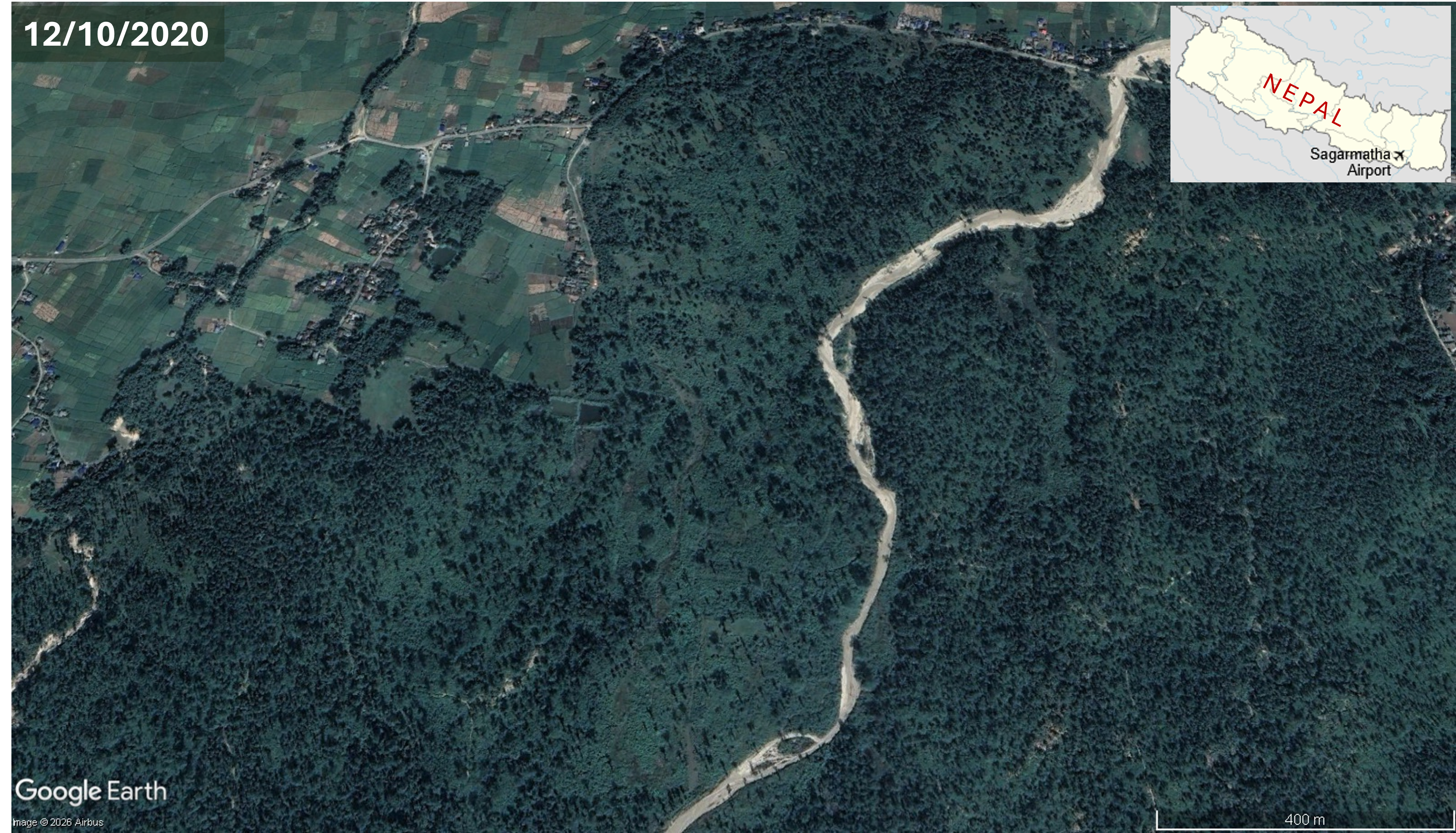
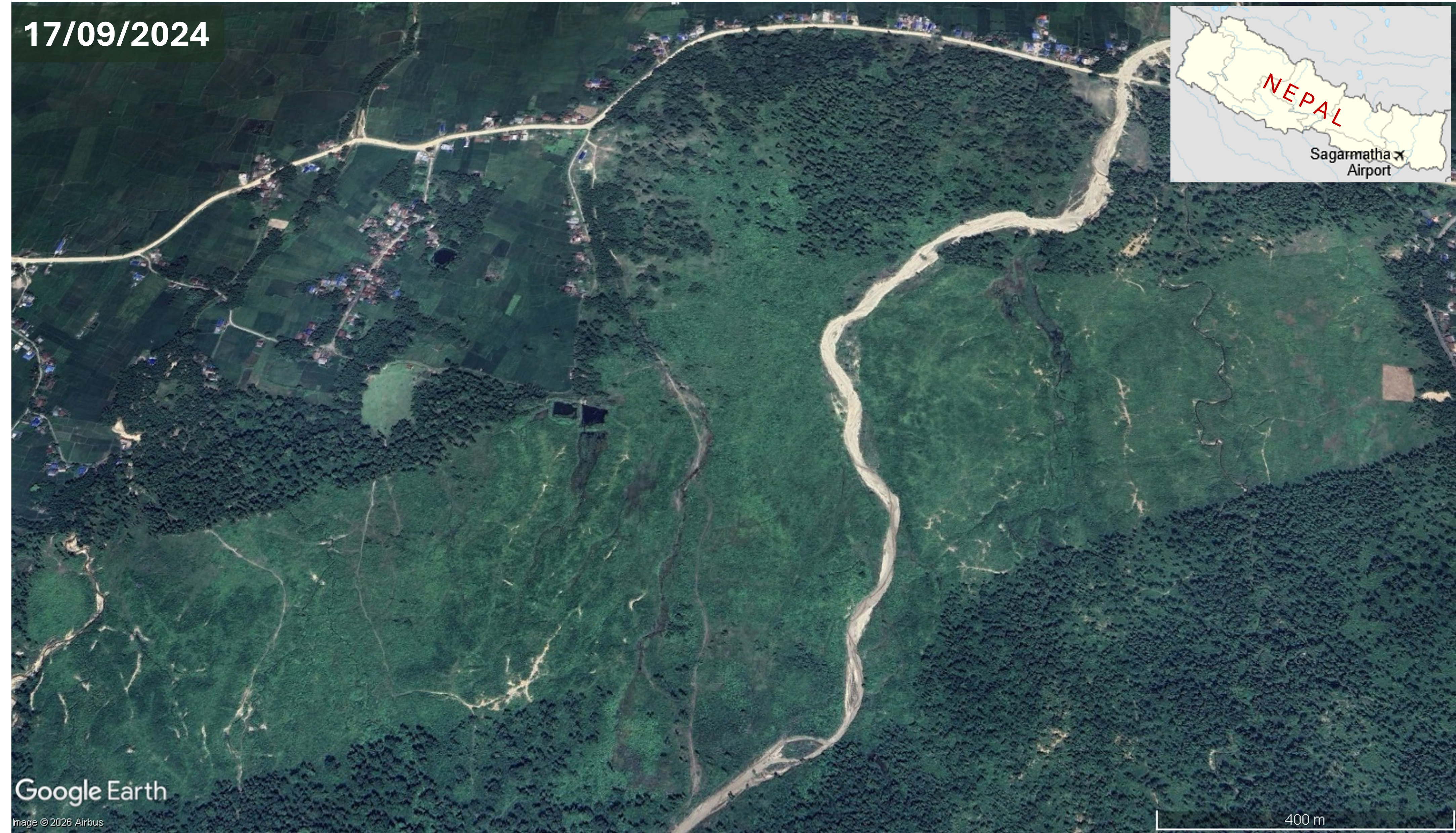
Thousands of trees were felled for the Sagarmatha Airport project, but it has not been constructed and the abandoned site has turned into pasture.
Aerial imagery of the Sagarmatha Airport site shows deforestation in perparation for construction
The Sagarmatha Airport project, in Triyuga Municipality, Udayapur District of Koshi Province, Nepal, was first announced in 2013. According to the Environmental Impact Assessment (EIA) for the airport 35,514 trees covering 124 hectares of land would be cut down to make way for a 200 metre runway, terminal, taxiways, staff quarters and other infrastructure. In April 2018, responding to protests by local people against felling trees in the local community forest for the airport, the Triyuga Municipality began to consider building the airport on unused land along the banks of the Triyuga and Luhale rivers. A year later surveys of the proposed site were complete and the Ministry of Industry, Tourism, Forest and Environment (MoITFE) announced that construction of the airport was imminent. Site clearance for Sagarmatha Airport did entail large-scale deforestation; by November 2022 70 per cent of the trees in the 105.11 hectare area allocated for the project, at this juncture named Sagarmatha Domestic Airport, had been cut down by the company awarded the tender for construction of the airport. An agreement between the Department of Forestry and Soil Conservation, signed in February 2022, had allowed use of the forested land for the airport.
In January 2024, the Centre for Investigative Journalism-Nepal reported that the Civil Aviation Authority of Nepal (CAAN) had spent Rs 24.7 million (USD169,000) clearing forest for airport construction and approximately 13,687 trees from the community forest had been cut down and sold. Foundation stones marking the start of construction had been laid in three locations. Following a site visit in February 2024 Minister for Culture, Tourism and Civil Aviation, Sudan Kirati said the government would proceed with the airport and committed more funds, “A total of Rs 50 million has been allocated for the construction of the airport.”
In October 2025, Kathmandu Post reported that, after the forest was cleared, no construction works had taken place. The airport had not materialised and 105 hectares of forest cleared for the project was being used as grazing land for cattle. A Division Forest Office Official admitted that the timber was not fully accounted for or utilised properly and said, “Some wood was distributed to local users through community forest groups, but a large quantity was reportedly sold elsewhere”. Some locals alleged that forest officials and community forest group members had colluded in illegal sales of the highest-quality timber. A Triyuga local commented, “They destroyed the forest for an airport that never got built. What’s left now is a pastureland where people graze their cattle.” Environmentalists criticised the government for permitting forest clearance for an unviable airport project. Kushal Babu Basnet, Udayapur chair of the Federation of Community Forestry Users, said “This is a textbook case of how politically driven projects can cause irreversible environmental loss.” Responsibility for protection of the site, at risk of encroachment, was unclear with the Division Forest Office insisting that land ownership had been transferred to CAAN whereas the Land revenue Office denied any record of this.
Sagarmatha Airport is not the only abandoned airport in Nepal, the country has a history of building airports that languish unused. According to a report by CAAN, of Nepal’s 55 domestic airports only 32 were operational with just seven making a profit. A retired CAAN official includes Sagarmatha Airport in a long list of airports constructed at the behest of powerful politicians. Several airports in particularly remote areas had initially served as a ‘lifeline’ for isolated communities as there were no roads; many of these airports were built 1 – 3 hours driving distance from the national highway network. But when roads connecting these airports to national highways were constructed they were utilised by poor locals for whom the airports were not a priority. Weather is another factor affecting viability of new airports, some of which can only be used as seasonal facilities. Former CAAN director general Sanjiv Gautam explained that airport viability depends on the income of the local area, saying “many airports built in past decades have turned into grazing fields”.
Research by the Centre for Investigative Journalism-Nepal into Nepal’s abandoned airports, published in January 2024, mentions Sagarmatha Airport as one of several uncompleted and unused airports incurring significant public costs, ‘From East to West, there are more than 20 domestic airports in various stages of construction and abandonment’. Airports superseded by roads include Jiri Airport, the ‘gateway to Everest’, now used as pastureland following connection to the road network and the non-operational Tikapur Airport, in the far west of Nepal, through which locals have built a road.
 antiaero.org