Airports in India

The ‘Airports in India’ report by Equitable Tourism Options (Equations), is a useful critique of government plans for massive airport expansion. Published in May 2015, the report is skeptical regarding the viability of plans to construct 200 new airports over the next two decades, when most of India’s established airports operate at a loss. Vast amounts of public expenditure on airport infrastructure would benefit only a small wealthy minority, in a country where 22 per cent of the population live below the poverty line.

In many instances new airport plans are rushed, without proper consultation of the local community and the requisite environmental clearances. Several Indian airport projects have met with opposition from affected communities. The Bhogapuram airport project has seen massive protests by farmers (also see GAAM blogposts from 15th April and 17th April 2015). Airports in Sikkim and Aranmula have been stalled by community protests. There has also been vigorous opposition to privatization of Mumbai, Delhi and Chennai airports. Chennai Airport is thought to have 2,000 acres of land which the private operator can lease for facilities like five-star hotels. The report urges the government to reconsider new airports in favour of upgrading existing airports.

Army Invades the Ejidal Lands of San Salvador Atenco

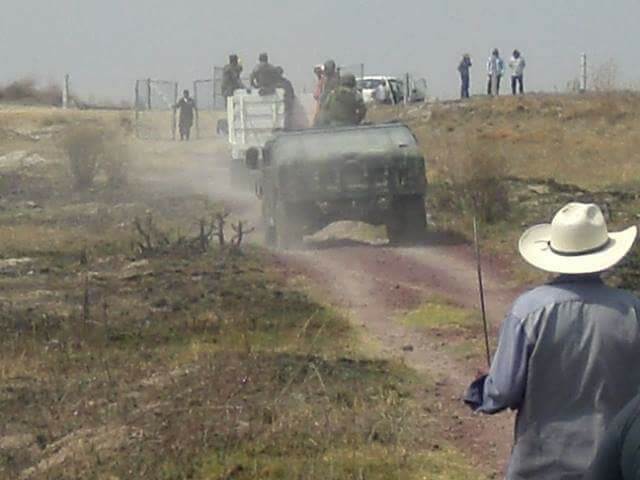
The Mexican army invaded ejidal (communal) lands of Atenco, where communities have resisted land expropriation for an airport for more than a decade. The military convoy was escorting a party of workers from one of the companies contracted to construct the airport. The community of Atenco has begun daily patrols to prevent further intrusion into ejido lands and is calling for international solidarity.

dorsetchiapassolidarity's avatardorset chiapas solidarity

.

Army Invades the Ejidal Lands of San Salvador Atenco

atenco invade 

In the morning of April 12, while the police forces of the State of Mexico continued advancing at the other end of the state, in San Francisco Xochicuautla, a convoy of military entered the ejidal lands of the community of San Salvador Atenco to escort a gang of workers from one of the private companies in charge of the construction of the new airport in Mexico City.

Community members who have resisted the expropriation of their lands for more than ten years told Desinformémonos that the day before, April 11, an official of the company had already arrived in the communal lands, at the base of Cerro Huatepec, with the intention to “carry our measurements.” Facing the intrusion, villagers moved in and responded.

“The compañerxs told them that they could not be on communal lands because we are in…

View original post 738 more words

Farmers in Ekiti, Nigeria achieve High Court victory in fight against airport project

An article in The Ecologist, Nigerian farmers win High Court victory in fight against Ekiti airport, is a story of a successful struggle against a land grab for an airport. On 2nd October 2015 the state government of Ekiti, in western Nigeria, sent in bulldozers to clear 4,000 hectares of farmland for an airport. Bulldozers were sent in and began destroying crops, without even warning the farmers, never mind making provision for compensation for their loss of land and livelihood. Affected farmers from the five affected villages fought back, organizing a protest and filing a suit.There was widespread criticism of the airport project, allocated an enormous amount of public funds in a state where many residents are impoverished. The viability of the project was dubious as many airports in Nigeria, including one in the neighbouring state, are underutilized.
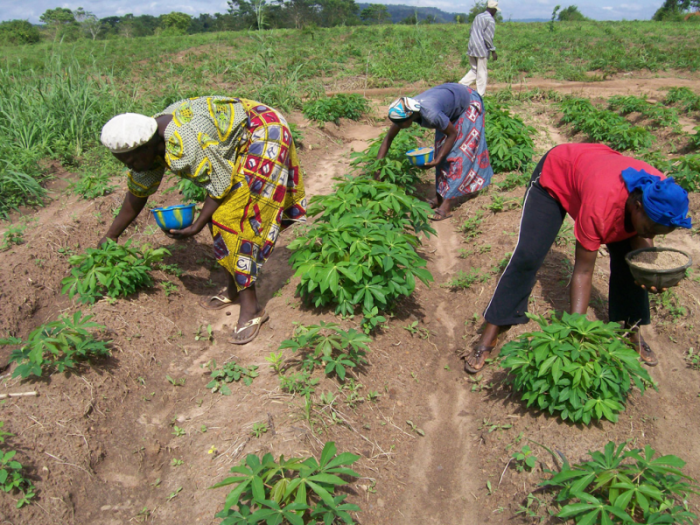
Ekiti picThe plan for Ekiti airport was not, to my knowledge, referred to as an ‘aerotropolis’. But the land area allocated, 4,000 hectares, is far more than would be required even for an enormous global hub airport (an unlikely prospect in an agrarian state). In comparison, Atlanta Airport, in the USA, the busiest passenger airport in the world handling over 100 million passengers in 2015, covers an area of about 1,600 hectares. As well as land used for airport operations.this includes considerable commercial space, such as retail and warehouses.

On 20th January 2016 farmers held a protest, storming the Ekiti airport project site and demanding that work cease immediately, in respect of the suit that they had filed. They held placards with slogans reading: “Gov Fayose, Please Leave Us Alone, Don’t Damage Our Life”, “This Land Is The Major Cocoa Plantation, Please No Trespass”, “Please Relocate Your Airport to Government Forest”, “We All Say No To Illegal Airport Project”, “Iwajo, Aso Say No To Illegal Airport”, and “Igbogun Cries Over Illegal Destruction of Our Property”. They also stated that at least ten farmers, including three women, had ‘died of shock’ caused by the destruction of their farms.

In 22nd March the Ekiti farmers secured victory in the High Court, which ordered that forcible take-over of their land for the airport was unconstitutional, illegal, null and void. But there are plans for major new airports all over Nigeria, in the states of Osun, Bayelsa, Abia, Ogun, Anambra and Nasarawa, all of which are being vigorously opposed. Citizens are calling on governments to use the vast amounts of public funds being allocated to these airports to infrastructure that will benefit ordinary people – to repair roads and bridges and support small businesses. And yet another major airport plan is looming. The Yobe state government plans to build a N6 billion (over US$30 million) cargo airport in Damaturu, to act as a gateway for investment in the state and facilitate export of meat, dairy produce and gum arabic (acacia gum). The scheme which is meeting with criticism and goes against state commitments to prioritise water supply, schools, clinics and roads to benefit local communities.

Opposition to airport project in Kaş

A proposal for an airport near the town of Kaş has raised serious concerns over threats to the region’s heritage, agriculture and natural environment. Kaş is a popular tourism destination on the mountainous southernmost shore of Turkey, known as the ‘Turquoise Coast’ and one of least developed areas of the Mediterranean. The rugged coastline has beautiful bays, coves and beaches. Outdoor activities include kayaking, paragliding, mountain-biking and trekkers flock to the area as it is situated along the 509 kilometre Lycian Way. The proposed airport site is a few kilometres inland from Kaş in the Çomucak-Pınarbaşı-Çukurbağ-Ağullu area. It is thought that the proposed land area to be allocated for the airport is about 20 square kilometres. This is almost twice the 11.7 square kilometre area of Istanbul’s Ataturk Airport, the busiest airport in Turkey, handling over 61 million passengers in 2015.

Kas

If the airport project goes ahead there will be negative impacts on historical and archeological sites, including Phellos, the largest ancient city in the area, on the outskirts of Kaş. Forested areas would be destroyed and the area is rich in native plants such as the endangered Lycian orchid. Fertile land that is cultivated, with agricultural plots, livestock grazing and beehives, would be lost, along with farming livelihoods. Parts of Pınarbaşı village are in the expropriation area, so people may face displacement. There are also concerns that residents of the Ağullu, Belenli, Çukurbağ, and Yeniköy neighbourhoods would be forced to relocate. Noise pollution from aircraft flying overhead would ruin the tranquillity of the villages. The Greek island of Kastellorizo is close to the coast so building the airport would require permission from Greece.

Kaş has a population of just 8,000 people and mass tourism would damage unique natural, cultural and historical assets. Major and international firms would take trade away from local tourism-based businesses. Campaigners warned that an airport in Kaş would lead to the area meeting the same fate as the coastal resort towns of Marmaris and Side, also on the Mediterranean coast, and Kuşadası on the western Aegean coast, their distinctiveness deteriorating due to large-scale tourism developments.

A consortium of eight companies, DETUYAB, has applied to the Ministry of Transport and Communications to build the airport on the BOT (build-operate-transfer) model. DETUYAB is already heavily involved with mass tourism projects in the area. The consortium is developing a 115 hectare tourism zone in the coastal town of Demre, about 47 kilometres east of Kaş, including restaurants, villas, hotels with a total of 7,500 beds and a 700 berth marina. Demre has sandy beaches and, like Kaş, is surrounded by historic sites, cultivated land and important wildlife habitats.

Opposition to the airport plan is gathering momentum. A group of local organisations – including Kaş Tourism Association, Kaş Kalkan Patara Hoteliers Association, Kaş Underwater Association and Kaş Environment Platform – has submitted a seven-page report to local state bodies opposing construction of the airport, detailing the damage that would be caused to nature, communities and the local economy. An online petition, We don’t want an airport in Kaş, had already attracted nearly 19,000 signatures.