Dust pollution from levelling Long Thanh Airport construction site

Long Thanh Airport, under construction in the Đồng Nai Province, is slated to be Vietnam’s biggest airport. With a 5,000 hectare site and costing USD16 billion the airport is designed to have capacity to handle 100 million passengers and five million tonnes of cargo per annum. High levels of dust pollution from levelling Long Thanh Airport construction site, caused distress and posed health risks for neighbouring communities. Between April and October 2022 inspections by Đồng Nai Department of Natural Resources and Environment found dust pollution at the site up to 18 times higher than permitted levels. Levelling works entailed digging up and filling and flattening vast volumes of soil and trucks carrying soil on the site stirred up clouds of dust. In December 2022 more than 1,800 vehicles and machines were operating on the airport site. By the end of March 2023 residents of neighbourhoods near Long Thanh Airport construction site had been shrouded in dust for several months. Satellite imagery dated 13th March 2023 showed progress of the levelling works.
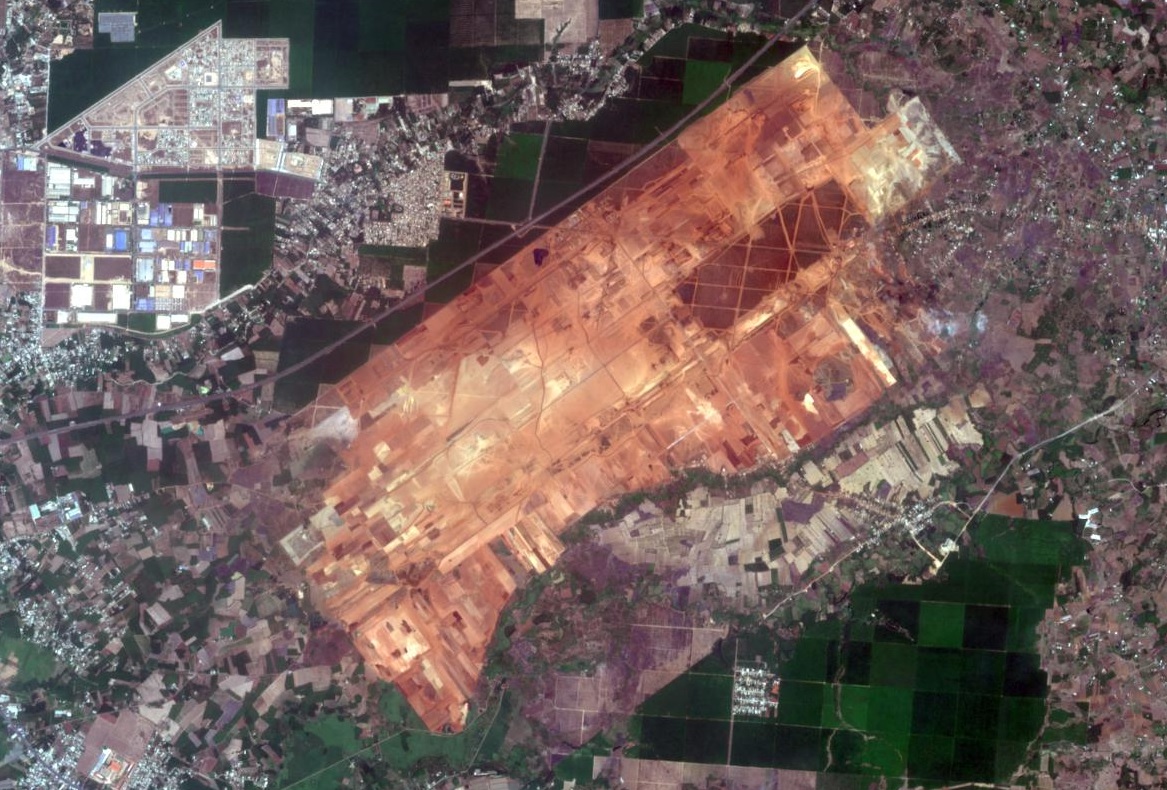
Long Thanh Airport site, 13/03/2023
Long Thanh Airport site 13/03/2023. Image credit: Esri, European Commission, European Space Agency, Amazon Web Services

One place worst affected by dust was the primary school at the heart of the Binh Son Commune. Doors were kept closed for the entire day but dust still seeped in. “It’s impossible to clean” said a school security guard, “the dust is everywhere and comes at all times.” A teacher at the school said pupils’ books were “terribly dirty”. Pupils’ hands were always red and they were not comfortable with wearing face masks. Ten people cleaned the school three times every day but dust got into every corner. Some households attempted to keep dust out with canvas tarpaulins or plastic sheeting. A local resident said before airport construction started air quality in the area had been good, but now it was “unbearable”. Another resident said it would be another two of three years until the airport is completed and they “could not bear the red dust”. The deputy chairman of the Vietnam Lung Association said exposure to dust on a daily basis can severely affect people’s health, causing damage to the lining of the respiratory tract or leading to pneumonia, lung infection or pulmonary fibrosis.

Green roofs were coated in red dust and residents spoke of dust on every surface. Farmers in Binh Son Commune grappled with pervasive red dust from the airport construction site. Dust had stuck to mangosteen and rambutan leaves just as the trees began to bear fruit. One farmer said his durian trees had not developed properly and more than half of the fruit had fallen. He and other farmers attempted to wash their trees, spraying them with water which was of limited effectiveness. Another farmer cleaned his trees from 2am to 8am each day, consuming a lot of water and electricity. Other crops were affected, including jackfruit, lychee, banana and sapodilla. Red plumes rose like fires from the construction site and dust was carried by the wind, turning the sky red and impacting on people living at some distance from the construction site, including in the Loc An-Ninh relocation area, a resettlement site for people displaced to make way for Long Thanh Airport. A blanket of dust hung in the air extending as far as 10 kiometres from the site.

A video filmed on the airport site in March 2023 shows a red dust ‘tornado’, a large, dense, rotating plume of dust. You can hear the rumbling sound of the tornado. Clouds of dust are generated when a bulldozer pours red soil into a truck. Footage from a moving vehicle shows areas of the site under a heavy haze of dust and trucks pumping water onto part of the site.

Efforts to address the dust problem, such as spraying water and deploying trucks to dampen the ground to reduce airborne dust, had been ineffective. Officials noted that the size of the site, the dry season and windy weather exacerbated the dust problems. Beginning in April 2023 dust mitigation measures were increased with construction of 10 reservoirs, each with capacity to store 3,200 cubic metres of water, to supply water for 60 trucks including two firefighting trucks. It was also announced that air conditioners would be installed at some schools near the construction site, to prevent dust from entering classrooms.

For more information see the case report on EJatlas, the world’s largest, most comprehensive online database of social conflict around environmental issues: Dust pollution from Long Thanh Airport construction, Vietnam. In April 2023, after publication of the case study, ACV was fined VND180 million (US$7,670) for dust pollution during construction of Long Thanh Airport, plus an additional fine of VND90 million (US$3,835) for failure to implement the environmental impact assessment report.
Demolitions for ‘airport zone’ (zone aéroportuaire Modibo Kéita), Mali

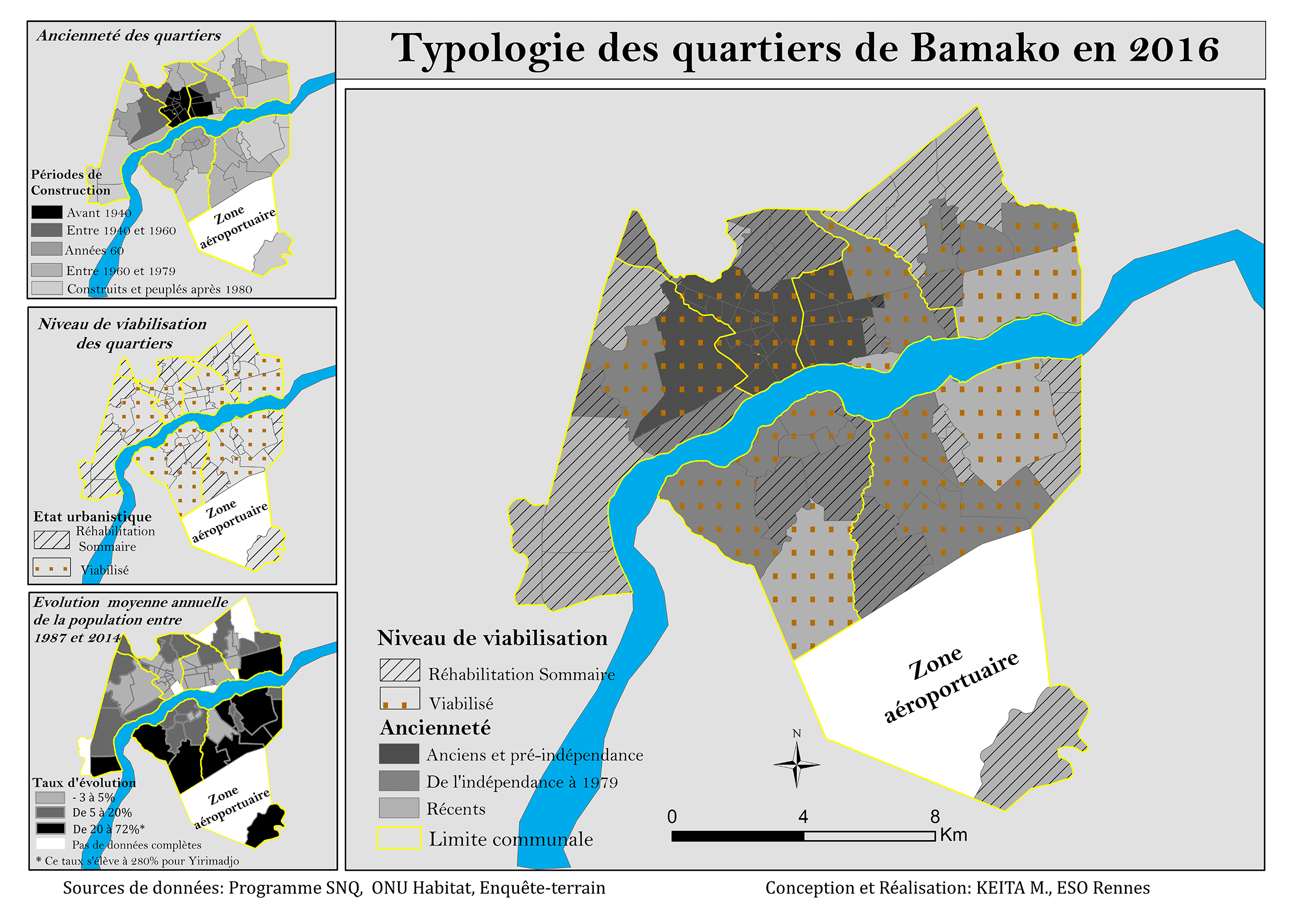
Mass evictions for an ‘airport zone’ next to Modibo Keita Airport, Mali’s main airport on the outskirts of Bamako, the capital city, began on 20th April 1995. Without warning, the government began bulldozing the Senou neighbourhood to make way for expansion of the zone. Demolitions continued for ten days and about 3,707 families, approximately 30,000 people, were forcibly evicted. Further waves of demolitions followed with many instances of land grabbing and speculation. Farmers were displaced for a fertilizer plant on the land in 2007-8 and in 2009 residents resisted instructions to leave the land. A drive to clear remaining communities began in 2021. Bulldozers arrived early in the morning of 14th January, in a major eviction drive covering 1,600 hectares; about 20,000 families in 11 neighbourhoods were impacted. About 800 evictees said they had permits to occupy the land and many affected people were left destitute without shelter.

zone aéroportuaire Modibo Kéita
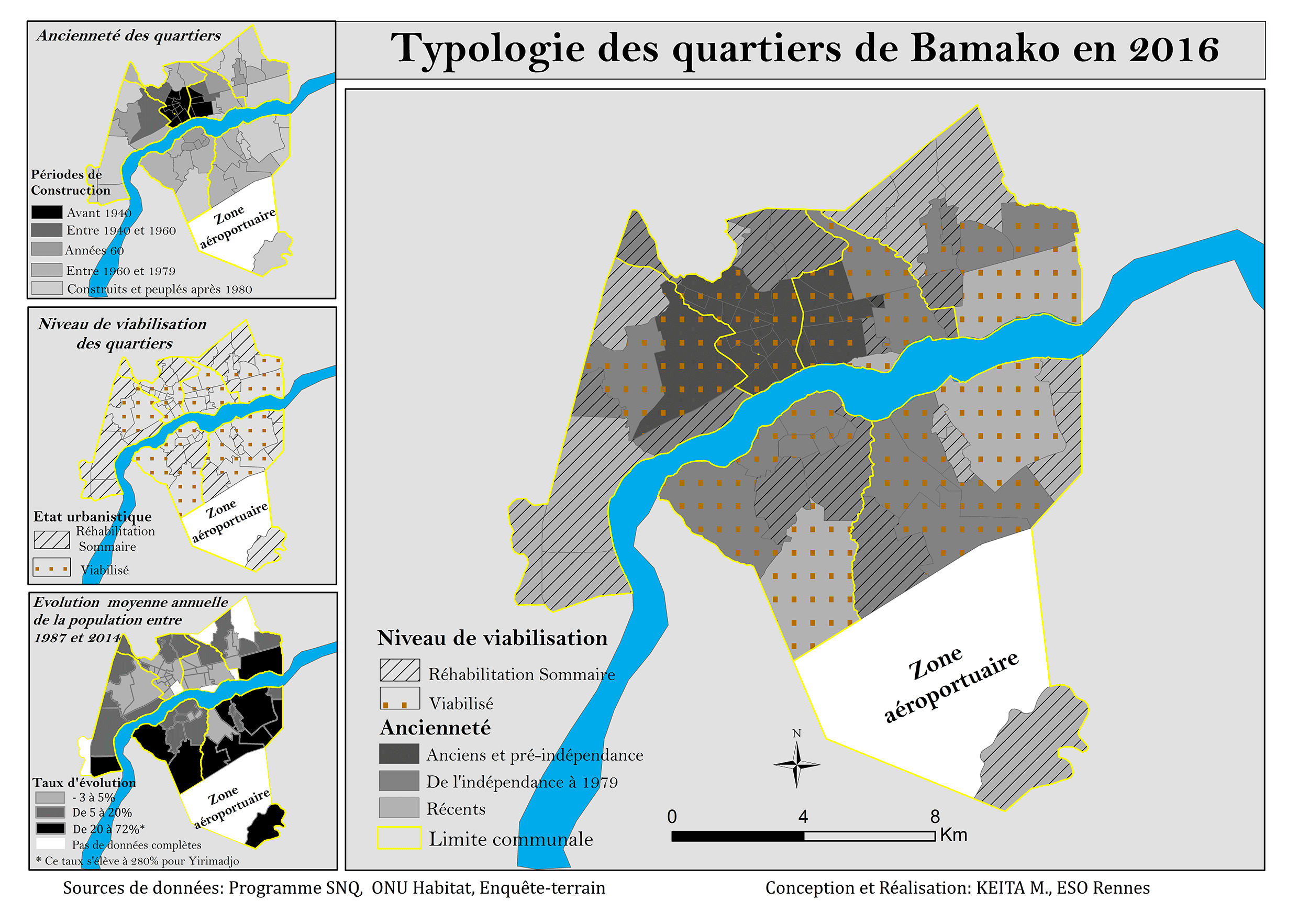
Map showing zone aéroportuaire Modibo Kéita. Source: https://journals.openedition.org/eps/docannexe/image/7707/img-3.png

The ‘airport zone’ – zone aéroportuaire Modibo Kéita – is vast, extending over 7,194 hectares northwest of the airport. It was classified as a plot of land for airport company use in 1999. Residents contest government claims that their occupation of the airport zone is illicit; they have lived on the land for several generations. An inhabitants’ organization – Plateforme deshabitants de la zone dite aéroportuaire (PHZA) – has been established with active groups, sometimes holding different views about land management, in many affected villages. Women, some of them elderly, play a prominent role in resistance against eviction from the ‘so-called airport zone’. The land struggle is supported by l’Union des Associations et Coordinations d’associations pour le Dévelopement et la Défense des Droits des Démunis (UACDDDD), a national federation fighting the injustices of dispossession. Demonstrations and meetings about the airport zone have been attended by hundreds of people. In November 2021 an independent national commission of inquiry to investigate demolitions in the airport area was established.

For more information about the Modibo Keita airport zone evictions see the case report on EJatlas, the world’s largest, most comprehensive online database of social conflict around environmental issues: Modibo Keith airport zone, Mali

New Phnom Penh Airport land dispute enters fifth year

Disputes over land acquisition for New Phnom Penh Airport date back to 2018 when 2,600 hectares, in the Kandal Province, were allocated for the project. With an estimated cost of US$1.5 billion the development was described as one of the world’s largest airports by land area with an adjoining ‘Airport City’. The site is predominantly agricultural land and villagers were shocked by sudden news of the airport and the prospect of losing homes, land and livelihoods from farming and fishing. A series of protests between February and June 2018 involved hundreds of people, representing about 2,000 families, complaining of low compensation offers, intimidation during negotiations over land and encroachment onto communally held wetlands. By December 2019 foundations for the airport were being laid.

Protest continued into 2020. In June the Kandal Stung district governor said 2,000 plots of land were affected by airport construction and in August villagers from the Kandal and Takeo provinces whose farmland fell within the planned site petitioned the Prime Minister requesting a bigger payout from the airport developer. By May 2021 construction of New Phnom Penh Airport was reported to be 40% complete, with the terminal hall, airfield and 100 metre high control tower already in place. A State Secretariat of Aviation (SSCA) spokesperson said, “We are aware that the pandemic has disrupted many projects and the economy, but the construction of the airport in Kandal Province and other airport projects in the country have been on schedule.” The map below, dated 17th July 2021, shows satellite imagery of part of the airport site and communes impacted by land acquisition including Ampov Prey, Boeng Khyang and Kandork.

New Phnom Penh Airport construction site, satellite imagery 17th July 2021

The land dispute escalated on 14th May 2021 when approximately 200 people who said their rice crops had been destroyed set up a protest camp blocking a road to the construction site. They set up tents and a few days later several of them surrounded a bulldozer and demanded proper compensation for their land and crops. Residents were still blocking bulldozers from clearing farmland in July and authorities warned journalists against covering the land dispute. On 7th September about 50 villagers attempted to block National Road 2 in protest against development of New Phnom Penh Airport. They were confronted by about 100 security officers but the standoff remained non-violent. Then police set up roadblocks to prevent villagers from inspecting land they had been displaced from. A representative of Kampong Talong village (shown to the south of the map) said villagers were being prevented from seeing land that had been seized for airport construction. They had ceased cultivating the land three years ago but economic hardship, due to business shutdowns during the Covid pandemic, had driven them to start farming it again as they had been left without other ways to survive.

On 12th September 2021 a ‘clash’ between about 100 protesters and about 400 police left 13 officers and an unknown number of protesters injured. Kandal provincial police dispersed the protests with teargas and about 30 people were arrested and detained. Nine of the arrested people were accused of violence – specifically being in possession of sticks stones and slingshots, hurling gasoline and burning tyres. In February 2022 a dozen excavators were digging up rice fields and wetland in Boeng Khyang and dozens of police and military officials were dispatched to ensure implementation of authorities’ instructions to carry out the works. The nine protesters charged with violence were acquitted in November 2022. At this time the number of villagers impacted by land acquisition increased; about 200 people demanded to know whether they would be joining the 300 families already being displaced for the airport. Numbers were sprayed in red paint on dozens of houses alongside the 94 canal, located about 5km from the airport site. Then in January 2023 residents affected by the airport development said company workers had instructed them to dismantle sheds housing animals, causing anxiety that their land might be cleared. Representatives of 460 families living around the airport project had requested land titles the previous month but received no response.

For more information about the airport land dispute see the case write-up on EJAtlas, the world’s largest, most comprehensive online database of socio-economic conflict related to environmental issues: New Phnom Aiport and Airport City, Kandal Province, Cambodia