The oil supply crunch reduced deliveries of the vast volumes of diesel required for expansion of Phu Quoc Airport, including a second runway and passenger teminal, plus a luxurious VVIP terminal, scheduled for completion in time for the APEC 2027 forum.
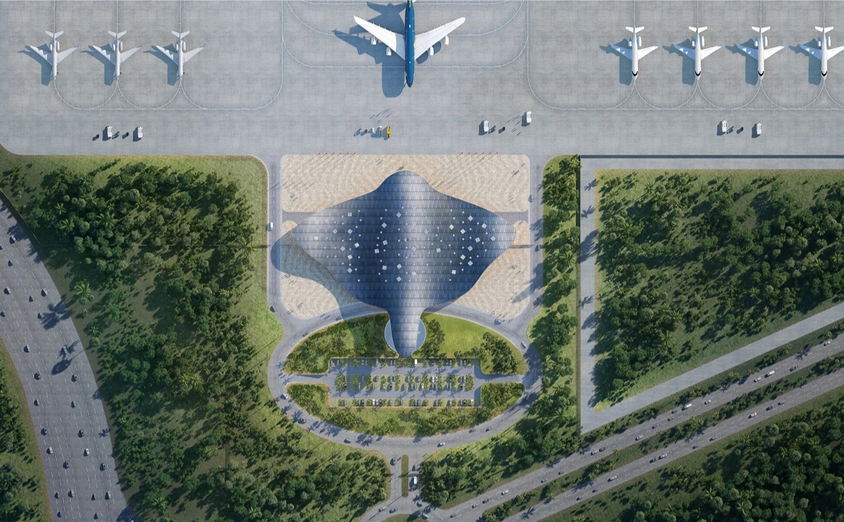
Within days of the US and Israel launching strikes on Iran restrictions on oil shipments through the Strait of Hormuz, a key transit route for diesel supplies to the Vietnamese island of Phu Quoc, had drastically reduced delivery of the volumes required for expansion of Phu Quoc Airport. The ambitious expansion plan aims to increase passenger handling capacity fivefold, from the current 4 million per year to 20 million by 2027 in the first phase, rising further to 50 million per year by 2050. The oil supply crunch had major impacts on construction works. Operation of between 160-180 items of heavy equipment for runway 2 works required 10,000 liters of diesel per day. Earthworks on 2,700 hectares of the runway 2 area, with 130 pieces of equipment, had been consuming about 27,000 liters per day. More than 60 per cent of the equipment had been shut down and 70 machine and vehicle operators temporarily laid off. Tankers carrying 200,000 liters of diesel had been arriving from the mainland every 7-10 days, but since 2nd March the supplier was only fulfilling existing orders and was no longer taking new orders. Yet publicity for the airport expansion continued. On 18th March 2026 Phu Quoc Airport unveiled more details of the VIP terminal design, with graphics depicting an exclusive lounge and luxurious, spacious arrival and departure halls that are markedly different from cramped and crowded facilities for regular travellers, with floor-to ceiling windows giving a ‘sweeping view of the sea’, ‘glossy black obsidian surfaces’, gold accents and a glass and gold sculpture of an eagle ray in flight.
Luxury aviation facilities for APEC 2027
Less than four months previously, on 28th November 2025, rapid progress of Phu Quoc Airport expansion was reported to be an aviation industry record with a second runway, closely followed by the ‘VVIP terminal’, then a second terminal, T2, all on schedule. The expanded airport is envisaged as a ‘gateway’ to a ‘Phu Quoc megacity of the future’ and on 31st December 2025 it was announced that airport construction was moving at an unprecedented pace; the steel framework for the 6,000 square meter VVIP terminal was in place. Initially, the VVIP terminal will host heads of state and high ranking delegations to the 2027 APEC (Asia-Pacific Economic Cooperation) Leaders Week meeting, a key event in the APEC 2027 forum themed ‘Connecting: Building Inclusive and Resilient Economies’. Exclusive facilities are being fast-tracked for an event purporting to promote inclusivity. Both the VIP terminal and Terminal 2 are being built ‘with the aim of delivering luxury standards and a premium passenger experience’. Luxurious passenger facilities will be accompanied by a new luxury airline, Sun PhuQuoc Airways, which ordered up to 40 Boeing 747 Dreamliner planes for international flights to its hub at Phu Quoc Airport. Boeing’s announcement emphasised the aircraft’s ‘superior comfort to passengers’ and described Sun PhuQuoc Airways as ‘well positioned to capture the next wave of premium tourism’. Two mega hotel projects reshaping the skyline to host global leaders and high ranking officials for APEC 2027 are similarly exclusive, designed for ‘diplomatic events, international conferences and high-end tourism’.
Forest land conversion for tourism projects
Conversion of 0.46 hectares of protected forest land for use in Phu Quoc Airport expansion was approved in February 2026. This small forest loss for tourism-related infrastructure is a continuation of a pattern affecting large swaths of the island. Elsewhere on Phu Quoc 286 development projects are planned and, as reported by Mongabay, since July 2024, authorities have permitted conversion of over 180 hectares of forest, most of it categorised as ‘special use’ due to ecological value or scientific importance. A key development, Rạch Tràm Ecotourism and Residential Project on the island’s north coast, required forced relocation of 508 households and clearance of 57.7 hectares of special use forest in Phu Quoc National Park. Development of Phu Quoc as an island tourism city was approved by the Prime Minister in 2022 and the 286 projects, at various stages of planning and development, span over 9,600 hectares, nearly 17 per cent of the island. Legal changes in 2024, expanding the type of developments for which forest land can be converted to include industrial parks and clusters in addition to ecotourism, resorts and recreation projects, facilitated a spike in forest conversion approvals. Since the amendments to land laws conversion of nearly 182 hectares of Phu Quoc forest, 77 per cent of this being special use forest, has been approved and the land designated for tourism projects.
 antiaero.org