Thousands of trees were felled for the Sagarmatha Airport project, but it has not been constructed and the abandoned site has turned into pasture.
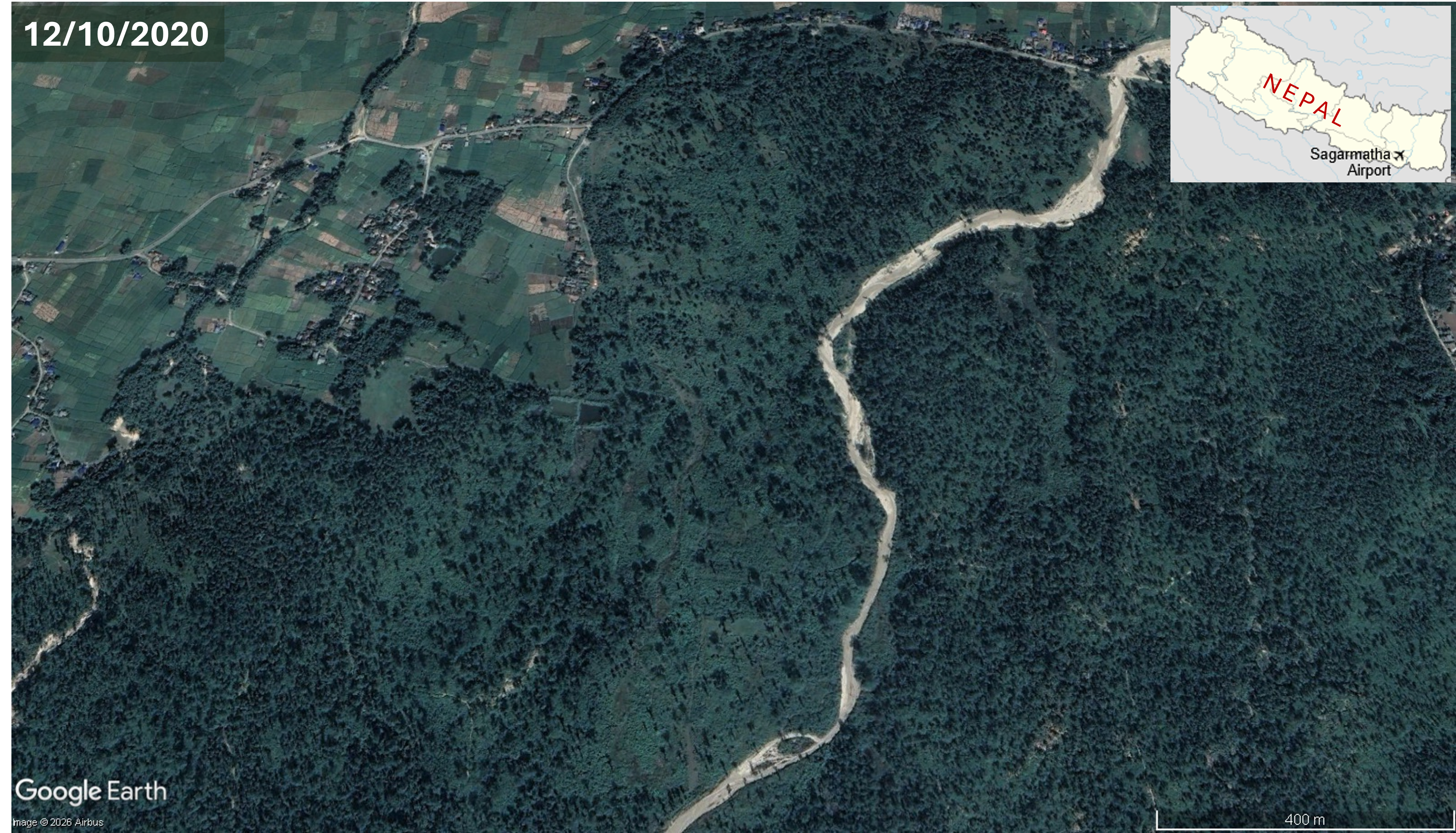
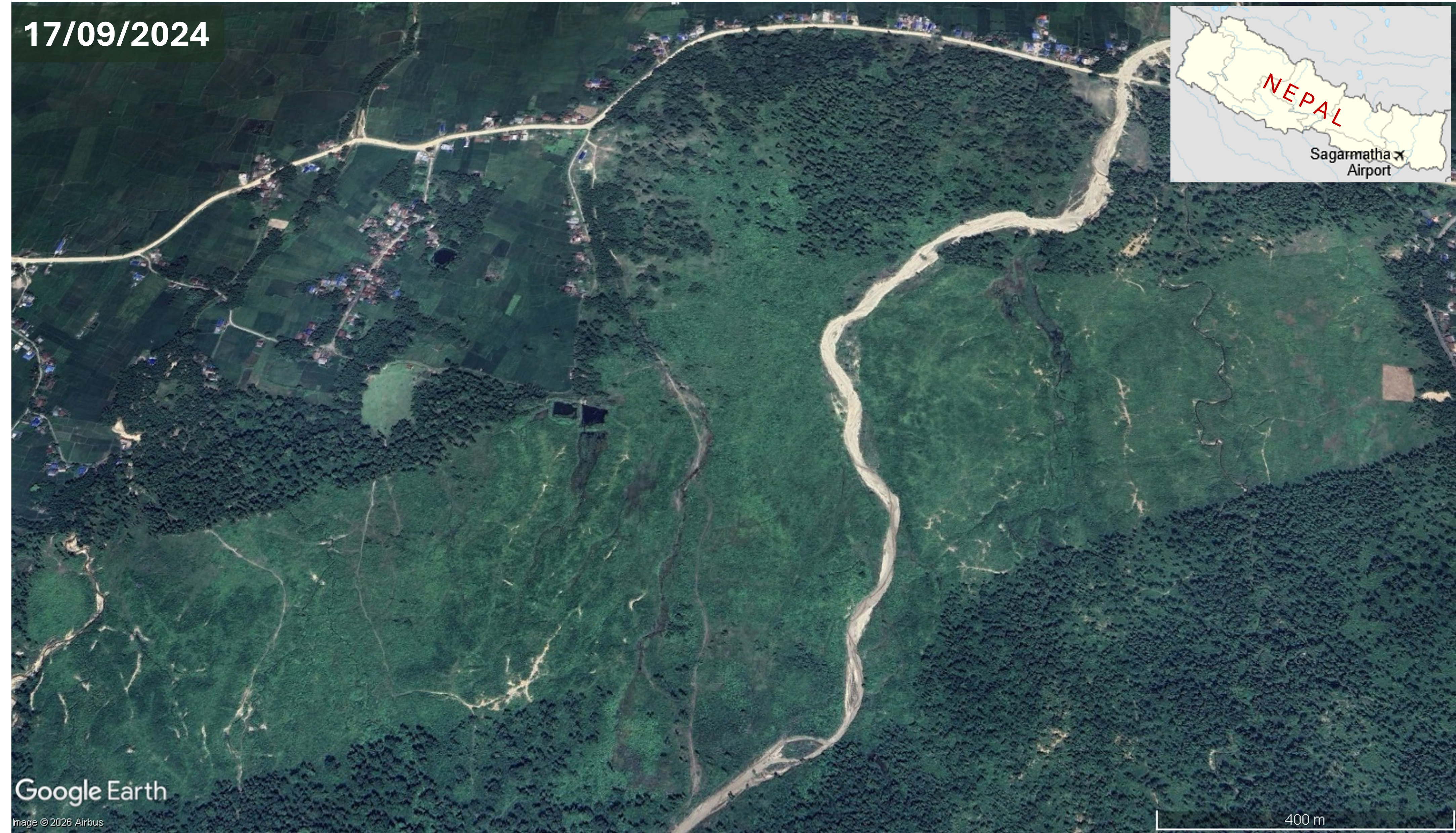
The Sagarmatha Airport project, in Triyuga Municipality, Udayapur District of Koshi Province, Nepal, was first announced in 2013. According to the Environmental Impact Assessment (EIA) for the airport 35,514 trees covering 124 hectares of land would be cut down to make way for a 200 metre runway, terminal, taxiways, staff quarters and other infrastructure. In April 2018, responding to protests by local people against felling trees in the local community forest for the airport, the Triyuga Municipality began to consider building the airport on unused land along the banks of the Triyuga and Luhale rivers. A year later surveys of the proposed site were complete and the Ministry of Industry, Tourism, Forest and Environment (MoITFE) announced that construction of the airport was imminent. Site clearance for Sagarmatha Airport did entail large-scale deforestation; by November 2022 70 per cent of the trees in the 105.11 hectare area allocated for the project, at this juncture named Sagarmatha Domestic Airport, had been cut down by the company awarded the tender for construction of the airport. An agreement between the Department of Forestry and Soil Conservation, signed in February 2022, had allowed use of the forested land for the airport.
In January 2024, the Centre for Investigative Journalism-Nepal reported that the Civil Aviation Authority of Nepal (CAAN) had spent Rs 24.7 million (USD169,000) clearing forest for airport construction and approximately 13,687 trees from the community forest had been cut down and sold. Foundation stones marking the start of construction had been laid in three locations. Following a site visit in February 2024 Minister for Culture, Tourism and Civil Aviation, Sudan Kirati said the government would proceed with the airport and committed more funds, “A total of Rs 50 million has been allocated for the construction of the airport.”
In October 2025, Kathmandu Post reported that, after the forest was cleared, no construction works had taken place. The airport had not materialised and 105 hectares of forest cleared for the project was being used as grazing land for cattle. A Division Forest Office Official admitted that the timber was not fully accounted for or utilised properly and said, “Some wood was distributed to local users through community forest groups, but a large quantity was reportedly sold elsewhere”. Some locals alleged that forest officials and community forest group members had colluded in illegal sales of the highest-quality timber. A Triyuga local commented, “They destroyed the forest for an airport that never got built. What’s left now is a pastureland where people graze their cattle.” Environmentalists criticised the government for permitting forest clearance for an unviable airport project. Kushal Babu Basnet, Udayapur chair of the Federation of Community Forestry Users, said “This is a textbook case of how politically driven projects can cause irreversible environmental loss.” Responsibility for protection of the site, at risk of encroachment, was unclear with the Division Forest Office insisting that land ownership had been transferred to CAAN whereas the Land revenue Office denied any record of this.
Sagarmatha Airport is not the only abandoned airport in Nepal, the country has a history of building airports that languish unused. According to a report by CAAN, of Nepal’s 55 domestic airports only 32 were operational with just seven making a profit. A retired CAAN official includes Sagarmatha Airport in a long list of airports constructed at the behest of powerful politicians. Several airports in particularly remote areas had initially served as a ‘lifeline’ for isolated communities as there were no roads; many of these airports were built 1 – 3 hours driving distance from the national highway network. But when roads connecting these airports to national highways were constructed they were utilised by poor locals for whom the airports were not a priority. Weather is another factor affecting viability of new airports, some of which can only be used as seasonal facilities. Former CAAN director general Sanjiv Gautam explained that airport viability depends on the income of the local area, saying “many airports built in past decades have turned into grazing fields”.
Research by the Centre for Investigative Journalism-Nepal into Nepal’s abandoned airports, published in January 2024, mentions Sagarmatha Airport as one of several uncompleted and unused airports incurring significant public costs, ‘From East to West, there are more than 20 domestic airports in various stages of construction and abandonment’. Airports superseded by roads include Jiri Airport, the ‘gateway to Everest’, now used as pastureland following connection to the road network and the non-operational Tikapur Airport, in the far west of Nepal, through which locals have built a road.
 antiaero.org