Announcement of a mega airport in Nyakisharara in the Mbarara District, with two 5.5-kilometre runways and a VIP runway, met with scepticism from aviation industry specialists. Land acquisition would displace residents and there are doubts over the scale, site and financing of the project.
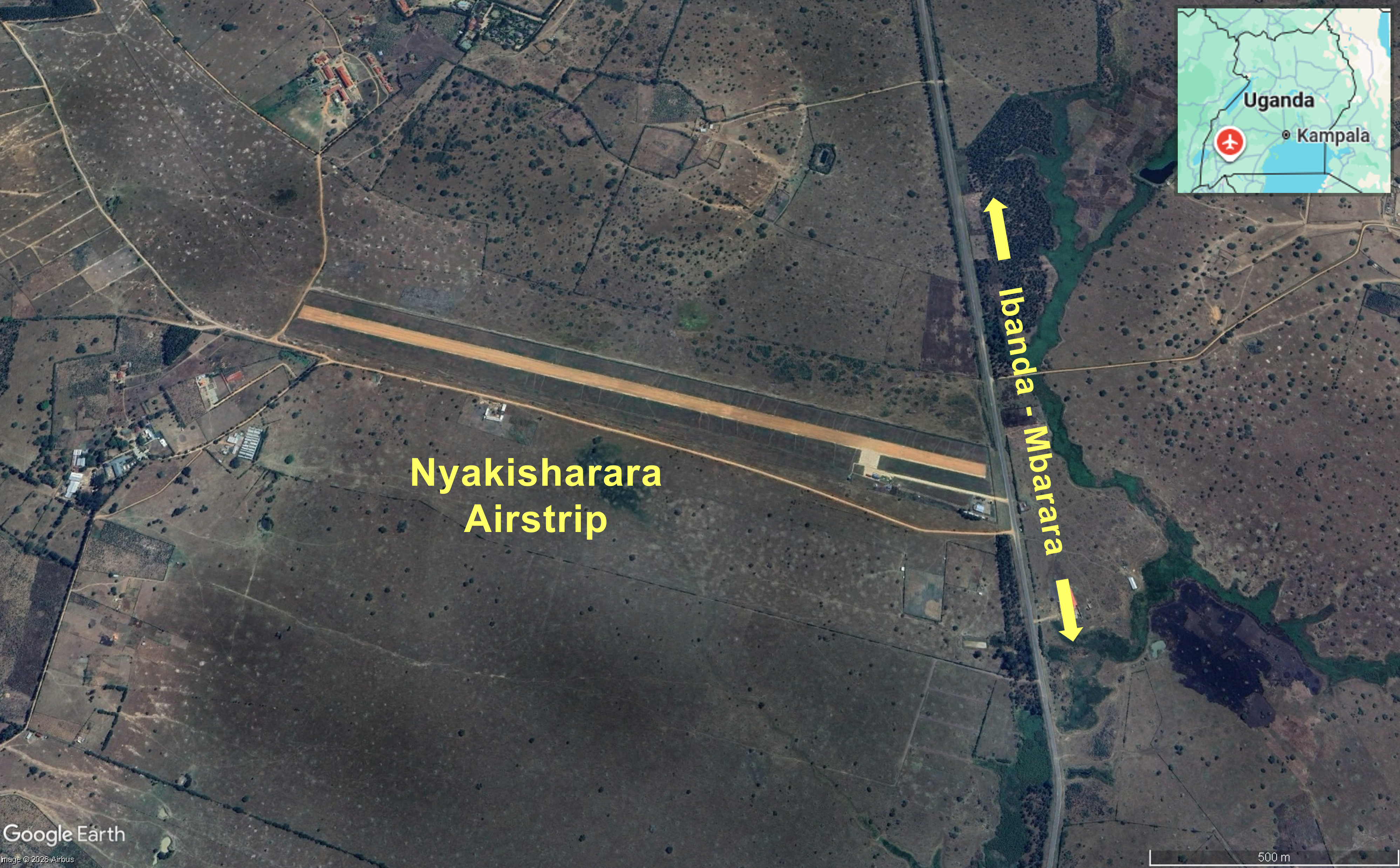
On 11th February 2026 Ugandan President Yoweri K. Museveni’s announced a mega airport project in Nyakisharara, northwest of the city of Mbarara in the Western Region. A 21 square kilometre site has been allocated for an airport with two 5.5-kilometre runways and a 3.7-kilometre runway for VIP flights. Hotels are also planned and the project will require relocation of the Mbarara-Ibanda road. Land acquisition, for what would be one of the largest infrastructure developments in the region, will cause displacement of people living in the Nyakisharara area. President Museveni instructed Prime Minister Robinah Nabbanja to oversee the relocation and compensation of impacted residents. A higher number of people might be displaced if a NewSwift article, reporting a larger project site of almost 30 square kilometres for the ‘master plan’, is correct. Many aviation professionals and experts have expressed doubts over the plan. Airport projects in other African countries show that the most serious pre-construction hurdles arise from disputes over land acquisition. Compensation and relocation of communities, if conducted without a clear process and transparency, can be protracted, delaying the project and increasing costs. The requisite Environmental Impact Assessment (EIA) is particularly important because the area earmarked for the project includes settlements, agriculture and sensitive ecosystems. The project is focussed on transforming an established airstrip into a ‘global hub’ linking Latin America with China and reducing travel time between these regions. But location alone does not induce airlines to use a particular airport. Analysts warned that commercial decision-making is multifactorial, considering passenger demand, profitability forecasts, operating costs, cargo, logistics and transfer networks linking airports with destinations. With regard to tourism, an airport alone rarely creates an inflow of passengers. Tourism operators and planners from several countries explained that to attract visitors an airport needs to be built where facilities such as accommodation, connectivity via road and/or rail and a reliable flight schedule are already in place.
No cost estimate and risky BOT contract
As of March 2026 the government had yet to announce an official cost estimate for the megaproject. Yet six months previously, on 4th September 2025, at a meeting in whcih China-based consortium presented its proposal to build the Mbarara International Airport project, ‘specifically in Nyakisharara’ to President Museveni, Bethuel Macharia of Blackrock Uwekeza, a private limited company registered in the UK, ‘expressed enthusiasm for financing the entire project’. Bethuel Macharia confirmed Blackrock Uwekeza’s full financial backing for the airport in February 2026, saying, “The project is expected to take shape in December, we already have backing from the president, as we await the feasibility study as well as the conceptual and preliminary designs. Next year construction is expected to start.” Government statements about the airport emphasised the private financing committed to the project, under the Build-Operate-Transfer (BOT) model whereby an investor operates the airport, recouping costs and generating profits, for an agreed period before transferring ownership to the government. Caution is advised as BOT contracts are risky for the public purse. If the projected revenue from passenger numbers and cargo volumes fail to materialise, the state may be obliged to provide revenue guarantees and other subsidies. Viable examples of the BOT model usually include non-aeronautical revenue from an ‘airport zone’ containing facilities such as retail, hospitality, logistics centres and real estate in addition to aeronautical revenue from landing and passenger handling fees and cargo operations. The airport might only be viable with commercial development on a large land area surrounding it. Another issue casting doubts on the feasibility of the Mbarara mega airport is major investment in other major airport projects in Uganda. The US$125 million second phase of expansion of the country’s main airport, Entebbe Airport, is underway. in the Hoima District construction of Kabalega Airport, to serve the oil sector and possibly provide access to tourist attractions, is reported to be in its final stages.
Doubts over scale, site and VIP runway
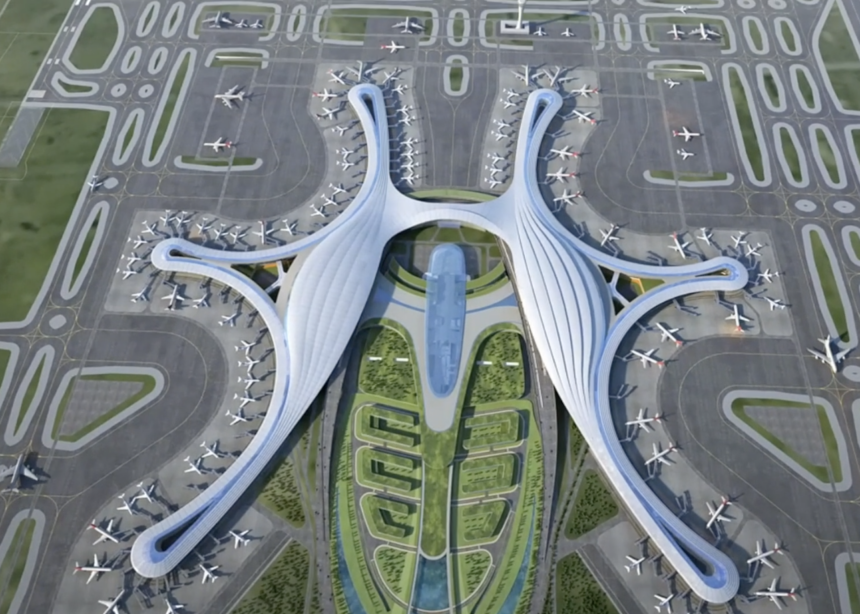
Another critic of the ‘Gargantuan New Airport‘ questions the logic of building a transfer hub for flights between China and Latin America; refuelling stops with passengers staying on the plane would not make a significant contribution to Uganda’s economy. The scale of the project in a remote area, its renderings showing ‘dozens and dozens’ of planes parked at terminal gates, seem immensely unrealistic and the claim that the airport will have a VIP runway is particularly fanciful. Regional competition could also undermine the viability of the Mbarara Airport project. Most notably, Ethiopia is expanding its already more established aviation sector and has begun construction of a mega airport in Abusera, near the town of Bishoftu. Another sceptical article, questioning whether the mega airport is a ‘real deal‘, highlights the length of the two main runways; at 5.5 kilometres these would be the longest in the world. Aircraft would require long runways to reach take-off speed due to the low air density and high temperatures at the high-altitude site. Selection of the high elevation site, centred on the existing Nyakisharara Airstrip at an altitude of 1,517metres, for the mega airport would lead to inefficient air operations and increase airport construction and operating costs. The economic performance of the heavily subsidised Uganda Airlines does not inspire confidence in the country’s governance of its aviation sector. Since a massive injection of government funds in August 2019, for procurement of four Bombardier CRJ900 regional jets each costing US$27.3 million (and providing flights for a minute number of people as these jets can only accommodate up to 90 passengers), Uganda Airlines has reported heavy losses every year. In the 2023/24 financial year alone Ugandan Airlines made a loss of over US$63 million. Yet a further allocation of public funds to the airline, US$113 million from a supplementary budget for purchase of ten aircraft, is planned.
 antiaero.org